The Schengen countries are a twenty-nine-country space that opens up on a single visa. From Lisbon to Helsinki, from Reykjavik to Athens, you travel with no border checks. For us this is both the biggest opportunity and the subject people get wrong most often. Which country do you apply to? How are the ninety days counted? How many countries can you see in one trip, by train or on a cheap flight? These questions reach me every week. So in this article I have gathered the rules and the classic routes for anyone planning a trip to the Schengen countries. Transport, budget levels and the seasons are in here too. A separate guide to each country is on our site.
The Schengen countries in brief
| Countries | 29 countries: 25 EU members plus Iceland, Norway, Switzerland, Liechtenstein; Cyprus and Ireland are not included |
| Visa | The single “C” visa, a maximum of 90 days in 180, apply to the country of your main stay |
| Fee | 35 euros for citizens of Azerbaijan, free under the age of 12; 90 euros for other countries; the visa centre’s service charge is separate |
| Border | The EES entry-exit system: fingerprints and a photo recorded instead of a stamp |
| Currency | The euro in most of them; a national currency in Poland, Czechia, Hungary, Scandinavia and Switzerland |
| Flights from Baku | Direct flights to Paris, Rome, Milan, Frankfurt, Vienna, Budapest, Warsaw and others |
| Daily budget | 70–100 euros in Eastern Europe, 130–180 in the West, from 250 euros in Scandinavia and Switzerland |
The rules: the main country, 90/180 and the EES
The visa is obtained from the embassy of the country where you will spend the most nights, and if the nights are equal, from the country of first entry. In Baku some countries accept the documents directly at the embassy. Some work through the VFS, BLS and Capago centres, and some through a representing country. The full list and the addresses are in our Schengen visa article. The visa is of type “C” and is issued as single-entry or multiple-entry. If you have used your previous visas properly, your chances of a long-term visa next time go up. I have seen that happen with my own eyes many times.
The 90/180 rule works like this: 90 days in total within any 180-day period, and the count is made each day by looking back 180 days — on long trips use a calculator. Instead of stamping the passport, the EES entry-exit system records your fingerprints and photo at the border and counts the days automatically; the first entry takes two or three minutes, later crossings are quick. The ETIAS authorisation is for citizens of visa-free countries and does not apply to us. Insurance with 30,000 euros of cover, valid for the whole Schengen area, is compulsory. At the border you may be asked for a return ticket, a hotel booking and proof of funds.
Classic routes: Schengen countries in one trip
For a first trip the right measure is two or three countries in seven to ten days. More than that, in practice, means seeing the airport.
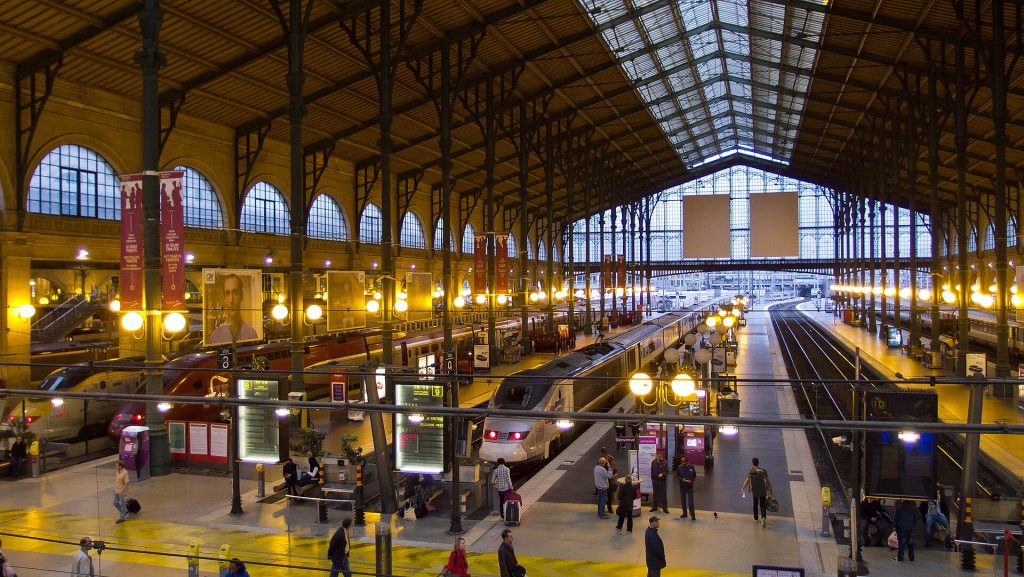
The western classic starts in Paris; give it four days, two to Amsterdam, and two more are enough for Brussels or Berlin. Between them the high-speed train takes 1.5–3 hours; the details are in the France, Netherlands and Belgium guides.
The Italian classic — Rome, Florence and Venice — takes nine days, and the cheapest way in is with Wizz Air; you will find the details in the Italy guide. The Central European route links Vienna, Budapest, Prague and Bratislava. The trains between the cities take 2–4 hours, and this is the best-value route in the whole of Schengen; the particulars are in the Austria, Hungary and Czechia guides.
The Iberian route brings Madrid, Barcelona and Lisbon together. The AVE train and cheap flights both run between them; the details are in the Spain and Portugal guides.
The Scandinavian capitals — Copenhagen, Stockholm and Oslo — are expensive, but in summer they are unforgettable. The Baltic trio, Tallinn, Riga and Vilnius, are four hours apart from one another by bus, and that is the cheapest part of Europe.
In the south, the Greek islands, the Croatian coast and Slovenia make up the summer sea route. For the Alps, Switzerland, Austria’s Tyrol and the Italian Dolomites are linked by train. Whichever route you choose, the Schengen visa is obtained from the country where you spend the most nights.
Transport: trains, cheap flights, buses, cars
High-speed trains are the backbone of Schengen travel. In France there are TGV and Ouigo, in Germany ICE, in Italy Frecciarossa and Italo, and in Spain the AVE and Iryo lines. Railjet runs between Austria and Hungary, and Eurostar between Paris, Amsterdam and Brussels.
Tickets open two or three months ahead. Buy early and you pay 10–30 euros, buy late and it is 80–150, so the train ticket should be the earliest part of the plan to be locked in. The Trainline and Omio apps show every country on one screen. The Eurail Global Pass, on the other hand, only pays for itself if you are planning more than five long train journeys.
There are low-cost airlines too. Ryanair, Wizz Air, easyJet, Vueling and Transavia fly between cities for 20–60 euros, but the baggage is paid for separately and the airports are sometimes a long way out of town. FlixBus is the cheapest and slowest option, and the night buses keep a night’s hotel money in your pocket. To see the train, the bus and the cheap flight on one screen, a search that combines them all is the quickest way.
Car rental is for country routes — Tuscany, Provence, the Alps and the Baltics are toured this way. Picking a car up in one country and returning it in another, though, is expensive. Motorways are tolled in France, Italy and Spain, in Switzerland and Austria you buy a vignette, and in the historic centres a ZTL zone and its fine cameras are waiting for you. Inside the cities the metro and the tram work, and in most capitals Uber and Bolt as well.
Cheap and expensive countries: a budget map
The price difference between the Schengen countries reaches threefold, so the budget conversation starts with the route itself.
The cheapest group takes in Poland, Hungary, Czechia, Slovakia, Romania, Bulgaria, the Baltic countries, Greece and Portugal. There a hotel night costs 50–90 euros and lunch 8–12, and the daily spend fits into 70–100 euros.
In the middle group stand Spain, Italy, Germany, Austria, Slovenia and out-of-season Croatia, where a hotel is 90–140 euros and the daily spend 110–150. The expensive group is the capitals of France and the Netherlands, Belgium and Luxembourg, where a hotel is 130–200 euros and the daily spend rises to 150–200. The most expensive are Switzerland, Norway, Iceland, Denmark, Sweden and Finland, where a hotel costs 180–280 euros and the daily spend 250–350.
The saving rules are the same everywhere. Stay outside the capital and come into the city by train, use the supermarkets, choose the lunchtime set menu. Buy the train ticket early, look at museum cards and free museum days, and go out of season if you can. The city tourist tax adds 2–7 euros a night on top of the hotel price. You will need a booking document for the visa in any case, so pick your hotels early and take the free-cancellation option.
Read more: Getting a Schengen visa: which country to apply to and where to submit the documents in Baku
Halal food, season and safety
Halal food in the Schengen area is easier than you think. Paris, Berlin, Amsterdam, Brussels and Vienna have large Muslim communities and restaurants with halal signs. In Germany and Austria Turkish döner is on almost every corner, and in the Scandinavian capitals there are Middle Eastern restaurants. In Italy and Spain seafood and pasta see you through comfortably, in Eastern Europe there are kebab shops, and Azerbaijani restaurants can be found in Berlin, Paris, Prague and Warsaw.
As for the season, April–June and September–October are the best time for the whole of Europe. In July and August the south is hot and crowded, while the north is ideal. In December the Christmas markets are set up in Germany, Austria, Czechia and France, and from January to March the season of cheap city breaks and Alpine skiing begins.
European cities are safe; the main risk is pickpocketing in tourist spots and on the metro. Be particularly careful in Paris, Barcelona, Rome and Prague, hold your bag in front of you, leave the passport at the hotel and keep a copy on you. During strikes and demonstrations transport can come to a stop. The official explanation of the rules is on the European Commission’s Schengen area page.
Budget and tickets
Not counting the flight, a ten-day trip across two or three countries comes to 800–1,100 euros a head in Eastern Europe. In Western Europe that figure rises to 1,400–1,900, and in Scandinavia it starts at 2,500. The visa, insurance and visa-centre service add 150–200 euros on top.
There are direct flights from Baku to Paris, Rome, Milan, Frankfurt, Berlin, Vienna, Budapest, Prague and Warsaw. Wizz Air and Pegasus are the cheapest, while AZAL and Turkish Airlines are more comfortable. When looking for a flight to Europe, choose an “open-jaw” ticket that flies into one city and out of another, because that removes the cost of going back by train altogether.
Europe tour packages linking two or three countries by train settle the visa support, the hotel bookings and the train tickets in one go. For a first Schengen trip this is the most comfortable way, and the booking documents required for the visa are prepared along with the package.
Frequently asked questions about the Schengen countries
Can you enter all the Schengen countries on one visa?
Yes, the “C” visa works in all twenty-nine countries, but the main part of the trip must be in the country that issued it. Cyprus, Ireland and Britain are not in Schengen and require a separate visa, while some neighbours such as Montenegro and Albania allow visa-free entry with a multiple-entry Schengen visa.
Which country is easy for a first Schengen trip?
The countries that have an embassy in Baku and issue the visa relatively quickly are the most convenient for a first application — Hungary, Poland, Czechia and Italy, for example. The direct flights and the low prices are in those same countries, and the details are in our Schengen visa article.
How many countries make sense to see?
Two countries in a week, three in ten days, four in two weeks. Give each capital at least two or three days, and choose routes where the hop between cities is under three hours.
In closing
The Schengen countries open up almost all of Europe on a single visa. Choose the right main country, keep the 90/180 count, buy the train tickets in good time. Then the trip is both cheap and trouble-free. The question of which country to apply to is explained on the Schengen countries page, and to build the route and the visa plan together, fill in the application form.
Note: the prices in this article are as of the publication date; visa rules and fees can change, so check before your trip.
