Belgium is Europe’s smallest but densest «postcard» country. From Brussels the train takes you to Bruges in an hour, to Ghent in thirty minutes and to Antwerp in forty. Which means one visa and one hotel gets you four different cities. For us Belgium is usually an add-on to a Paris or Amsterdam trip: you pop over to Brussels for a day, eat a waffle, come back. Yet the country deserves a week of its own. In this article I have gathered the cities and the train system in one place. The famous food, the weather and the budget are in there too.
Belgium in brief
| Capital | Brussels, also the capital of the EU |
| Language | Flemish (Dutch) in the north, French in the south, both in Brussels; English everywhere |
| Currency | Euro |
| Visa | Schengen «C» visa, through Capago in Baku |
| Best time | April–October; Christmas markets in December |
| Flights | No direct flight, 7–8 hours via Istanbul or Frankfurt |
| Daily budget | 120–160 euros at a mid-range level |
Belgian cities: Brussels, Bruges, Ghent, Antwerp
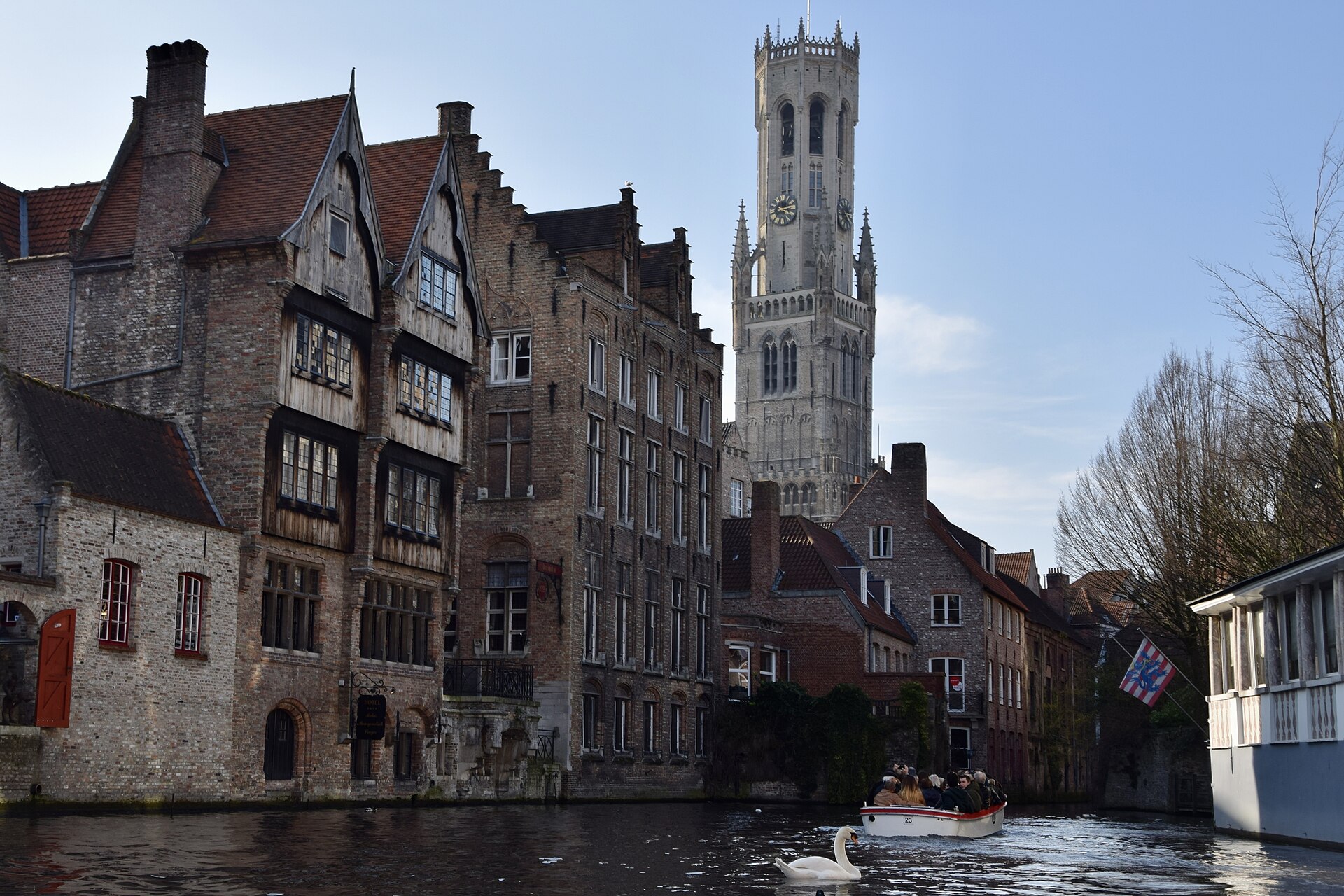
Brussels begins with the Grand Place and, honestly, the square is lovelier than it looks in photographs; the golden façades lit up in the evening stop you where you stand. Then you go and look at the Manneken Pis, and everybody who sees it says «that’s it?». The Atomium and the EU quarter are on the programme too. The Sablon antiques market is worth a walk in its own right. Two days is enough. Bruges, with its medieval canals, the Belfry tower and its chocolate shops, is the most photographed city in the country. By day it fills with the flow of tourists, but in the evening, once the day visitors have gone, it goes completely quiet — which is why a night there is worth it.
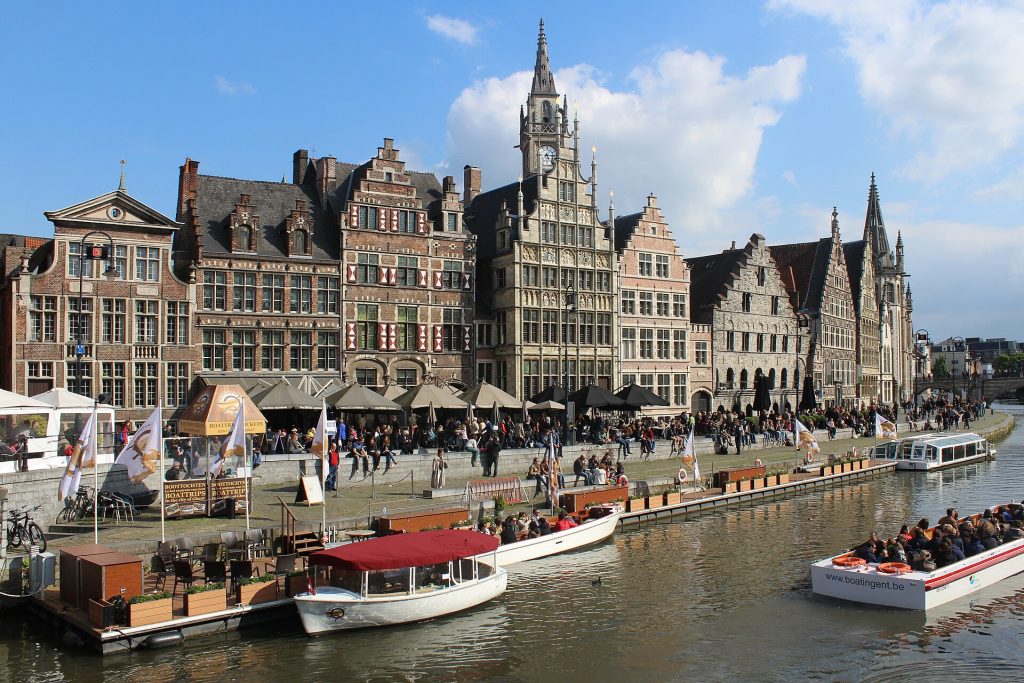
Ghent is a livelier, student-town version of Bruges. The Graslei waterfront and Gravensteen castle are in the centre, and the famous altarpiece by the Van Eyck brothers is there as well.
Antwerp is known for its diamond district, for fashion and for Rubens’s house. Its railway station is counted among the most beautiful in the world; you step off the train and spend a while with your head tipped back.
In the south lies the Wallonia region. People go to Dinant and the Ardennes for nature and castles, and there are few tourists there.
Transport in Belgium: the train solves everything
The SNCB railway covers the whole country on an hourly timetable. From Brussels it is an hour to Bruges, thirty-five minutes to Ghent and forty-five to Antwerp, and a ticket is 10–15 euros. Weekend tickets are sold at half price, and few people know that.
In Brussels the metro, tram and bus run on one ticket, and a twenty-four-hour ticket is eight euros. From the airport the train takes twenty minutes into the centre. The cities themselves are walked, while Bruges and Ghent are cycling towns.
A car is not needed in Belgium; parking in Brussels is both expensive and infuriating. Paris, Amsterdam and Cologne are an hour and a half to two hours away by fast train, which is exactly why Belgium is the ideal base for a whole Benelux route. If you want to see the difference between the Eurostar and an ordinary train, open both options side by side.
Belgian food: waffles, chocolate, chips and mussels
Belgian cooking gets described as «French quality, German portions», and that is an accurate phrase.
Chips were invented right here. At the «frituur» kiosks they are sold in a paper cone with mayonnaise and cost 3–4 euros. There are two kinds of waffle: the Brussels one is rectangular and light, the Liège one is grainy with sugar and heavy — try both, then argue about which is better. Mussels with chips, that is «moules-frites», is the national dish and comes to 20–25 euros.
Chocolate shops are on every street: Neuhaus, Godiva and small chocolatiers whose names you have never heard — there is nothing better for a present. The country has more than fifteen hundred kinds of beer, and for those who do not drink the café culture is strong too. A main course in a restaurant is 18–28 euros; a tip is not obligatory, you round the bill up. Halal food is plentiful in the Turkish and Moroccan restaurants of Brussels.
Read next: Why is a Belgian visa issued by the French embassy? Capago, the fee and the documents
What is the weather like in Belgium?
Belgian weather is known for a chance of rain on every day of the year. In summer it is 20–24 degrees and in winter 3–6, and snow falls rarely. Keep an umbrella and waterproof shoes in the bag in every season.
April-May and September are the most comfortable months, while in July and August Bruges is crowded. In December Christmas markets are set up in Brussels and Bruges; in August, every second year, a carpet of flowers is laid out on the Grand Place; and in May the Brussels jazz festival is held. The events calendar for the Flanders region can be seen on the Visit Flanders portal.
Budget and tickets
A hotel is 100–150 euros in Brussels and 120–180 in Bruges, while Ghent is a little cheaper.
There is one subtlety. At the weekend Brussels hotels get cheaper, because the business crowd leaves the city. Compare a Thursday with a Sunday and the difference is sometimes twofold. A museum is 10–15 euros and a canal tour in Bruges 12 euros.
Excluding the flight, a week-long trip fits into 900–1200 euros per person. Turkish Airlines flies to Brussels via Istanbul, and the Amsterdam and Paris airports are two hours away by train as well. Comparing flights to Brussels with Amsterdam and Paris tickets sometimes gives a hundred-euro difference. For anyone wanting to cover the Benelux in one route, Belgium–Netherlands tour packages settle the intercity trains and the hotels together.
Frequently asked questions about Belgium
How many days does Belgium need?
Two days for Brussels, one or two for Bruges, one for Ghent and Antwerp. Five days is enough for the main part of the country.
Where is it better value to stay?
In Ghent. It is half an hour from Bruges and Brussels, the hotels are cheap and the city is lively in the evenings.
Can you go to Paris on a Belgian visa?
Yes, a Schengen visa is valid for the whole zone. Only, the main country of the trip has to be Belgium, meaning you must spend the most nights there.
In closing
Belgium is the easiest way to see four cities from one base: trains, waffles, canals and medieval squares. The visa process is explained on the Belgium page, and to build the Benelux route together, fill in the application form.
Note: the prices here are as of the publication date and can change with the season.
