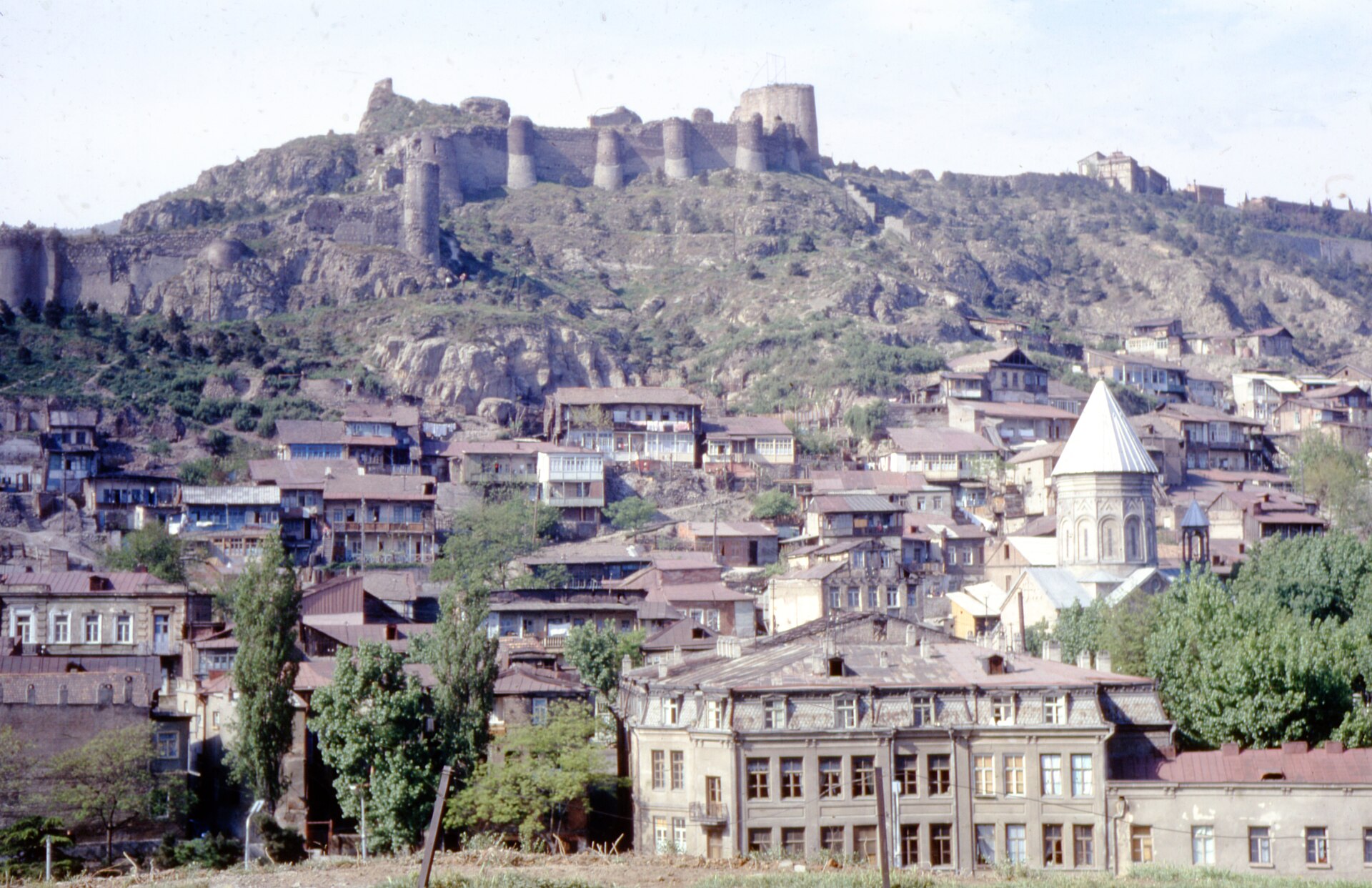
Tbilisi is the nearest foreign city to us, and that is exactly why most of us see it in a hurry. We take the night train, drink coffee on Shardeni street in the morning and come back on Sunday. Yet the real part of the city is above the centre, on the Betlemi steps and in the Sololaki courtyards. Below I have written how to divide Tbilisi properly into two or three days.
Tbilisi in brief
| Country | Georgia; 1.2 million people |
| Language | Georgian; Russian everywhere, English among the young |
| Currency | Lari (GEL); cards everywhere, cash at the market |
| Visa | One year visa-free for citizens of Azerbaijan |
| Best time | May–June and September–October |
| Getting there | Night train, bus or a one-hour flight from Baku |
| How many days | Two days for the city, a third for the surroundings |
The old town and Narikala
The old town spreads over both banks of the Kura, with wooden-balconied houses, narrow streets and a café on every corner. Go up to Narikala fortress by cable car — it takes five minutes from Rike park and the best view in the city is from there. From the top you walk to the Mother of Georgia statue, then descend by steps into the Betlemi quarter.
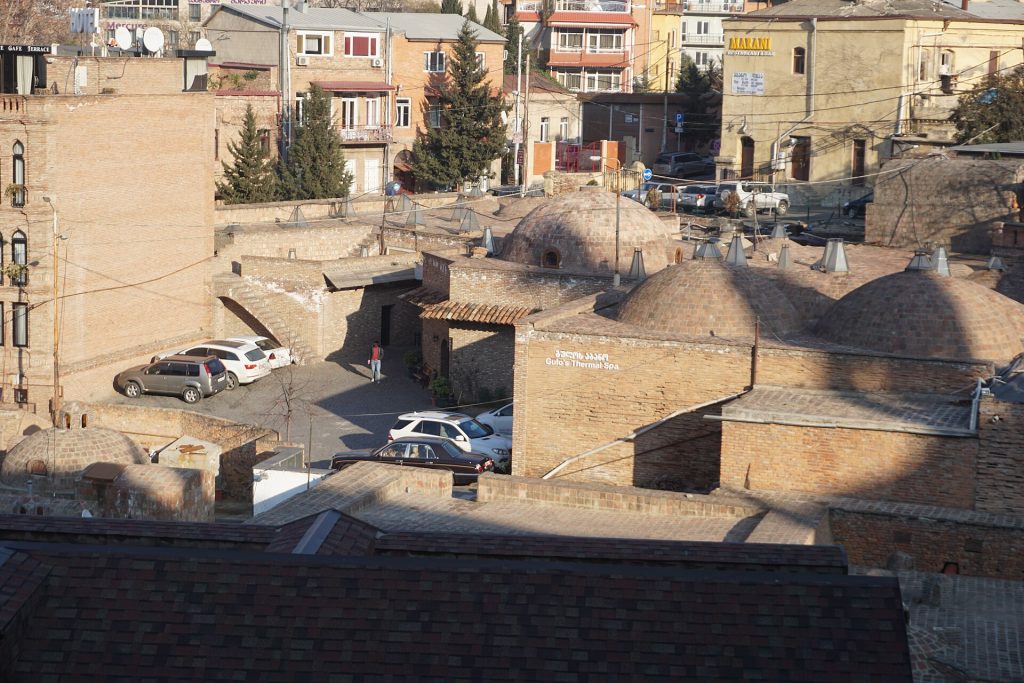
Below is Abanotubani, the district of sulphur baths. Brick domes rise out of the ground, inside there are private rooms rented by the hour, and the price is 30–60 lari. You have to go in once, and afterwards your legs carry you through the rest of the day easily. Beside it are the Leghvtakhevi waterfall and a narrow gorge.
Sololaki, Rustaveli and Fabrika
Sololaki is the upper part of the centre: nineteenth-century houses, carved doors and courtyards with stained glass. The doors look shut, but most are open — go in and look up at the ceiling. Rustaveli avenue is the city’s main axis, with the Opera, the Parliament and the National Museum on it. The Bridge of Peace is lit in the evening.
Fabrika is a former sewing factory, and its courtyard now holds cafés, workshops and a hostel, filling with young people in the evenings. The Dezerter bazaar is another world entirely: rows of churchkhela, cheese and spices. If you want to see the non-touristy Tbilisi, go there at nine in the morning.
Day trips from Tbilisi
Mtskheta is twenty minutes from the city and takes half a day with the Svetitskhoveli cathedral and the Jvari monastery on the hill. Kazbegi is three hours away, the Gergeti church stands on the shoulder of the mountain, and when the weather is clear the view stays with you for life. Kakheti is the wine side, and Sighnaghi and Telavi fit into one day.
You can reach these three by marshrutka, but you lose time. Guided day tours have a fixed price and combine several points; choosing the programme in advance guarantees your place in the summer months.
Transport and money in Tbilisi
The metro has two lines, a ride is one lari, and you pass through with a Metromoney card or a bank card. A Bolt taxi anywhere is 3–7 lari and is cheaper than a street taxi. The old town is walked, but the streets are cobbled and steep, so wear comfortable shoes. A taxi from the airport to the centre is 30–40 lari and the bus a few lari. The flight from Baku is short while the land route is cheaper, so compare flight prices with the bus and the train before deciding.
Cash machines are everywhere and cards work almost everywhere. You need cash at the market and on the marshrutka. Do not change manat here — buying dollars in Baku and converting them to lari in Tbilisi works out better.
The table: khinkali, khachapuri, wine
Khinkali is eaten by hand: you hold it by the tail, drink the juice and leave the tail on the plate. Five or six are enough for one person. Khachapuri differs by region, and the Adjarian version is boat-shaped with an egg on top. Pkhali, lobio, mtsvadi and aubergine with walnut paste complete the table.
Wine is a culture here, and the kind made in a qvevri, a clay vessel, has to be tried. Lunch in a restaurant is 20–35 lari and a good dinner 50–80. On the halal question Tbilisi is comfortable: there are many Azerbaijani and Turkish restaurants, and the choice around Mosque street is wide.
Read more: A Georgia travel guide: Tbilisi, Batumi, Kakheti, Kazbegi, Borjomi and travelling by train
Season and budget
May–June and September–October are the most comfortable months, at 20–27 degrees. In July and August the city heats to 35 and the stone streets hold the heat, and at that point escaping to Kazbegi becomes necessary. Winter is mild, snow falls rarely, and prices are at their lowest for the year.
A boutique hotel in the old town is 80–120 dollars, a three-star in the centre 40–70, and an apartment 30–50. A hostel bed starts at 10–20 dollars, and that network is strong in Tbilisi. Excluding the flight, a three-day trip fits into 200–350 dollars a head. Official tourism information is on the Georgia Travel portal.
Frequently asked questions about Tbilisi
By train or by plane?
The night train is cheap and saves you a night’s hotel, but it takes eleven hours. The flight is an hour, and if your time is short it is worth it.
Are two days enough?
For the city itself, yes. If you want Mtskheta, Kazbegi or Kakheti, set aside at least three days.
What is it like with children?
It is comfortable, but the steps and steep streets of the old town are difficult with a pushchair. Mtatsminda park is on top of the hill and is the best half day for children.
A last word
Tbilisi is underrated because it is close, yet anyone who gives it two days and climbs to the upper neighbourhoods sees an entirely different city. It is visa-free, cheap and close to a familiar language, and it deserves to be used fully. If you want a ready-made route, look at Granit AS tours. To put the route together with us, fill in the application form.
Note: the prices in this article are those at the time of publication and may change with the season.
