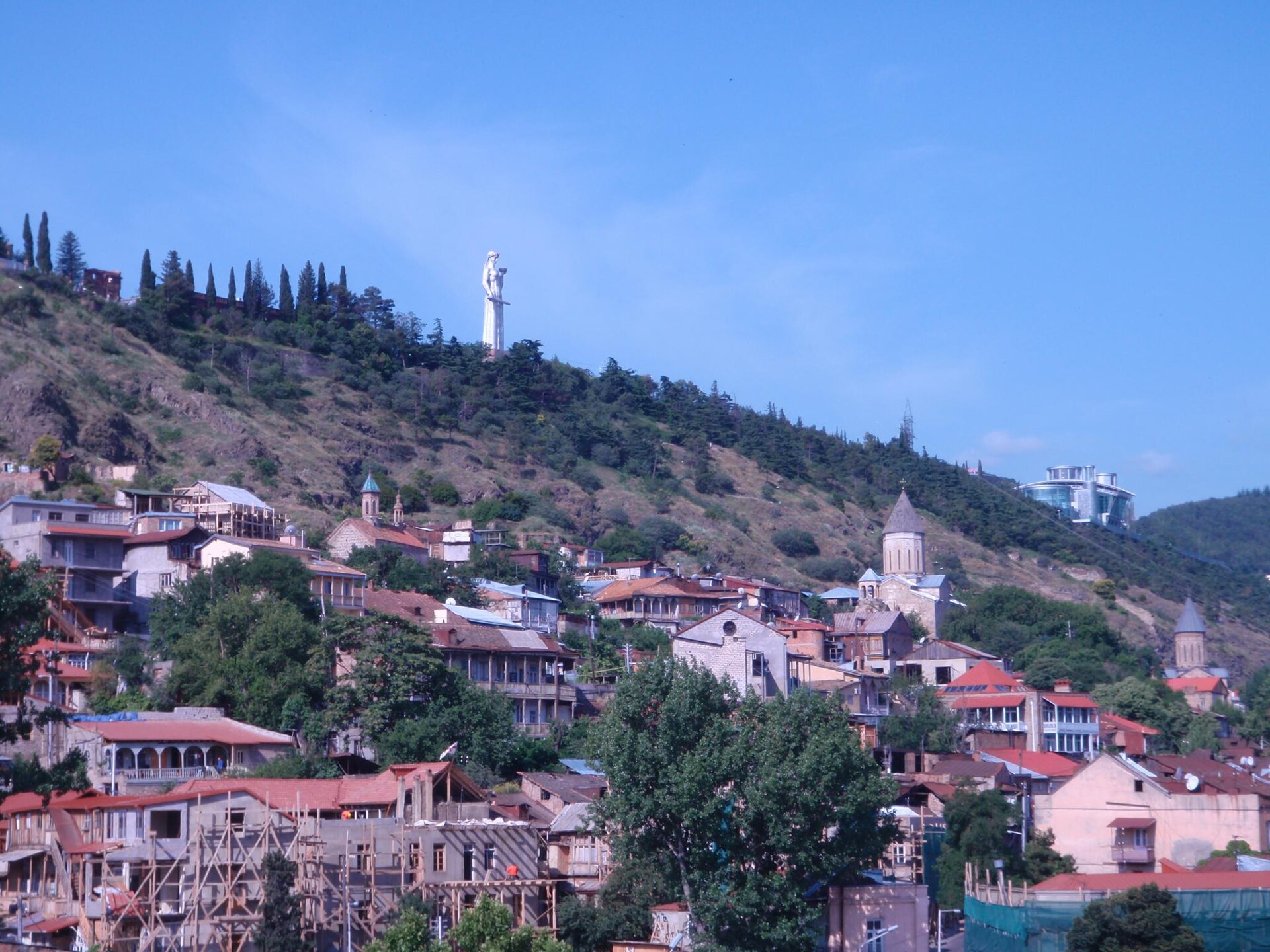
Georgia is the nearest foreign country to Baku and the one we travel to most. You get on the train in the evening and wake up in Tbilisi. They stamp your passport and ask for no visa. You have the right to stay a year. But because it is so close, most of us see only Tbilisi and Batumi. The wine villages of Kakheti, the mountain church of Kazbegi, the mineral water of Borjomi and the towers of Svaneti are left out. This article is for first-timers and for anyone saying “this time let me do it differently”: the route, the transport, the spas, the food, the season and the budget.
Georgia in brief
| Capital | Tbilisi |
| Language | Georgian; Russian among the older generation, English among the young, Azerbaijani in Marneuli and Tbilisi |
| Currency | Lari (GEL), 1 dollar ≈ 2.7 lari; cards in the cities, cash in the villages |
| Visa | 1 year visa-free for citizens of Azerbaijan |
| Best time | May–June and September–October; Batumi in summer, Gudauri in winter |
| Getting there | Baku–Tbilisi night train 12 hours, flight 1 hour, by car 8 hours |
| Daily budget | 50–80 dollars at a mid-range level |
Tbilisi: the old town, the sulphur baths and Fabrika
Tbilisi’s old town consists of houses with wooden balconies on both banks of the Kura. You go up to Narikala fortress by cable car, and the Metekhi church and the Bridge of Peace are close by. Two days are enough.
The Abanotubani sulphur baths are the city’s symbol. A public bath is 5–10 lari, and an hour in a private room with a scrub costs 60–150 lari. The night hours are quieter, and coming out you feel reborn.
The rest is a matter of taste. Soviet antiques are sold at the Dry Bridge market, Fabrika is a hostel and café complex set up in a former sewing factory, and you go up to Mtatsminda amusement park by funicular — go there without fail if you have a child. Mtskheta, twenty minutes from the city, is the ancient capital and takes half a day together with the Jvari monastery. Finding an Azerbaijani restaurant and halal food in Tbilisi is no problem at all.
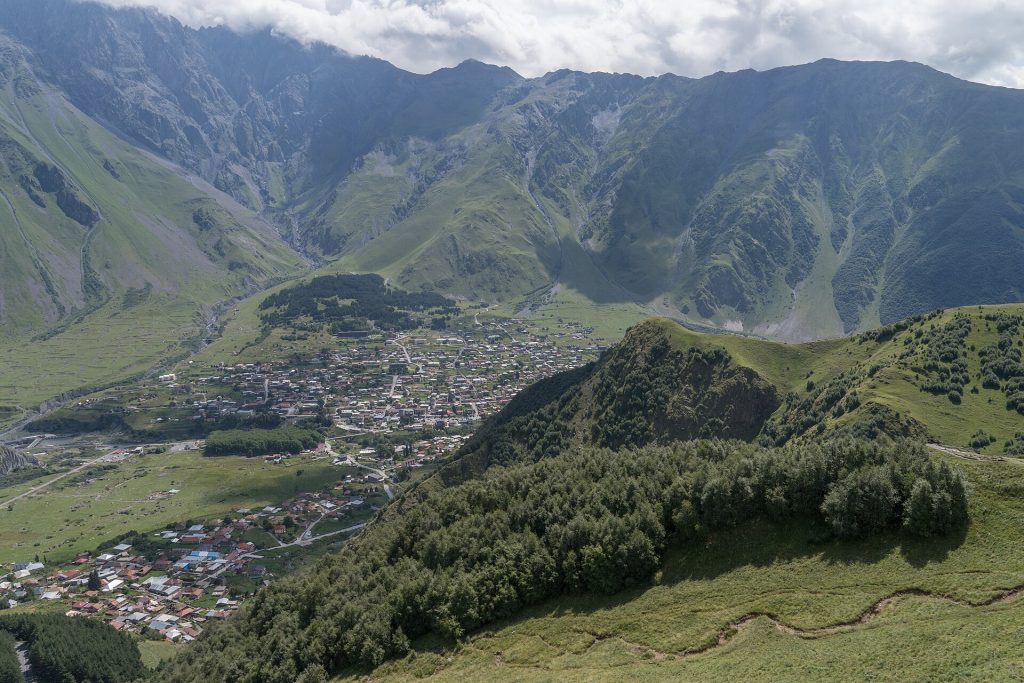
The regions of Georgia: Kakheti, Kazbegi, Batumi, Svaneti
Kakheti is two hours from Tbilisi, in the wine region. Sighnaghi is called “the city of love” and is known for its walls and its view opening onto the Alazani valley. Telavi is the centre of the region, and in the villages tastings of qvevri wine are arranged. On the Azerbaijani border lies Lagodekhi national park.
Kazbegi, officially Stepantsminda, is three hours away by the Georgian Military Road. The Gergeti Trinity church, standing at two thousand one hundred and seventy metres against the backdrop of five-thousand-metre Mount Kazbek, is the most famous photograph in the whole Caucasus. On the way are Ananuri fortress and the Gudauri resort.
Batumi is on the Black Sea coast. It is known for its casinos, its boulevard, its botanical garden and its summer nightlife. From Tbilisi it is five hours by train. Svaneti, with the tower villages of Mestia and Ushguli, is the wildest mountain region; Ushguli is the highest permanently inhabited village in Europe and you can only go there from June to September, the road is hard and the view is worth all of it. Kutaisi, with the Prometheus cave and the Gelati monastery, is the centre of the west.
Georgia’s spa resorts: Borjomi, Tskaltubo, Sairme
Borjomi is a resort known worldwide for its mineral water. In the central park the warm spring water is drunk free, people queue with a bottle in hand, and at the end of the park there are open-air sulphur pools. The Likani sanatoriums offer 7–14 day courses for digestive and metabolic conditions, full board at 60–120 dollars a day. Tskaltubo, near Kutaisi, is the famous Soviet-era resort for joint and nerve conditions with its radon water, now being restored, and the old sanatorium buildings are a sight in themselves. Sairme is known for mineral water in the mountains, Akhtala for mud treatment and Abastumani for its mountain air. Gudauri and Bakuriani are ski resorts from December to March; Gudauri is the nearest serious ski slope to Baku, with a day pass at 25–35 dollars.
Transport: the train, the marshrutka and Bolt
The night train from Baku to Tbilisi leaves in the evening and sets you down in Tbilisi in the morning, with a compartment at 30–60 manats. The border check is done inside the train, so you do not even get out of bed, and you buy the ticket from the ADY app or at the station. The flight is an hour, operated by AZAL and Georgian Airways. By car it is eight hours through the Boyuk Kesik crossing, and green card insurance is required.
Inside the country the Tbilisi–Batumi fast train takes five hours and costs 20–30 lari. Marshrutkas go cheaply in every direction but are crowded; to Kazbegi from Didube station it is fifteen lari.
In the city the metro is one lari, and a ride with Bolt or Yandex Go is 5–10 lari. Car rental is 30–50 dollars a day; take an SUV for the mountain roads, and an Azerbaijani licence is accepted.
Georgian food and the supra
Khachapuri is baked differently in every region. The Adjarian one is boat-shaped with an egg cracked on top. The Imeretian one is flat and filled with cheese. Khinkali are juicy meat dumplings, eaten by hand, with the “tail” left on the plate, and Georgians watch with a smile as someone eats them with a fork. Mtsvadi is kebab. Pkhali is vegetables with walnut paste and lobio a bean dish. Churchkhela is made from walnuts and grape juice. Lunch in Tbilisi is 15–25 lari, and dinner with wine at a village guesthouse 30–40. The supra is the traditional feast with the toasts of the tamada; do join one at a village guesthouse, because that is Georgian hospitality itself.
On the halal question you are fine. There are dozens of Azerbaijani and Turkish restaurants in Tbilisi, and the Marneuli region is entirely Azerbaijani cooking. Khachapuri and pkhali have no meat in them, khinkali and mtsvadi come with pork or beef, so ask when you order. Borjomi and Nabeghlavi water are everywhere.
Read next: Do you need a visa for Georgia? A year visa-free, the land border, the train and the Abkhazia rule
When to go to Georgia and what it costs
May and June pass green and full of flowers, while September and October are rtveli, the grape harvest, and Kakheti’s loveliest period. In July and August the temperature in Tbilisi climbs to thirty-five and everyone escapes to Batumi and the mountains. From December to March it is ski season in Gudauri, and Tbilisi at New Year is both lit up and calm.
As for accommodation, a three-star hotel in Tbilisi costs 40–70 dollars and a boutique hotel in the old town 80–120. Guesthouses in Kakheti and Kazbegi come down to 25–40 dollars. Prices in Tbilisi rise at the weekend, so compare the dates.
A five-day trip by train fits into 400–600 dollars a head. For those flying, an air ticket to Tbilisi sells out fast at Novruz and New Year. Georgia tour packages fitting Tbilisi, Kakheti and Kazbegi into two or three days are the most asked-about option for a weekend trip. Regional and spa information is on the Georgia Travel portal.
Frequently asked questions about Georgia
How many days do you need for Georgia?
Two days for Tbilisi and Mtskheta, one or two for Kakheti, one or two for Kazbegi: five or six in all. With Batumi or Svaneti, ten.
Can you cross on an identity card?
No, a foreign passport is needed. The passport must be valid beyond the length of the trip, and those staying more than 90 days need no registration.
Which route is good with a child?
Tbilisi, Mtatsminda park, Borjomi park and the Batumi dolphinarium. The road to Kazbegi is long and full of switchbacks, tiring with a small child.
In closing
Georgia is the visa-free, inexpensive neighbour that gives you mountains, wine, spas and the sea one night’s train ride away. Anyone who goes beyond Tbilisi sees a new country every time. The entry rules are gathered on the Georgia page, and to build the spa and mountain route together fill in the application form.
Note: the prices here are as of the publication date and can change with the season.
