Hungary is one of the best-value Schengen trips from Baku, because Wizz Air flies direct and cheaply to Budapest. And Budapest itself is among Europe’s most beautiful and cheapest capitals.
The country literally stands on thermal water, with more than thirteen hundred hot springs. The world’s largest healing lake, Hévíz, is here too. Below I have gathered Budapest’s two sides, the thermal baths, Lake Balaton and Hévíz. Eger, transport, the forint rule, food, the season and the budget are in there too.
Hungary in brief
| Capital | Budapest; a fifth of the population lives here |
| Language | Hungarian; English works in Budapest, harder in the villages |
| Currency | Forint (HUF), 1 euro ≈ 400 forints; cards everywhere, euros at a poor rate |
| Visa | Schengen «C» visa, BLS centre in Baku |
| Best time | April–June and September–October; the baths all year |
| Flights | Baku–Budapest direct, Wizz Air, 4.5 hours |
| Daily budget | 80–120 euros at a mid-range level |
Budapest: Buda, Pest and the Danube
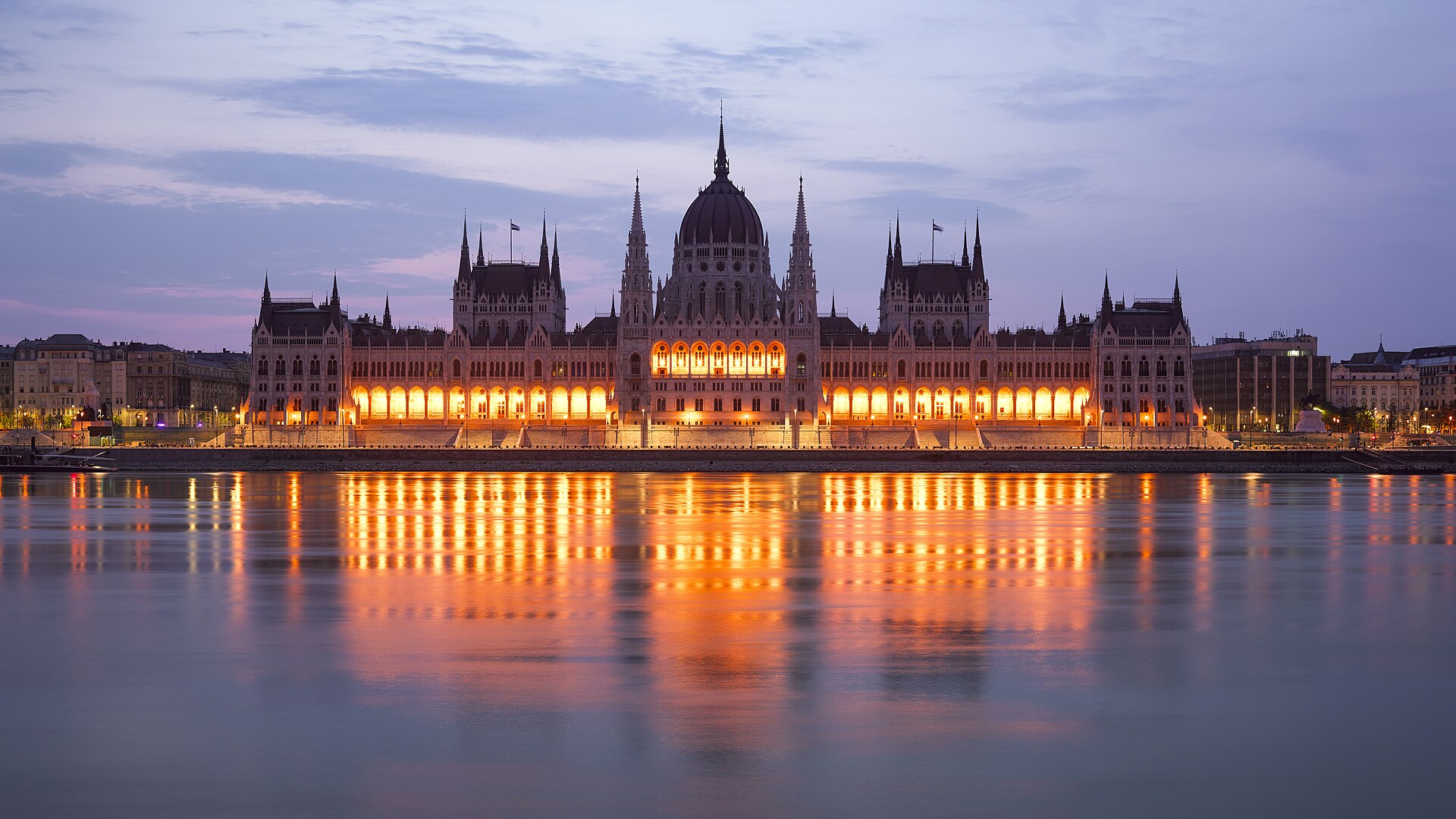
Budapest is two cities on the two banks of the Danube, and their characters differ. Buda is the hilly, historic side. In the castle district are the white turrets of the Fisherman’s Bastion and Matthias church. The Royal Palace and the National Gallery are there too. From Gellért hill a panorama of the city opens up; you go up by funicular or on foot. Pest is the flat, lively side with the nightlife. The Parliament building stands on the Danube shore, and the tour inside goes with an online ticket. St Stephen’s basilica, Andrássy avenue and the Opera lie along one line. Heroes’ Square and the City Park are at the end of the avenue. The Great Synagogue, the Central Market Hall and Váci street are in Pest as well.
The Chain Bridge links the city’s two sides. An evening cruise along the Danube costs 15–30 euros and shows the lit-up Parliament, which is one of the finest night views in Europe.
The ruin bars are a subject of their own. Hungarians call them «romkocsma»; the phenomenon started with Szimpla Kert in the courtyard of an old building and has now taken over the whole seventh district. Even if you do not drink, it is worth seeing. Margaret Island is for picnics and cycling. Altogether the city wants three or four days.
Thermal baths: Széchenyi, Gellért, Rudas
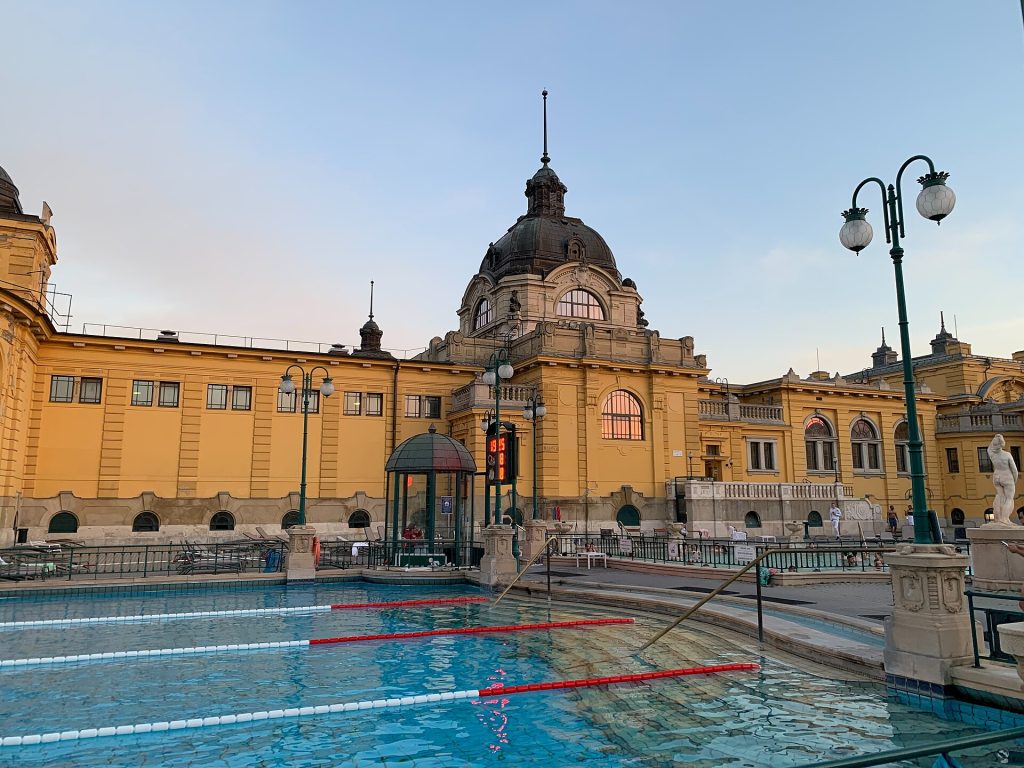
Budapest is the world’s only thermal capital, with more than a hundred and twenty hot springs beneath the city. Széchenyi is in the City Park and counts as Europe’s largest bath complex. At weekends the queue at the desk is long, so buying the ticket online takes you straight to the lockers.
Everyone has seen the photo of men playing chess in the steam in winter, in the 38-degree outdoor pools of the yellow baroque building. Inside there are fifteen pools and saunas, and a day ticket is 30–35 euros. On Saturday nights they hold pool parties here called «sparty».
Gellért, with its mosaic and columned pool, is on the Buda side and costs 30 euros. Rudas is an Ottoman bath from the sixteenth century with a pool under an octagonal dome; on weekdays men’s and women’s days alternate, and there is a rooftop pool with a Danube view. Lukács is the locals’ bath and the cheapest.
The thermal water is considered therapeutic for rheumatism, joint and spine problems, and the baths have doctors and massage services too. Bring your own swimsuit, towel and pool shoes; the cabin is included in the ticket.
Balaton, Hévíz, Eger: Hungary beyond the capital
Hévíz is the world’s largest thermal lake you can swim in. It covers 4.4 hectares, the water stays at 24–38 degrees all year, and its radon and sulphur content and the mud on its bed are considered therapeutic for joints, rheumatism and skin conditions.
There is one limit: more than three hours of bathing a day is not recommended, because it strains the heart. A day ticket is 20–25 euros. Around the lake dozens of sanatoriums and spa hotels offer two or three-week treatment courses. It is three hours from Budapest by train and bus, and most people travelling from Baku for treatment come exactly here.
Balaton is Central Europe’s largest lake and Hungarians call it «the Hungarian sea». Siófok on the southern shore means shallow water and nightlife, while Balatonfüred on the northern shore is a resort and yachting centre. The Tihany peninsula is known for its abbey and lavender, and Badacsony serves wine on a volcanic hill. The season runs from June to August.
Eger is a baroque town whose Ottoman minaret and castle have become its symbol, and in the «Valley of the Beautiful Women» the wine cellars stand in a row. It is two hours from Budapest, with the Egerszalók thermal hill and the Miskolctapolca cave bath beside it.
If you have time left, look at the Tokaj region, where the world’s most famous sweet wine comes from. Pécs in the south is known for its Ottoman heritage, and Szentendre is an artists’ town forty minutes from Budapest.
Transport in Hungary and the forint rule
The Budapest metro has four lines. Line one has run since 1896 and is the oldest in continental Europe — the carriages look it, too. Trams two and four-six run along the Danube shore, which makes them a sightseeing tour in themselves.
Tickets are bought in the BudapestGO app and come to one euro; the twenty-four-hour version is 6.5 euros and the seventy-two-hour one 14. The Budapest Card covers museums and transport together. The 100E bus from the airport to the centre takes thirty minutes and costs 6 euros.
MÁV trains run out of the city, and you reach Balaton, Eger and Hévíz on those lines. Budapest to Siófok takes an hour and a half and costs 8 euros. Within the city a Bolt taxi works out at 5–10 euros. Do not hail a taxi in the street; the official yellow taxis run on the meter.
Learn the forint rule, because that is where most money is lost in Budapest. Stay away from the street exchange kiosks advertising «0 commission»; use a card or take forints from a cash machine. When the terminal asks «forints or your own currency», always choose forints — «dynamic conversion» costs 5–10 per cent more. A car is needed only for Balaton and Tokaj, and the vignette is bought online.
Goulash, lángos, kürtőskalács: the Hungarian kitchen
In Hungary goulash is a soup, cooked with paprika, meat and potato. What we call goulash, the thick meat stew, is called pörkölt here — do not get confused when ordering. Paprika chicken is served with sour cream and dumplings called nokedli.
Lángos is fried dough topped with garlic and cheese, and it is the staple of the market and the Balaton beach. Kürtőskalács is a sweet dough baked over coals and called «chimney cake» — that is the smell of the Christmas markets. Halászlé is a fish soup, for dessert there is the Dobos torte, and on the table Tokaj wine. Paprika, both hot and sweet, goes into almost every dish.
Prices are about half those of Western Europe. Lunch on the first floor of the Central Market Hall is 6–10 euros, the daily menu called «napi menü» in a restaurant 8–12, and a full dinner 20–35.
Halal food is widely available in Budapest, with Turkish, Arab and Pakistani restaurants. The choice is particularly wide in the seventh and eighth districts. Goulash soup is cooked with beef, but ask anyway. The tap water is drinkable, the café culture is on a Viennese level, and the New York Café, billed as «the world’s most beautiful café», has a queue — worth seeing once.
Read next: Hungary visa: the BLS centre, the non-refundable service charge and the Wizz Air flight
When to go to Hungary, and what it costs
April–June and September–October are the ideal months at 18–26 degrees. In July and August the thermometer climbs to 32–35, the Balaton season falls exactly then, and the Sziget festival in August fills the city with young people.
In winter it stays between 0 and 5 degrees. Christmas markets go up on Vörösmarty square and in front of the basilica. Sitting in an open thermal pool under the steam is Budapest’s best winter experience, and Lake Hévíz stays at 24 degrees in those months too.
In Budapest a three-star hotel is 60–100 euros and a four-star 100–160. A spa hotel in Hévíz with treatment included is 90–150 euros, and a summer night at Balaton 70–120. A hostel bed is 20–30 euros and the choice in Budapest is wide.
The sights are cheap. Széchenyi is 33 euros, the Parliament 15 and the Danube cruise 15, while the upper terrace of the Fisherman’s Bastion is just 4. Excluding the flight, a week-long trip fits into 600–900 euros per person.
Wizz Air flies direct from Baku to Budapest; tickets to Budapest start at 60–100 euros without baggage when booked early, so count the baggage separately. For anyone touring Budapest, Vienna and Prague on one route, Central Europe tour packages settle the train crossings and the hotels together, and Budapest is the cheapest stop on that route. Bath and spa information is on the Visit Hungary portal.
Frequently asked questions about Hungary
How many days does Hungary need?
Budapest four days, Eger or Szentendre one, Balaton and Hévíz two or three — a week in all. For a treatment course, two weeks in Hévíz.
Which bath should you choose?
If it is your first time, choose Széchenyi. Gellért suits architecture and calm, Rudas a historic experience and a Danube view. The local, cheap option is Lukács. Weekday mornings are the emptiest.
Is Budapest safe?
Yes. The main risks are pickpocketing on the metro, fake taxis and inflated restaurant bills — check the prices on the menu and order taxis through an app.
In closing
With a cheap direct flight, one of Europe’s most beautiful capitals and year-round thermal water, Hungary is among the best-value Schengen trips, and Hévíz and the baths are a reason of their own for treatment. The visa process is explained on the Hungary page, and to plan a Budapest trip or a thermal spa stay together, fill in the application form.
Note: the prices here are as of the publication date and can change with the season.
