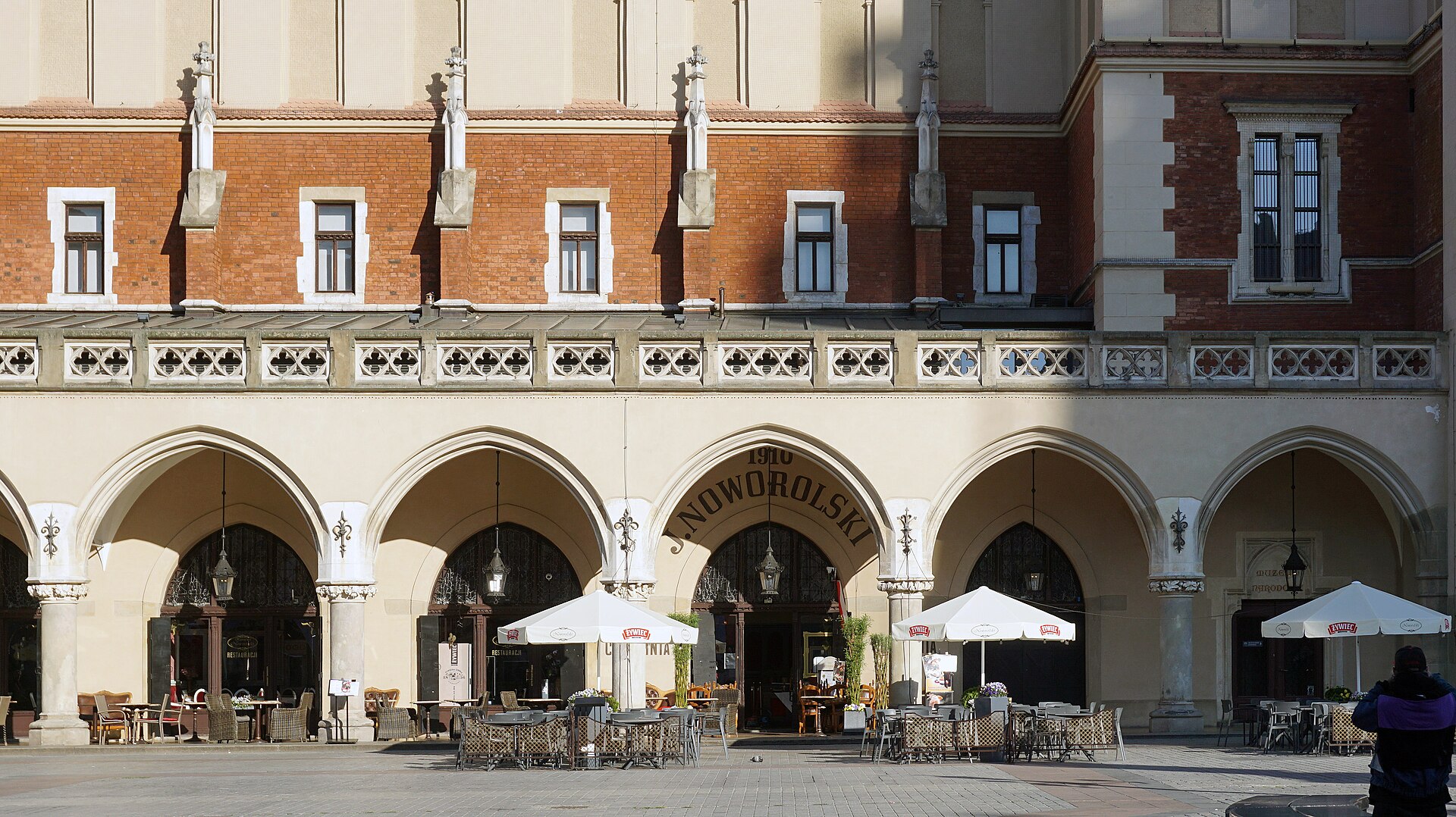
Krakow is Poland’s old capital and came through the war all but untouched. So here you are not walking a restoration but a genuine medieval city. The main square is the largest medieval square in Europe, and the city is full of students, which means prices are low and the evenings are lively. Three days is enough, and the fourth has to be given to somewhere outside the city.
The main square and Wawel castle
The Cloth Hall stands in the middle of the Rynek square, has worked as a trading place for six centuries and is now a souvenir market. From the tower of Saint Mary’s church beside it a trumpet sounds every hour, and the melody breaks off in the middle. The reason is an old legend: a Tatar arrow struck the watchman. It is the city’s best-known tradition.
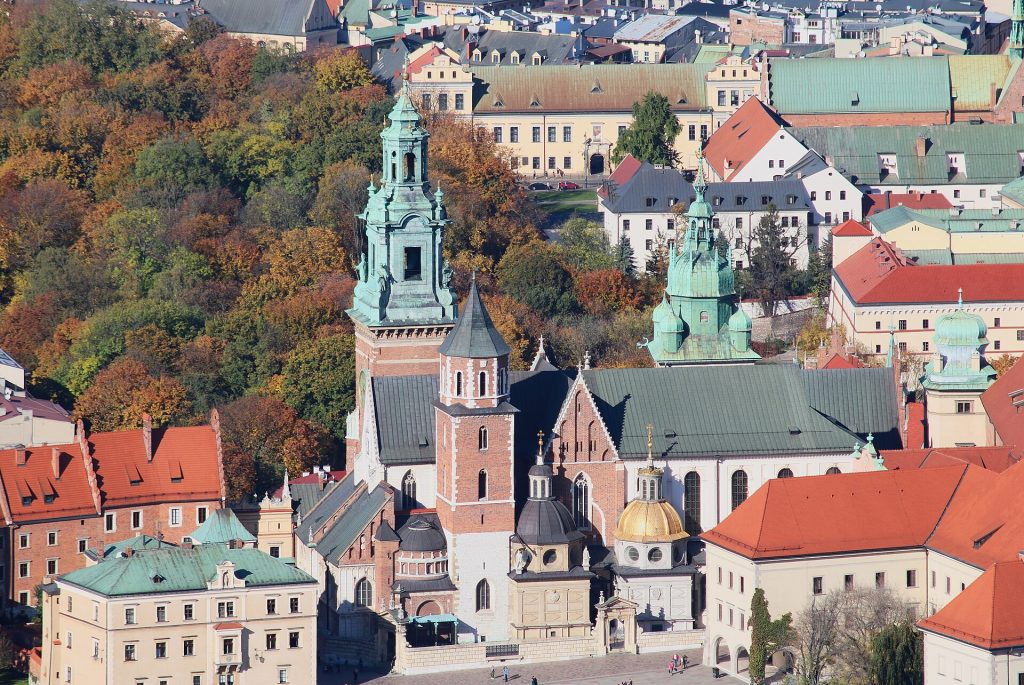
On Wawel hill stand the castle and the cathedral, where most of Poland’s kings are buried. Entry to the courtyard is free, tickets are bought for the individual sections, and the daily number is limited. Go early in the morning; by midday the tickets are gone.
The Kazimierz quarter
Kazimierz is the former Jewish quarter and is now the most interesting part of the city. The old synagogues, small galleries and cafés with prices below the centre are there. Schindler’s factory is across the river and is now a museum; the ticket is bought in advance. In the evening the long sandwich called zapiekanka is sold on Plac Nowy.
Out of the city: Auschwitz and the salt mine
Auschwitz-Birkenau is an hour and a half from Krakow. Entry is free, but registration is required for a guided group and places are taken weeks ahead. The visit takes half a day and is heavy going; an age limit is recommended for children.
The Wieliczka salt mine is an entirely different experience, with a chapel and halls carved out of salt a hundred metres underground. You go in only with a guide. Fitting the two places into one day is possible, but tiring. Taking the day tours in advance is a practical matter here, because the registration system is confusing.
Read more: A Poland travel guide: Krakow, Warsaw, Gdansk, Zakopane and cheap Europe in the milk bars
Transport and budget in Krakow
The centre is entirely pedestrian and you can reach anywhere in half an hour. The tram is needed for the outer districts, and a ticket is 4 zloty. The train from the airport to the centre takes twenty minutes. The fast train to Warsaw is two and a half hours; compare the tickets in one search.
A three-star hotel in the centre is 45–80 euros, and a boutique hotel in Kazimierz 60–95. Lunch in a milk bar is 25–35 zloty and dinner in a restaurant 60–100. Wawel tickets are between 15 and 35 zloty. Official information is on the krakow.travel site.
The season in Krakow
May to September is the most suitable period, with 18–26 degrees, and the square fills with cafés. Winter is cold, dropping below zero, but in December a Christmas market is set up on the square. January to March are the cheapest months. It rains often in autumn.
In short
Krakow is a cheap, compact and genuine medieval city, and beside it there are two completely different day trips. Register for Auschwitz weeks ahead, stay in Kazimierz, and go to Wawel in the morning. If you want to see it together with Warsaw, look at tours covering Poland. For a visa and a route, fill in the application form.
Note: the prices in this article are those at the time of publication and may change with the exchange rate.
