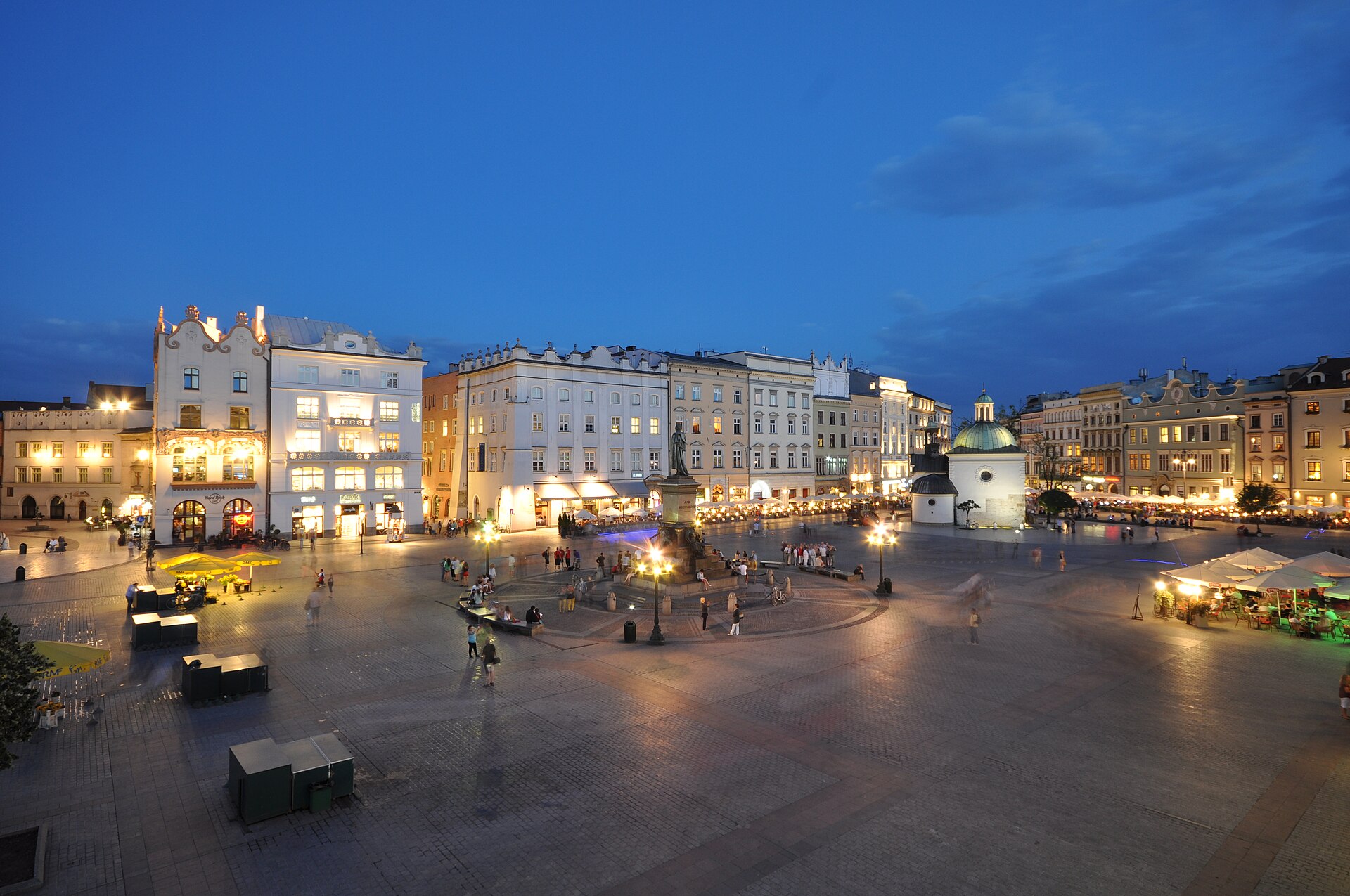
Poland is the best-value big country in the Schengen zone. On one side stand Kraków’s medieval square and Warsaw’s old town rebuilt from zero; on the other there is the Hanseatic port at Gdańsk and the thermal pools in the Tatra mountains. And all of it at half the price of Western Europe.
For us the visa is obtained through the e-Konsulat system and, honestly, the hardest part of the process is getting an appointment; after that it gets easier. Below I have gathered Kraków, Warsaw, Gdańsk, Wrocław and Zakopane, along with the trains, the milk bars, the food, the season and the budget.
Poland in brief
| Capital | Warsaw; the tourism centre is Kraków |
| Language | Polish; English among the young and in tourism |
| Currency | Złoty (PLN), 1 euro ≈ 4.3 złoty; euros are not accepted, cards everywhere |
| Visa | Schengen «C» visa, the embassy in Baku through the e-Konsulat system |
| Best time | May–September; Christmas markets in December |
| Flights | Direct to Warsaw or 4–6 hours via Istanbul |
| Daily budget | 70–110 euros at a mid-range level |
Kraków: the market square, Wawel, Wieliczka, Auschwitz
Kraków is the only big Polish city not destroyed in the war and is on the UNESCO list. The Rynek is Europe’s largest medieval square, with the Cloth Hall and St Mary’s basilica on it. Every hour an unfinished trumpet call sounds from the tower; according to the legend the trumpeter was struck by an arrow. Wawel castle and cathedral stand above the Vistula, with the dragon’s cave beneath. The Jewish quarter of Kazimierz stands out for its cafés and evening life. In Podgórze lies the museum in Schindler’s factory. Set aside three days for the city.
The Wieliczka salt mine is thirty minutes from the city. At a hundred and thirty-five metres deep there are chapels and lakes carved out of salt, and the three-hour tour costs 25 euros. You can lick the walls and, to be honest, everybody does.
Auschwitz-Birkenau is an hour and a half away. Entry is free, but the guided tour has to be bought online weeks ahead. It is a heavy day, but an important one.
Zakopane is two hours to the south, in the capital of the Tatra mountains. Krupówki street and the Gubałówka funicular are in the centre, and the hike to Morskie Oko lake starts from here. In winter people ski, and the thermal pools work all year. The Chochołowskie and Bukowina complexes give open hot pools with a mountain view, and entry is 15–25 euros.
Warsaw, Gdańsk, Wrocław: Poland outside Kraków
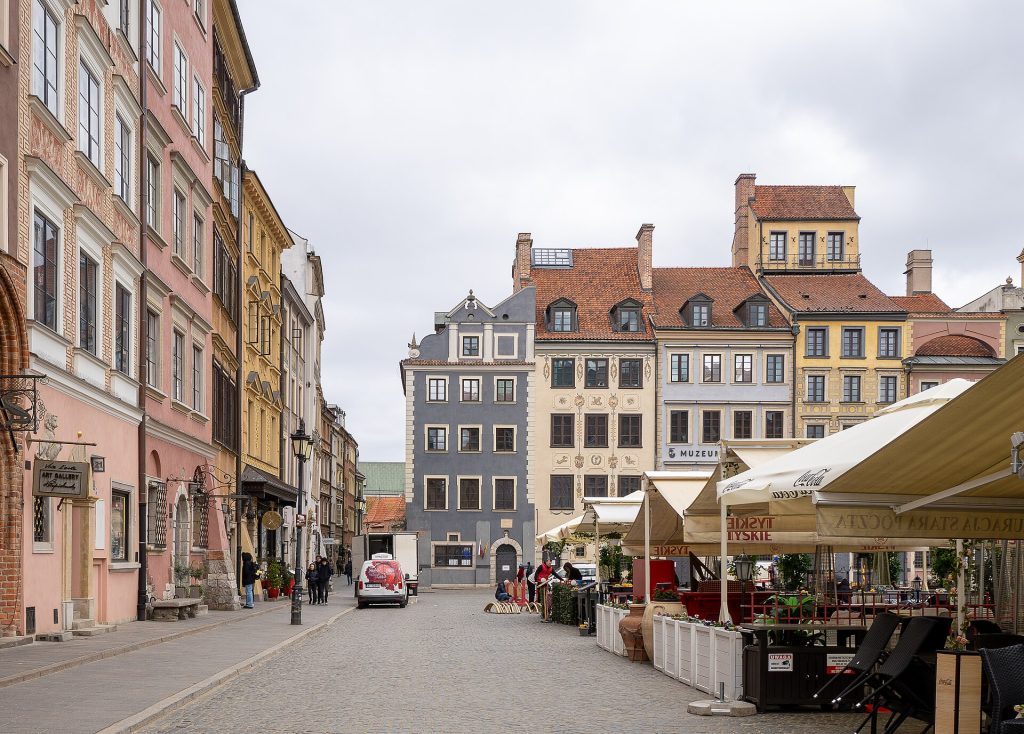
Warsaw was completely destroyed in 1944 and its old town was rebuilt from zero out of paintings; it is now on the UNESCO list, and looking at it that is hard to believe. The Royal Castle, the Market Square and the mermaid statue are in the old town, and the Royal Route starts from there. In Łazienki park free Chopin concerts are given on summer Sundays. The Palace of Culture and Science is Stalin’s gift. The POLIN museum of Jewish history and the Warsaw Uprising museum must be seen, while the Vistula bank is for a walk. Two days is enough for the city, and from Kraków the train takes two and a half hours.
Gdańsk is a Hanseatic city on the Baltic coast. The Long Market and the colourful houses on the Motława waterfront are the city’s calling card, and the Neptune fountain and the amber shops are there too. The Solidarity centre and the Museum of the Second World War give its historical part. Next door the resort of Sopot is known for the longest wooden pier in Europe, and a little further on lies Gdynia. Set aside two days.
Wrocław is known for its hundred bridges and four hundred little dwarf statues, and children love hunting them down. The market square and the Racławice Panorama are its main sights, and the country’s loveliest Christmas market is right here too.
If you have time left, Toruń with Copernicus and gingerbread, the Masurian lakes with summer sailing, and Malbork with Europe’s largest brick castle make the list.
Transport in Poland: PKP Intercity, FlixBus, Bolt
PKP Intercity trains join the cities. The Pendolino takes two and a half hours from Warsaw to Kraków and three to Gdańsk, and bought early the ticket is 10–20 euros. Checking train and bus side by side sometimes turns up a cheaper option. Tickets open thirty days ahead on the site and in the app, and for Zakopane and Auschwitz the regional trains are cheaper.
FlixBus is the best-value alternative: Kraków to Zakopane takes two hours and costs five euros.
Inside the cities Warsaw has two metro lines and Kraków trams, a twenty-four-hour ticket is four euros, and the Jakdojade app sells tickets in every city. Bolt and Uber are cheap in every big city and a ride is 3–6 euros. From the airport into the centre of Kraków the train takes twenty minutes for four euros, and in Warsaw the train from Chopin airport takes twenty-five. A car is needed only for the Masurian and Tatra villages, costs 30–45 euros a day, and makes no sense in the cities.
Pierogi, żurek, milk bars: Polish food and halal
Pierogi are dough filled with potato and cheese, meat or mushrooms, and the most classic version is called «ruskie». They are a big cousin of our düşbərə. Żurek is a sour rye soup served inside a loaf, bigos a cabbage and meat stew, and kotlet schabowy a schnitzel.
Zapiekanka is a pizza baked on a long loaf and is the commonest street food. Oscypek is the smoked sheep’s cheese of the Tatras and is eaten with cranberry. For dessert come pączki doughnuts and Toruń gingerbread.
The «bar mleczny», that is the milk bars, are subsidised canteens left over from the Soviet period, where home cooking comes to 3–5 euros. They still operate in Kraków and Warsaw and fill up with students. Lunch in a restaurant is 8–12 euros and dinner 15–25, which is to say half of Western Europe.
Halal food is easy to find in Warsaw and Kraków, there are Turkish, Arab and Pakistani restaurants, and kebab shops are on practically every corner. Pierogi are made in meatless versions too, while żurek and bigos can contain pork, so ask. The tap water is clean.
Read next: A Polish visa: how to get an e-Konsulat appointment and how to avoid the category mistake
Season and weather
May to September are the ideal months, with the weather at 18–26 degrees. In July-August Kraków is crowded, while in Gdańsk the beach season opens and the Baltic warms to 18–20 degrees. September passes quiet and golden, while October-November is grey, rainy and cheap.
In December the Christmas markets in Kraków, Wrocław and Gdańsk are counted among the loveliest in Europe. In Zakopane people ski from December to March, a day pass is 25–35 euros, and the thermal pools live their finest hours under the snow. In January-February the weather is minus 5–10 degrees.
Among the thermal resorts the Tatra pools take first place. Krynica-Zdrój is a mineral water spa and Ciechocinek is known for its salt towers. Poland’s cheap sanatorium system left over from the Soviet period still works too. Regional and event information is on the Poland Travel portal.
Budget and tickets
In Kraków’s old town a three-star hotel is 60–100 euros and a flat in Kazimierz 50–80. In Warsaw the price is 60–110 euros, in Gdańsk in summer 70–120, and a mountain house in Zakopane comes to 50–90. A hostel is 15–25 euros and the choice in Kraków is very wide.
Entry tickets are cheap. Wawel cathedral is five euros, Wieliczka 25, POLIN ten and Schindler’s factory eight. Entry to Auschwitz is free and with a guide 20 euros. Excluding the flight, a week-long trip fits into 600–900 euros per person, and that is one of the cheapest in all of Schengen.
LOT and AZAL open Baku–Warsaw flights according to the season, while Turkish Airlines flies to Warsaw and Kraków via Istanbul. Along with a ticket to Warsaw, check the direct connection option to Kraków as well. Poland tour packages that fit Kraków, Zakopane and Warsaw into one week settle the Wieliczka and Auschwitz tickets in advance, and in summer that is the biggest advantage.
Frequently asked questions about Poland
How many days does Poland need?
Three days for Kraków, one or two for Zakopane, two for Warsaw — a week in all. With Gdańsk and Wrocław, ten days.
Can you cross to Germany and the Czech Republic on a Polish visa?
Yes, it is a Schengen visa. The bus from Kraków to Prague takes six hours and the train from Warsaw to Berlin five and a half. The visa must be obtained from the main country of the trip, and the category mistake is explained in our visa article.
Which route with a child?
Kraków’s dragon legend and the Wieliczka salt mine interest children greatly. Warsaw has the Copernicus science centre. Zakopane’s thermal pools and the Gubałówka funicular, and in Gdańsk the Sopot beach, are good choices. Auschwitz is not recommended for children under fourteen.
In closing
Poland is a Schengen country giving you history, sea, mountains and thermal pools at half the price of Western Europe, and for the person who gets an e-Konsulat appointment the rest is easy. The visa process is explained on the Poland page, and to build the Kraków and Warsaw route together, fill in the application form.
Note: the prices here are as of the publication date and can change with the season.
