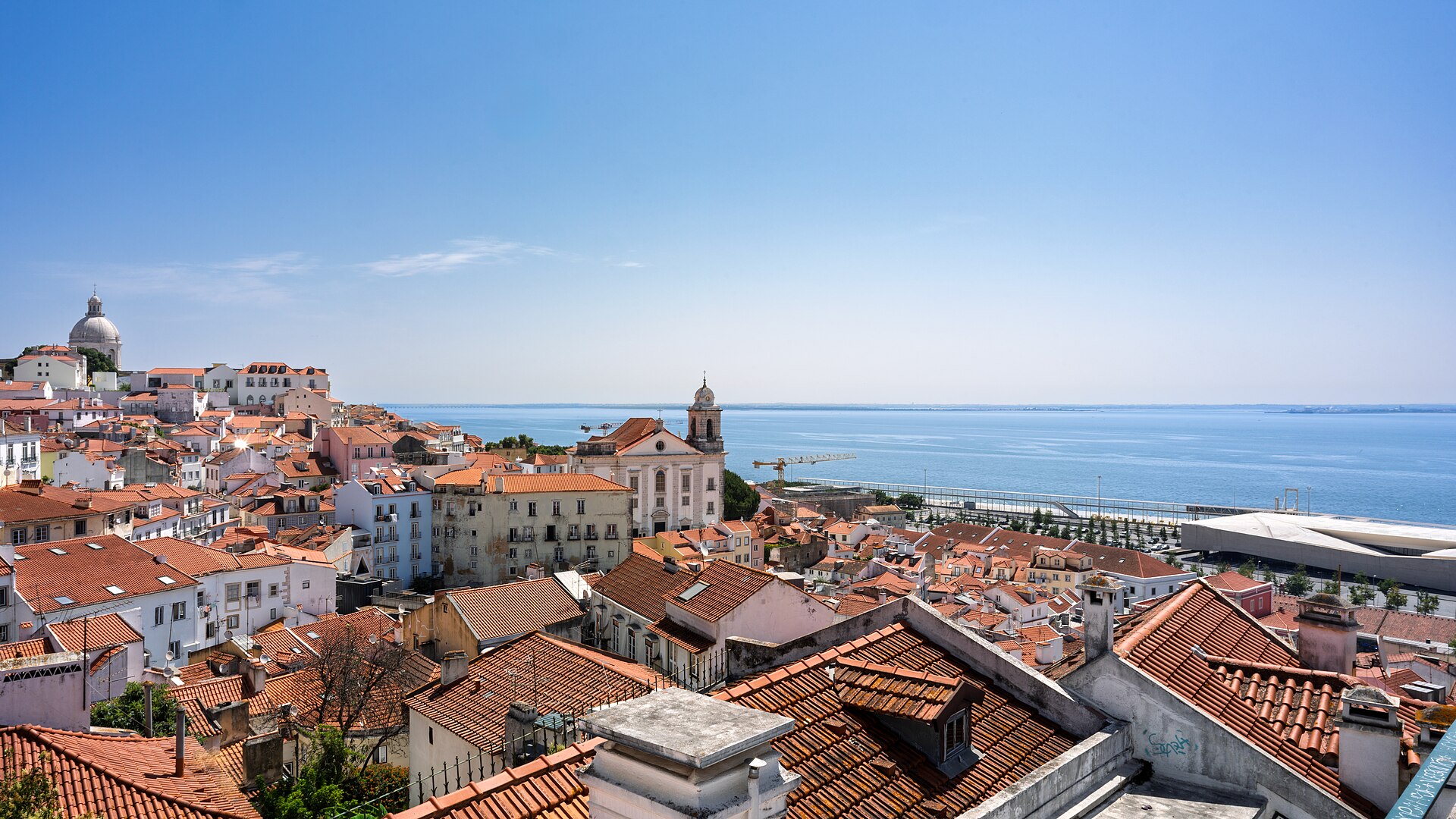
Portugal, at the western end of Europe, is the most loved country of recent years. Lisbon’s yellow trams and tiled façades and the fairytale palaces of Sintra are on one side. Porto is known for its port wine and the Algarve for its golden cliffs. Madeira and the Azores, meanwhile, stand in the middle of the ocean like green volcanoes. The prices are among the lowest in Western Europe, the people are warm and the weather is mild all year. For us there is no embassy in Baku, and the visa is obtained through France at the Capago centre. In this article I have gathered Lisbon, Sintra, Porto and the Algarve. The islands, the transport, the food, the season and the budget are in it too.
Portugal in brief
| Capital | Lisbon |
| Language | Portuguese; English everywhere in tourism |
| Currency | Euro; cards everywhere, cash in the small cafés |
| Visa | Schengen «C» visa, France represents it, the Capago centre in Baku |
| Best time | April–June and September–October; the Algarve May–October |
| Flights | 8–9 hours to Lisbon and Porto via Istanbul; a Madrid connection |
| Daily budget | 90–130 euros at a mid-range level |
Lisbon and Sintra
Lisbon is a city on seven hills looking out over the Tagus, and it takes three days. The narrow streets of the Alfama quarter fill with fado music in the evening. St George’s castle and the Santa Luzia viewing terrace are up above. Get on the yellow tram 28 early in the morning; by midday a queue forms and the pickpockets multiply. Below are Baixa and Commerce Square, while the nightlife is in Chiado and Bairro Alto. In Belém the Jerónimos monastery and the Belém tower are on the UNESCO list, and the Monument to the Discoveries is there too. At the Pastéis de Belém pastry shop, in business since 1837, the queue is long, but it is worth it. Nearby are the LX Factory creative space and the Vasco da Gama bridge.
Sintra is forty minutes from Lisbon by train. The coloured towers of the Pena palace are visible from up on the mountain, and the Regaleira estate has its famous spiral well. The Moorish castle and Cabo da Roca, the westernmost point of Europe, are here as well. Set aside a full day, buy the tickets online and set off early in the morning. Cascais is a seaside resort, while Nazaré is known for its thirty-metre waves in winter. Óbidos is a walled village, and Évora has a Roman temple and a chapel of bones. All of them are day trips.
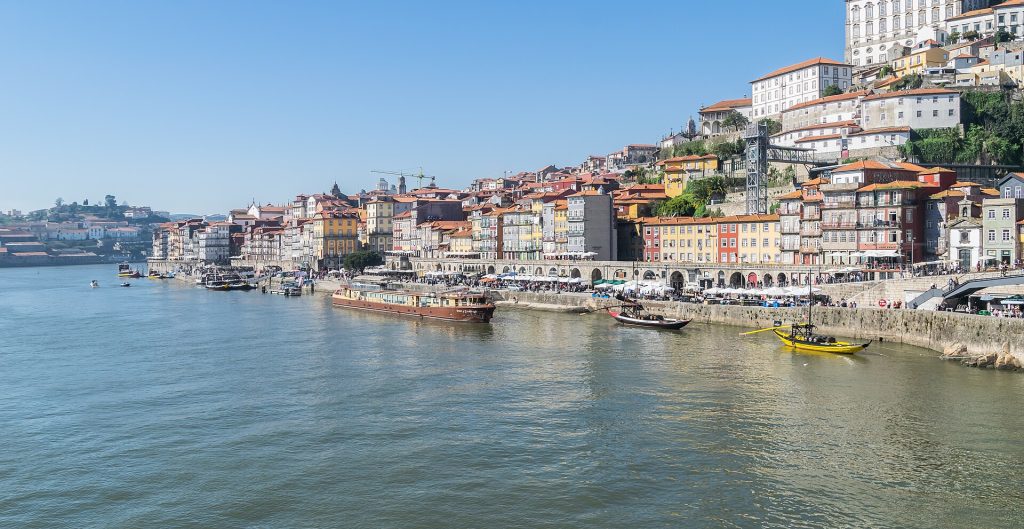
Porto, the Douro, the Algarve, the islands: Portugal outside Lisbon
Porto is three hours from Lisbon by train. On the bank of the Douro the coloured houses of the Ribeira quarter are on the UNESCO list. The Dom Luís iron bridge, the Lello bookshop and the Clérigos tower are close to one another. Be sure to look at the tile panels of the São Bento station. Across the river in Vila Nova de Gaia the port wine cellars with a tasting are 15–25 euros; two or three days. To the Douro valley you go from Porto to Pinhão by train in two and a half hours. Terraced vineyards, a river cruise and the quinta estates await you. If you land in the September harvest, better still.
The Algarve in the south gives you the most beautiful cliff beaches in Europe. Lagos and Ponta da Piedade are the most famous spots, and you enter the Benagil cave by boat or kayak. Albufeira is the resort and Faro the gateway. The season runs from May to October, and the journey from Lisbon is three hours.
Madeira in the Atlantic is called «the island of eternal spring». Its capital is Funchal, and walking along the levada channels is the favourite pastime, with the Cabo Girão cliff there too. The weather stays at twenty degrees all year and the flight takes an hour and a half.
The centre of the Azores is São Miguel. The Furnas volcanic lake and its hot springs, and the two-coloured lakes of Sete Cidades, are here; whale tours are organised on top of that, and the flight takes two and a half hours. On the mainland Coimbra is the university city, while Aveiro is known as «the Venice of Portugal».
Transport in Portugal: CP trains, Viva Viagem, Bolt
On CP trains the Alfa Pendular goes from Lisbon to Porto in three hours, and booked early the ticket costs 10–25 euros; to Faro it is the same three hours. The tickets open at the «promo» price on the CP site sixty days ahead. Seeing the train and bus prices in one search saves time.
In Lisbon the Viva Viagem card covers the metro, the trams, the buses and the Santa Justa lift, and a day ticket is seven euros. The famous tram 28 is 1.5 euros with the card and 3 without. From the airport to the centre the metro takes twenty-five minutes. The train to Sintra leaves from Rossio and the one to Cascais from Cais do Sodré. In Porto the metro works with the Andante card, and there are funiculars and a historic tram as well.
Bolt and Uber are cheap in every city, a ride costs 4–8 euros, and the taxis run on the meter.
A car pays off for the Algarve, the Douro and the Alentejo, and costs 25–40 euros a day. The motorways use electronic tolls, so take a transponder from the hire company, otherwise the fine follows you home. On Madeira and in the Azores a car is essential.
Bacalhau, pastel de nata, sardines: Portuguese food
Bacalhau is salted cod and counts as the national dish; they say there are «365 recipes» for it. In June, at Lisbon’s feast of Saint Anthony, every street is smoking with sardines on the grill.
Pastel de nata is a custard tart, sold in every café for 1.2 euros, and you eat three a day. Caldo verde is a cabbage soup, Porto’s francesinha sandwich and piri-piri chicken should be tried as well, and in the Algarve the cataplana seafood pot is served. For drinks there are port and vinho verde, and for coffee a one-euro «bica».
Know one rule: in every restaurant the bread and olive starter called «couvert» is charged for; if you do not want it, send it back, and then it is not written on the bill.
The «prato do dia» set lunch is 8–12 euros, Lisbon’s Time Out market 12–18 and dinner in a restaurant 20–35, which is to say the cheapest in Western Europe. Halal food in Lisbon is around Martim Moniz square, where there are Bangladeshi, Pakistani and Indian restaurants, while in Porto a few Turkish and Arab places are open. Seafood is found everywhere and the tap water is clean too.
Season and weather
April-June and September-October are the ideal months; in Lisbon the weather is 20–26 degrees, while in the Algarve the sea is at its warmest in September.
In July-August the temperature in Lisbon climbs to 30–35 degrees and the crowds grow, the Algarve hotels reach their most expensive, and Porto stays cooler thanks to the Atlantic breeze.
From November to March it rains, but the weather is 12–17 degrees and this is one of the warmest winters in Europe, while on Madeira it stays at twenty degrees in winter. The Nazaré waves come from October to March.
Know one thing in advance. The ocean water in Lisbon and Porto is 18–20 degrees even in summer, and for someone used to the Caspian that is cold, while in the Algarve the water is twenty-two. Regional and event information is on the Visit Portugal portal.
Budget and tickets
In Lisbon a three-star hotel is 90–140 euros and a flat in Alfama 70–110. In Porto the price is 70–120 euros, in the Algarve in summer 100–180 and on Madeira 80–130. A hostel is 25–40 euros, and the Lisbon tourist tax adds four euros a night.
The entry tickets are cheap. The Pena palace is 20 euros, Jerónimos 12, the Belém tower 8, a port cellar 20 and a Benagil kayak tour 30. Excluding the flight, a ten-day trip fits into 1,100–1,500 euros per person.
Turkish Airlines flies to Lisbon and Porto via Istanbul, and Iberia goes with a Madrid connection. An air ticket to Lisbon has to be bought early for the summer, while flying into Porto and coming down south by train is a comfortable option. Portugal tour packages fitting Lisbon, Sintra, Porto and the Douro valley into one week settle the trains, the palace tickets and the wine tour together, and combining the route with Spain is possible as well.
Frequently asked questions about Portugal
How many days does Portugal need?
Lisbon three, Sintra one, Porto two or three — a week in all. With the Algarve or Madeira, ten to twelve days.
Is Lisbon safe?
It is one of the safest capitals in Europe. The main risk is pickpocketing on tram 28, so hold your bag in front of you, and in Bairro Alto ignore the people offering «drugs» at night — what they sell is fake anyway.
Can it be combined with Spain?
Yes, it is the same Schengen visa. The flight from Lisbon to Madrid is an hour and the bus from Seville to Faro two and a half. The visa is obtained from the country of the main trip.
In closing
Portugal is the cheapest, mildest and warmest-hearted country in Western Europe, and the trams, the port wine and the ocean cliffs fit into one week. The visa process is explained on the Portugal page, and to build the Lisbon and Porto route together, fill in the application form.
Note: the prices here are as of the publication date and can change with the season.
