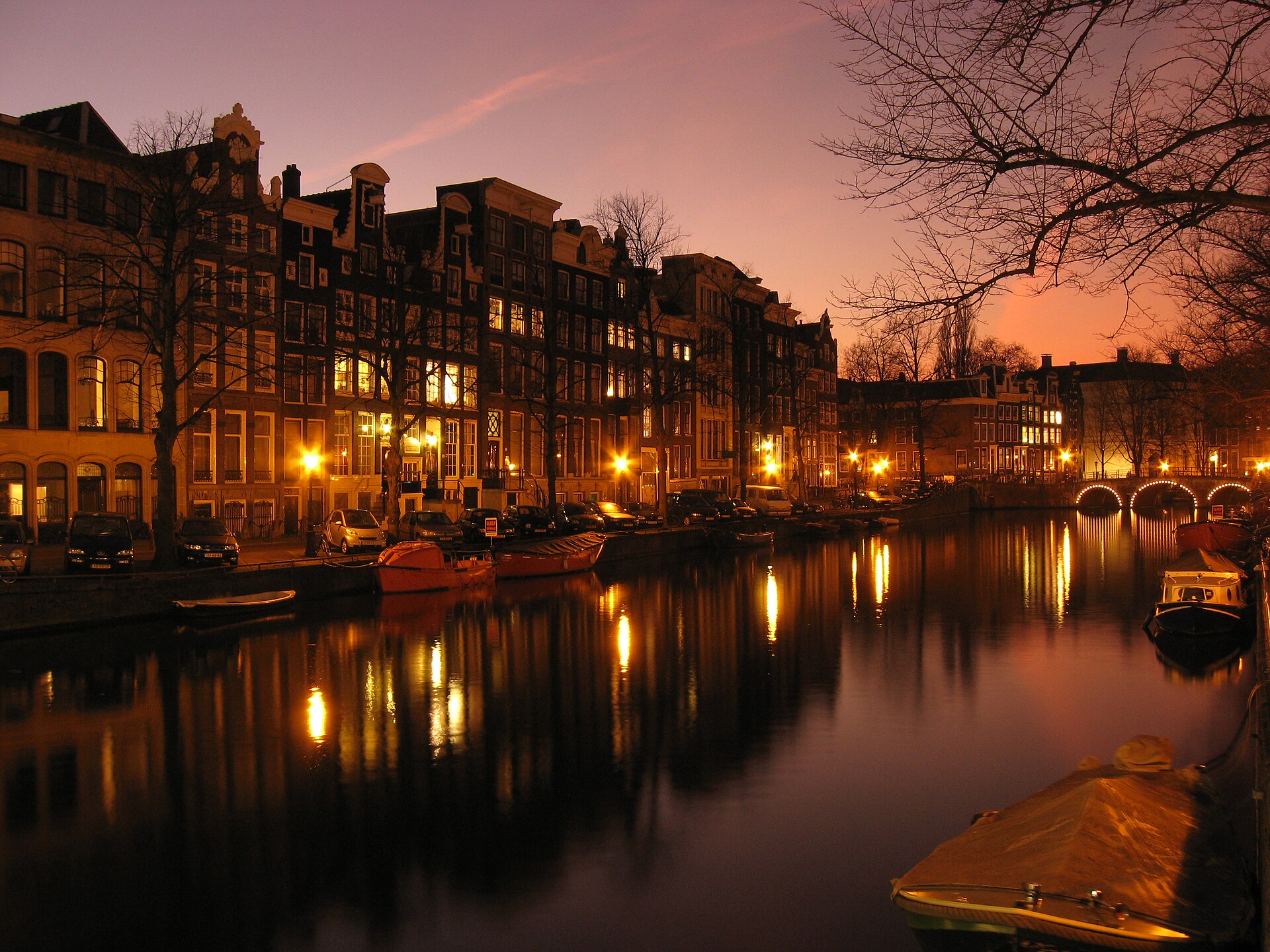
The Netherlands is small, flat and one of the best organised countries in the world. Amsterdam’s canals, the millions of tulips that open in April-May and the windmills are the country’s calling card. Rotterdam stands out for its architecture of the future, and bicycles are everywhere — even the ministers cycle to work.
For us the visa is obtained through the Capago centre, and the Keukenhof season is one of the most popular reasons for a Schengen trip. The country is expensive, but being able to reach everywhere by train in an hour lets you see the whole country from one base. Below I have gathered Amsterdam, Keukenhof and the windmills, and the other cities, the transport, the food, the season and the budget.
The Netherlands in brief
| Capital | Amsterdam; the government is in The Hague |
| Language | Dutch; everybody’s English is excellent |
| Currency | Euro; cards everywhere, card only in some places |
| Visa | Schengen «C» visa, through the Capago centre in Baku |
| Best time | April–May for the tulips, June–September; the lights in December |
| Flights | 7–8 hours to Amsterdam via Istanbul |
| Daily budget | 150–200 euros at a mid-range level |
Amsterdam: canals, museums, the Anne Frank House
Amsterdam is three days and is seen on foot, along the canals. The seventeenth-century canal ring is on the UNESCO list. The Jordaan quarter, with its narrow streets and cafés, is a place to walk. Dam Square and the Royal Palace are in the centre. On Museum Square the Rijksmuseum holds Rembrandt’s «Night Watch», and the Van Gogh museum stands beside it. Buy the tickets online and choose a time. The Anne Frank House tickets go on sale on the site six weeks ahead and sell out; there is no other way, and plenty of people ask «any tickets?» at the door — the answer is always no.
Vondelpark is the city’s largest park, and a canal boat tour is 20 euros. The Albert Cuyp market and the De Pijp quarter should be seen too. The red light district is in the centre and photography is forbidden. Twenty minutes from the city, Zaanse Schans has windmills and wooden houses, free, half a day, and the fishing villages of Volendam and Marken. Bicycle hire is 15 euros a day, the cycle lanes and cyclists’ rights are taken seriously, so do not step onto a cycle lane as a pedestrian — by the time you hear the bell it is too late.
Keukenhof, Rotterdam, The Hague, Delft: the Netherlands outside the capital
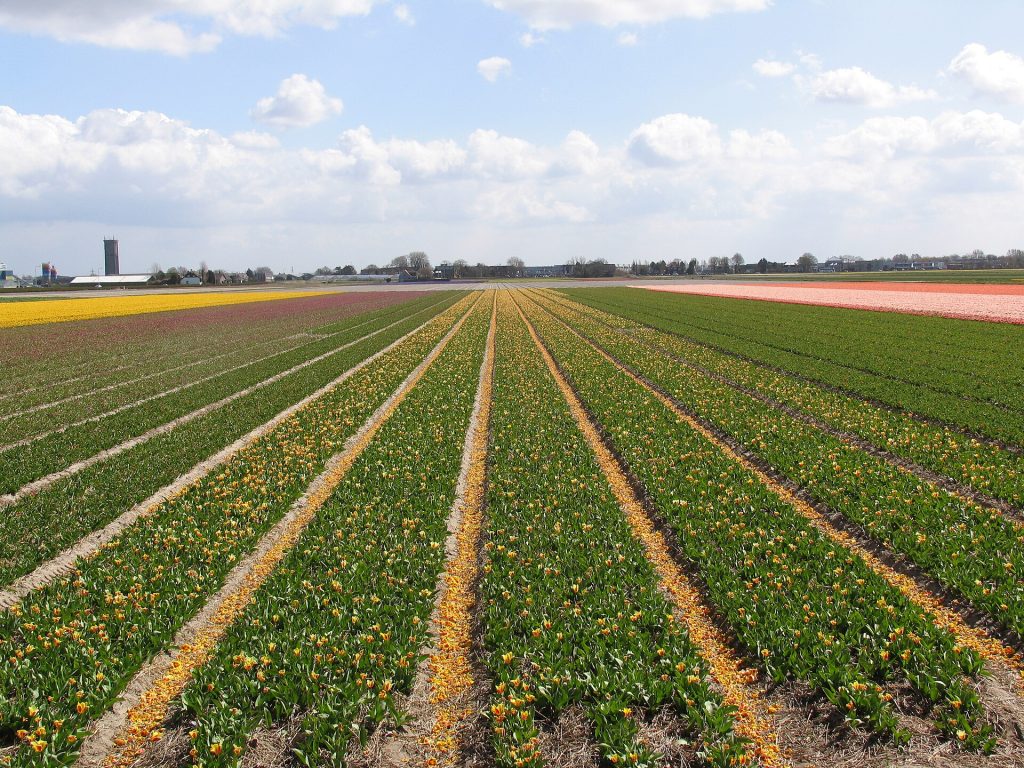
Keukenhof in Lisse is the largest flower garden in the world, where seven million bulbs are planted. It is open only from mid-March to mid-May, and the peak is the second half of April. A ticket online is 20 euros. You reach it from Amsterdam in forty minutes on the Keukenhof Express bus. See the tulip fields around it by bicycle. The 27th of April is King’s Day, when the whole country dresses in orange and goes out into the street. Rotterdam is a modern city built from scratch after the war. The Markthal market hall, the Cube houses, the Erasmus bridge and the Depot museum are its sights. It is forty minutes from Amsterdam by train. Kinderdijk’s nineteen windmills are on the UNESCO list, and you go there from Rotterdam by water bus.
The Hague is the seat of government. The Mauritshuis museum holds Vermeer’s «Girl with a Pearl Earring», and the Binnenhof is nearby. Scheveningen beach and its pier are here too. Delft, with its blue ceramics and canals, is like a little Amsterdam. Utrecht has canal-cellar cafés and the Dom tower. Giethoorn is a car-free canal village called «the Venice of the North», two hours from Amsterdam. Every city is within an hour by train, which is to say the hotel is in one place and the country is everywhere.
Transport in the Netherlands: NS trains, the OV-chipkaart, the bicycle
The NS trains are the country’s backbone and run every ten or fifteen minutes. From Amsterdam to Rotterdam takes forty minutes and costs 18 euros, to The Hague fifty minutes and 13, and from Schiphol airport to Central Station fifteen minutes and 5.
The ticket is paid for by touching a contactless bank card in and out; an OV-chipkaart or OVpay works too. A paper ticket is expensive, and those who forget to touch out pay the full fare.
In Amsterdam there are the GVB trams and metro; a twenty-four-hour ticket is 9 euros and a seventy-two-hour one 21, and you can travel with a contactless card as well. The bicycle is the main transport in every city, and to take a bicycle on the train you buy an extra ticket. On the intercity trains the price changes by the hour, so compare the options.
A car is not needed and is expensive; parking in Amsterdam is 7 euros an hour. Uber works and taxis are expensive. The Keukenhof Express, the Zaanse Schans buses and the Kinderdijk water bus cover the tourist routes.
Stroopwafel, herring, rijsttafel: Dutch food and halal
Dutch cooking is simple, but its snacks are famous. The stroopwafel is a warm caramel waffle sold at the market, and bitterballen are fried meat balls. Haring is raw herring, served at a street stall with onion and eaten by holding it by the tail. Poffertjes are little pancakes and kibbeling is fried fish. Be sure to buy Gouda and Edam cheese.
Rijsttafel, left from the Indonesian heritage, is a table of dozens of small dishes, and in Amsterdam there is Surinamese food too.
Lunch in a restaurant is 15–20 euros and dinner 30–50. The FEBO vending kiosks give you a cheap snack, while the Albert Heijn supermarket saves the budget.
Halal food is very easy, because the country has large Turkish and Moroccan communities. In Amsterdam halal restaurants and kebab shops line the De Pijp and western districts, in Rotterdam they are everywhere, and fast food with a halal sign is found too. The tap water is clean and the tip is included in the bill.
Read next: A Netherlands visa: Capago, the confirmed booking requirement and the Keukenhof season
Season and weather
April-May is the tulip season. Keukenhof is open, the weather stays at 12–18 degrees, and the hotels in Amsterdam live their most expensive time, so book months ahead.
From June to August the weather is 20–25 degrees, the days grow long and the canalside terraces open, while July passes changeably. September is quiet and still warm.
From October to March the weather turns grey, rainy and windy, and in return the museums are empty. In December the Amsterdam Light Festival is held on the canals and Christmas markets are set up in the city.
Rain is possible all year, so a jacket is always needed. An umbrella does not work because of the wind, and the Dutch do not even carry one. The Keukenhof dates and the events calendar are on the Holland.com portal.
Budget and tickets
Amsterdam is one of the most expensive cities in Europe. A three-star hotel is 150–220 euros and a four-star 220–350, with a 12.5 per cent tourist tax on top. Staying in Haarlem, Utrecht or Rotterdam is 30–40 per cent cheaper and only 20–40 minutes away by train; that is what I would do. A hostel bed starts from 40–60 euros.
The museums are expensive. The Rijksmuseum is 22 euros, Van Gogh 22, the Anne Frank House 16, Keukenhof 20 and a canal tour 18, while the twenty-four-hour I Amsterdam card is 65. Excluding the flight, a five-day trip fits into 900–1,300 euros per person.
Turkish Airlines flies to Amsterdam via Istanbul, and an air ticket to Amsterdam has to be bought early in the tulip season. Flying to Brussels or Düsseldorf and coming on by train is the alternative. For those touring Amsterdam, Keukenhof, Rotterdam and Brussels on one route, Netherlands and Belgium tour packages settle the museum tickets and the train legs in advance, and for April-May it is the most asked-about option.
Frequently asked questions about the Netherlands
How many days does the Netherlands need?
Amsterdam three days, Keukenhof or Zaanse Schans one, Rotterdam or The Hague one — five days in all. With Belgium, eight days.
What is the best date for Keukenhof?
Between the 10th and 30th of April the tulips are at their peak both in the fields and in the garden. In mid-March only inside the garden, in mid-May the last days; go in on a weekday at eight in the morning.
Which route with a child?
The NEMO science museum and the Artis zoo are in Amsterdam, with the Zaanse Schans windmills nearby. The Madurodam miniature city is in The Hague. The Efteling fairytale park is one of the best in Europe and is an hour and a half from Amsterdam.
In closing
The Netherlands, seen whole by train from one base, is the most compact destination for a Schengen trip with its tulips, canals and museums, and staying outside Amsterdam and booking tickets early keeps the budget under control. The visa process is explained on the Netherlands page, and to build the Keukenhof or Benelux route together, fill in the application form.
Note: the prices here are as of the publication date and can change with the season.
