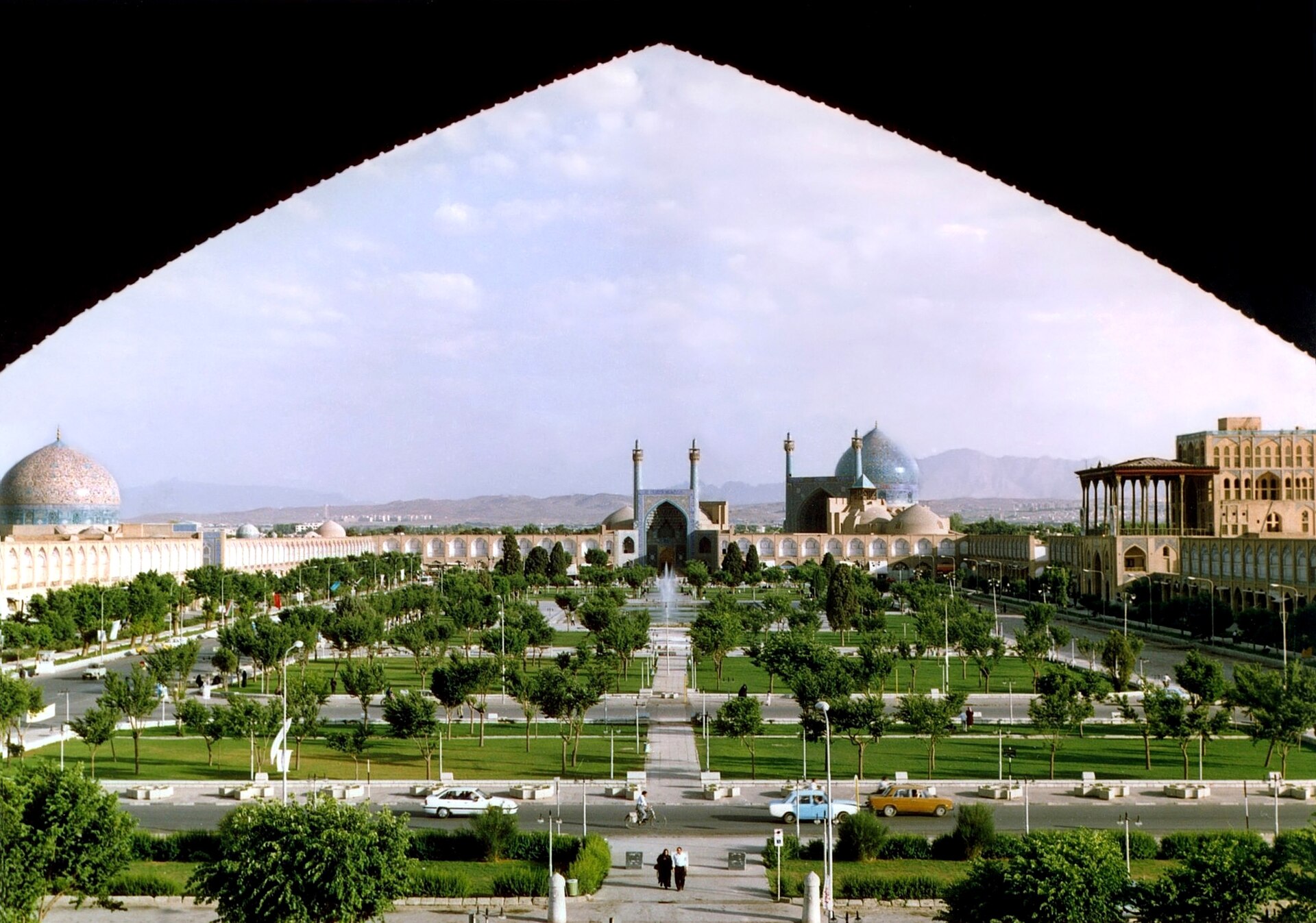
Iran is visa-free for citizens of Azerbaijan for fifteen days, and you go there from Baku either by air or by car through the Astara crossing. For most of us this country means the Ardabil bazaar and the Sarein hot springs: we go, we come back, and the trip ends there. Yet the real treasure is in the south — Isfahan’s turquoise domes, Shiraz’s mosque of coloured glass, Persepolis and the brick city of Yazd.
The trip has its difficulties too. Bank cards do not work, the internet is restricted, and there is a dress code for women. Below I have gathered the route, the question of money and internet, transport, the spa towns and the budget.
Iran in brief
| Capital | Tehran |
| Language | Persian; Azerbaijani Turkish everywhere in Tabriz and Ardabil |
| Currency | Rial; prices are quoted in «toman», 1 toman = 10 rials; cash only |
| Visa | 15 days visa-free for citizens of Azerbaijan |
| Best time | Late March–May and September–November |
| Getting there | Baku–Tehran flight 1.5 hours; Ardabil 3 hours via the Astara crossing |
| Daily budget | 40–60 dollars at a mid-range level |
Money, internet and rules: before you go to Iran
International bank cards do not work in Iran, and there is no exception to that. You have to take the whole budget in cash dollars or euros. Change money at official exchange offices — on Ferdowsi street in Tehran, for instance — because the airport and bank rates are several times worse than the market.
Prepaid local debit cards for tourists are also sold and work well for hotels and taxis. Learn one more subtlety in advance: prices are quoted in toman while the banknotes say rial. Drop one zero from the figure you are told and you have it right — everyone gets confused on the first day.
Instagram, WhatsApp and Telegram are blocked, so install a VPN while you are still at home; downloading one there is harder. A local SIM card is bought with a passport and costs little.
The dress code applies in public. Women wear a headscarf with clothing below the knee and long sleeves, and men do not wear shorts. Do not photograph government buildings or military sites; that is taken very seriously. Before travelling, also check the Ministry of Foreign Affairs’ advice on the regional situation.
Isfahan, Shiraz, Yazd: Iran’s classic route
Tehran is a day or two. The Golestan palace, the Milad tower, the Grand Bazaar and the Jewellery museum fit comfortably into that, and then it is time to head south.
They call Isfahan «half the world», and stepping onto Naqsh-e Jahan square makes the reason clear, because it is one of the largest squares on earth. The domes of the Shah mosque and the Sheikh Lotfollah mosque look onto it, and the Ali Qapu palace is there too. In the evening go to the Si-o-se-pol and Khaju bridges; when the lights come on people sit under the arches and sing. The Armenian quarter of Jolfa, with its cafés, earns the city a third day.
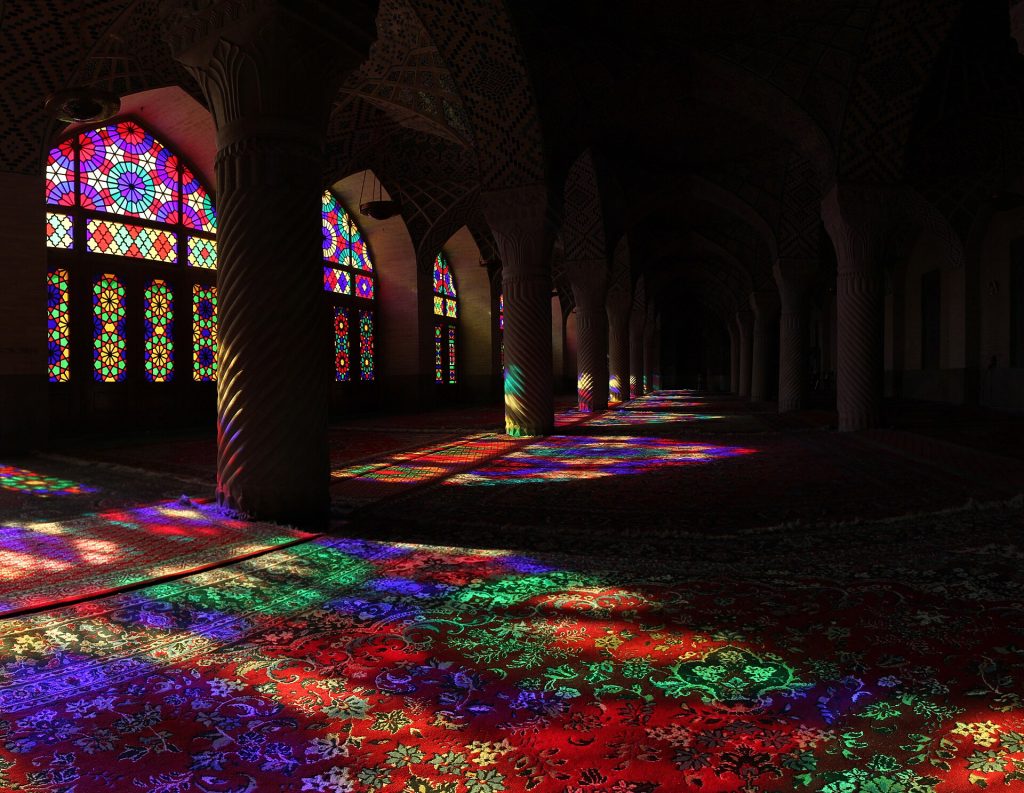
Shiraz is the city of poets, with the tombs of Hafez and Saadi. Nasir al-Mulk is called the «pink mosque» and astonishes with its coloured glass in the morning sun. The Eram garden is worth a walk too. An hour from the city stands Persepolis, capital of the Achaemenid empire. Set aside two or three days. Yazd, on the desert’s edge, is a day or two of brick lanes, wind towers and the Zoroastrian fire — watch the sunset from a rooftop. Kashan, with its historic houses and rosewater season, is on the Tehran–Isfahan road. Kish island in the Persian Gulf is shopping and beaches.
Tabriz, Ardabil and the Sarein hot springs
For those driving through the Astara crossing, the north-west is a route of its own. Ardabil takes half a day with the Sheikh Safi mausoleum on the UNESCO list and its bazaar. Sarein, thirty kilometres away, is the spa town our people know best.
At the foot of the Sabalan volcano there are dozens of hot mineral springs, considered therapeutic for joint, skin and nerve conditions. Gahve-Suyi and Sabalan are the largest complexes; entry is 2–4 dollars and a hotel night 20–40. In summer the place fills with people from Baku and you hear Azerbaijani on the street at every step.
Tabriz takes two days with the world’s largest covered bazaar, the Blue Mosque and El Gölü park, and Kandovan, an hour away, is a village carved into rock. On the Caspian shore, Anzali and Ramsar are green and humid, and Ramsar is known for its thermal springs. In this region Azerbaijani Turkish works everywhere, so no interpreter is needed.
Transport in Iran: flights, VIP buses, Snapp
Domestic flights are very cheap. Tehran to Shiraz takes an hour and a half and the ticket is 30–50 dollars, bought through a local site or agency because foreign cards do not work.
VIP buses have twenty-five seats that recline. Tehran to Isfahan takes five hours and costs just 5–8 dollars; Isfahan to Shiraz is six hours, and the night service saves you a day. The train is comfortable on the Tehran–Yazd and Tehran–Tabriz routes.
In the cities the Snapp app works — Iran’s Uber — and a twenty-minute ride comes to 1–2 dollars; the app is in English and payment is cash. The Tehran metro has seven lines, a ride is under ten cents and there are separate carriages for women. Drivers are required to have a temporary vehicle import document at the Astara crossing, and fuel is among the cheapest in the world.
Persian cuisine
Chelo kebab is the mainstay of every restaurant: kebab laid over saffron rice, with koobideh and barg the two main kinds. Ghormeh sabzi is a stew of greens and beans, fesenjan is chicken in pomegranate and walnut sauce, and dizi is lamb with chickpeas in a stone pot.
Dizi has its own ritual: first you drink the broth with bread, then you mash and eat the rest — the waiter usually comes over and shows you. Tabriz’s köfte and Ardabil’s halva are the flavours closest to our own kitchen. Saffron ice cream with faloodeh is the sweet of Shiraz, and tea starts every meeting, served with rock sugar.
Prices are low: lunch in a restaurant is 3–6 dollars and dinner in a good place 10–15. The tastiest option is street food and bazaar canteens. Everything is halal, alcohol is banned, and tap water is drunk in the cities, though bottled water is easier.
Read next: Do you need an Iran visa? 15 days visa-free, the Astara crossing and Iran’s own rules
When to go to Iran, and what it costs
Late March to May and September to November are ideal, with 20–28 degrees in the central cities. During Novruz week, around the twenty-first of March, the whole country takes to the road, hotels fill and museums close, so plan for a week after the holiday.
In summer Isfahan and Shiraz climb to 38–40 degrees and Yazd is hotter still, while Sarein, Tabriz and the Caspian shore stay comfortable. Winter is snowy in Tehran and mild in Shiraz. During Muharram and Ramadan restaurants are either closed by day or working behind a curtain.
The budget is the nicest part of this route. A three-star hotel is 25–45 dollars, and boutique hotels opened in the historic houses of Kashan and Yazd are 40–70; museum tickets are 2–5 dollars. Excluding the flight, a ten-day trip fits into 400–700 dollars per person, which is the cheapest option in the whole region.
AZAL and Iranian airlines fly from Baku to Tehran, and tickets to Tehran get more expensive around Novruz. For anyone wanting to see Isfahan, Shiraz and Yazd on one route, Iran tour packages settle the cash, the domestic flights and the guide together. Regional information is on the Visit Iran portal.
Frequently asked questions about Iran
Are 15 days enough for a trip to Iran?
Yes. Tehran two days, Kashan one, Isfahan three, Yazd two, Shiraz three — the classic eleven-day route. Sarein is a separate trip of three to five days.
Does an Iranian stamp in the passport cause problems?
For the US ESTA programme yes, but citizens of Azerbaijan get a US visa anyway. For Schengen and other visas the stamp is no obstacle.
What do you need for Sarein?
A foreign passport, cash, a swimming costume and a swimming cap. The pools work separately for men and women or in alternating sessions, and a hotel’s own pool is more comfortable.
In closing
Iran is a neighbour that needs no visa, costs very little and holds world-class cities like Isfahan and Shiraz. For anyone ready for cash, a VPN and the dress code, this country is far bigger than the Sarein bazaar. The entry rules are gathered on the Iran page, and to plan the route and the spa stay together, fill in the application form.
Note: the prices here are as of the publication date and can change with the exchange rate.
