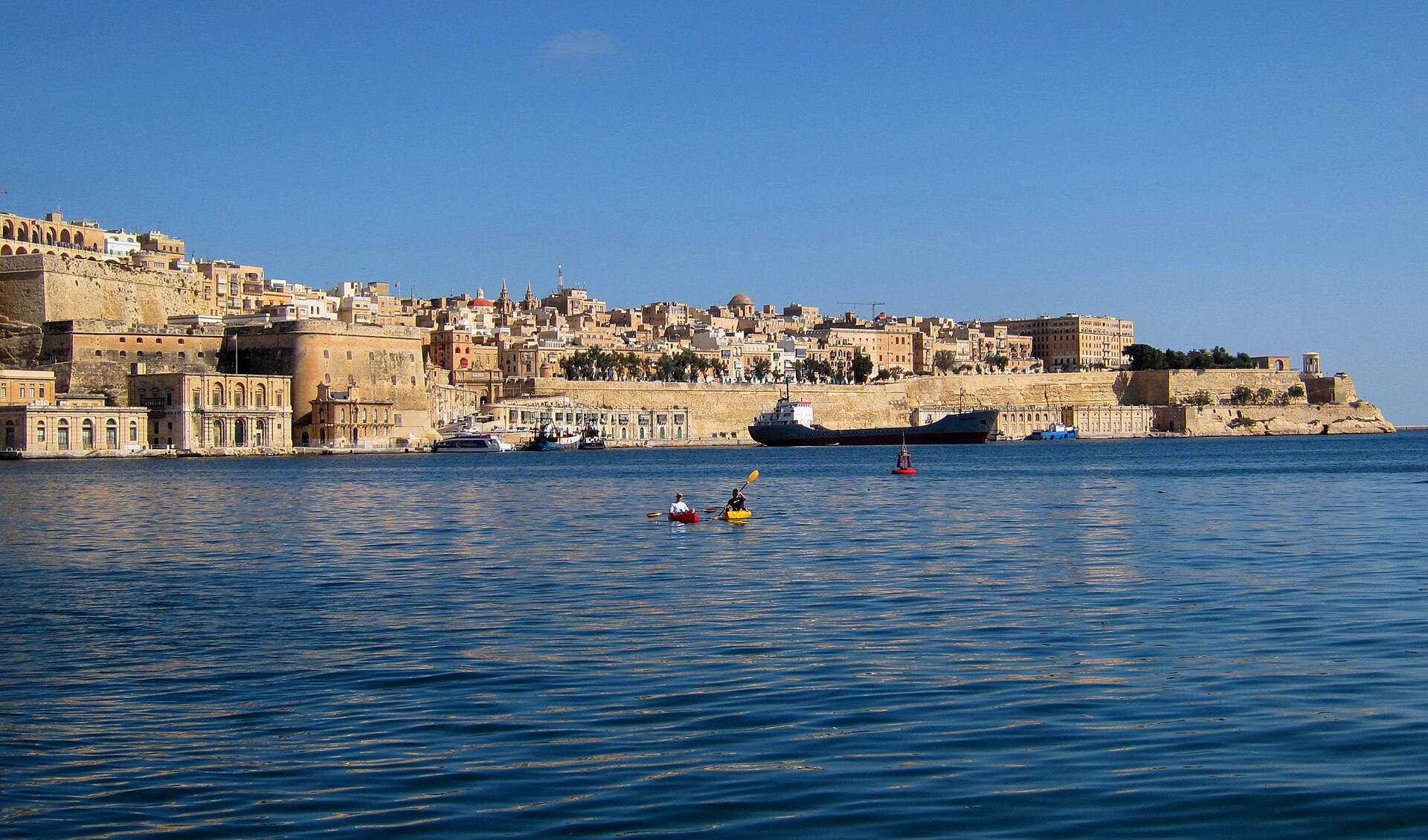
Malta is three small islands in the middle of the Mediterranean and holds the densest history in Europe. Seven-thousand-year-old temples, Valletta founded by the crusading knights and Mdina with its Arab traces all fit on one island. The castles where «Game of Thrones» was filmed are here too. The turquoise Blue Lagoon on the island of Comino is a reason in itself. For us Malta is known from two sides: as a Schengen trip and as English language courses. The island is toured in its entirety by bus and is among the cheapest Schengen countries. In this article I have gathered Valletta, Mdina and Gozo. The beaches, transport, food, the season and the budget are here too.
Malta in brief
| Capital | Valletta, Europe’s smallest capital |
| Language | Maltese and English, both official |
| Currency | Euro; cards everywhere |
| Visa | Schengen «C» visa, through the representing embassy in Baku |
| Best time | April–June and September–October; the sea stays warm into November |
| Flights | 6–7 hours to Malta via Istanbul; Rome and Vienna connections |
| Daily budget | 90–130 euros at a mid-range level |
Valletta, the Three Cities and Mdina
Valletta is a sixteenth-century knights’ city on the UNESCO list. It is barely a kilometre long and is walked in a day.
St John’s Co-Cathedral is golden baroque inside and holds Caravaggio’s largest painting; entry is 15 euros. From outside it looks like a plain building, but stepping in stops you where you stand.
The Upper Barrakka Gardens open onto a panorama of the Grand Harbour, and a cannon is fired every day at noon. The Grandmaster’s Palace and Republic Street are in the centre, and Renzo Piano’s new city gate and Parliament building stand at the entrance to the city.
Across the harbour stand the Three Cities: Birgu, Senglea and Cospicua. You cross by ferry or on a dgħajsa boat for two euros. This was the knights’ first capital and there are few tourists; in Birgu’s narrow lanes the locals still sit in their doorways.
Mdina, in the middle of the island, is called the «Silent City». It is a walled medieval capital with just three hundred residents — go in the evening, by lantern light. Next door in Rabat are St Paul’s grotto and the catacombs.
Sliema and St Julian’s are the seaside districts of hotels, restaurants and language schools, and the ferry to Valletta takes ten minutes.
Gozo, Comino, the beaches: Malta at sea
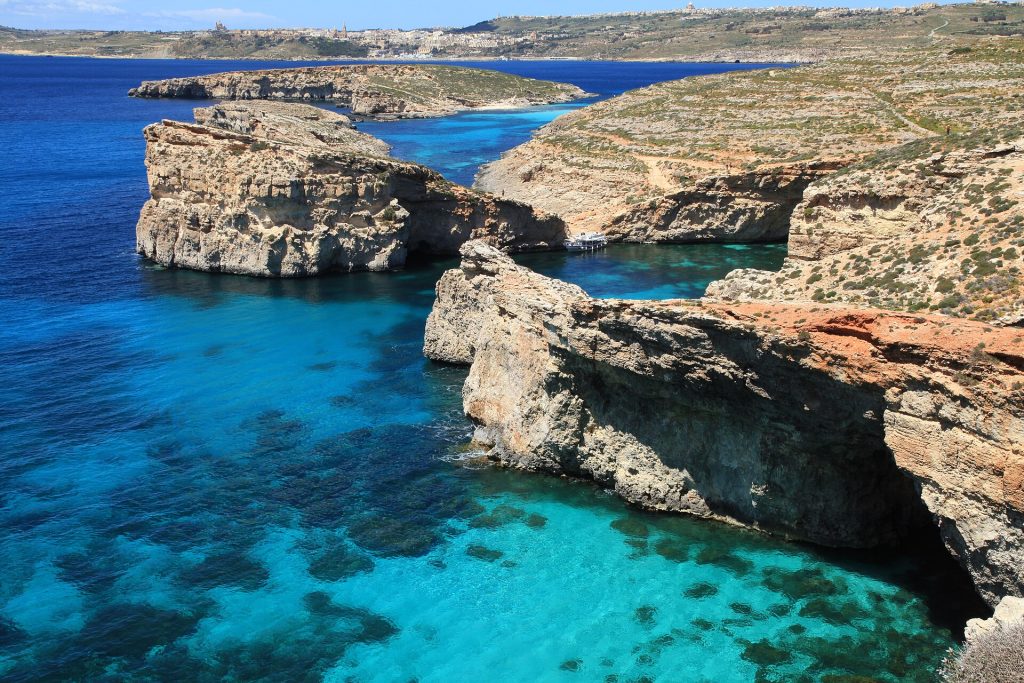
Comino is a small uninhabited island between Malta and Gozo, and the Blue Lagoon is the reason to go: turquoise water over a white sandy bed. In summer it fills with boats after nine in the morning, so either take the first boat or come in May or October; a boat from Sliema or Ċirkewwa is 15–25 euros. Gozo is twenty-five minutes by ferry and is quieter and more rural. The Citadel in Victoria and the five-and-a-half-thousand-year-old temples of Ġgantija are here. Ramla is a red sand beach. In Dwejra bay the Azure Window collapsed in 2017, but the coast is beautiful still. Look at the village of Xlendi too. A day is enough, but a night is better.
Malta’s beaches vary. Golden Bay and Għajn Tuffieħa are sandy, and Mellieħa is shallow and good for families. St Peter’s Pool is rocky, and you reach the Blue Grotto by boat. In the north, Popeye Village survives as a film set. Marsaxlokk in the south, with its colourful luzzu boats and Sunday fish market, is the most photographed village. The Ħaġar Qim and Mnajdra temples are older than the Egyptian pyramids — hard to believe, but so it is.
Getting around Malta: Tallinja buses, ferries, driving on the left
Malta Public Transport buses cover the whole island. From the central terminus in Valletta you can reach anywhere; a single ticket is two euros in summer, and the Tallinja Explore card is twenty-one euros for seven days unlimited. The X routes run from the airport. In summer the buses are full and late, so set out early in the morning or you will wait half an hour at a stop at midday.
Ferries are cheap. Valletta to Sliema and the Three Cities is two euros, the Gozo ferry from Ċirkewwa five, and the fast ferry from Valletta takes forty-five minutes. Boat trips to Comino and the Blue Lagoon are bought separately; catch the morning departure and you will see the lagoon empty.
Bolt and eCabs taxis cost 8–15 euros, and twenty from the airport to Sliema. Car hire is 25–40 euros a day; traffic is on the left, roads are narrow and parking is hard, so a car mainly pays off for Gozo, and an Azerbaijani licence is accepted. The island is forty-five minutes end to end, which makes Malta one of the rare countries you can tour entirely on foot and by bus.
Pastizzi, fenek, ftira: the Maltese kitchen
Pastizzi are buttery pastries filled with ricotta or peas. Sold on every corner for fifty cents, they are the island’s symbol, and one eats three a day.
The national dish is fenek, rabbit stew. Ftira is a country bread served with tuna, olives and tomato, and Gozo cheese is called ġbejniet. Lampuki fish is caught in the autumn. Braġioli are beef rolls, timpana is a pasta pie, and for sweets comes imqaret, a date pastry. Kinnie is an orange-and-herb drink; the taste is odd, but the locals love it.
The cuisine is a mixture of Italian, Arab and British, with pizza and pasta everywhere. Lunch in a restaurant is 12–18 euros, dinner 25–40, and fish at Marsaxlokk 20–30. Halal food is found in the Turkish, Arab and Pakistani restaurants of St Julian’s and Sliema, while seafood and vegetarian pastizzi are everywhere, and ftira is made without meat too. The tap water tastes salty, so buy bottled.
Read next: Malta visa: the representing embassy, the language course documents and the 35 euro fee
Season and Malta’s language courses
April–June and September–October are the ideal months, with 22–28 degrees, and the sea stays above twenty degrees from May to November. In July and August the temperature climbs to 32–35, the resorts and the Blue Lagoon fill up and prices reach their peak.
In winter it is 12–17 degrees and windy, but sunny. Valletta and Mdina stay quiet, hotels drop to half price, and Carnival is held in February.
Language courses are an industry of their own in Malta. There are dozens of schools in St Julian’s and Sliema; a two-week course is 400–700 euros, and 900–1400 with accommodation. The main document for the visa is the school’s acceptance letter, and about half the people going from Baku go for exactly this reason. Event and ferry information is on the Visit Malta portal.
Budget and tickets
A three-star hotel in Sliema is 70–110 euros in summer, a boutique hotel in Valletta 120–200, and a farmhouse on Gozo 80–130; a hostel is 25–35.
Entry tickets are cheap. The cathedral is 15 euros, Ħaġar Qim 10 and the Comino boat 20. Excluding the flight, a week-long trip fits into 700–1000 euros per person.
Turkish Airlines flies to Malta via Istanbul. When looking for a ticket to Malta, check the Ryanair option via Rome and Catania too. For anyone touring Malta and Sicily on one route, Malta tour packages settle the Gozo, Comino and Valletta programme together.
Frequently asked questions about Malta
How many days does Malta need?
Valletta and the Three Cities two days, Mdina and the south one, Gozo and Comino two — five days in all. A week with a beach holiday.
Can you cross to Italy on a Maltese visa?
Yes, it is a Schengen visa. The ferry to Sicily takes two hours and the flight to Rome an hour and a half. The visa is taken from the main country of the trip.
Which beach with children?
Mellieħa bay is shallow and sandy, and Golden Bay and Ramla are sandy too. The Sliema and Valletta shore is rocky. Popeye Village and the Splash water park are for children.
In closing
Malta is a Schengen country that gives you seven thousand years of history, a knights’ capital and the Blue Lagoon on one small island for the price of a bus ticket, and for those going on a language course, work and holiday are in the same place. The visa process is explained on the Malta page, and to build the Valletta and Gozo route together, fill in the application form.
Note: the prices here are as of the publication date and can change with the season.
