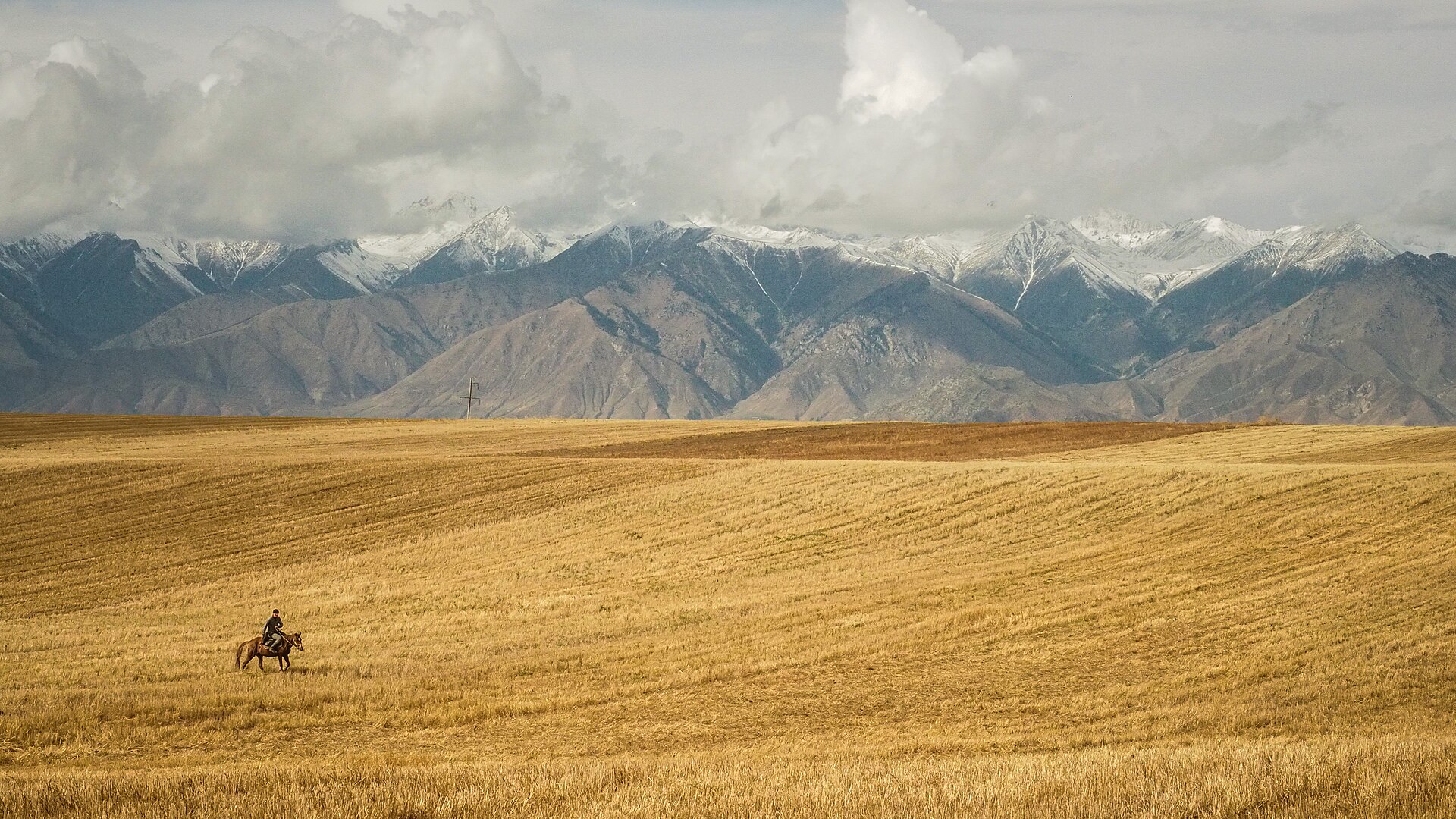
Kyrgyzstan is the Switzerland of Central Asia, but at a tenth of Switzerland’s price. Ninety per cent of the territory is mountains, Issyk-Kul is the world’s second largest mountain lake, and spending the night in a yurt and riding a horse on the Son-Kul plateau is still not tourism but the way people live. For us there is no visa, AZAL flies direct from Baku to Bishkek, and there is no language problem — Kyrgyz is close to ours. In this article I have gathered Bishkek, Issyk-Kul, Karakol and the yurt camps. The hot springs, the transport, the food, the season and the budget are here too.
Kyrgyzstan in brief
| Capital | Bishkek |
| Language | Kyrgyz and Russian; Kyrgyz is close to Azerbaijani |
| Currency | Som (KGS), 1 dollar ≈ 87 som; cards in Bishkek, cash in the villages |
| Visa | 90 days visa-free for citizens of Azerbaijan |
| Best time | June–September for the mountains and the lake; Karakol skiing December–March |
| Flights | Baku–Bishkek direct, AZAL, 4 hours |
| Daily budget | 40–70 dollars at a mid-range level |
Bishkek and Ala-Archa
Bishkek is a green, Soviet-planned and quiet capital, and one day is enough for it. Ala-Too square and the Manas statue are the centre of the city, and go to the Osh bazaar for fruit, kurut and kumis. The State History Museum and Panfilov park are nearby, and spend the evening in the cafés of Chuy avenue.
Forty minutes from the city, Ala-Archa national park is a gorge running between four-thousand-metre peaks. There is a half-day hike to the Ak-Sai waterfall, and you picnic on the way. This is Bishkek’s favourite weekend place, and the return taxi is 15–20 dollars.
The Burana tower at Tokmok is an eleventh-century minaret with stone balbals standing around it, and it is seen as a stop on the road to Issyk-Kul. Bishkek is linked to Almaty by a four-hour bus, which means combining the two countries in one trip is easy.
Issyk-Kul, Karakol, Son-Kul: the mountains of Kyrgyzstan
Issyk-Kul is a salty lake a hundred and eighty kilometres long, at one thousand six hundred metres, that does not freeze in winter, and it is four hours from Bishkek.
On the northern shore Cholpon-Ata is a resort zone left over from the Soviet period. The beaches, the sanatoriums and the Rukh Ordo cultural complex are there, and in July-August it fills with the people of Bishkek and Almaty.
At the eastern end Karakol is the mountain capital. The wooden Dungan mosque and the Holy Trinity church are the city’s symbols, on Sundays the animal market is held, and you have to go there at six in the morning.
There is plenty to see around. Jeti-Oguz, that is the red rocks of the «seven bulls», is nearby. You reach the hot springs of the Altyn-Arashan valley by a two- or three-hour hike or by jeep, and to Lake Ala-Kul there is a two-day trek. In winter the Karakol ski base opens.
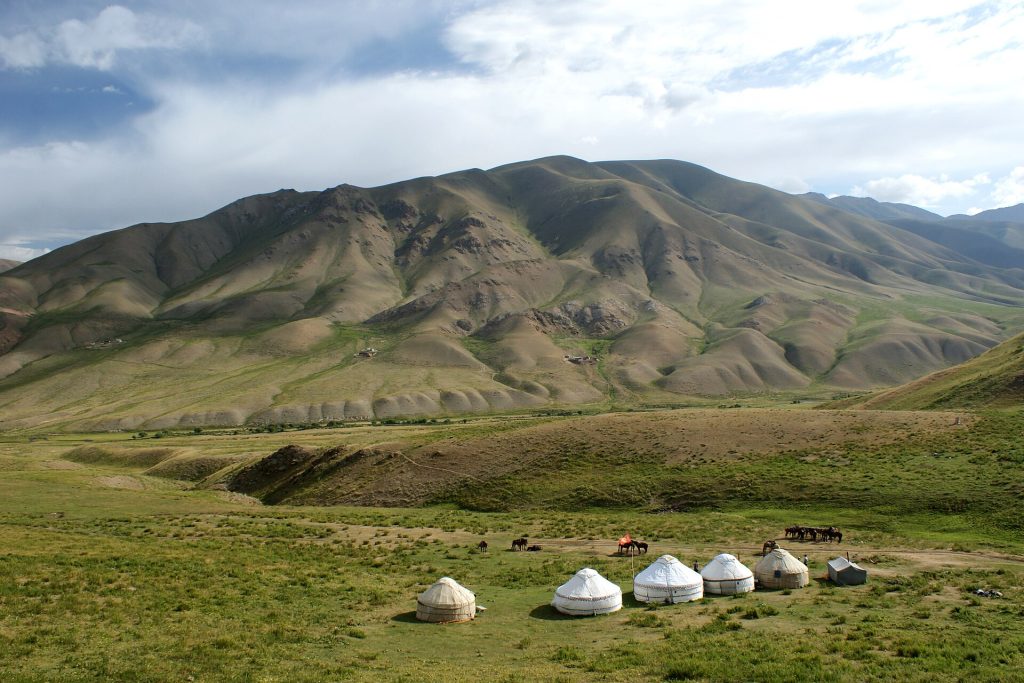
The southern shore is empty and wild, with the coloured sandstones of Skazka, the «Fairytale» canyon, and the eagle hunters in the village of Bokonbayevo. Son-Kul is at 3016 metres and is the shepherds’ yurt pasture in summer. The road is open only from June to September. A night in a yurt is 15–25 dollars. By day you ride a horse along the lake. And at night a starry sky opens up that a city person has never seen. Set aside two days. Osh in the south is the country’s oldest city, and Sulaiman-Too mountain is on the UNESCO list.
Transport in Kyrgyzstan: marshrutka, driver, CBT
From Bishkek to Karakol the marshrutka from the Western bus station takes six hours and costs 5–7 dollars, and to Cholpon-Ata four hours. A shared taxi does the same road two hours faster and charges 10–15 dollars. Yandex Go works in Bishkek and Karakol, and a ride across the city is 1–2 dollars.
No public transport goes to Son-Kul, Skazka or Altyn-Arashan. A jeep with a driver is 60–100 dollars a day, and four people share that.
CBT, that is the «community-based tourism» network, is the country’s best invention. In every region it arranges local families’ guest houses, yurts, horses and guides from one office. The Karakol and Kochkor offices settle a Son-Kul trip in a single day.
Car hire is 40–60 dollars, but the mountain roads are gravel and demand an experienced driver. The flight from Bishkek to Osh takes an hour and costs 40–60 dollars, while by car it is twelve hours — even so, that road is the most scenic in the country.
Kyrgyz food: beshbarmak, kumis, boorsok
Beshbarmak is flat dough served with mutton or horse meat; that is the national dish and it stands at the centre of every gathering. Lagman is hand-pulled noodles and comes from Dungan cooking, while manty and plov are on every table. Shorpo is a meat broth, kuurdak is fried meat and potatoes, and samsa comes out of the tandoor.
Boorsok are fried pieces of dough served with tea, and they never run out — they keep bringing more. Kumis is a drink fermented from mare’s milk in summer; be sure to taste it on the pasture, and maksym and chalap are the cooling drinks. Everything is halal.
The prices are low. Home cooking at CBT guest houses is 3–5 dollars, lunch in a Bishkek restaurant 4–7, and at well-known restaurants like Navat and Faiza 8–12. Honey, apricots and Issyk-Kul plums are in the market in summer. Tap water is drunk in Bishkek, in the mountains there is spring water, and in the villages buy bottled.
Season and hot springs
June to September is the main season: 25–30 degrees on the lake shore, close to zero at night at Son-Kul, and the pastures are open only in those months, with July-August the busiest. May and October are quiet and cheap for Bishkek and Issyk-Kul, while the mountain roads are still snowy. From December to March the Karakol ski base operates. A day pass is 15–20 dollars, that is a tenth of Europe. There is powder snow and few tourists. The lake shore in winter is completely empty and quiet.
The hot springs are a reason of their own for going to Kyrgyzstan. In the Altyn-Arashan valley forty-degree radon-sulphur pools come together with a mountain view. The Jeti-Oguz resort is a sanatorium of the Soviet period. On the Issyk-Kul shore the Aurora and Kyrgyz Coast sanatoriums are 40–70 dollars a day with full board and treatment. Cholpon-Ata has hot spring pools. And Jalal-Abad in the south is a mineral water spa. Regional information is on the Kyrgyzstan Tourism Department portal.
Budget and tickets
In Bishkek a three-star hotel is 35–60 dollars and a guest house in Karakol 20–35. A shore hotel in Cholpon-Ata rises to 50–100 dollars in summer, while a night in a yurt is 15–25. Hostels and guest houses are found cheaply in Bishkek and Karakol.
Entry tickets practically do not exist. Entry to Ala-Archa and Skazka is a dollar, a jeep to Altyn-Arashan 40 dollars, and hiring a horse 15–20 dollars a day. Excluding the flight, a week-long trip fits into 350–600 dollars per person, and that is one of the cheapest trips in all of Central Asia.
AZAL flies from Baku to Bishkek several times a week, a ticket to Bishkek must be bought early in summer, and flying to Almaty and crossing by bus is an alternative. Kyrgyzstan mountain tour packages fitting Issyk-Kul, Karakol and Son-Kul into one week settle the jeep, the yurt and the CBT bookings together.
Frequently asked questions about Kyrgyzstan
How many days does a trip to Kyrgyzstan need?
Set aside a day for Bishkek and three for Issyk-Kul and Karakol. Son-Kul takes another two days, which comes to a week. With Osh and the south, ten days.
Is spending the night in a yurt comfortable?
A felt yurt is warm, with a mattress, a quilt and a stove. The toilet is outside, there is no shower, the night is cold, and warm clothes and a torch are needed — and the experience turns out to be the most memorable part of the trip.
Can it be combined with Kazakhstan?
Yes, the bus and taxi from Bishkek to Almaty take four hours, the border is easy, and both countries are visa-free. Returning to Baku from Almaty is possible too.
In closing
Kyrgyzstan is visa-free, reached by a direct flight, very cheap, and gives you the world’s loveliest mountain scenery with a yurt and a horse; whoever goes in summer sees Issyk-Kul and Son-Kul, and whoever goes in winter sees the snow of Karakol. The entry rules are gathered on the Kyrgyzstan page, and to build the mountain and lake route together, fill in the application form.
Note: the prices here are as of the publication date and can change with the season.
