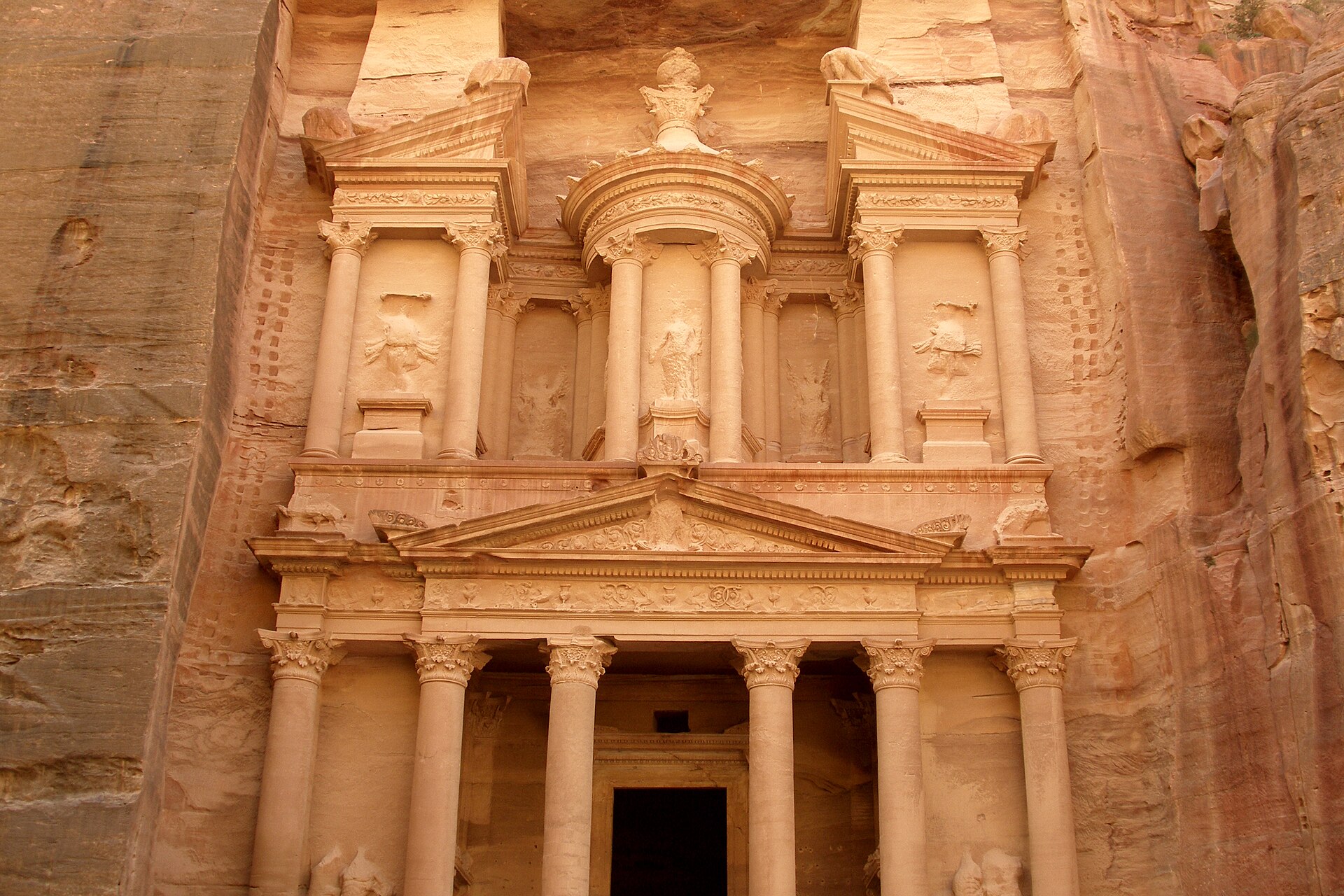
Jordan is the quietest country in the Middle East and the friendliest to a traveller. Petra’s city carved into the rock and the Martian landscape of Wadi Rum are on one route. The salty water of the Dead Sea, Roman-era Jerash and the corals of the Red Sea are there too. All of it fits into a week. For us the visa is obtained at the border or online, and when you buy the Jordan Pass the visa fee is not paid at all — few people know that. In this article I have gathered the route and the Jordan Pass maths. The transport, the hot springs, the food, the season and the budget are in there too.
Jordan in brief
| Capital | Amman |
| Language | Arabic; English everywhere in tourism |
| Currency | Jordanian dinar (JOD), 1 dinar ≈ 1.4 dollars; cards in the cities, cash in the desert and the bazaar |
| Visa | 40 dinars at the border, online, or free with the Jordan Pass |
| Best time | March–May and September–November |
| Flights | 6–8 hours via Istanbul, Doha or Dubai |
| Daily budget | 80–120 dollars at a mid-range level |
Petra and the Jordan Pass maths
Petra is the rock-carved capital of the Nabataean kingdom and one of the new seven wonders of the world. You walk two kilometres through the Siq gorge, and suddenly, between the narrow rocks, the façade of Al-Khazneh appears and you cannot help stopping — everybody stops.
After that come the Royal Tombs, the Roman theatre and the climb of eight hundred steps to the Monastery. One day is the minimum and two is ideal. Go in at sunrise, because by midday the group coaches arrive. The ticket is 50 dinars for one day and 55 for two.
Now let us look at the maths. The Jordan Pass is sold in three versions at 70, 75 and 80 dinars and covers one, two or three days at Petra, entry to more than forty sites and, most importantly, the 40-dinar visa fee. Which means it pays off for anyone spending at least three nights in the country. You buy it online before entry and show it on your phone at the border.
«Petra by Night» is an evening programme held by candlelight on Mondays, Wednesdays and Thursdays; it costs 17 dinars and really is worth it. And in the town of Wadi Musa next to Petra there are hotels at every level.
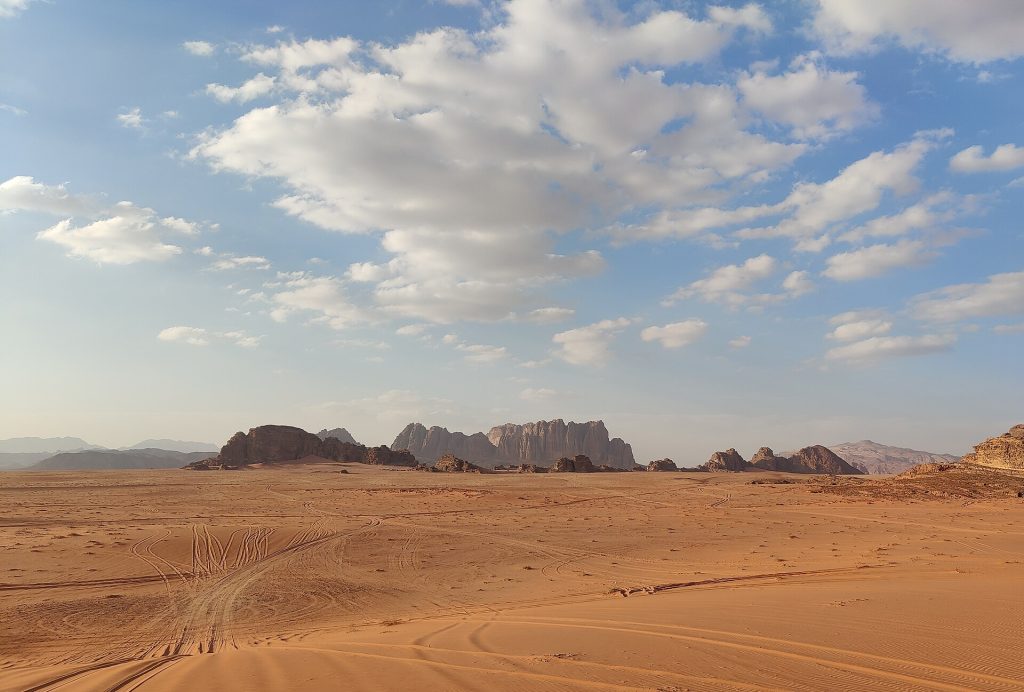
Wadi Rum, the Dead Sea, Jerash, Aqaba
Wadi Rum, that is the «Valley of the Moon», is made of red sand and granite rocks, and people go there to spend the night in a bedouin camp. A jeep tour takes three or four hours and costs 40–60 dinars, with a camel ride and the sunset on the programme, and at night such a starry sky opens up that a city person has never seen its like. A night in a camp with food is 30–80 dinars, while the «glass dome» tents start at 150.
The Dead Sea is the lowest point on earth. It is impossible to sink in the water — a person floats while reading a newspaper — and the mud is considered good for the skin. On the shore there are five-star resorts, day entry is 25–40 dinars, and the journey from Amman is an hour.
The Main hot springs are near the Dead Sea, where thermal waterfalls and a spa resort operate, and people mostly go for joint and skin problems.
Jerash is the best-preserved Roman city in the Middle East and is forty-five minutes from Amman. Aqaba on the Red Sea is a diving and snorkelling centre, and the coral reefs are only a few metres from the shore.
In Amman itself there are the Citadel, the Roman theatre and Rainbow Street, and nearby remain the Madaba mosaics and Mount Nebo; all of that takes a day or two.
Transport in Jordan: JETT, Careem and a car
The country is small and is travelled mainly along a north-south axis. JETT buses go from Amman to Petra in three and a half hours for 12 dinars, and to Aqaba in four. The timetable is sparse, so buy the ticket in advance.
In Amman the Careem and Uber apps work, and in a yellow taxi insist on the meter.
Honestly, the most comfortable option is car hire: 30–50 dollars a day, the roads are good, traffic is on the right and the Azerbaijani licence is accepted. The King’s Highway from Amman to Petra passes Karak castle and the Dana reserve and is the loveliest route; it takes two hours longer than the straight motorway, but it is worth it. A car with a driver is 80–120 dinars a day and is what families most often choose. From Amman airport into the city a taxi is 20–25 dinars and the Airport Express bus 3.5.
Food: mansaf, kunafa and tea
Mansaf is the national dish. Lamb cooked in a dried yoghurt sauce is laid over rice and bread and eaten by hand. It is a dish for feasts and for guests, and if it is offered to you, do not refuse.
On the everyday table there are falafel, hummus and mutabbal. Maqluba is a pot of rice and chicken turned upside down, and shawarma is sold on every corner. Amman’s Hashem restaurant has been famous for falafel and hummus for a hundred years; lunch there is 3–5 dinars, and even the king has been.
Kunafa is a cheese pastry, and cardamom coffee and mint tea are everywhere. Everything is halal. Dinner in a restaurant is 10–20 dinars and in a resort restaurant 30. Do not drink the tap water. During Ramadan the restaurants are closed during the day, while the tourist hotels operate.
Read next: A Jordan visa: at the border, online and how to get it free with the Jordan Pass
Season and safety in Jordan
March-May and September-November are the ideal months, the weather is 20–28 degrees, and Petra and Wadi Rum are comfortable to walk.
From June to August the temperature in Petra rises to thirty-five degrees and in Aqaba and at the Dead Sea above forty; sightseeing is left to the morning hours only, while the hotels get cheaper. From December to February Amman is cold and rainy and Petra sometimes gets snow, while Aqaba and the Dead Sea live their best time at twenty degrees.
On safety the country is the most comfortable in the region. Tourist police stand at every site, and women travelling alone have no trouble either. The rules are simple: dress covered at the sites, respect local custom during Ramadan, and do not take photographs in the border regions. Jordan Pass and site information is on the Visit Jordan portal.
Budget and tickets
In Amman a three-star hotel is 40–70 dollars, and in Wadi Musa near Petra 50–90. A Dead Sea resort rises to 150–300 dollars. A Wadi Rum camp with food is 50–100 dollars, and comparing the options shows the difference between a tent with a view and an ordinary camp straight away.
The Jordan Pass costs 100–115 dollars and pays the visa fee too. A Wadi Rum jeep tour is 60–80 dollars and day entry to the Dead Sea 35–55. Booking the Petra night programme and the Wadi Rum overnight in advance matters in season.
Excluding the flight, a week-long trip fits into 900–1300 dollars per person. The country is not one of the Middle East’s cheap ones, but the Jordan Pass and the choice of camp let you manage the budget. Turkish Airlines, Qatar Airways and flydubai fly to Amman, and a ticket to Amman should be bought early for Novruz and the autumn holidays. Jordan tour packages fitting Petra, Wadi Rum and the Dead Sea into one week settle the driver, the camp and the Jordan Pass together.
Frequently asked questions about Jordan
How many days does Jordan need?
Two days for Amman and Jerash, two for Petra, one night in Wadi Rum, one day at the Dead Sea — six or seven days in all. With Aqaba, nine.
Is crossing to Israel possible?
There are land border crossings, but Israel requires citizens of Azerbaijan to have a visa in advance. For a Jordan-only trip that is not an issue.
Is Petra hard with a child?
From the Siq to the Treasury it is two kilometres on level ground and is comfortable with a child. The Monastery steps and the summer heat are hard with a small child, and a horse cart is hired at the entrance.
In closing
Jordan is a safe, compact country that zeroes out the visa cost with the Jordan Pass, and Petra and Wadi Rum are the key frames of a once-in-a-lifetime trip. The visa options are explained on the Jordan page, and to build the route and the camp plan together, fill in the application form.
Note: the prices here are as of the publication date and can change with the season.
