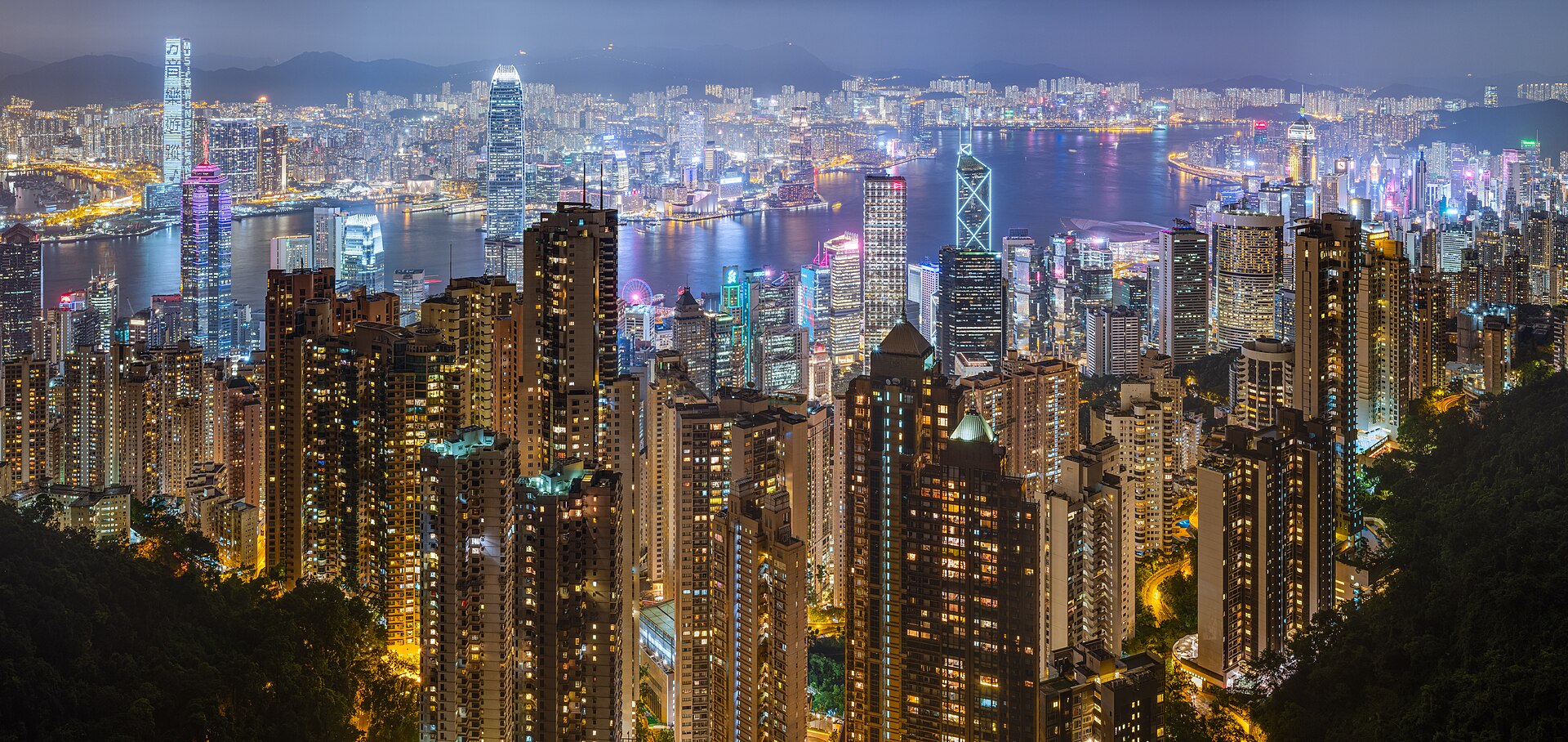
Hong Kong has fitted seven million people into a small territory, and the result is the densest forest of skyscrapers in the world. Yet three quarters of that territory is still green, and mountain trails and empty beaches are half an hour from the city. These two faces are what make it interesting. For citizens of Azerbaijan the entry regime differs from the rest of China, so check in advance.
Victoria Peak and the harbour
The old tram climbs Victoria Peak, and the trip can start with a sixty-minute queue. There is a separate ticket for the observation terrace at the top, but the Lion Pavilion viewpoint next to it is free and the view is all but identical. Go up an hour before sunset and you see both the daytime and the night view.
The Star Ferry joins the islands to the peninsula and the ticket is a few cents, which makes it one of the cheapest scenic boat rides in the world. Every evening at eight the buildings around the harbour put on a light show, watched from the Tsim Sha Tsui waterfront.
Markets, temples and islands
In the Mong Kok district the night market, the bird market and the flower market sit side by side. Man Mo temple is among the oldest in the city and its interior is full of spirals of smoke. The Chi Lin nunnery is built entirely of wood without nails, and the garden beside it is quiet.
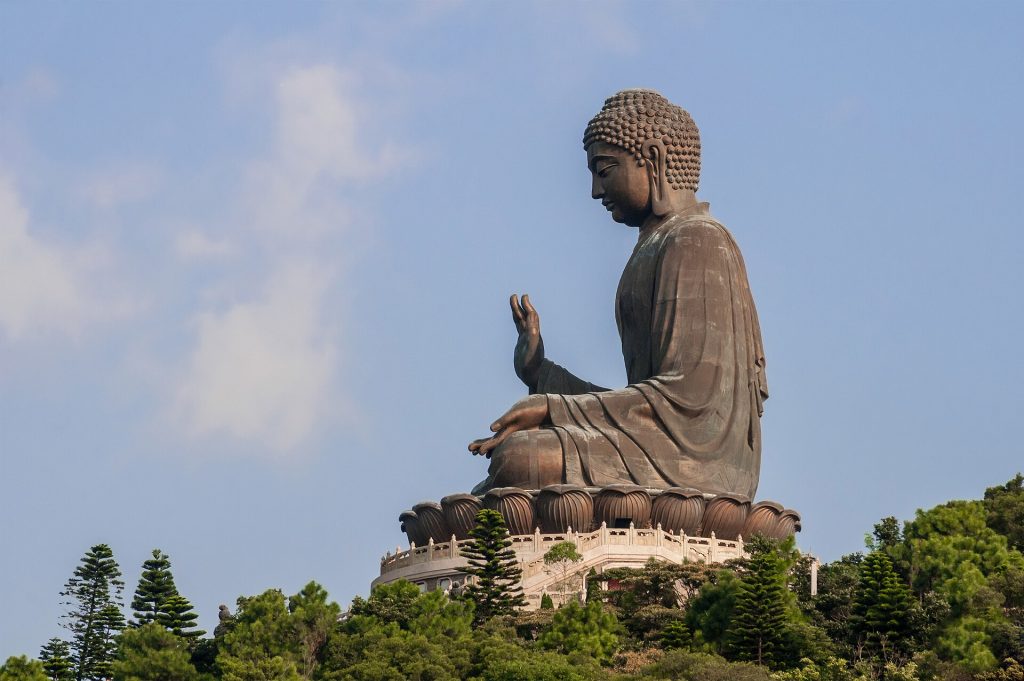
You reach Lantau island by cable car, and the enormous bronze Buddha stands there. The ferry to Lamma and Cheung Chau islands is half an hour; there are no cars there and the atmosphere of a fishing village has survived. It is possible to combine these routes in a single day tour.
Transport and food in Hong Kong
The Octopus card works on the metro, the buses, the trams, the ferries and in the shops, and is the most essential item in the city. The double-decker tram runs along the island side, the ticket is very cheap and the city passes by the window. The metro is fast and clean, with announcements in three languages.
Dim sum is a breakfast and lunch, comes in small baskets and is shared. Noodles and dumplings are sold at street stalls for a few dollars. Halal restaurants are in the Wan Chai and Tsim Sha Tsui districts, around the central mosque.
Prices and season in Hong Kong
Accommodation is the biggest expense, because the rooms are very small. A three-star hotel is 90–160 euros, while a hostel bed starts at 25–45. In return food and transport are very cheap, which balances the daily spend.
October to December is the best period, with 22–27 degrees and dry weather. March to May is humid and foggy. June to September is hot, very wet and typhoon season. January and February are cool. Official information is on the Discover Hong Kong site.
A last word
Hong Kong fits into three days, has cheap transport and is unexpectedly green. Buy an Octopus card, go up the peak before sunset, and give one day to the islands. For a visa and a route, fill in the application form.
Note: the prices in this article are those at the time of publication and may change with the exchange rate.
