
China has been visa-free for citizens of Azerbaijan since 2025, and that decision turned the country into something entirely different for us. Businesspeople going to the Guangzhou fair, tourists going to Beijing and Shanghai and families wanting to see the pandas of Chengdu all set off at the same time.
But China is not travelled the way Europe is. Google, WhatsApp and Instagram do not work there, cash is all but gone and English is scarce. In exchange, for anyone who comes prepared it opens up the world’s fastest trains, its safest cities and its most varied cuisine. Below I have gathered the cities, the transport, payment, the internet, the food, the season and a thirty-day visa-free plan in one place.
China in brief
| Capital | Beijing; the largest city is Shanghai |
| Language | Chinese (Mandarin); English only in the hotels |
| Currency | Yuan (CNY); payment with WeChat Pay and Alipay |
| Visa | Visa-free: 30 days per trip, 90 days in 180 |
| Best time | April–May and September–October |
| Flight | Baku–Beijing and Baku–Guangzhou direct, 7–8 hours |
| Daily budget | 80–120 dollars at a mid-range level |
The cities of China: which one and what for?
Beijing is the historic capital and needs four days. The Forbidden City, Tiananmen Square, the Temple of Heaven, the Summer Palace and the Mutianyu section of the Great Wall all fit into that time. Go to the Great Wall early in the morning, because the coach groups arrive by midday.
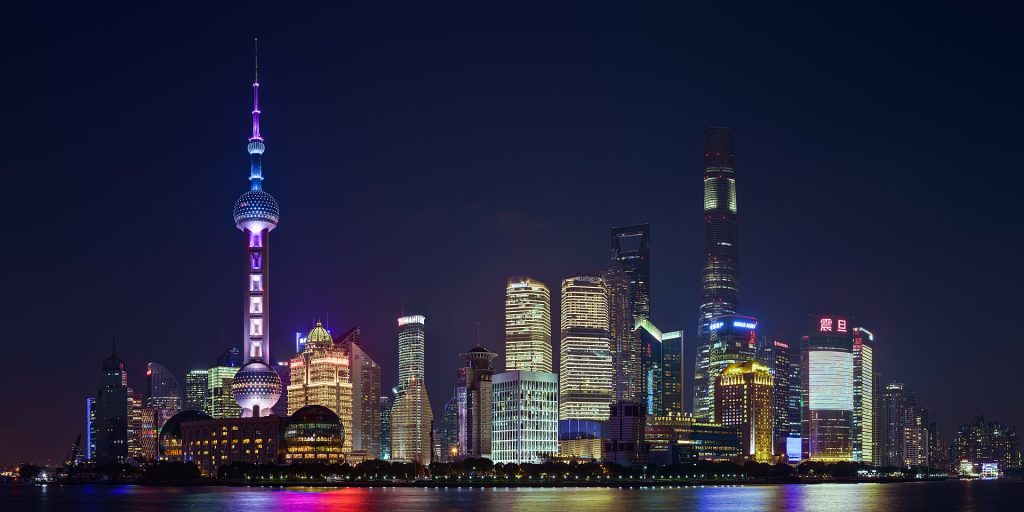
Shanghai is modern China. From the Bund waterfront you look across at the skyscrapers of Pudong and see a hundred years ago and a hundred years ahead in one frame. Together with the French Concession and Yu Garden, three days are enough for the city.
Guangzhou is the centre of business trips from Baku; the Canton Fair is held in April and October, and the city itself is two days with Cantonese food and the Pearl River, while nearby Shenzhen is known for its electronics markets and borders Hong Kong. Xi’an means history, with the terracotta army. Chengdu is known for pandas and Sichuan cooking. Guilin stands out for its karst mountains and the Li River. And Zhangjiajie is the mountains from the film Avatar. Harbin has its ice festival in winter and Hainan island its winter beaches. The 30-day visa-free regime is more than enough for two or three regions; do not attempt more.
Payment and internet: get your phone ready before you go to China
In China cash and bank cards barely work; everything is paid by QR code. That goes for the taxi, the shop, a temple ticket and even the woman selling potatoes in the street.
So while you are still in Baku, sitting at home, install Alipay or WeChat Pay and link your Visa or Mastercard; both accept foreign cards, and payments up to two hundred yuan carry no commission. Take a small amount of cash yuan as a reserve, for when the app does not work.
The internet is a subject of its own. Google services, WhatsApp, Instagram and Telegram are blocked on the Chinese internet.
There are two ways. Either you install a VPN at home, or you work on a foreign operator’s signal, because roaming stays outside the block. Roaming on an Azerbaijani number is expensive, while an international eSIM does the same job and costs far less.
For maps, Apple Maps or Amap work, and for translation download an offline pack. The Didi taxi app is the Chinese version of Uber and works with a foreign card.
Transport in China: fast trains and the metro
China’s high-speed rail network is the largest in the world, and once you have ridden it you forget about planes. Beijing to Shanghai takes four and a half hours, Shanghai to Guangzhou seven, and Guangzhou to Shenzhen thirty minutes.
The ticket is bought against your passport number, at the station they scan the passport, and there is no paper ticket at all. The official 12306 app works badly with foreign cards, so most people buy the ticket through Trip.com. Get to the station an hour ahead as you would for a flight, because there is a security check there too.
The city metros are clean and cheap, a single ride is under a dollar, and you go through the barrier with an Alipay QR code. Domestic flights are only for the far regions: Beijing to Chengdu takes three hours. Car rental is not practical for a tourist, because a local driving licence is required.
Chinese food and halal China
Chinese cuisine is not one cuisine but eight. Peking duck is cooked in the north. Dim sum and sweet-and-sour flavours are in Canton. Spicy Sichuan cooking is in Chengdu, and rice and seafood in Shanghai. Halal food is easier here than you would expect: the Hui Muslims’ restaurants with the «清真» sign are in every city, Lanzhou noodles are sold on every corner, and the Muslim quarter of Xi’an is a street-food paradise, so go there hungry. Lunch at a restaurant is 5–10 dollars, Peking duck 30–40 and street food 1–3. The menus have pictures, and the camera mode of a translation app reads the menu. Tipping is not accepted.
Read next: The China visa has been abolished: the rules of visa-free travel for 30 days and the 90/180 count
When to go to China and when not to
April–May and September–October are the most comfortable months for the whole country. In Beijing the summer is hot and humid and the winter dry and minus five degrees. In Shanghai the temperature climbs to 38 degrees in July and August. Guangzhou is subtropical and rains in summer. Avoid two dates. The first is Chinese New Year, falling in January or February, when everything closes and the tickets run out. The second is the first week of October, the “Golden Week”. Then the whole country travels at once and you are stuck in the middle of it. During the Canton Fair, hotel prices in Guangzhou triple. Information on the visa-free regime and the regions is on the site of China’s National Immigration Administration.
Budget and tickets
Prices are a good deal cheaper than Europe’s. A three-star hotel is 50–80 dollars in Beijing, 70–110 in Shanghai and 50–70 in Guangzhou outside the fair period.
Entry tickets are cheap too. The Forbidden City charges eight dollars and the Great Wall six, while the fast train from Beijing to Shanghai is 80. Leaving out the flight, a ten-day trip fits into 1000–1500 dollars a head.
AZAL flies direct from Baku to Beijing and Guangzhou, and air ticket to Beijing prices rise around the fair and Golden Week dates. China tour packages linking Beijing, Xi’an and Shanghai solve the language and payment question with a guide, and for a first trip that is the most comfortable route.
Frequently asked questions about China
Is China safe?
In terms of street crime it is among the safest countries in the world. The real risk is getting lost and the payment app not working, so take cash as a reserve.
Can you cross into Hong Kong?
Hong Kong has a separate entry regime and requires a visa in advance for a citizen of Azerbaijan. Crossing from Shenzhen is possible only with a visa.
When the 30 days run out, can you leave and come back?
Yes, but there is a limit of 90 days in total within 180. Those travelling often for the fairs have to count their days.
In closing
China is visa-free, cheap and safe, and the key to success is a phone prepared at home: Alipay, a VPN and an offline map. The entry rules and the 90/180 count are gathered on the China page, and to build a fair or tourist route together fill in the application form.
Note: the prices here are as of the publication date and can change with the season.
