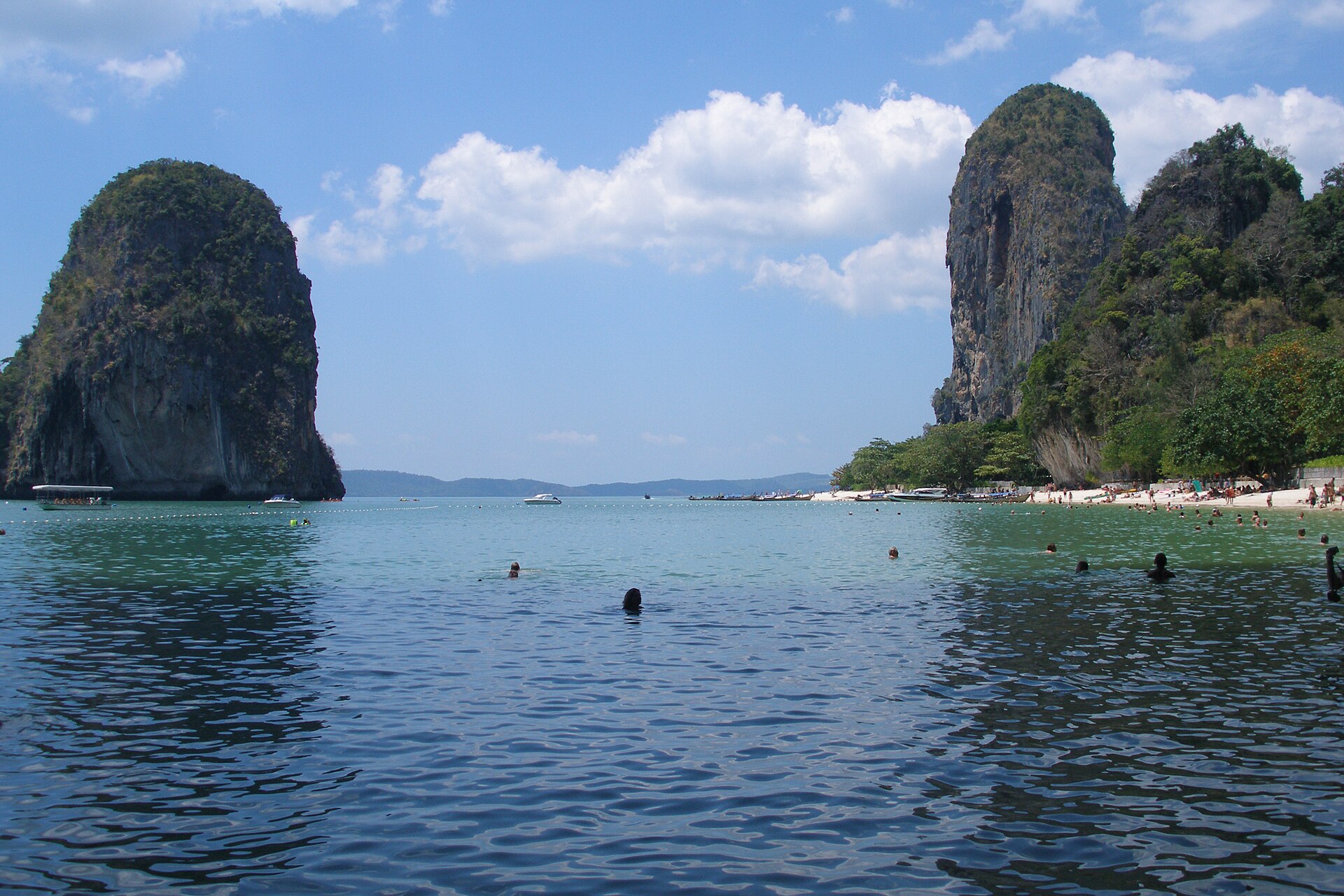
Thailand is the classic address for a first trip to Asia from Baku. Bangkok’s golden temples and street food stand on one side and the mountains and elephants of Chiang Mai on the other. Phuket and Krabi are known for their limestone islands and Samui for its coconut beaches. It is a cheap, safe and smiling country, which is why I recommend it to everyone going to Asia for the first time.
The visa rule, though, has changed. A fifteen-day visa at the border costs two thousand baht, for sixty days you need an eVisa, and before entry the TDAC form is filled in. You have to be ready for that in advance. Below I have gathered the route from Bangkok to the islands, the transport, the food, the halal options, the season of the two coasts, the visa rule and the budget in one place.
Thailand in brief
| Capital | Bangkok |
| Language | Thai; English works in tourism, a translation app is useful |
| Currency | Baht (THB), 1 dollar ≈ 34 baht; cash in the street and markets, cards in hotels and malls |
| Visa | 15 days at the border for 2000 baht or a 60-day eVisa; the TDAC form online |
| Best time | November–February; the Gulf islands January–August |
| Flight | 10–12 hours via Doha, Dubai or Istanbul; seasonal direct flights |
| Daily budget | 50–90 dollars at a mid-range level |
Bangkok and Chiang Mai
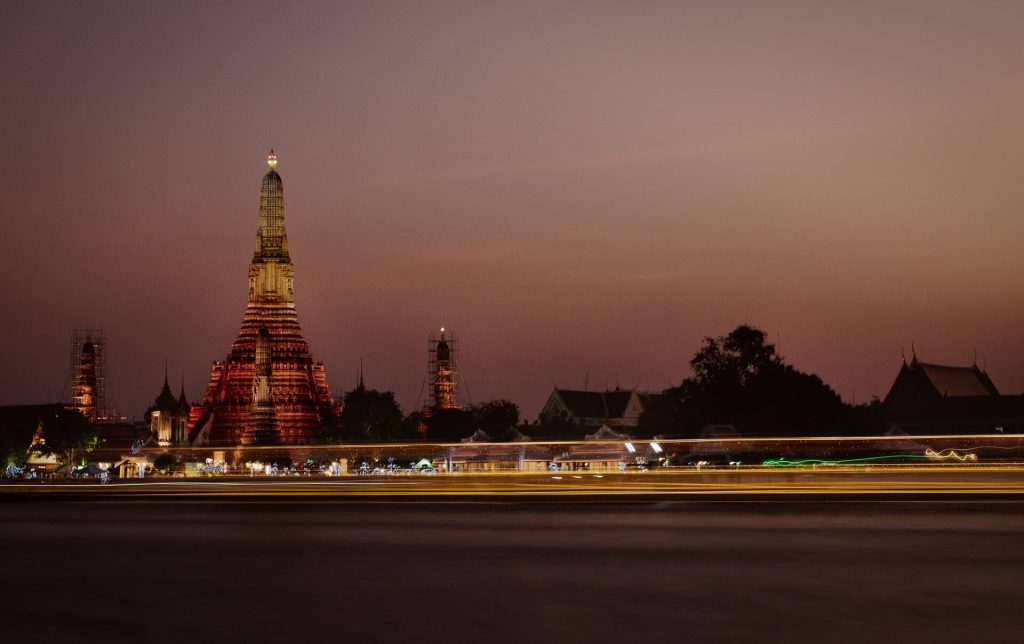
Set aside two or three days for Bangkok. The Grand Palace and the Emerald Buddha are walked close to opening time, and covered clothing is required. At Wat Pho there is the giant reclining Buddha, and it is the home of Thai massage. Wat Arun is across the river; cross at sunset, and the river boat takes you for twenty baht.
In the evening Yaowarat street in Chinatown fills with street food, and at the weekend the fifteen thousand stalls of the Chatuchak market open. Khao San road, the rooftop bars of Sukhumvit and Silom, and shopping at Icon Siam and MBK are in this city too. The Damnoen Saduak floating market and the ancient capital of Ayutthaya, meanwhile, are worth a day trip.
Chiang Mai is an hour’s flight to the north. Inside the walls of the old town there are three hundred temples. The mountain temple of Doi Suthep looks down over the city, and on Sunday the night market fills the whole centre. Do go to the elephant sanctuaries, but do not pick the places offering elephant rides; ethical sanctuaries like Elephant Nature Park are 80–100 dollars. With cooking classes, Doi Inthanon, Thailand’s highest point, and the Yi Peng lantern festival in November, three days pass quickly. Chiang Rai is a day trip with the White Temple and the Blue Temple, while Pai is a hippie village in the mountains.
The islands: Phuket, Phi Phi, Krabi, Samui
The Andaman coast in the west has its season from November to April. Phuket is the largest island and the most chosen resort. Patong is known for its nightlife while Kata and Karon are family beaches, and the Sino-Portuguese houses of Old Phuket Town and the Big Buddha take half a day. In Phang Nga bay there are James Bond island and kayak tours, and diving at the Similan islands is open from November to May. The Phi Phi islands are an hour and a half by boat, Maya Bay from the film The Beach is there, and the nightlife is on Phi Phi Don. Krabi gives you the most beautiful beaches in the world among limestone cliffs at Ao Nang and the Railay peninsula, and rock climbing and the four-island tour start from here. Ko Lanta is a quiet family island. If the choice were mine, I would always say Krabi.
The Gulf of Thailand is in the east and there the season runs from January to August. Ko Samui is the coconut island, known for Chaweng beach; Ko Phangan stands out for its Full Moon Party and yoga centres, and Ko Tao for the cheapest diving certificate in Asia. Pattaya is two hours from Bangkok, and Ko Chang further east.
The formula for a first trip is simple. Three days for Bangkok, three for Chiang Mai and five or six for one island region.
Transport in Thailand: flights, the sleeper train, Grab, ferries
Domestic flights are cheap. With AirAsia, Nok Air and Thai Lion you reach Phuket or Chiang Mai from Bangkok in an hour, a ticket is 30–70 dollars, and the flights mainly go from Don Mueang airport.
The Bangkok–Chiang Mai sleeper train takes twelve hours and costs 25–40 dollars, and a second-class air-conditioned berth is the best choice. The berths sell out several days ahead, so get the ticket in advance through 12Go.
Ferries and fast boats run to the islands. Phuket to Phi Phi takes an hour and a half and costs fifteen dollars, and Surat Thani to Samui is also an hour and a half.
In Bangkok the BTS Skytrain and the MRT save you from the traffic; get a Rabbit card, and one ride is about a dollar. The Airport Rail Link brings you from the airport to the centre in thirty minutes for a dollar and a half. Inside the city the easiest thing is a Grab car or motorbike, metered taxis are cheap too, and get on a tuk-tuk only for the experience and agree the price in advance.
On the islands scooter rental is eight dollars a day. An international licence and a helmet are essential, because without a licence insurance does not pay for an accident. In Chiang Mai and on the islands the shared pickups called songthaew run for a dollar. You need the internet to call a Grab and look at the map, so if you do not want to queue for a SIM at the airport, connect an eSIM before you set off.
Pad thai, tom yum, mango: Thai food and halal
Thai food is among the best loved in the world and the best of it is cooked in the street. Pad thai is fried noodles, tom yum a hot and sour prawn soup, and the green and red curries are made in coconut milk. Som tam papaya salad and massaman curry must be tried, and for dessert mango comes with sticky rice. Do not forget Thai iced tea and coconut ice cream either.
You reduce the heat by saying “mai phet”; learn those two words, they will serve you well. Street food is 1–2 dollars, a local restaurant 3–5 and a tourist restaurant 10–15.
Halal food in Bangkok is in the Ramkhamhaeng and Bang Rak districts. The south of Phuket and Krabi, with their large Muslim communities, are full of halal restaurants, and Ko Lanta is an entirely Muslim island. In Samui and Chiang Mai there are Thai restaurants with a “halal” sign, and massaman curry itself is of Muslim origin.
Drink only bottled water; the ice is factory-made and safe. An hour of Thai massage is 8–12 dollars and an oil massage 15, and the best spa resorts are in Chiang Mai and Phuket.
The season of the two coasts and the rules
November to February is the best time for the whole country, the weather is 28–32 degrees and dry, and the New Year week is the most expensive period. From March to May the temperature climbs to 35–40 degrees, and from the thirteenth to the fifteenth of April the Songkran water festival is held and everybody soaks everybody.
From June to October there is monsoon on the Andaman coast, Phuket and Phi Phi get rough, some islands close and hotels drop to half price. The Gulf side, that is Samui, stays dry in those months, and the rain there falls in October to December. Chiang Mai is cool in December and January, and from February to April there is haze from field burning.
Take a few rules seriously. Respect for the royal family is protected by law in Thailand. At temples shoulders and knees must be covered and shoes come off, and a disrespectful photograph with images of the Buddha ends in a fine. Drugs are punished severely and e-cigarettes are banned. Entry to national park islands such as Phi Phi and the Similans is 10–15 dollars. Seasonal and festival information is on the Tourism Authority of Thailand portal.
Budget and tickets
In Bangkok a three-star hotel is 30–50 dollars and a four-star 60–100. In Chiang Mai a boutique hotel is 30–60 dollars, in Phuket a three-star in Kata 40–70 and a resort 120–250. In Krabi, Railay is 80–200 dollars and in Samui 50–150. A hostel is found on practically every island for 8–15 dollars.
The activities cost this much. The Grand Palace is 15 dollars, an elephant sanctuary 80, and a diving course on Ko Tao 300. A Phi Phi boat tour starts at 40 dollars, and if you book your place in advance you get the morning boat, while the afternoon boats are always full.
Leaving out the flight, a two-week trip fits into 1000–1600 dollars a head. Qatar Airways, Emirates and Turkish Airlines fly to Bangkok and Phuket, and seasonal direct and charter flights from Baku to Phuket also open. An air ticket to Bangkok has to be bought three months ahead for the New Year and Novruz weeks. Thailand tour packages linking Bangkok, Phuket and Phi Phi are the best-selling Asian holiday from Azerbaijan and settle the domestic flight, the boat tours and the visa support together.
Frequently asked questions about Thailand
How many days do you need for a Thailand trip?
Three days for Bangkok and five or six for the islands: ten in all. With Chiang Mai, fourteen days; a Phuket holiday alone is seven or eight days and fits within the fifteen-day border visa.
Phuket, Krabi or Samui?
Phuket means comfort, nightlife and a direct flight. Krabi gives the finest scenery and the quiet. Samui wins in the summer months with its dry season and coconut shore. In winter choose the Andaman and in summer the Gulf.
Which route with a child?
In Bangkok Safari World and the aquarium hold children’s attention. In Phuket there are Kata beach and the water parks, and in Chiang Mai you go to an elephant sanctuary. Ko Lanta, with its shallow and calm shore, is ideal for a family. The Phi Phi boat tours are comfortable with a child over five.
In closing
Thailand is cheap, safe Asia to suit every taste, and for anyone who picks the coastal season correctly and is ready for the new visa rule the trip goes without trouble. The visa and TDAC rules are explained on the Thailand page, and to build the Bangkok and island route together fill in the application form.
Note: the prices here are as of the publication date and can change with the season.
