Japan is the world’s most distinctive country to travel in. Tokyo’s neon streets stand on one side and Kyoto’s thousand-year-old temples on the other. The Shinkansen arrives to the second, picnics are laid out under the sakura, a hot spring bath waits in the mountain villages, and on every corner they sell the best food in the world.
For us the visa comes from the embassy in Baku with a day-by-day itinerary. And thanks to the weak yen the country is cheaper than you expect — I am surprised by that every time. Below I have gathered Tokyo, Kyoto and Osaka, Fuji and Hiroshima, the Shinkansen and the IC card, the JR Pass arithmetic, the food and halal options, the season, onsen and etiquette, and the budget.
Japan in brief
| Capital | Tokyo, the world’s largest urban agglomeration |
| Language | Japanese; English on signs and at stations, little in conversation |
| Currency | Yen (JPY), 1 dollar ≈ 150 yen; cards widely, cash still matters |
| Visa | The embassy in Baku, a day-by-day itinerary, fee 15,000 yen |
| Best time | Late March–April for sakura, October–November for autumn |
| Flights | 14–16 hours to Tokyo and Osaka via Doha, Dubai or Istanbul |
| Daily budget | 15,000–25,000 yen at a mid-range level |
Tokyo and Fuji
Tokyo is four days and is toured district by district. Start with the Shibuya crossing and the Hachiko statue. Shinjuku’s skyscrapers, the narrow lanes of Omoide Yokocho and the free Metropolitan Government observation deck are nearby. Harajuku is full of youth fashion, with the Meiji shrine beside it. In Asakusa you walk the Senso-ji temple and Nakamise street; Akihabara means electronics and anime, and Ginza is for shopping. At the Tsukiji market you eat morning sushi, and the teamLab digital museum needs a ticket. Tokyo Skytree shows the city from above, and in the evening you drop down into the izakaya lanes of Shinbashi.
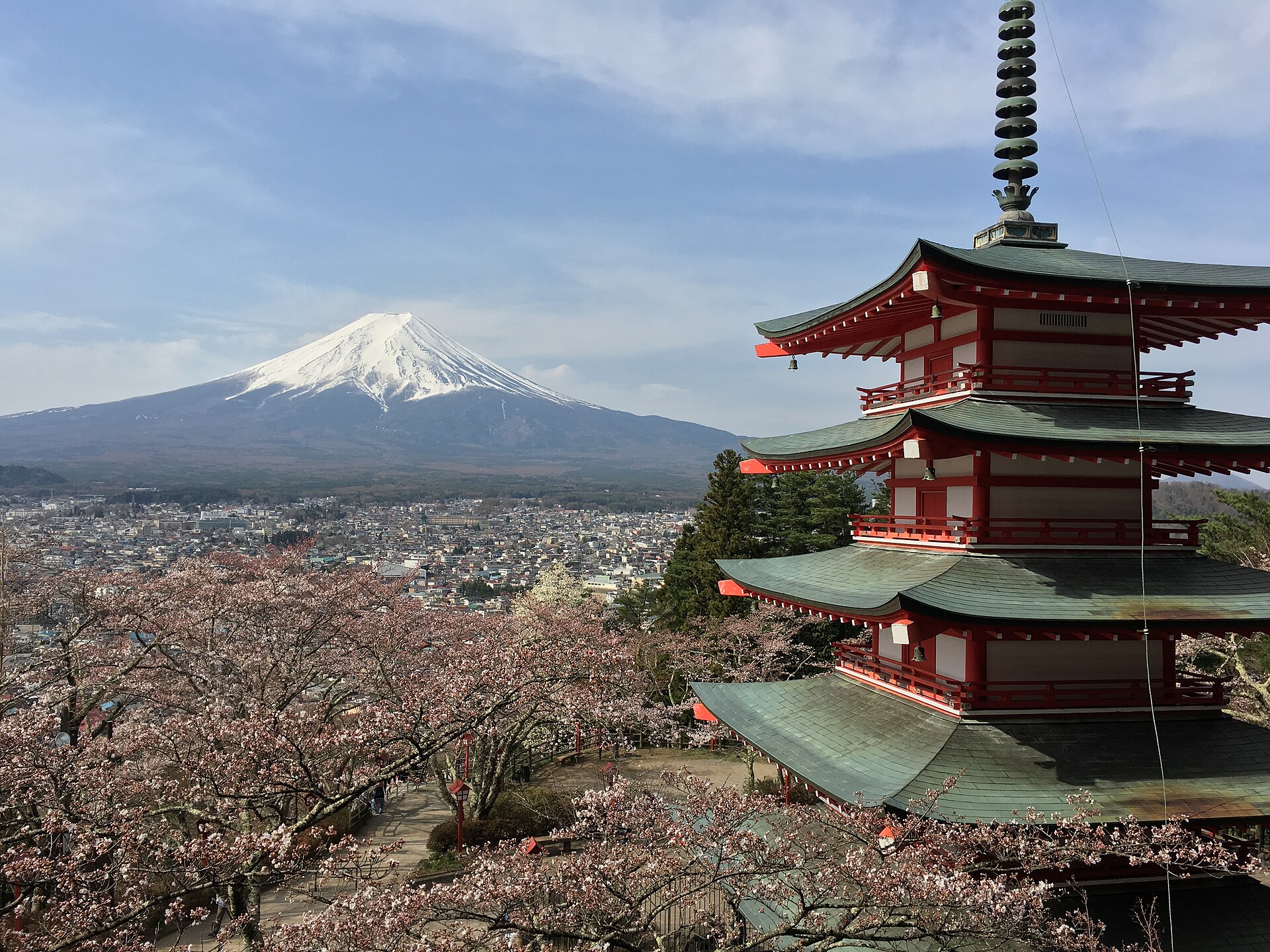
There are plenty of day trips from Tokyo. Nikko is known for its temples and waterfalls. Kamakura has the Great Buddha and the coast. Hakone gathers a Fuji view, a boat, a cable car and an onsen into one loop. Lake Kawaguchiko gives the best photograph of Fuji, and the Chureito pagoda looks finest in sakura season. Fuji is clearest from November to February and often stays under cloud in summer. Tokyo Disneyland is for families.
Kyoto, Nara, Osaka, Hiroshima: Japan’s Kansai region
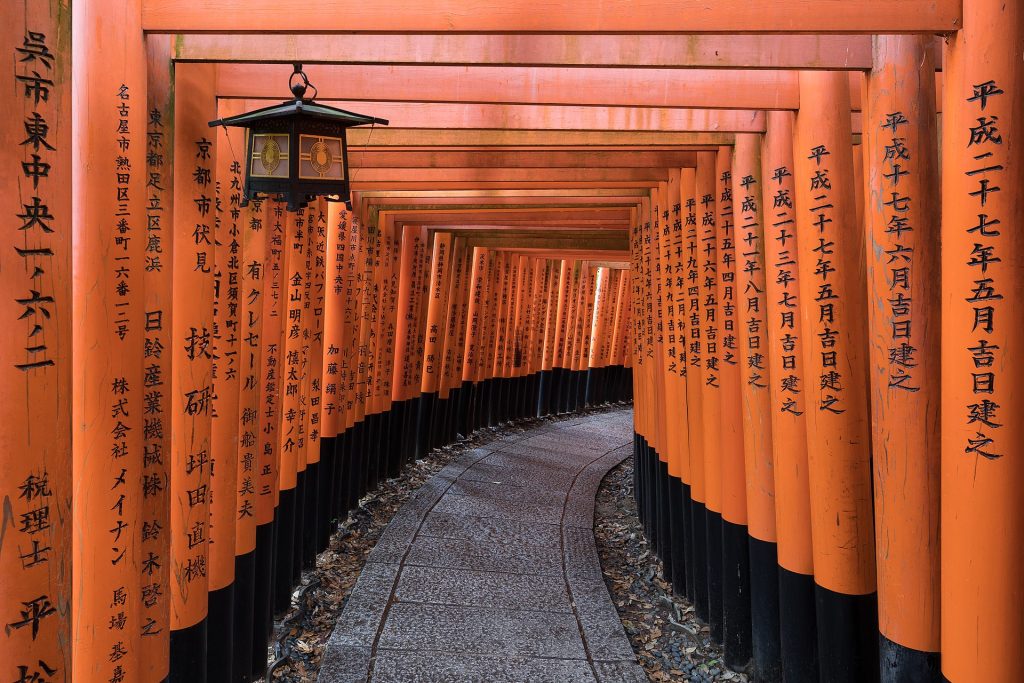
Kyoto is a thousand-year-old capital and wants three days. Go to Fushimi Inari at seven in the morning, when the thousands of orange torii gates are empty. Kinkaku-ji is the Golden Pavilion, and Arashiyama has the bamboo forest and the monkey park. Kiyomizu-dera is known for its wooden terrace. Drop into the Gion geisha quarter in the evening. The Nishiki market, the Philosopher’s Path in sakura season and a walk in a hired kimono are on the list too. The Fushimi sake cellars are a programme of their own. Nara is forty-five minutes from Kyoto: twelve hundred free-roaming deer in the park and the fifteen-metre Buddha of Todai-ji temple, half a day.
Osaka is Japan’s kitchen capital. Dotonbori is full of neon and street food, with Osaka castle and Shinsekai nearby. Universal Studios Japan and Super Nintendo World, together with the Kuromon market, take two days. Hiroshima is an hour and a half from Osaka on the Shinkansen. The Peace Memorial Park and the Atomic Dome are in the city centre. On the island of Miyajima there is the torii that «floats» on the water; all of it takes a day or two. Kanazawa is a craftsmen’s city, Takayama and Shirakawa-go are Alpine Japan with their thatched villages, and Hokkaido means the Sapporo snow festival in February and skiing at Niseko.
The Shinkansen, the IC card and the JR Pass arithmetic
On the Shinkansen Tokyo to Kyoto takes two hours fifteen minutes and costs 14,000 yen. Tokyo to Osaka is two and a half hours and Osaka to Hiroshima an hour and a half. You buy tickets at the station or in the SmartEX app. Fuji appears on the right, so ask for seat D.
The JR Pass has risen to 50,000 yen for seven days and only pays for itself on long routes such as Tokyo–Kyoto–Hiroshima–Tokyo, so do the sum; some of the regional passes are better value.
A Suica or Pasmo IC card loads onto an iPhone or Android, and you pay by touch on the metro, on buses, in konbini shops and at vending machines. The Tokyo metro is 200–300 yen and a twenty-four-hour Tokyo Subway ticket 800.
From the airport to the city the Narita Express takes an hour and costs 3000 yen, while the Skyliner reaches Ueno in forty minutes; Haneda is close to the city anyway. From Kansai airport the Haruka train runs to Osaka. Taxis are expensive, starting at 700 yen, and there is Uber too.
The Shinkansen app, the map and the translation camera all need constant internet, so land at Narita or Kansai with an eSIM. A car is unnecessary and only taken for Hokkaido and Okinawa. The railway is the heart of this country, and everything arrives on time.
Sushi, ramen, konbini: Japanese food and halal
At conveyor sushi restaurants a plate is 150–300 yen, and ramen ordered from a ticket machine comes to 1000. Tempura, tonkatsu, takoyaki, udon and soba are everywhere, and okonomiyaki is eaten in Osaka. In Kyoto, kaiseki is a multi-course meal starting at 10,000 yen. At an izakaya order yakitori, and be sure to try wagyu beef.
The 7-Eleven, Lawson and FamilyMart konbini sell onigiri, sandwiches and hot food round the clock at 300–600 yen, and that is Japan’s hidden restaurant. The depachika food halls in department store basements discount in the evening.
Lunch is 1000–1500 yen and dinner 2500–5000. There is no tipping, and here it is considered disrespectful.
Halal food in Japan has become much easier. Tokyo and Kyoto have halal ramen and wagyu restaurants, and in Shinjuku and Asakusa there are places with a prayer room. The Halal Navi and Halal Gourmet Japan apps show them on a map. In konbini you can find meat-free onigiri, and fish sushi is no problem. Soy sauce may contain alcohol, and some places serve halal soy sauce. The tap water is clean.
Read next: Japan visa: 15,000 yen from July, the Baku embassy and the day-by-day itinerary
Sakura, autumn, onsen and etiquette
The sakura lasts a week or two in Tokyo and Kyoto at the end of March and the start of April. «Hanami» picnics are held in Ueno and Maruyama parks, while hotels sell out months ahead and double in price. From the end of April to the start of May comes Golden Week, when the whole country takes to the road, so avoid those dates.
June is the rainy season. In July and August it climbs to 35 degrees with rising humidity, but in exchange the festivals and fireworks begin. October is settled, and in November the «koyo», the red maples, turn Kyoto into the loveliest place of the year. From December to February the weather is dry and sunny, Fuji is clearly visible, and Hokkaido lies under snow.
An onsen is a hot spring bath, and the best are at Hakone, Kusatsu and Beppu. You go in without a swimsuit and washing first is compulsory. Tattoos are often forbidden, and for such cases there are private «kashikiri» baths.
Etiquette is taken seriously too. Shoes come off in a ryokan and in the home, phones stay on silent on the metro, and eating or smoking in the street is not done. There are few bins, so you carry your rubbish in your bag. Queues are respected everywhere, and a bow is a greeting. Seasonal and halal information is on the Japan National Tourism Organization portal.
Budget and tickets
With the weak yen Japan is cheaper than expected. A business hotel in Tokyo is 10,000–15,000 yen and a three-star 15,000–22,000. A traditional ryokan in Kyoto is 20,000–40,000 yen and a capsule hotel just 4000, while Osaka is cheaper across the board. In sakura week, start looking for a hotel at least four months ahead.
Entry tickets vary. Fushimi Inari is free, Kinkaku-ji 500 yen, the Skytree 2100 and the Hakone Free Pass 6000. teamLab is 3800 and Universal Studios 8600, and for both you have to buy the ticket in advance, because the daily quota fills fast.
Excluding the flight, a ten-day Tokyo–Kyoto–Osaka trip fits into 1500–2200 dollars per person. Qatar Airways, Emirates and Turkish Airlines fly to Tokyo and Osaka, and tickets to Tokyo should be bought four or five months ahead for sakura and autumn. Flying into Tokyo and out of Osaka removes the cost of the return Shinkansen. Japan tour packages fitting Tokyo, Fuji, Kyoto and Osaka into ten days settle the day-by-day itinerary the visa requires, the Shinkansen and the hotels together — and with a Japanese visa that is the greatest convenience of all.
Frequently asked questions about Japan
How many days does a trip to Japan need?
Tokyo four, Hakone one, Kyoto three, Nara and Osaka two — ten days in all. Twelve to fourteen with Hiroshima.
Is it hard without English?
No: stations and the metro are in English, Google Translate’s camera mode reads menus, and the Japanese are patient and helpful. A few Japanese words, «sumimasen» and «arigato», go a long way.
Can it be combined with South Korea?
Yes: the Tokyo–Seoul flight is two and a half hours and the Fukuoka–Busan ferry three. South Korea requires its own visa, and both visas are obtained in advance for one trip.
In closing
For anyone who prepares the visa itinerary, Japan is the most precise, cleanest and most distinctive trip in the world. Ten days in sakura or autumn season, spent on the Shinkansen and in the konbini, leave an impression for life. The visa process is explained on the Japan page, and to build the day-by-day itinerary and the route together, fill in the application form.
Note: the prices here are as of the publication date and can change with the exchange rate.
