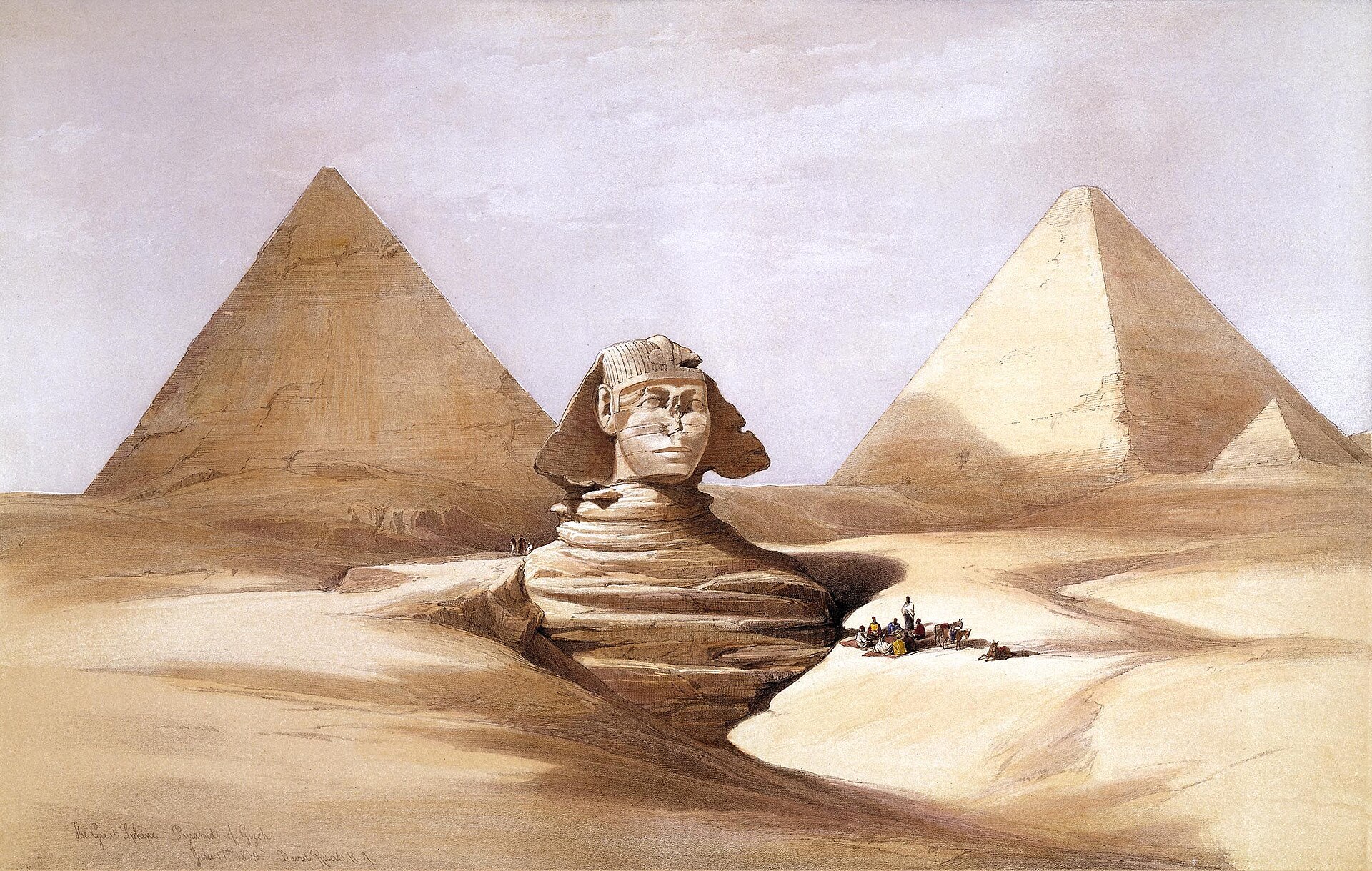
In Cairo the pyramids are not outside the city, they are inside it. A few hundred metres separate the Giza plateau from blocks of flats, and that is never shown in the photographs. The city itself is loud, dusty and twenty million strong, but nowhere else in the world can you get this close to something four and a half thousand years old. Below I have written a four-day route.
The pyramids of Giza and the Sphinx
The three great pyramids and the Sphinx are on the same site. There is a separate ticket for going inside the Great Pyramid; the passage is narrow and airless and is not recommended for anyone claustrophobic. The area is large, and you will be offered a horse, a camel or an electric cart to reach the panorama point.
Haggling is normal here and the pressure is strong. Settle the price of a service before it begins, or you will be told a completely different figure at the end. Go at opening time in the morning — it is cooler and there are fewer sellers. Taking the tickets and tours in advance removes most of that pressure.
The Grand Egyptian Museum and Saqqara
The Grand Egyptian Museum beside the Giza plateau is the largest archaeological museum in the world, and the complete Tutankhamun collection is gathered there. The display is vast — set aside at least half a day. The old Egyptian Museum on Tahrir Square is still open and holds different works.
Saqqara is half an hour from Giza, and the step pyramid of Djoser stands there; it is considered the oldest stone building in the world. The Bent Pyramid at Dahshur is visited by fewer people. Fitting all three into one day is possible, but tiring.
Islamic Cairo and Khan el-Khalili
The Citadel of Saladin is up on the hill; the Mosque of Muhammad Ali inside it is the city’s best-known silhouette, and all of Cairo is visible from there. The madrasa of Sultan Hassan is among the strongest examples of medieval architecture.
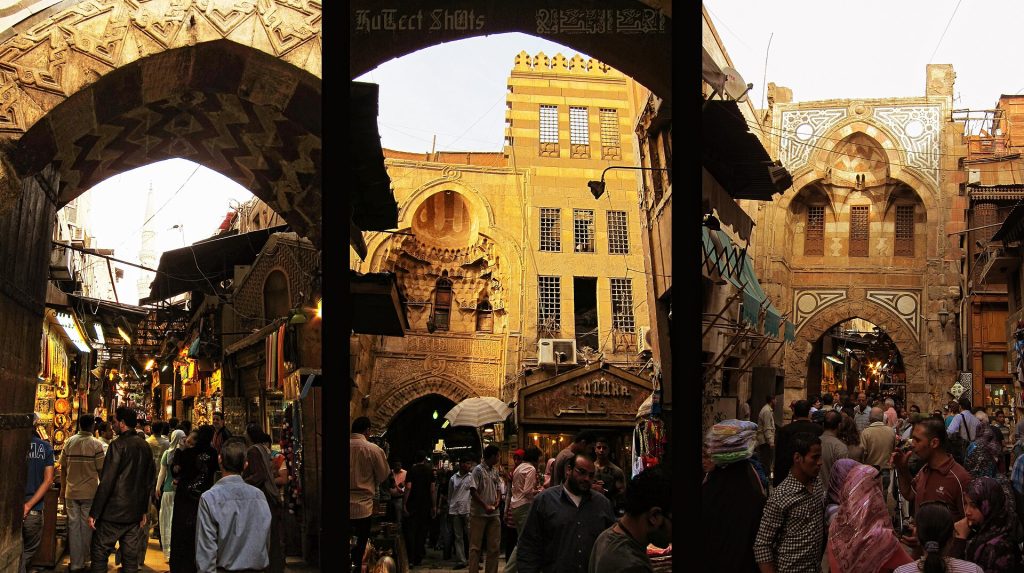
The Khan el-Khalili bazaar has been trading since the fourteenth century; spices, copper and cloth are sold in its narrow passages and the prices are negotiable. The al-Azhar mosque and university nearby have lived for more than a thousand years. The churches and the synagogue in Old Cairo show another layer of the city.
Read more: An Egypt travel guide: Cairo and the pyramids, Luxor, a Nile cruise, Hurghada and Sharm el-Sheikh
Transport, season and prices in Cairo
The metro has three lines, is cheap and saves you from the traffic, and there is a separate carriage for women. Taxi apps work and are safer than flagging one down in the street. There is a night train to Luxor and cheap domestic flights. December to February is the most in-demand period, so it pays to make the flight booking before the season begins.
October to April is the best period, with 20–28 degrees. May to September climbs to 38 and there is no shade at the pyramids. A three-star hotel is 30–60 dollars, and hotels facing the pyramids 60–120 — look at the options with a rooftop view. Official information is on the Egypt Monuments site.
A last word
Cairo asks for patience, and in return gives you an experience with no equivalent anywhere. Go to the pyramids at opening time, settle the price before every service, and give the museum half a day. For a visa and a route, fill in the application form.
Note: the prices in this article are those at the time of publication and may change with the season.
