Egypt is two different trips for us. One is a Red Sea holiday with the all-inclusive hotels of Hurghada and Sharm el-Sheikh; the other is five thousand years of history with the pyramids, the temples of Luxor and a Nile cruise. The best thing is to combine the two: half a week of history, half a week of sea.
The visa is bought online for 25 dollars or at the airport, and for the Sinai resorts there is a separate rule. Egypt is cheap, but the tipping and scam culture wants preparation; whoever goes unprepared hands over money at every step. Below I have gathered Cairo, Luxor and Aswan, the Nile cruise, along with the Red Sea, the transport, the food, the rules, the season and the budget.
Egypt in brief
| Capital | Cairo, the largest city in Africa |
| Language | Arabic; English in tourism, Russian widespread in Hurghada and Sharm |
| Currency | Egyptian pound (EGP), 1 dollar ≈ 50 pounds; cash for tips, card in hotels and big shops |
| Visa | eVisa 25 dollars or at the airport; the Sinai stamp for Sharm |
| Best time | October–April; the Red Sea all year |
| Flights | Baku–Cairo and Baku–Sharm el-Sheikh direct, 4 hours; charters to Hurghada |
| Daily budget | 50–80 dollars at a mid-range level; all-inclusive at a resort |
Cairo: the pyramids, the Grand Egyptian Museum, Khan el-Khalili
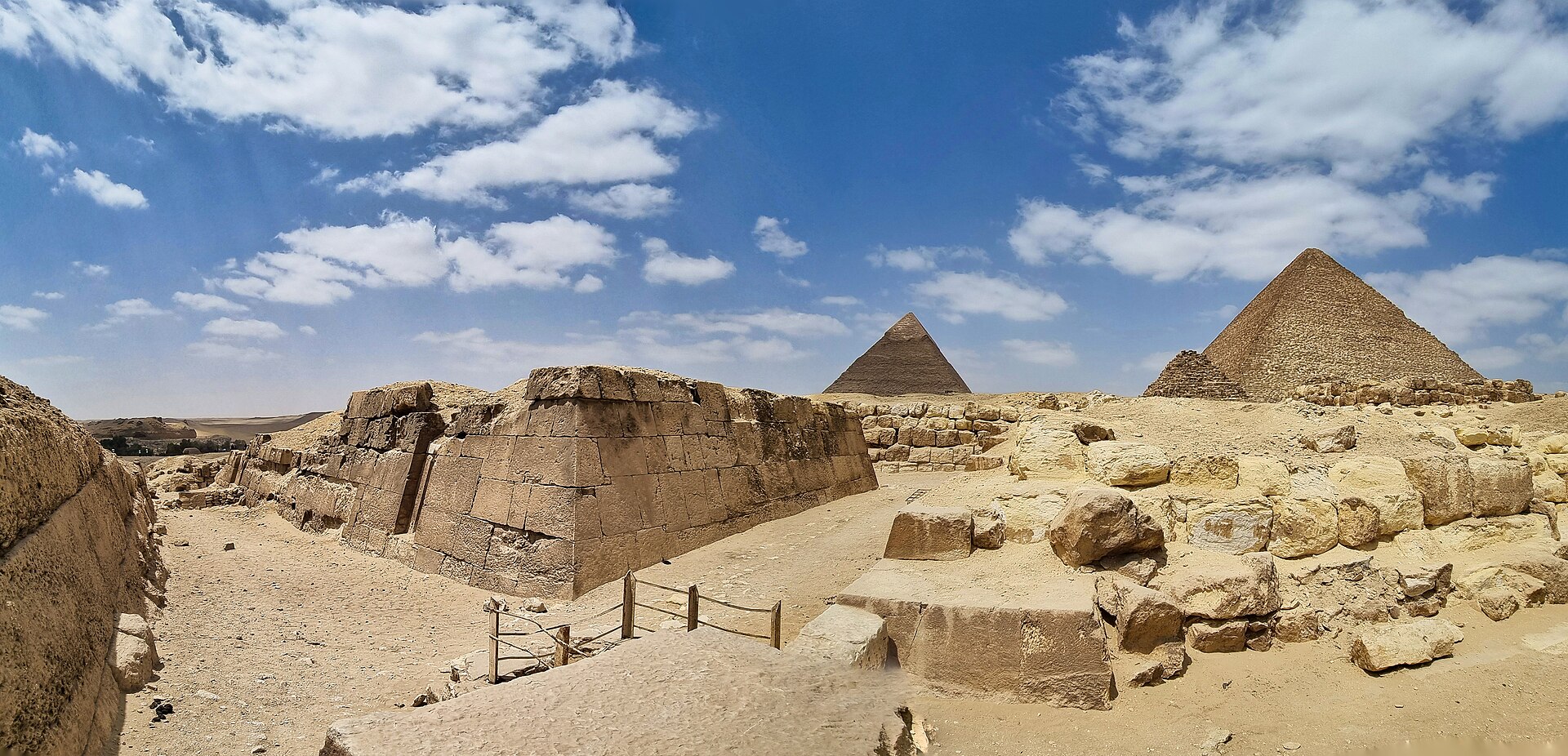
The Giza pyramids stand on the edge of Cairo face to face with the city: five-thousand-year-old stone on one side, blocks of flats on the other. The pyramid of Cheops and the Sphinx are here, and by camel you go out to the panorama point on the desert side. Go in at eight in the morning; the ticket is 10–15 dollars. Inside the pyramid costs a further 20 dollars, but it is narrow and hot in there. In the evening there is a light show. The Grand Egyptian Museum next to the pyramids is the largest archaeological museum in the world, the whole treasure of Tutankhamun is there, half a day, the ticket 25–30 dollars; the old Egyptian Museum on Tahrir Square is still open.
Islamic Cairo has the Al-Azhar mosque, the Sultan Hassan mosque and the Citadel. Spices and copper are sold in the Khan el-Khalili bazaar. End the evening with tea at the Fishawi café, which has not closed in two hundred years. Coptic Cairo, the Hanging Church, the step pyramid of Saqqara and Memphis are half a day from Giza. The city is chaotic and noisy, and crossing the street is a skill in itself; three days is enough. On the bank of the Nile a felucca in the evening is 10 dollars and is the city’s quietest hour.
Luxor, Aswan and the Nile cruise
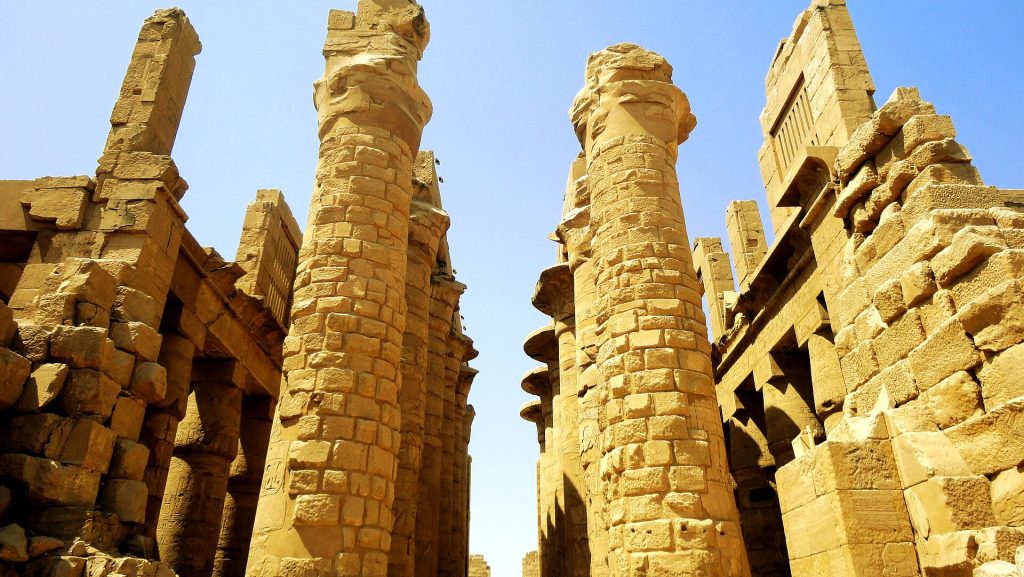
Luxor is the largest open-air museum in the world. On the east bank the Karnak temple has a hall of 134 columns, and among them a person feels small. Luxor temple looks its best in the evening light. On the west bank are the Valley of the Kings and the tombs of Tutankhamun and Ramesses II. The temple of Hatshepsut and the Colossi of Memnon are there too. At five in the morning a hot-air balloon flight over the valley is 60–100 dollars. Set aside two days. Aswan is the most beautiful part of the Nile. The temple of Philae is on an island, and around it are Nubian villages. Go out on a felucca at sunset. The huge temple of Ramesses II at Abu Simbel is three hours to the south, and people go there with the morning convoy.
A Nile cruise between Luxor and Aswan takes three or four nights. On the way you stop at the temples of Edfu and Kom Ombo, and on board it is full board. Three stars is 300–500 dollars and five stars 600–1200 per person. This is the most comfortable and most classic Egyptian experience. You sit on deck and watch the villages on the bank of the Nile. From Cairo to Luxor the sleeper train is ten hours and 80–100 dollars for a compartment, and the flight an hour and 60–120 dollars.
Egypt’s Red Sea: Hurghada, Sharm el-Sheikh, Dahab
Hurghada is the address of the charters leaving Baku. All-inclusive hotels are lined up along forty kilometres of coast. There is a snorkelling trip to Giftun island and a water park. Sahl Hasheesh and El Gouna are the luxury side. A day coach trip to Luxor takes four hours. It is an ideal place for a family holiday. Sharm el-Sheikh in Sinai is the diving capital. Ras Muhammad national park and the reefs of Tiran island are its best spots. Naama Bay is known for its night life. A night climb up Mount Sinai and Saint Catherine’s monastery are a separate programme. For Sharm there is free entry for fifteen days with the Sinai stamp, but only for the Sinai region — to cross to Cairo a full visa is needed, and whoever does not know that is left at the airport. Dahab is an hour from Sharm. It is a hippie-spirited diving village and the famous Blue Hole is there. It is cheap and quiet. Marsa Alam in the south has the cleanest reefs, with dugongs and turtles. The sea is 22–28 degrees all year. A dive is 40–60 dollars and a snorkelling trip 20–30. Taking the boat programmes to Giftun island from a reviewed operator is more reliable than from those offering them on the beach.
Egyptian food, tipping and the rules
Koshari is made of rice, pasta, lentils and fried onion. It is Egypt’s national street food, sells for 1–2 dollars and fills you up.
Ful is a bean dish and taameya is falafel, and both are served for breakfast. Molokhia is a green soup, hamam mahshi is stuffed pigeon, and kofta and kebab are on every menu. For dessert come kunafa and basbousa, to drink karkade, and in Aswan they eat Nile fish.
Everything is halal. Lunch in a local restaurant is 3–5 dollars and in a tourist restaurant 10–15, while at a resort the food is inside the all-inclusive package. Do not drink the tap water, and be careful with ice and salad too.
The tip, that is «baksheesh», is everywhere here. A hand reaches out in the toilet, when you take a photo, when a door is opened, when someone shows you a «hidden corner» in a temple; 10–20 pounds is enough, so carry small money.
In a taxi either insist on the meter or agree the price beforehand, and in Cairo Uber works. To call an Uber you need the internet, and an eSIM settles that without queueing for a SIM at the airport.
There are a few classic traps too. The «free» camel photo is not free: they put you on the camel and then want money to get you down. Say no to those presenting themselves as guides at the pyramids, and choose your hotel and restaurant yourself. For women, covered clothing is needed in the old quarters and mosques, while at the resorts it is free.
Read next: Do you need a visa for Egypt? The Sinai stamp, the 25-dollar eVisa and the visa at the border
Season and safety
October to April is ideal for Cairo and Luxor, the weather is 20–28 degrees, in December-February the nights get cool, and the Novruz and Christmas weeks pass expensively.
From May to September the temperature in Luxor and Aswan rises to 40–45 degrees and sightseeing has to be moved to the morning only. In return the hotels and cruises drop to half price. The Red Sea is hot in summer, but time passes comfortably in the water. Hurghada works all year; in January-February the water is twenty-two degrees and the wind blows.
As for safety, the tourist routes are protected by tourist police. Northern Sinai is prohibited, while Sharm and Dahab are in southern Sinai and are safe. In Cairo walking the streets alone at night is not advisable. The main problem is not crime but scams and persistent sellers. Keep sea-and-sun insurance, stomach medicine and sun cream with you. Museum tickets and regional information are on the Experience Egypt portal.
Budget and tickets
In Cairo a three-star hotel is 30–50 dollars and a hotel with a pyramid view 60–120, while in Luxor the price drops to 25–50. In Hurghada a four-star all-inclusive is 60–100 dollars a night for a couple and a five-star 120–250. Hotels with a pyramid view fill up fast, so check the free dates in advance.
Entry tickets are cheap. The pyramids are 12 dollars, the Grand Egyptian Museum 28, three tombs in the Valley of the Kings 12, Karnak 10, Abu Simbel 15, and a balloon flight in Luxor 80.
Excluding the flight, a week-long history trip with a Nile cruise fits into 700–1100 dollars per person, and a week’s holiday in Hurghada into 500–800. AZAL flies from Baku to Cairo, there are seasonal direct and charter flights to Sharm el-Sheikh and Hurghada, and flights to Sharm el-Sheikh must be bought early for Novruz and the summer holidays. Egypt tour packages fitting the pyramids, a Nile cruise and Hurghada into one week are among the best-selling destinations from Baku and settle the cruise booking together with the guide.
Frequently asked questions about Egypt
How many days does a trip to Egypt need?
Three days for Cairo, four for a Nile cruise, four or five for the Red Sea — ten to twelve days in all. A Hurghada holiday on its own is seven days.
Can you go to the pyramids on the Sinai stamp?
No, the Sinai stamp is only for Sharm, Dahab and southern Sinai. For Cairo and Luxor you need an eVisa or the 25-dollar visa at the airport.
Which route with a child?
Hurghada is the most comfortable, with a water park and shallow beaches, and you go to the pyramids on a day flight. The Luxor heat is hard with a small child, while a Nile cruise is comfortable with a child over six.
In closing
With direct flights, an easy visa and cheap prices, Egypt gives you both the world’s oldest history and its best reefs in one trip. For the person who knows the tipping and scam rules the trip passes without trouble. The visa options are explained on the Egypt page, and to build the Nile cruise or Red Sea plan together, fill in the application form.
Note: the prices here are as of the publication date and can change with the season.
