Tajikistan is Central Asia’s most mountainous country: ninety-three per cent of its territory is mountain. The Pamir Highway is reckoned one of the most magnificent road routes in the world, with passes at four thousand metres along the way. The Panj river runs along the border with Afghanistan, the villages of the Wakhan valley sit on that shore, and the turquoise Karakul lake comes near the end of the route.
For us there is no visa, AZAL flies direct from Baku to Dushanbe, you can make yourself understood everywhere in Russian, and the country is very cheap. Below I have gathered Dushanbe, the Fann mountains and Iskanderkul, along with the Pamir Highway and the GBAO permit, the hot springs, transport, food, the season and the budget.
Tajikistan in brief
| Capital | Dushanbe |
| Language | Tajik, a form of Persian; Russian everywhere, and easy to get by in Azerbaijani |
| Currency | Somoni (TJS), 1 dollar ≈ 10.5 somoni; cash is the rule, cards only in Dushanbe |
| Visa | 90 days visa-free for citizens of Azerbaijan; a GBAO permit for the Pamirs |
| Best time | The Pamirs June–September; Dushanbe and the Fann mountains April–October |
| Flights | Baku–Dushanbe direct, AZAL, 3.5 hours |
| Daily budget | 40–60 dollars at a mid-range level; 80–120 in the Pamirs with a jeep |
Dushanbe and Iskanderkul: the start of a Tajikistan trip
Dushanbe is a green, quiet capital of wide avenues, and one day is enough. Rudaki avenue and its park are the centre of the city, where one of the world’s tallest flagpoles stands. The National Museum and the Museum of Antiquities hold a thirteen-metre reclining Buddha. The Mehrgon bazaar, the Ismail Samani monument and the Navruzgoh palace are nearby. Cafés and teahouses are cheap and comfortable. Hisor fortress is thirty kilometres from the city and takes half a day with its eighteenth-century gate and madrasas.
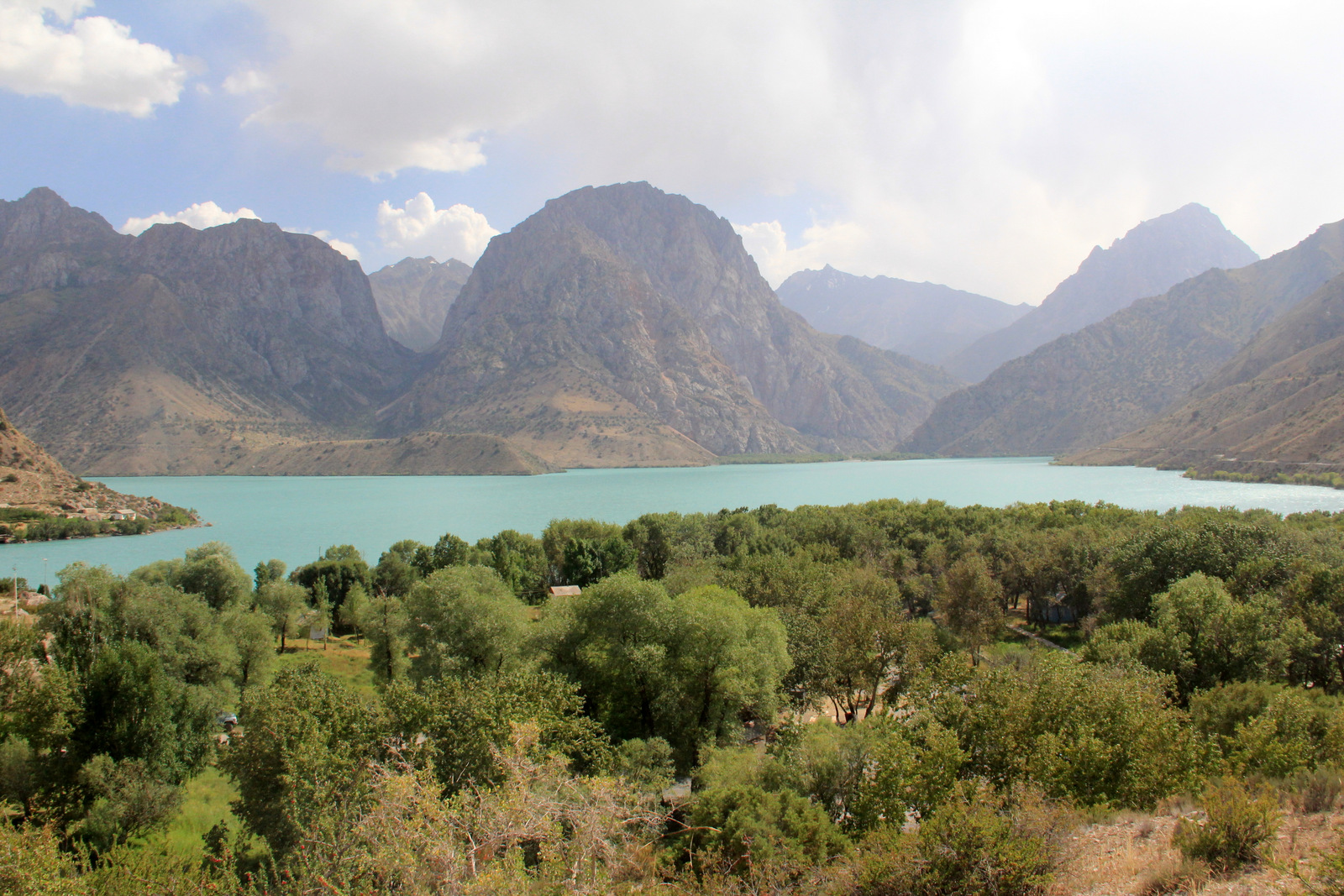
Iskanderkul is two and a half hours from Dushanbe. It is a turquoise lake at 2200 metres in the Fann mountains and bears the name of Alexander the Great. There is a tourist base on the shore and you can pitch a tent as well. Nearby the forty-metre Fann Niagara waterfall comes down. This is the easiest mountain landscape in the country to reach. In the Fann mountains, on the Panjakent side, there is the Seven Lakes route. Each lake is a different colour, and village guesthouses come along the way. The Alauddin lakes and the Kulikalon tent trek take three to five days. This is the finest hiking region in Central Asia — I rate it no lower than the Pamirs. Panjakent is an hour from Samarkand and the Uzbek border is open.
The Pamir Highway: the GBAO permit, Khorog, Wakhan, Karakul
The Pamir Highway, officially the M41, runs twelve hundred kilometres from Dushanbe to Khorog and on via Murghab to Osh in Kyrgyzstan, and it wants seven to ten days.
To enter Gorno-Badakhshan you need a GBAO permit. You get it at the migration service in Dushanbe in a day, or online; the price is 20–30 dollars, and the details are in our visa article.
Khorog is the capital of Badakhshan at two thousand one hundred metres, with a botanical garden, a bazaar and an Ismaili community. The Garm Chashma hot sulphur springs are forty kilometres from Khorog, and the pools on top of the limestone terraces are considered therapeutic for skin and joint problems.
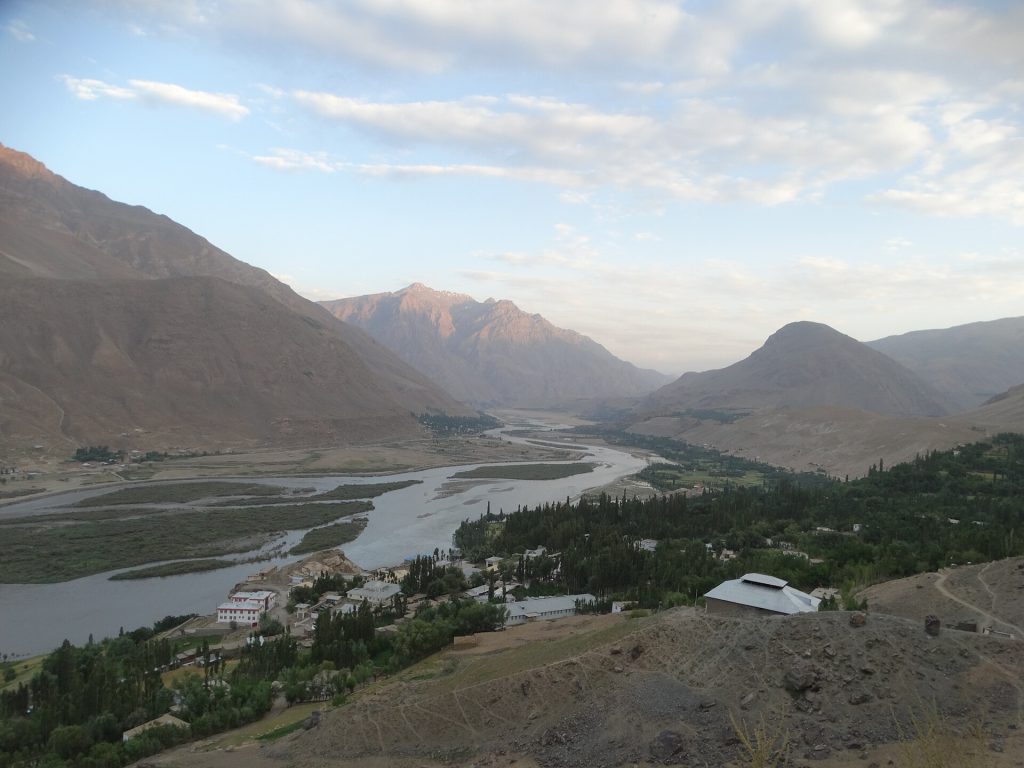
The Wakhan valley stretches along the Panj river, directly opposite Afghanistan. Yamchun fortress and the Bibi Fatima hot spring are here, and the Langar petroglyphs are on the way. The peaks of the Hindu Kush rise across the river, and village guesthouses cost 15–20 dollars.
Murghab, at three thousand six hundred metres, is the country’s highest town. The Ak-Baital pass climbs to four thousand six hundred and fifty-five metres, Karakul lake at three thousand nine hundred metres is the largest lake in the Pamirs, and after it you cross the Kyzyl-Art pass into Kyrgyzstan.
Altitude sickness is real here. Acclimatise for two days in Khorog, the nights in Murghab are cold, and take insurance that covers evacuation.
Transport: shared taxis, jeeps and Somon Air
Shared intercity taxis are the main transport. From Dushanbe to Khorog the road takes 14–18 hours and a seat is 30–40 dollars; Panjakent is five hours and ten dollars, and Khujand, through the Anzob tunnel, is another five.
For the Pamir Highway a 4×4 with a driver is 100–150 dollars a day, shared between three or four people. The PECTA tourism office in Khorog will find you a driver. The roads are gravel and mountainous, so do not drive yourself.
The flight from Dushanbe to Khorog with Somon Air takes an hour and costs 50–70 dollars. It is one of the world’s most scenic flights and also one of the most cancelled, because it depends entirely on the weather.
In Dushanbe a Yandex Go taxi is 1–2 dollars and the minibuses twenty cents. A car with a driver to the Fann mountains from Panjakent or Dushanbe costs 60–80 dollars a day.
Qurutob, osh, non: the Tajik kitchen
Qurutob is the national dish. Pieces of fatir bread are mixed in a wooden bowl with qurut yoghurt, onion and vegetables, and eaten by hand. Osh, the plov, comes to the table on Thursdays and at every celebration.
Shurbo is a meat and vegetable soup, sambusa is baked in a tandoor, and lagman, manti and shashlik are on every menu. Non is tandoor bread and stands in the middle of every table. In season the Dushanbe bazaar sells apricots, melons and pomegranates, and in the Pamirs they serve shir chai, salty milk tea.
Everything is halal. Lunch in a teahouse is 2–4 dollars, a restaurant in Dushanbe 6–10, and a night in a village guesthouse with three meals 15–25. The tap water is not drunk; in the mountains there is spring water. Tajik hospitality is famous — in a village an invitation to tea is certain, and you should not refuse it.
Read next: Do you need a Tajikistan visa? 90 days visa-free, the GBAO permit and the Pamir Highway
Season and weather
The Pamir Highway is fully open only from June to September. The passes stay clear of snow, the daytime temperature is 20 degrees, and at night in Murghab it drops close to zero. July and August bring the most travellers, while September is quiet and clear.
The Fann mountains and Iskanderkul are open from May to October, and the trekking season falls in July to September.
In Dushanbe April and May are full of blossom at 25 degrees, in July and August the temperature climbs to forty, and September and October are comfortable. In winter it is minus five and snowy, and the Anzob road can close. Novruz on the twenty-first of March is the country’s greatest holiday. Permit and regional information is on the portal of the Tajikistan Committee for Tourism.
Budget and tickets
In Dushanbe a three-star hotel is 40–60 dollars and a four-star 80–120. Guesthouses are 20–30 dollars, and in Khorog 20–40. In the Pamir and Fann villages a family guesthouse with meals is 15–25 dollars, and the Iskanderkul tourist base fifteen. Book your first and last night in Dushanbe in advance; the rest sorts itself out on the spot.
The GBAO permit is 25 dollars, museums 2–5 and the hot springs 1–3. Excluding the flight, a ten-day Pamir trip by jeep fits into 800–1200 dollars per person, and a week in the Fann mountains and Dushanbe into 400–600.
AZAL flies direct from Baku to Dushanbe, and tickets on the Dushanbe route should be bought early in summer, while coming to Khujand via Tashkent is the alternative. Pamir Highway tour packages that settle the Fann mountains or the Highway together with the driver, the GBAO permit and the guesthouses are the easiest option for a first trip, and the route can be combined with Kyrgyzstan too.
Frequently asked questions about Tajikistan
How many days does a trip to Tajikistan need?
Dushanbe and Iskanderkul three days, the Fann mountains three or four — a week in all. The Pamir Highway is another eight to ten days.
Is the Pamir Highway safe?
It is usually calm for tourists; the difficulties are the altitude and the gravel road, and travel along the Afghan border is permitted. Check the regional situation before you travel and go with a local driver.
Can it be combined with Uzbekistan?
Yes: the Panjakent–Samarkand border is an hour away and Khujand–Tashkent two. Both countries are visa-free for us. The Fann mountains and Samarkand are ideal on one route.
In closing
Tajikistan is a country you reach visa-free on a direct flight, very cheap, and offering the wildest mountains in Central Asia. Iskanderkul is a day trip; the Pamir Highway is a trip of a lifetime. The entry rules and the GBAO permit are gathered on the Tajikistan page, and to build the mountain route together, fill in the application form.
Note: the prices here are as of the publication date and can change with the season.
