Greece is one of our Schengen favourites. The Acropolis of Athens, Santorini’s white-and-blue houses, Crete’s beaches, Thessaloniki’s markets and the three fingers of Halkidiki all fit into one country. The food is close to our taste, the people are warm, and the sea stays warm into November — in Thessaloniki you almost feel at home.
The visa is obtained from the embassy for 35 euros, but the summer queue calls for early planning. Below I have gathered Athens, the islands and the ferries, Thessaloniki and Halkidiki, Meteora and the thermal baths. Transport, food, the season and the budget are in there too.
Greece in brief
| Capital | Athens; the second city is Thessaloniki |
| Language | Greek; English everywhere in tourism |
| Currency | Euro; cards everywhere, cash useful on the islands |
| Visa | Schengen «C» visa, embassy in Baku, 35 euros, a queue in summer |
| Best time | May–June and September–October; the sea until November |
| Flights | 5–6 hours to Athens and Thessaloniki via Istanbul; charters in summer |
| Daily budget | 90–140 euros at a mid-range level; more on Santorini |
Athens and Meteora
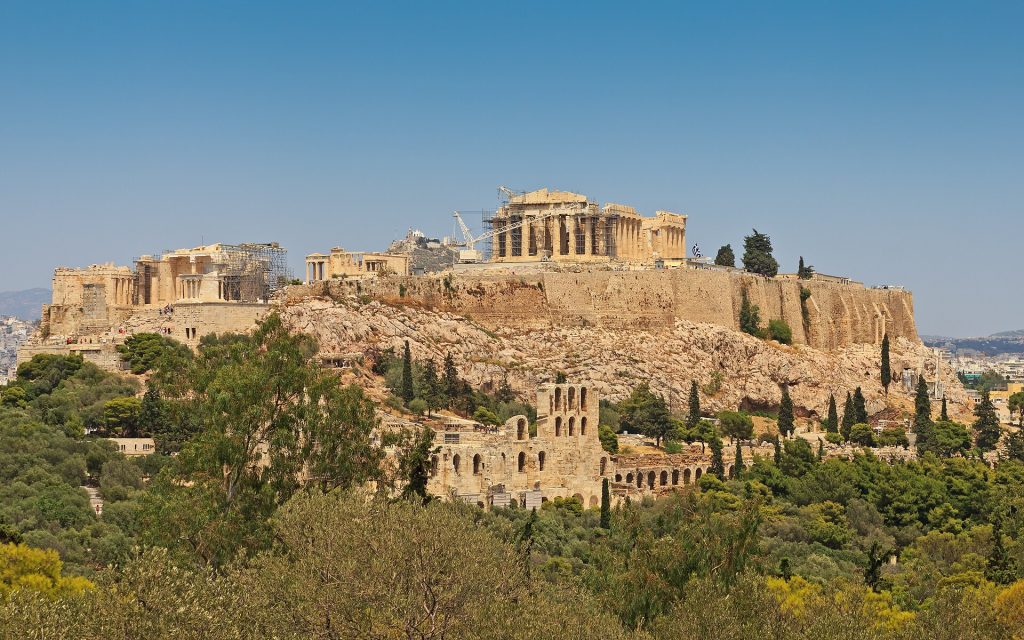
Athens is two days. Climb to the Acropolis and the Parthenon at eight in the morning; in summer the ticket is timed and costs 30 euros. The Acropolis museum, the Plaka and Anafiotika quarters, the Monastiraki flea market and the Ancient Agora are all close together. Watch the changing of the guard on Syntagma square, and take in the sunset from Lycabettus hill. In the evening drop into the tavernas of the Psyrri quarter. The temple of Poseidon at Cape Sounion is also for sunset.
Meteora is four hours from Athens by train. Six monasteries stand on top of the rocks, and it is one of the most surreal sights in the world. Give it a day or two and sleep in Kalambaka, and on the way look in at Delphi, the temple of the oracle of Apollo.
In the Peloponnese, Nafplio with its Venetian fortress is the peninsula’s loveliest town. Nearby are the theatre of Epidaurus and Mycenae, while Olympia is the home of the Games. The Corinth canal is just an hour from Athens.
The islands: Santorini, Mykonos, Crete, Rhodes, Corfu
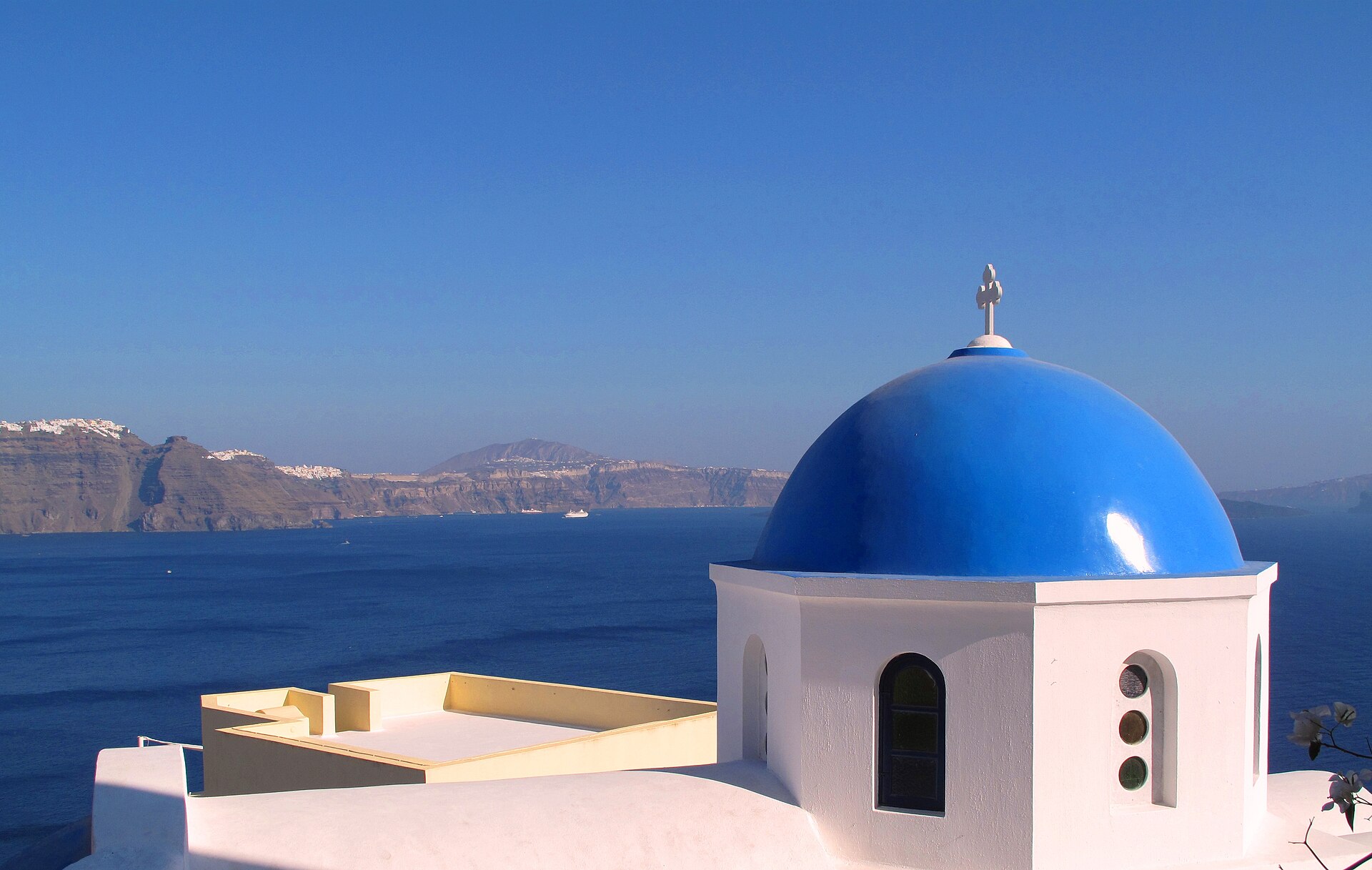
Santorini is white houses and blue domes strung along the rim of a volcanic caldera. You watch the sunset at Oia, walk the caldera path between Fira and Imerovigli, and there are red and black beaches, vineyards and a catamaran trip besides. The flight from Athens takes forty-five minutes and the ferry five to eight hours. Two or three days are enough, because this is the country’s most expensive island.
Mykonos is known for nightlife, windmills and Little Venice. Crete is the largest island and almost a country of its own. Chania’s Venetian harbour, the pink beach of Elafonisi and the Balos lagoon are in the island’s west, while Heraklion, the palace of Knossos and the Samaria gorge walk take five to seven days by car.
Rhodes’ medieval knights’ town is on the UNESCO list, with the acropolis of Lindos beside it. Corfu is known as a green island with a Venetian town. Zakynthos has Navagio shipwreck beach. Naxos and Paros are Santorini’s cheaper neighbours, and Skiathos is known as the «Mamma Mia» island. Ferries run with Blue Star and SeaJets from the port of Piraeus, the Cyclades are 1–3 hours from each other, and in summer buy tickets in advance.
Thessaloniki, Halkidiki, Pozar: northern Greece
Thessaloniki is our favourite northern city. The White Tower and the seafront promenade, the Byzantine churches on the UNESCO list, the Ladadika tavernas and the Modiano market fit into two days. Ano Poli, the upper town, gives the best view, and Aristotelous square is the heart of the city. Here are the country’s best food, an Ottoman heritage and the house where Atatürk was born.
Halkidiki, with its three peninsulas, is the beach paradise of the north. Kassandra means resorts and nightlife, Sithonia quiet coves and pine forests. Only men may enter Mount Athos with a permit; everyone else views the monasteries from a boat trip along the coast. From Thessaloniki the drive is an hour to an hour and a half, the season runs from June to September, and there is a wide choice of all-inclusive hotels and apartments.
The Pozar thermal baths are two hours from Thessaloniki. In a mountain gorge, natural thirty-seven-degree pools and a spa work all year; sitting there under the snow in winter is a pleasure of its own, and entry is 3–8 euros. Nearby are the Mount Olympus walk, the Macedonian royal tombs at Vergina, the port town of Kavala and the island of Thassos.
Transport: ferries, flights, KTEL, cars
Ferries to the islands leave from the ports of Piraeus and Rafina. Blue Star’s ordinary ferries are slow but comfortable at 30–45 euros, while SeaJets are fast and cost 60–80. Hopping between islands comes to 20–40 euros, and you buy tickets in the Ferryhopper app.
Domestic flights are run by Aegean, Olympic and Sky Express. Flights to Santorini, Crete, Rhodes and Corfu take 45–60 minutes and cost between 50 and 120 euros.
In Athens the metro runs from the airport to the centre in forty minutes for 9 euros, a ninety-minute city ticket is 1.2 euros, and a taxi is a fixed 40 euros. If you arrive on a night flight with a child, a meet-and-greet transfer is easier than hunting for the metro.
Intercity KTEL buses operate; Athens to Thessaloniki is six hours by bus and four by train at 30–50 euros, and Meteora is reached by train too. A car is essential for Crete, Rhodes, Halkidiki and the Peloponnese at 30–50 euros a day, while on Santorini the roads are narrow so people choose scooters and ATVs. In Athens Uber calls a taxi, and FreeNow works too.
Gyros, moussaka, meze: Greek food and halal
Gyros is spit-roasted meat in pita, sold for 3–4 euros and counted as the country’s street food. Souvlaki is skewers, moussaka is layers of aubergine and mince, and Greek salad with feta and tzatziki are on every taverna’s table. Spanakopita is a spinach pie, and dolma and stuffed vine leaves are relatives of our own kitchen.
On the islands taverna fish comes first, for dessert there is baklava and galaktoboureko, and to drink frappé and freddo coffee. On the whole Greek food is one of the easiest European cuisines for an Azerbaijani palate.
Lunch in a taverna is 12–18 euros and dinner 20–35. Caldera restaurants on Santorini start at 50 euros, while in Thessaloniki everything is cheaper than in Athens.
Halal food is found in Athens in the Pakistani, Bangladeshi and Arab restaurants around Omonia and Metaxourgeio. Turkish places operate in Thessaloniki, and there is a Muslim community in Thrace. Order your gyros with chicken, because the menus are full of pork, «hirino». Fish and vegetarian meze are everywhere. Tap water is drunk in Athens; on the islands buy bottled.
Read next: Greece visa: 35 euros at the embassy, the summer queue and the full chain of an island trip
Season and weather
May–June and September–October are the ideal months. It is 24–30 degrees, the sea stays warm, the islands quieten down and prices fall to sixty or seventy per cent of the summer level.
In July and August the thermometer climbs to 35–40 degrees and Athens has heatwaves. Santorini and Mykonos are then both crowded and at their most expensive, and the Meltemi wind delays ferries in the Cyclades. That is exactly Halkidiki’s real season. At the end of October hotels on the islands start closing and ferries thin out.
From November to March Athens holds at 12–17 degrees, the museums are empty, and Meteora and Pozar look finer in winter. Easter is the Greeks’ greatest holiday and is especially moving on the islands. Island, ferry and event information is on the Visit Greece portal.
Budget and tickets
Accommodation varies sharply by region. In Athens a three-star hotel is 80–130 euros and a boutique hotel in Plaka 120–180. On Santorini a hotel with a caldera view is 250–500 euros, while outside Fira it drops to 100–160. In Crete the price is 70–120 euros, in Halkidiki 100–180 in summer, and in Thessaloniki 60–100. A hostel bed can be found from 25–40 euros, with a wide choice in Athens and on the islands.
Museums are cheap. The Acropolis is 30 euros, the Acropolis museum 20, Knossos 20, and each of the Meteora monasteries just 3. A catamaran trip on Santorini starts at 100 euros, and you have to book the sunset departure a week ahead, because in summer there are no places left.
Excluding the flight, a ten-day trip taking in Athens, Santorini and Crete fits into 1200–1800 euros per person, while a week in Thessaloniki and Halkidiki comes to 700–1000. Turkish Airlines and Pegasus fly to Athens and Thessaloniki via Istanbul, and in summer charters open from Baku to Thessaloniki as well. Tickets to Athens should be bought early for summer, and the best-value option is to fly to Thessaloniki and stay in Halkidiki. For anyone touring Athens, Santorini and Crete on one route, Greek islands tour packages settle the ferries and domestic flights together, while Halkidiki’s all-inclusive packages are the best-selling holiday of the summer.
Frequently asked questions about Greece
How many days does Greece need?
Athens two, Santorini three, Crete or Mykonos three or four — ten days in all. Thessaloniki and Halkidiki are a separate week, and Meteora another day or two.
Santorini or Crete?
Santorini is for the view and a honeymoon; two or three days are enough and it is expensive besides. Crete gathers beaches, history and food in one place, takes a week by car and is both cheaper and roomier for families. The ferry between the two islands takes two hours.
Can it be combined with Türkiye?
Yes: the Rhodes–Marmaris and Kos–Bodrum ferries take an hour, and the Thessaloniki–Istanbul bus ten. Türkiye is visa-free, and returning to Greece needs a multiple-entry Schengen visa.
In closing
Greece is the Schengen country closest to our taste and our liking, and Athens, the islands and Halkidiki come out both cheap and unforgettable with the right choice of season. The visa process and the summer queue are explained on the Greece page, and to plan an island or a Halkidiki trip together, fill in the application form.
Note: the prices here are as of the publication date and can change with the season.
