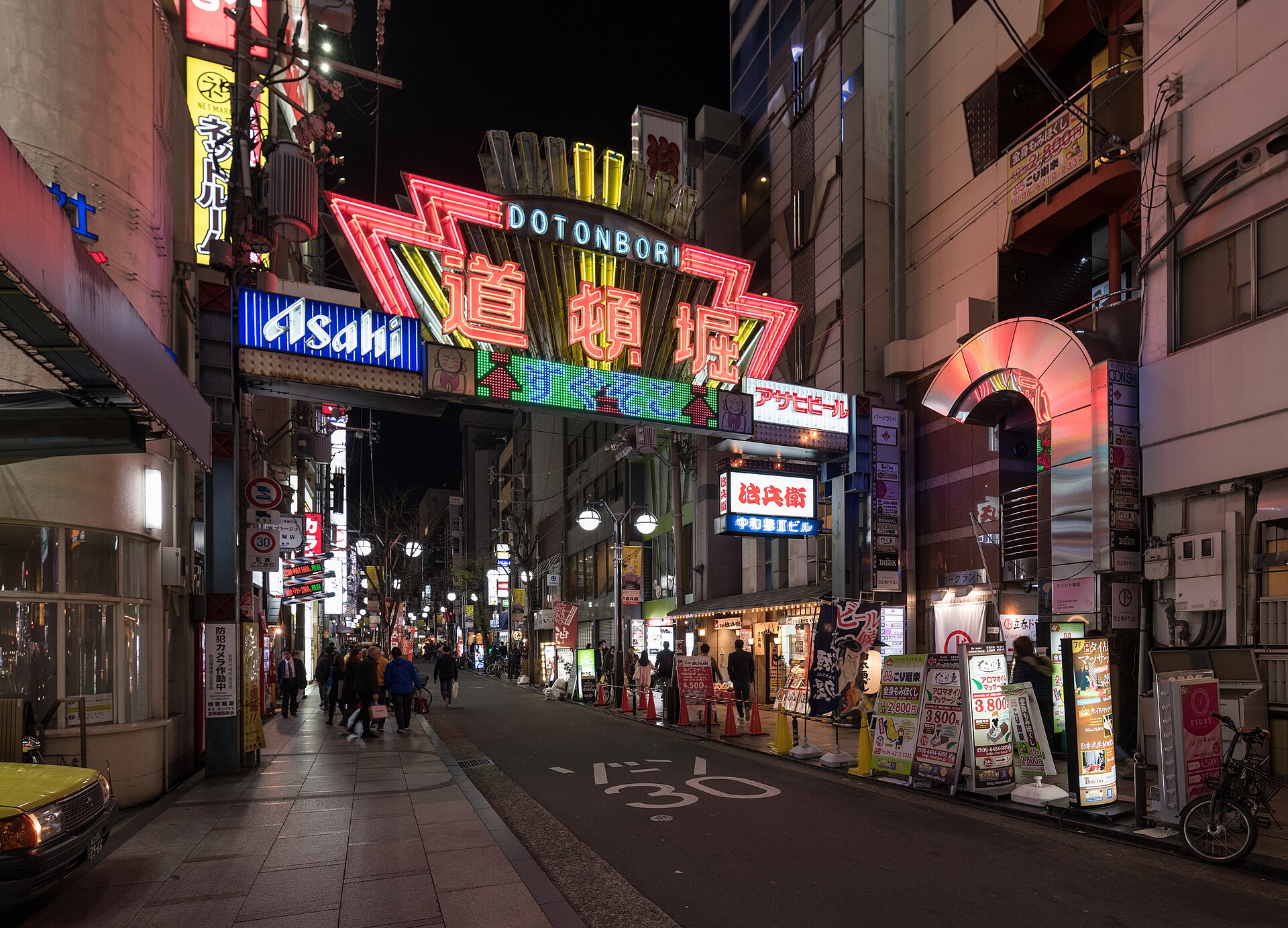
Osaka is considered the food capital of Japan and has a character quite different from Tokyo’s. People here speak more openly, street food is a central part of the culture, and prices are below the capital’s. The city is also the jumping-off point for Kyoto and Nara. Three days go to the city and one or two to the routes around it.
Dotonbori and the street food
Dotonbori is the neon street beside the canal and in the evenings is the busiest place in the city. There are enormous moving signs on the walls, and the famous running man above the canal has become the city’s symbol. Here eating while walking is more usual than sitting down.
The batter balls called takoyaki have octopus inside and are made in the street. Okonomiyaki is a thick pancake cooked at the table, with whatever you like folded into it. The skewered fried pieces called kushikatsu come with one rule: you may dip in the sauce only once, and dipping a second time is one of the most serious taboos in Japan.
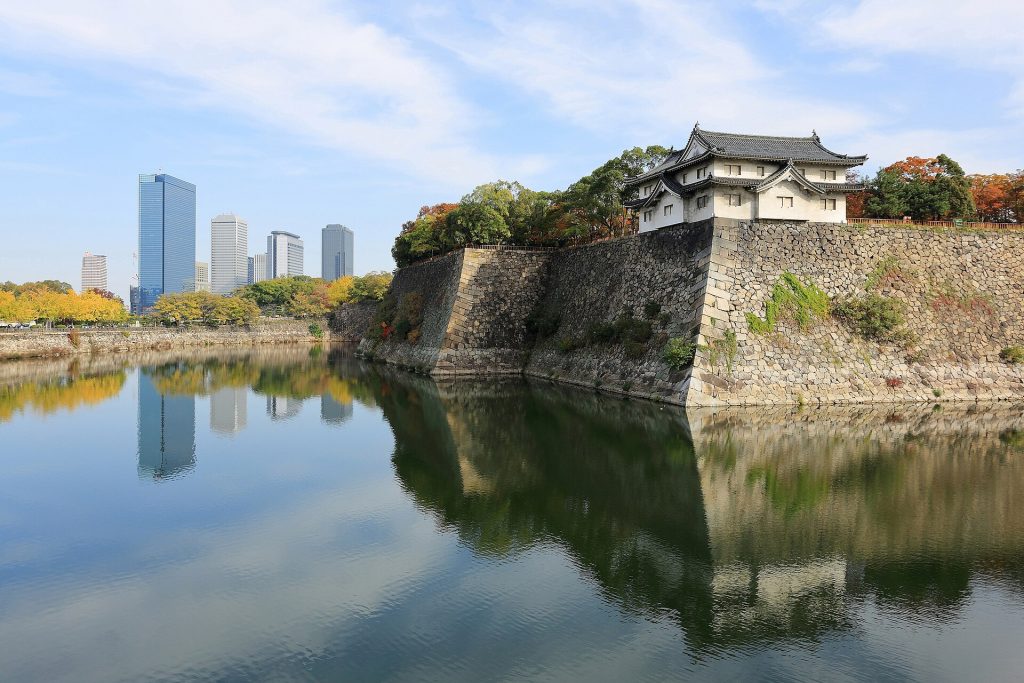
The castle, the market and the observation decks in Osaka
Osaka castle stands in the middle of a park behind a moat, and in spring it is surrounded by cherry trees. Inside it is a museum, and from the upper floor you get a panorama of the city. The park itself is free and is enough for a walk.
Kuromon market is the city’s kitchen larder, where seafood is prepared on the spot. The tall building in the Umeda district has an open observation deck on its roof, reached by a glass escalator. A lot of people go there at sunset, so taking the tickets in advance gets you round the queue.
Kyoto, Nara and day routes
Kyoto is about forty minutes by ordinary train, which means staying in Osaka and going to Kyoto for the day is entirely possible. Given hotel prices, that often works out better. Nara is forty-five minutes away and is known for the deer wandering freely in its city park.
Himeji castle is an hour and a half away and is the best-preserved castle in Japan. Kobe is half an hour off and is famous for its beef. All of these routes connect comfortably by train, so buying a regional card works out well.
Read more: A Japan travel guide: Tokyo, Kyoto, Osaka, cherry blossom season, the Shinkansen and onsen etiquette
Transport and budget in Osaka
The airport is on an artificial island and the fast train to the centre takes about forty minutes. For getting around the city, buy a rechargeable electronic card; it works on the metro, the buses and in shops. For the internet, loading a Japan eSIM before you fly gets you past the queue at the airport. Cash is still needed, because small places do not take cards. To choose a hotel around Namba or Umeda, filtering Osaka hotels by station is useful.
| Hotel | Around 70–130 euros a night in the centre |
| Street food | A portion 3–7 euros |
| Lunch in a restaurant | 10–20 euros a head |
| City card | A daily option combining the metro and entries exists |
There is no direct flight from Baku; you travel via Dubai, Doha or Istanbul and the journey is long. Watching flight options towards Japan a few months ahead changes the budget seriously. Official information about the city is on Osaka’s official tourism portal.
The season in Osaka
The end of March and the beginning of April is the cherry blossom period, the loveliest and at the same time the most expensive time. November is the second best month with its autumn colours, and the crowds are a little thinner. The end of June is the rainy season, while July and August are hot and humid. Winter is mild, snow falls rarely and prices are at their lowest.
In short
Osaka is a city of food, a castle and night streets, and on top of that it is the most comfortable base for day trips to Kyoto and Nara. Walk Dotonbori in the evening, do not break the kushikatsu rule, and buy the electronic transport card on your first day. If you want to see Japan across several cities, you can look at tour programmes for Japan. For a visa and a route, fill in the application form.
Note: prices and train timetables change with the season, so check before you travel.
