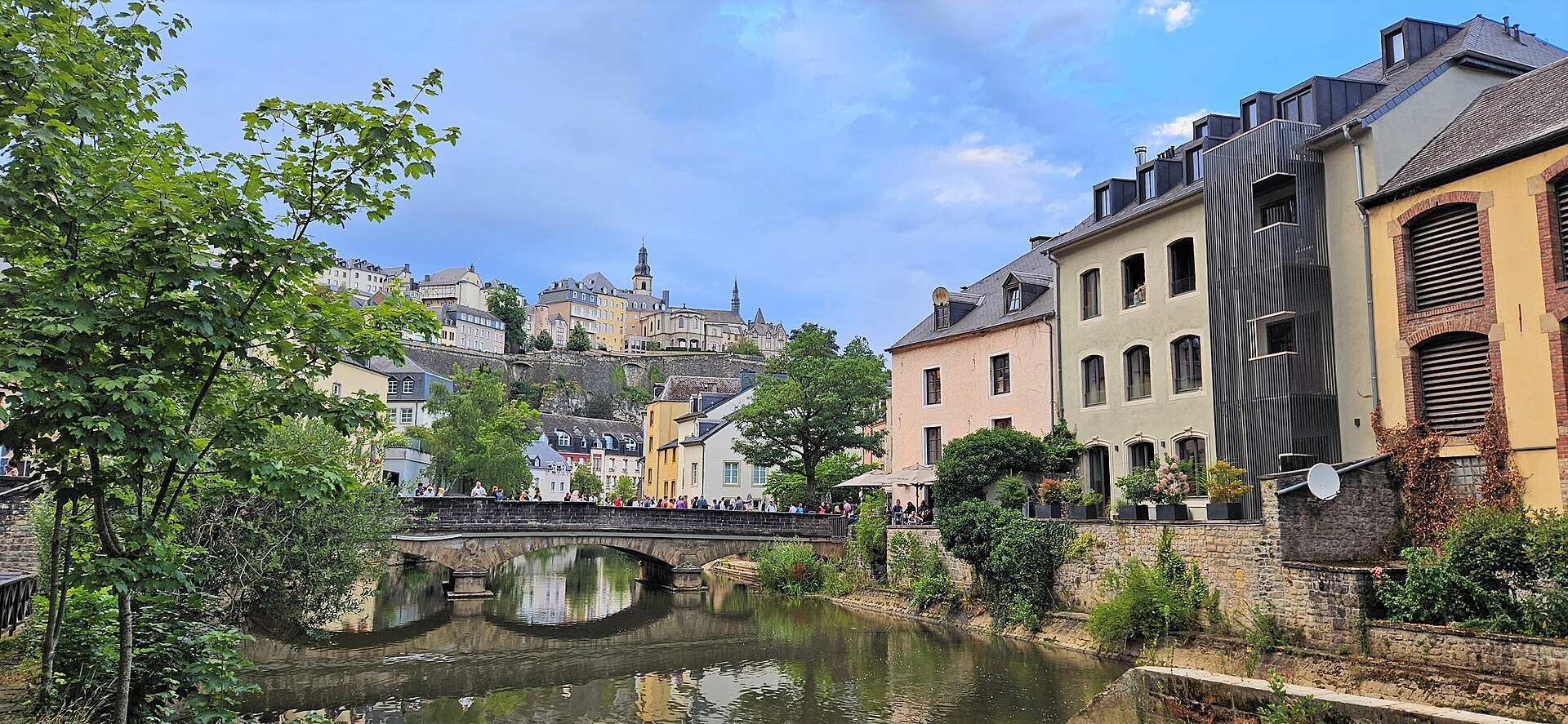
Luxembourg is one of Europe’s richest and least known countries. Its capital is a city where a medieval fortress on a cliff meets the glass quarter of the European Union. Public transport is free across the whole country. And the word Schengen itself comes from the name of a small village here — the very word in all our passports.
For us there is no embassy in Baku; the visa is obtained through the Capago centre. Below I have gathered the capital, Vianden and Mullerthal, the Moselle river, and with them the free transport, the food, the season and the budget.
Luxembourg in brief
| Capital | Luxembourg City |
| Language | Luxembourgish, French and German; English everywhere |
| Currency | Euro; cards everywhere |
| Visa | Schengen «C» visa, through the Capago centre in Baku |
| Best time | April–October; the Christmas market in December |
| Flights | 6–7 hours direct to Luxembourg via Istanbul; trains from Frankfurt and Brussels |
| Daily budget | 130–180 euros at a mid-range level |
The capital: casemates, the Grund, Kirchberg
Luxembourg City is on two levels, and that is where all its charm lies. Above is the old town, on the UNESCO list; below, in the valley of the Alzette, is the Grund quarter. The Bock casemates are a seventeen-kilometre tunnel system inside the rock. They are what remains of the fortress known as the «Gibraltar of the North». They are open from March to November and cost 8 euros. Inside, you get lost easily. The Chemin de la Corniche, called «Europe’s most beautiful balcony», is a walkway looking down into the valley — go there in the evening.
You descend to the Grund by the Pfaffenthal panoramic lift, which is glass and free; anyone who prefers can take the steps. Below, along the river, there are cafés and the Neumünster abbey.
Up above, the Grand Ducal Palace is open to visitors in summer, and nearby are Notre-Dame cathedral, Place Guillaume with its Saturday market, and the Adolphe bridge.
The Kirchberg plateau is the city’s modern face. The European Court of Justice and the banks, the Mudam modern art museum and the Philharmonie are there, fifteen minutes away by tram. All in all the city is walked in a day and a half.
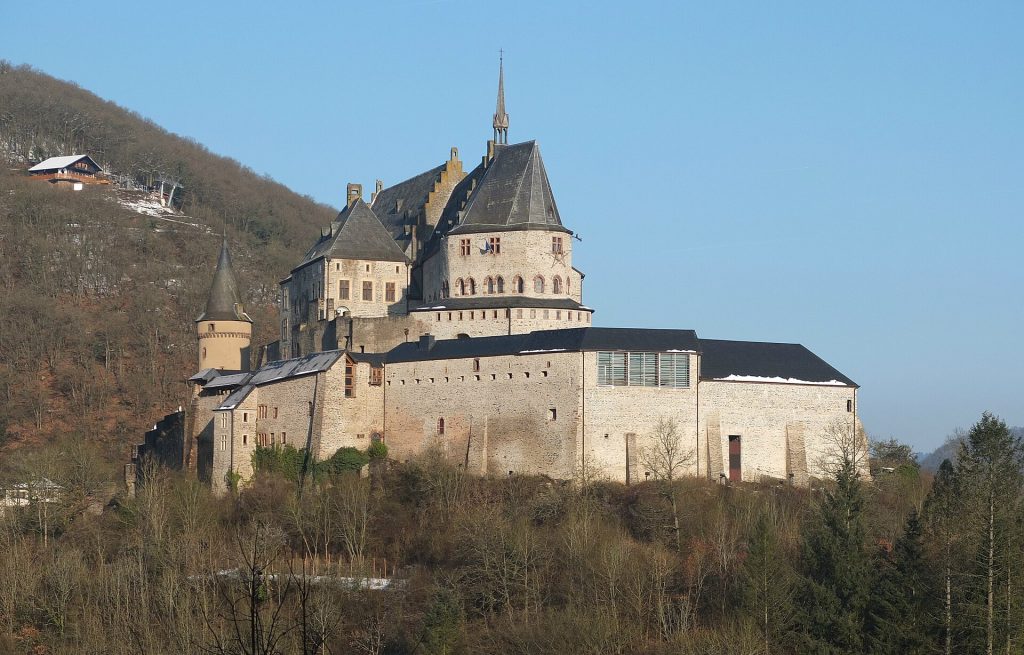
Vianden, Mullerthal, the Moselle and Schengen village: Luxembourg beyond the capital
Vianden lies in the north, above the river Our. One of Europe’s finest restored medieval castles stands there; you ride up by chairlift for the view, and Victor Hugo’s house of exile is now a museum. It is an hour and a half from the capital by train and bus — and free.
Mullerthal is the region called «Little Switzerland». Sandstone rocks, narrow gorges, the Schiessentümpel waterfall and the hundred-and-twelve-kilometre Mullerthal Trail are there, with the Benedictine abbey of Echternach and the country’s oldest town beside them.
The Moselle river is the German border and at the same time Luxembourg’s wine region. River cruises run at Remich and Grevenmacher, and the Riesling and crémant tastings are there too.
Schengen village on the Moselle shore is where three countries meet; the borderless Europe agreement was signed here on a boat in 1985, and there is a European museum and pieces of the Berlin Wall. Anyone who gets a Schengen visa should go once and look at that village, to see where the visa’s name comes from. Clervaux in the north holds «The Family of Man» photo exhibition in its castle, and Esch-sur-Alzette in the south has an industrial heritage.
Free transport in Luxembourg: train, tram, bus
Since 2020 trains, trams and buses have been free across the whole country. No ticket, no card, no app — you simply get on. The first time you feel like a fare dodger, and then you get used to it. Only first class on trains and travel on into neighbouring countries is paid.
In the capital the tram runs from the airport through Kirchberg and the centre to the station, a journey of twenty-five minutes, and it is free. The Pfaffenthal and Grund lifts are free as well. You plan the bus and train combination to Vianden, Echternach and Remich in the mobiliteit.lu app.
A car is convenient for the Mullerthal trails and the Moselle villages, at 40–60 euros a day. Because fuel is cheaper than in the neighbouring countries, Germans and Belgians fill their tanks here. Trains from Frankfurt, Brussels and Paris take two to four hours, which makes Luxembourg a stop in the middle of a European route. Bolt and Uber work, while taxis are expensive.
The kitchen: judd, gromperekichelcher, crémant
The cuisine is a mixture of French finesse and German heartiness. Judd mat Gaardebounen is smoked meat with broad beans and is the national dish. Gromperekichelcher are fried potato cakes sold at every market and festival — if you cannot say the name, just point.
Kachkéis is a melted cheese, bouneschlupp a bean soup, and for dessert comes quetschentaart, a plum tart. To drink there is Moselle Riesling and crémant sparkling wine.
Restaurants are expensive. Lunch is 20–30 euros and dinner 45–70, while the daily menu called «plat du jour» is 15–20 and is found in the cafés of the Grund and the old town. Halal food is available in the capital around the station and in the Bonnevoie quarter, in Turkish, Middle Eastern and Portuguese restaurants, because half the population is foreign and the largest community is Portuguese. The tap water is clean and the bread is of French quality.
Read next: Luxembourg visa: no embassy in Baku, but Capago. The process and the documents
Season and weather
April to October is the travel season at 15–25 degrees, with rain possible in any month. The 23rd of June is the national day, with fireworks and street celebrations. In July and August the «Blues’n Jazz Rallye» and the Moselle wine festivals are held. September is the grape harvest and the Schueberfouer fair. The casemates are open only from March to November, so anyone going in winter finds a closed door. In winter it is 0–5 degrees, grey and wet. Even so, in December Christmas markets go up on Place Guillaume and Place de la Constitution. And the Christmas lights of Vianden castle are a beauty of their own. Casemate tickets and the events calendar are on the Visit Luxembourg portal.
Budget and tickets
In the capital a three-star hotel is 120–180 euros and a four-star 180–260, while around the station the price drops to 90–130. Guesthouses in Vianden and Echternach are 80–120 euros. The hostel in Pfaffenthal is 35–50 euros and, thanks to the lift, only five minutes from the centre.
Museum tickets are cheap. The casemates are 8 euros, Vianden castle 13 and Mudam 8, while the Luxembourg Card covers the museums for 13–28 euros in its one to three-day versions — transport being free anyway. Excluding the flight, a three-day trip fits into 450–650 euros per person.
Turkish Airlines flies direct from Istanbul to Luxembourg. Compare the price of a ticket to Luxembourg with the Frankfurt and Brussels options, from where the train takes two or three hours. For anyone touring Brussels, Luxembourg and Amsterdam on one route, Benelux tour packages link the three countries by train on one Schengen visa.
Frequently asked questions about Luxembourg
How many days does Luxembourg need?
The capital a day and a half, Vianden a day, Mullerthal or the Moselle a day — three days in all. One or two days on a Benelux route.
Is transport really free?
Yes, for tourists too, with no registration and no ticket. Only first class on trains, night buses and the stretch beyond the border are paid.
How do you get to Schengen village?
An hour from the capital by bus via Remich, free of charge. The European museum is free, and with a walk along the Moselle and the German and French border stones it makes half a day.
In closing
With its capital on a cliff, its castles, its wine river and its free transport, Luxembourg is a small but full stop on a Schengen route. And Schengen village is a symbolic address for everyone who holds that visa. The visa process is explained on the Luxembourg page, and to build the Benelux route together, fill in the application form.
Note: the prices here are as of the publication date and can change with the season.
