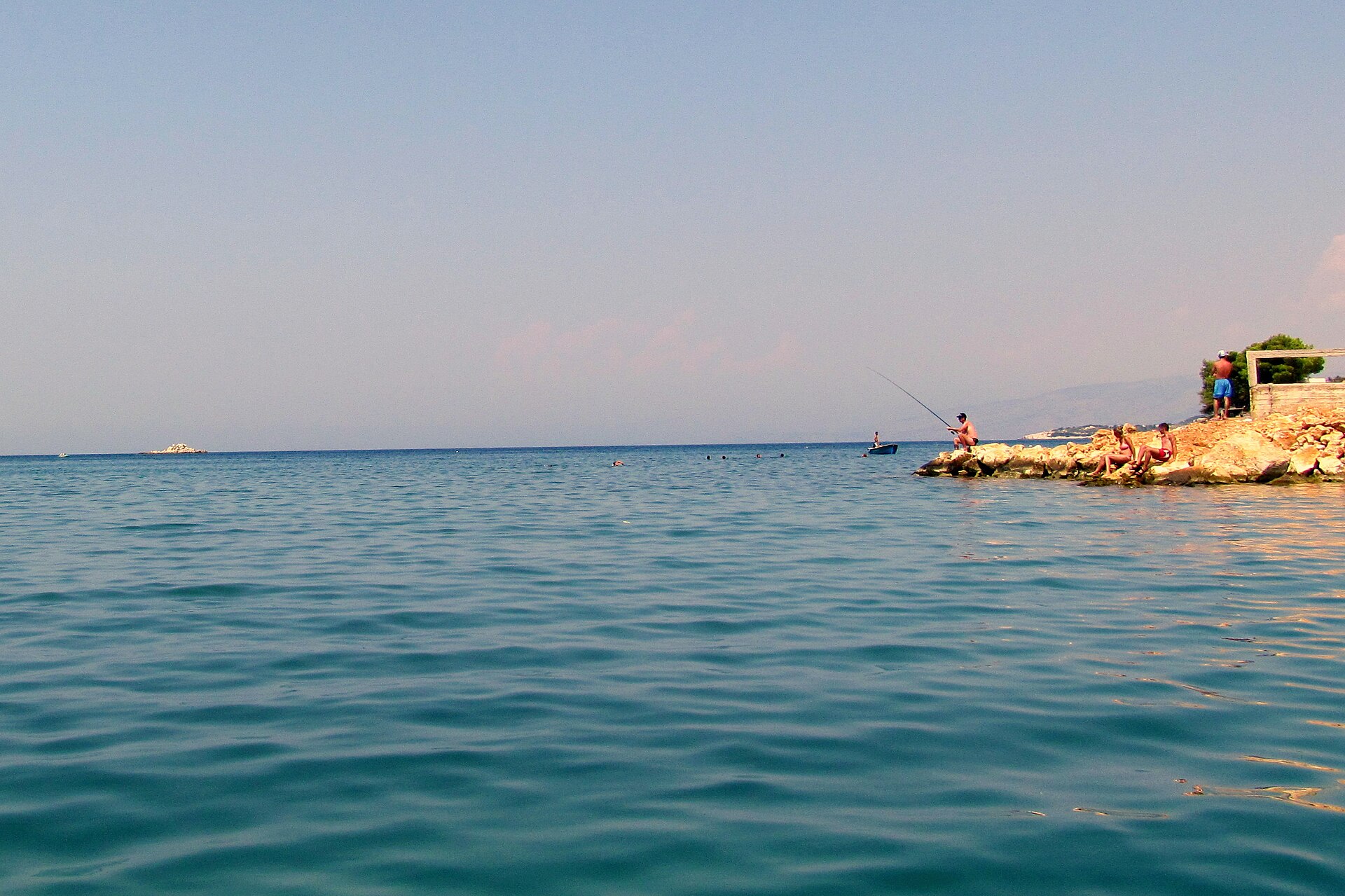
Ten years ago, when you said Albania in Baku, all that came to mind were old films. Now every summer the turquoise water of Ksamil beach fills the feeds of people we know and everyone asks the others how they got there. The answer is simple: there is no visa, the sea is the sea of Greece and the prices are half of it. But Albania is not a country you just turn up and travel around: its transport is peculiar, the distances take longer than they look on the map, and the season is short. I am writing this article for those going for the first time — where to go, how to get about, what to eat and what to be ready for in advance.
Albania in brief
| Capital | Tirana |
| Language | Albanian; young people know English and Italian |
| Currency | Lek (ALL), 1 euro ≈ 100 lek; euros are widely accepted too |
| Visa | 90 days visa-free for citizens of Azerbaijan |
| Best time | May–June, September; July-August hot and expensive |
| Flights | No direct flight, 2+2 hours via Istanbul |
| Daily budget | 50–70 euros at a mid-range level |
Where to go in Albania — what is there after Tirana?
Tirana is the country’s door and there is no need to give it more than a day or two. Skanderbeg Square, Soviet-style blocks painted in colours, the cafés of the Blloku quarter and the cable car up Mount Dajti — that is about it. The city is likeable not because it is beautiful but because it is comfortable: everything is within walking distance and in the evenings the streets fill with people.
The real Albania, though, begins once you leave Tirana.
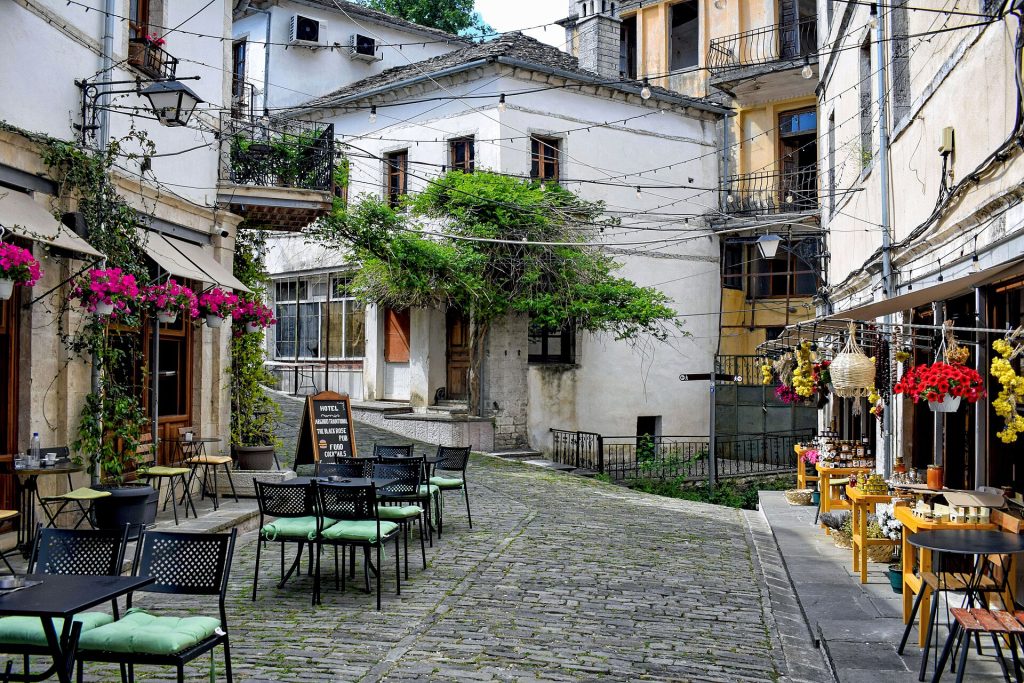
Berat is called the «city of a thousand windows». On the hill above the river white Ottoman houses are stacked one above another, and people still live inside its castle; it is ideal for a day trip from Tirana. Gjirokastra, with its stone-roofed houses, is on the road going south, and you cannot pass it without stopping.
As for the coast, Saranda is the centre of the south and Ksamil is only fifteen kilometres from it. Its water is like the one in the Maldives photographs, and people swim out to the little islands from the shore. Those wanting somewhere quieter go up to the villages of Himara and Dhërmi, where the beach is stonier and the view better.
From Ksamil it is ten minutes to the ancient city of Butrint and half an hour by ferry to the island of Corfu. Remember one thing: Corfu is Greece and wants a Schengen visa. For those who love the mountains there are Shkodra and Theth national park in the north, and that is an entirely different trip.
How to get about in Albania: furgon, bus or car?
The thing that surprises a first-time visitor most is the transport. The railway does not work in practice, and the country moves by the minibuses they call «furgon». The furgon sets off when it is full, the timetable is approximate, there is no ticket, and you give the money to the driver in cash. It is like our marshrutkas, only it goes a longer way. There are big coaches from Tirana to Saranda too, and checking the timetable and the price in advance guarantees a seat in the summer months. Because the road goes through the mountains it takes five or six hours. To Berat it is two hours, and to Shkodra the same.
Honestly, the most comfortable option is car hire. They give one for 25–40 euros a day and accept the Azerbaijani driving licence. Just know two things: the mountain roads are narrow and local drivers drive very boldly, so take the full insurance — the difference is a few euros. A bus runs every hour from Tirana airport into the city, and if you go by taxi agree the price before getting in. Taxis are cheap inside the city and can be called by app too.
Is Albanian food like ours?
Yes, more like it than you expect. It is a mixture of the Mediterranean and the Balkans, which means olive oil, yoghurt, lamb and pastry. Byrek is a layered pie sold on every corner and settles breakfast for a euro. Tavë kosi is lamb baked in yoghurt, and eating it for the first time you find it like a cross between our ovdukh and kebab. Fërgesë is a Tirana dish made of peppers and cheese, while on the coast the menu is grilled fish, squid and mussels. If you end up in a village, home-made cheese, olives and raki will certainly come to the table, and refusing is considered rude.
The coffee question deserves a separate word. Albanians do not forget that they live next to Italy: an espresso is one euro and there are three cafés on every street. An ordinary lunch in a restaurant is 8–12 euros, and fish in a seaside restaurant 15–20. Do not drink the tap water; bottled water is cheap everywhere.
When is it good to go to Albania?
The coast has a Mediterranean climate, the sea season runs from June to September, in July-August the weather climbs to 32–35 degrees and the water is 25. I recommend May and September: the weather is still warm, the beaches empty and the prices fall by half. After October the Riviera villages close, while Tirana and Berat are visited all year. In winter snow falls on the mountains and the Theth and Valbona routes are open only from June to September. The calendar of holidays and festivals can be seen on the Albanian national tourism portal.
Read next: Do you need a visa for Albania? A detailed guide for citizens of Azerbaijan
What does a trip to Albania cost?
Albania is one of the cheapest coastal countries in Europe, and that is still the case. A good hotel in Tirana is 40–60 euros and in Ksamil in season 60–100, while out of season the price halves.
The small expenses are low too. A sunbed and umbrella on the beach are 10–15 euros, an intercity furgon 3–8, and museum entry 2–5. Excluding the flight, a week-long trip fits into 400–600 euros per person.
There is a subtlety about money. Cards work in Tirana, while on the coast and in the small towns you need cash lek. Change euros at an exchange office rather than an ATM; the commission is considerably lower.
The largest part of the budget is the flight, because there is no direct service. When looking for a Baku–Tirana ticket, buying two separate tickets via Istanbul often comes out cheaper, and buy the summer dates early — in August the Tirana flights fill up.
Practical advice for the trip
- Safety. The country is quiet for a tourist, street crime is low, and the main risk is the traffic.
- Language. The older generation speaks Italian and the young English; those who know Turkish catch only a few words.
- Insurance. Not required, but the state hospitals are weak and a private clinic is expensive, so get insurance.
- Halal food. Most of the population is Muslim and pork is indicated separately on the menus.
- Internet. At the airport a local SIM gives a big package for 10 euros and works on the coast too.
- Neighbouring countries. Montenegro requires a visa, North Macedonia and Kosovo are closed without a Schengen visa, and the visa-free combination is Serbia and Bosnia.
For those who do not want to rack their brains over furgons and roads there are Albania tour packages covering the Tirana, Berat, Saranda and Ksamil line; travelling with a group the transport question solves itself, and a guide explains places like Butrint as well.
Frequently asked questions about Albania
Is Albania suitable for going with the family?
Yes, especially Ksamil and Saranda: the water is shallow, there are plenty of restaurants and the prices are cheap. Travelling by furgon with a child is tiring, so car hire would be more comfortable.
How many days is enough?
Three days for Tirana and Berat, five to seven for the coast. If you want to see the whole country without hurrying, plan for ten days.
Where can you get lek?
Lek is not sold in Baku, so you take euros and change them at an exchange office in Tirana. The rate at the airport is worse than in the city, so change only the taxi money there and the rest in town.
In closing
Albania is a visa-free, cheap Adriatic country not yet tired of tourists, and for the person who takes the transport and the season into account this is the best-value sea holiday in Europe. The entry rules and border requirements are gathered on the Albania page, and if you want to build the ticket, the hotel and the route together, fill in the application form.
Note: the prices and timetables here are as of the publication date and can change with the season.
