Tanzania is Africa’s most complete trip. The endless savannah of the Serengeti and the Great Migration, the world’s largest intact volcanic crater at Ngorongoro, and Kilimanjaro, counted as the roof of Africa, join up on one route. And at the end come the spice-scented Stone Town of Zanzibar and its white beaches.
For us the eVisa is obtained online, for Zanzibar there is a separate compulsory insurance, and the flight via Doha or Dubai is comfortable. A safari is expensive, but the price is known in advance and can be planned for, which means no surprises. Below I have gathered the northern safari circuit, Kilimanjaro and Zanzibar, along with the park fees, the transport, the food, the season and the budget.
Tanzania in brief
| Capital | Dodoma; the largest city is Dar es Salaam, the safari base Arusha |
| Language | Swahili and English; English everywhere in tourism |
| Currency | Tanzanian shilling (TZS), 1 dollar ≈ 2600 shillings; park fees in dollars and by card |
| Visa | eVisa 50 dollars online; compulsory insurance of 44 dollars for Zanzibar |
| Best time | June–October the dry season; January–February the migration’s calving period |
| Flights | 10–12 hours via Doha or Dubai to Kilimanjaro, Zanzibar or Dar es Salaam |
| Daily budget | 250–500 dollars on safari, 80–150 dollars in Zanzibar |
The northern circuit: the Serengeti, Ngorongoro, Tarangire
The classic safari is the five- to seven-day northern circuit starting from Arusha. Tarangire with its baobabs and elephant herds is the first day, Lake Manyara its tree-climbing lions and flamingos. The Ngorongoro crater is a hollow twenty kilometres across with twenty-five thousand animals living inside it. You can see the «Big Five» in a day, and this is the densest wildlife place in the world. Entry to the crater is 300 dollars per vehicle. From the lodges on the crater rim you never forget the view that opens up in the morning mist.
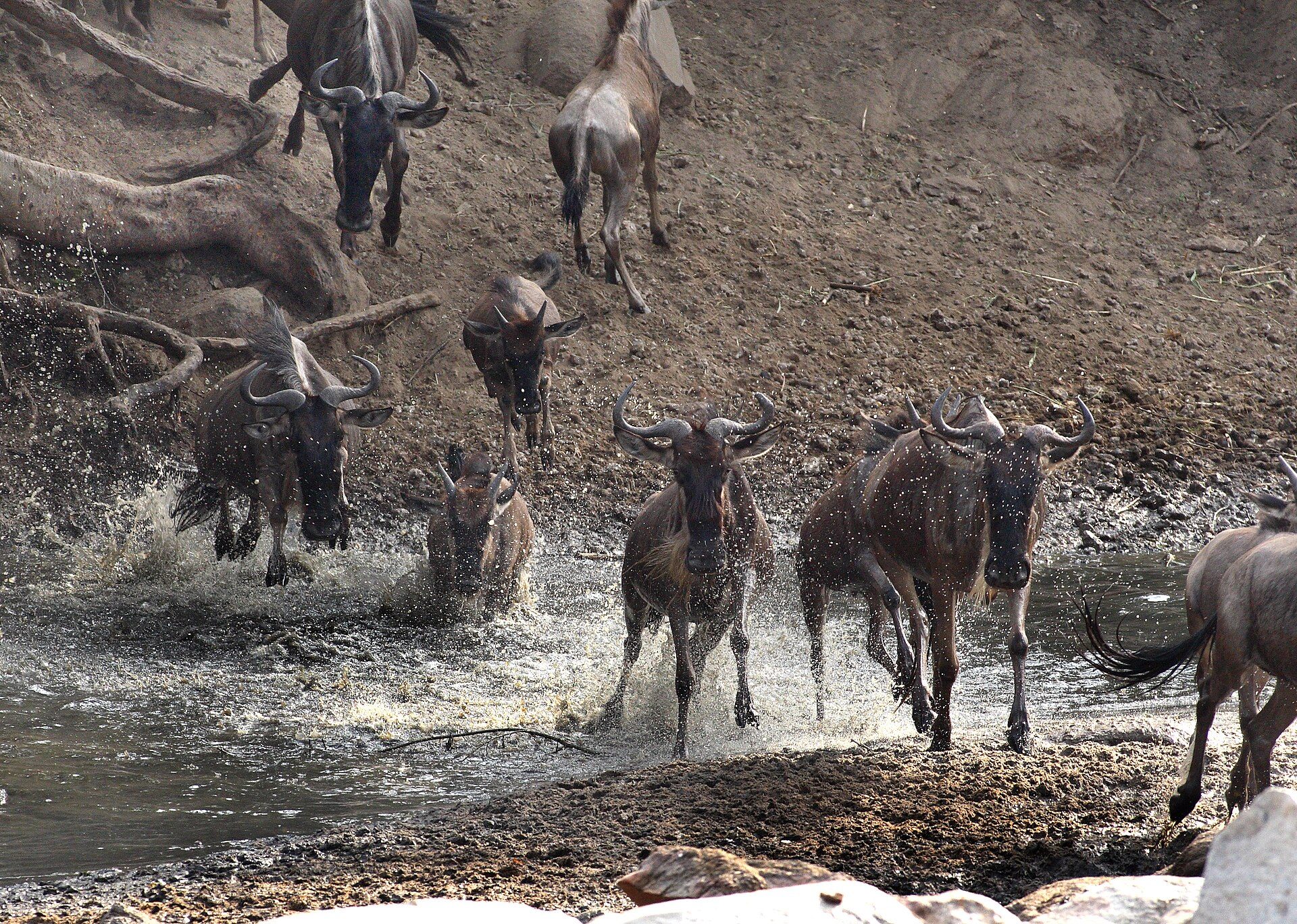
The Serengeti is fifteen thousand square kilometres of endless savannah, and the Great Migration moves in a circle all year. December–March is the calving time in the south, April–May falls in the western corridor. July–October brings the Mara river crossings in the north, on the Kenyan border. In each season the camp is chosen in a different area. A balloon at sunrise is 600 dollars. Park fees are high: the Serengeti is 70 dollars a day plus eighteen per cent tax, and lodges are 150–1500. The southern circuit, the Nyerere and Ruaha parks, is cheaper and emptier.
Kilimanjaro and Zanzibar: Tanzania after the safari
Kilimanjaro is five thousand eight hundred and ninety-five metres, the highest peak in Africa and the highest mountain in the world that requires no technical climbing.
The routes differ. Machame takes six or seven days and is the most scenic, Marangu is called the «Coca-Cola» route and has huts along the way, while Lemosho is eight days and gives the highest success rate.
A licensed operator, a guide and porters are compulsory, and the price is between 2000 and 4000 dollars. The key to success is acclimatisation and a slow pace, which the locals call «pole pole». The season falls in January-March and June-October.
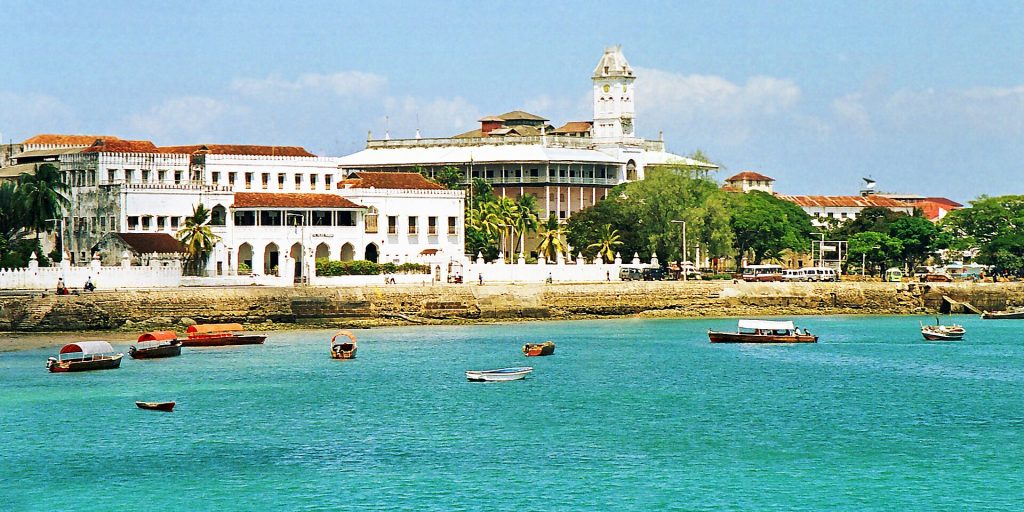
Zanzibar in the Indian Ocean is a world of its own. Stone Town is on the UNESCO list, in its narrow streets a mixture of Arab, Indian and African is felt, and the carved doors of the houses are famous in their own right. The evening Forodhani market and Freddie Mercury’s house are here too.
As for the beaches, Nungwi and Kendwa in the north give the best of them and the loveliest sunset, while Paje in the east is a place for kitesurfing and tides. Off Mnemba island you snorkel and see dolphins.
A spice plantation tour, the red colobus monkeys of Jozani forest and the tortoises of Prison Island complete the programme. The flight from Arusha takes an hour and a half; set aside four or five days for the island. The island’s population is Muslim, so dress covered in Stone Town.
Types of safari, transport and health
A safari is done with an operator and has three levels. A budget camping safari with a tent and a cook is 200–300 dollars per person a day, a mid-range lodge safari 350–600, and the luxury version starts at 800. The price includes the park fee, the Land Cruiser, the guide and the food.
A fly-in safari from Arusha to the Serengeti airstrips takes an hour and costs 250–400 dollars, and choosing that instead of eight hours of dusty road makes sense. Kilimanjaro airport is an hour from Arusha, while Zanzibar and Dar es Salaam are international airports. The Zanzibar–Dar ferry takes two hours and costs 35 dollars; within Zanzibar a taxi is 15–40 dollars and the dala-dala minibuses charge fifty cents.
Health is a separate conversation. A yellow fever certificate is required only of those coming from an endemic country, and they may ask when you arrive via Kenya. Settle malaria prophylaxis for the safari and Zanzibar with a doctor, mosquito spray is essential, and hepatitis A and typhoid vaccinations are recommended too. For Kilimanjaro you need evacuation insurance, and AMREF Flying Doctors membership comes to thirty dollars. Drink only bottled water.
Ugali, nyama choma, Zanzibar pilau: Tanzanian food and halal
Ugali is a maize porridge and nyama choma meat grilled over embers, and the mainland’s cooking is built on those two. Mishkaki are skewers, and chipsi mayai is a potato omelette and the commonest street food.
Zanzibar pilau and biryani come from the Arab-Indian tradition, while urojo is the island’s mixed soup. At the Forodhani market grilled seafood and Zanzibar pizza are sold. To drink there is spiced tea and coconut, and in season mango and jackfruit. At the safari lodges the food is an international buffet and is included in the package.
Halal food is everywhere in Zanzibar, because the island is ninety-nine per cent Muslim. Muslim restaurants are easy to find in Dar es Salaam and Arusha too, and tell the lodges of a halal requirement in advance. Tap water is not drunk. In Zanzibar alcohol is served only in tourist hotels, and during Ramadan the restaurants are closed during the day.
Read next: Tanzania visa: the 50-dollar eVisa, Zanzibar’s compulsory insurance and the safari route
Season and weather
June to October is the dry season and the best time for a safari. The grass gets lower, the animals gather at the water holes, and the Mara river crossings fall in July-September. In Zanzibar the weather is twenty-eight degrees and dry. That period is at the same time the busiest and the dearest.
January-February is the short dry season. In the southern Serengeti the migration’s calving period begins, hundreds of thousands of young appear and the predators after them, while Zanzibar stays hot.
From March to May the long rains fall, the roads turn to mud and some lodges close, but the prices drop by 30–40 per cent. In November-December there are short rains, a safari is still possible and the prices are low, with Christmas week the exception. For Kilimanjaro, January-March and July-October are chosen. Park fees and season information are on the Tanzania Tourism portal.
Budget and tickets
A five-day northern circuit safari is 1200–1600 dollars per person with camping, 2000–3000 with a mid-range lodge, and starts at 4000 in the luxury version. Kilimanjaro’s seven-day route costs 2500–3500 dollars.
In Zanzibar a boutique hotel in Stone Town is 80–150 dollars and a beach hotel in Nungwi 100–200. A resort is 250–500 dollars and a guest house comes to 40–70. Book the place you will stay on the coast after the safari in advance, because in July-August nothing is left free.
There are separate programmes too. Entry to the Ngorongoro crater is 300 dollars per vehicle, a spice tour 25 dollars and Mnemba snorkelling 40. Taking the day sea programmes in Zanzibar online is both cheaper and safer than the offers on the beach.
Excluding the flight, a two-week safari and Zanzibar trip fits into 2500–4000 dollars per person. Qatar Airways, Emirates and flydubai fly to Zanzibar, Dar es Salaam and Kilimanjaro; a ticket towards Zanzibar gets dearer in the migration season and at New Year, and flying into Kilimanjaro and out of Zanzibar is the most comfortable plan. Tanzania safari and Zanzibar tour packages that give the Serengeti, Ngorongoro and Zanzibar in one programme settle the lodges, the park fees, the domestic flights and the insurance together, and on safari they always come out cheaper than an individual plan.
Frequently asked questions about Tanzania
How many days does a trip to Tanzania need?
Five or six days for the safari and four or five for Zanzibar — ten to twelve days in all. With Kilimanjaro, three weeks; a Zanzibar holiday on its own, a week.
A Tanzanian or a Kenyan safari?
Tanzania is the more complete trip with bigger parks, Ngorongoro and Zanzibar, but it is expensive. Kenya is cheaper and has the migration’s river crossings in the Masai Mara; the two join up on one route, with the Arusha–Nairobi bus five hours.
Do you have to be a climber for Kilimanjaro?
No, it is a hiking route, but the altitude is serious. The success rate is over 85 per cent on the seven- and eight-day routes and under 50 on the five-day one; physical preparation and patience are needed.
In closing
With an online eVisa and a comfortable flight, Tanzania gives you safari, mountain and ocean in one trip and is Africa’s most complete address. The season and the type of safari settle the budget, and Zanzibar settles the end of the trip. The eVisa and insurance conditions are explained on the Tanzania page, and to build the safari and Zanzibar plan together, fill in the application form.
Note: the prices here are as of the publication date and can change with the season.
