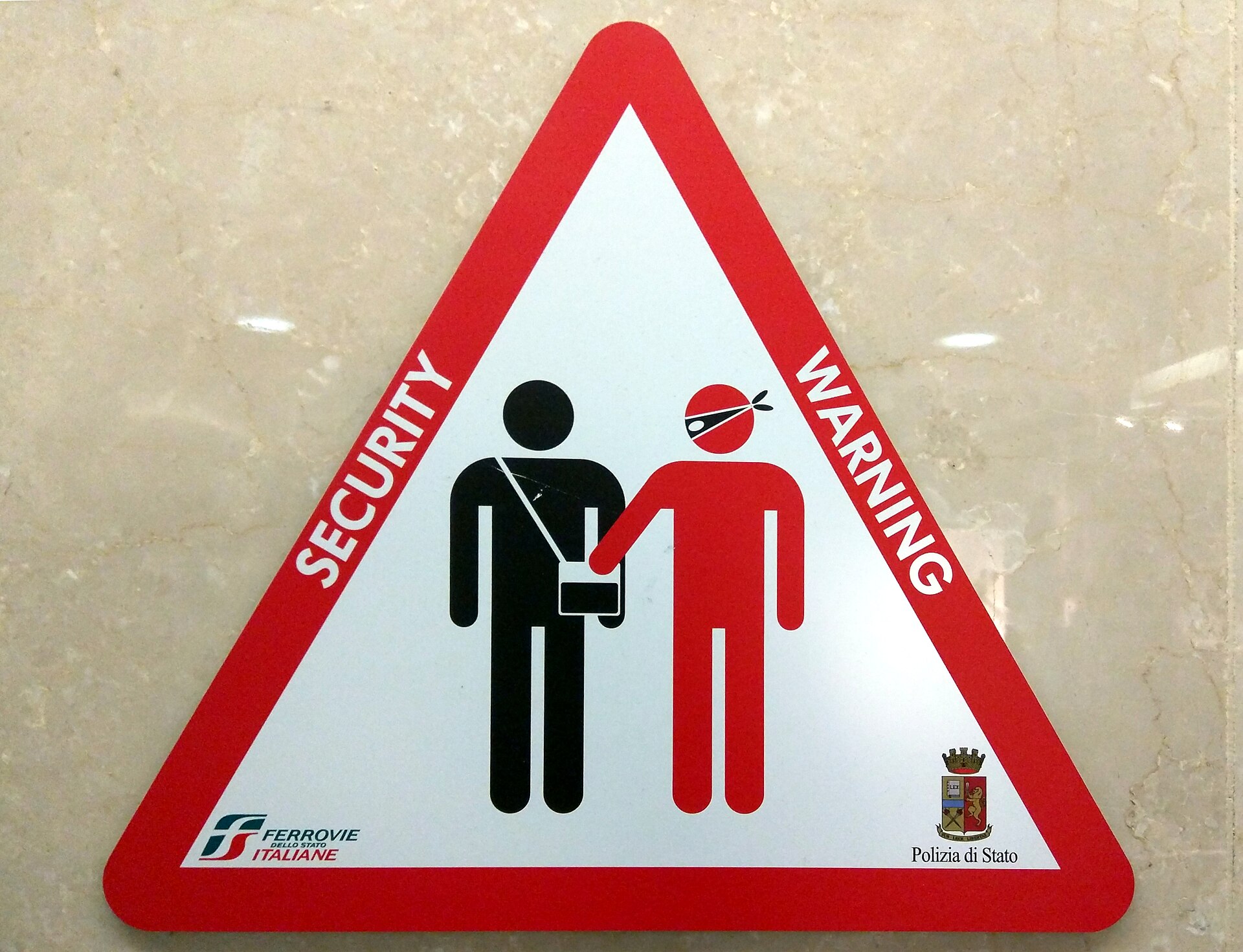
When people hear travel safety, crime comes to mind, whereas the great majority of things that happen to tourists are not violence but ordinary carelessness. A phone taken out of a pocket, a bag left on a table, a passport shown to a stranger. All of these are prevented by a handful of habits. Below I have written those habits and the classic con schemes.
The document rule for travel safety
Do not take your passport out walking; keep it in the hotel safe and carry a copy with you. Keep a copy on your phone too, both as a photo and in your email. If the passport goes missing, that copy speeds the process at the consulate up several times over.
Do not keep your card and your cash in one pocket. Set aside the amount you need for the day and put the rest in the safe. Carrying two cards in separate places is the simplest insurance there is, because if one is lost or blocked, the second still works.

The schemes you meet most often in the street
The most classic is the gold ring on the ground. Someone picks the ring up, holds it out to you and then asks for money. The second is the young people collecting signatures: while you look at the sheet their companion goes through your pocket. The third is something being spilt on your shirt, with someone helping to clean it and emptying your bag at the same moment.
The fourth scheme is called the “friendship bracelet”: they tie a thread round your wrist and demand money. The fifth is the people running games in the street, where winning is impossible. In all of them the rule is the same: do not stop and do not start talking.
Transport and taxis
On the metro hold your bag in front of you rather than behind, especially as the doors close. Do not hold your phone in your hand near the door, because snatching it as the doors close and stepping out is the most widespread method there is.
In a taxi insist on the meter being switched on, and use an app where possible, since the price is visible there in advance. Do not go with the man who comes up to you at the airport saying “need a taxi”; go to the official rank. On flights landing at night, ordering the transfer in advance is both cheaper and safer.
Read more: A Barcelona travel guide: Gaudi, the gothic quarter and the beach
Digital safety
Do not log into a banking app on an open wireless network, where the data can be read. Keep your phone’s screen lock switched on without fail and upload important documents to cloud storage. When you use the public charging ports at an airport, plug only your own adapter into the socket.
Do not broadcast the trip live on social media; that announces that your home is empty. Sharing the photographs after you get back is old advice, but still the right advice.
What to do if something goes wrong
In the event of a theft go to the local police at once and get a statement, because that is exactly what the insurer and the consulate require. If the passport is lost, telephone the embassy or consulate in that country and a temporary document is issued. Write those numbers into your phone before the trip; the list by country is on the site of the Ministry of Foreign Affairs.
A short conclusion
Travel safety is not a matter of fear but of a handful of habits. Keep the passport in the safe, hold the bag in front of you, do not talk to whoever comes up to you in the street. To prepare the travel documents and the insurance together, fill in the application form.
Note: the security situation varies by country, so check the official advice before the trip.
