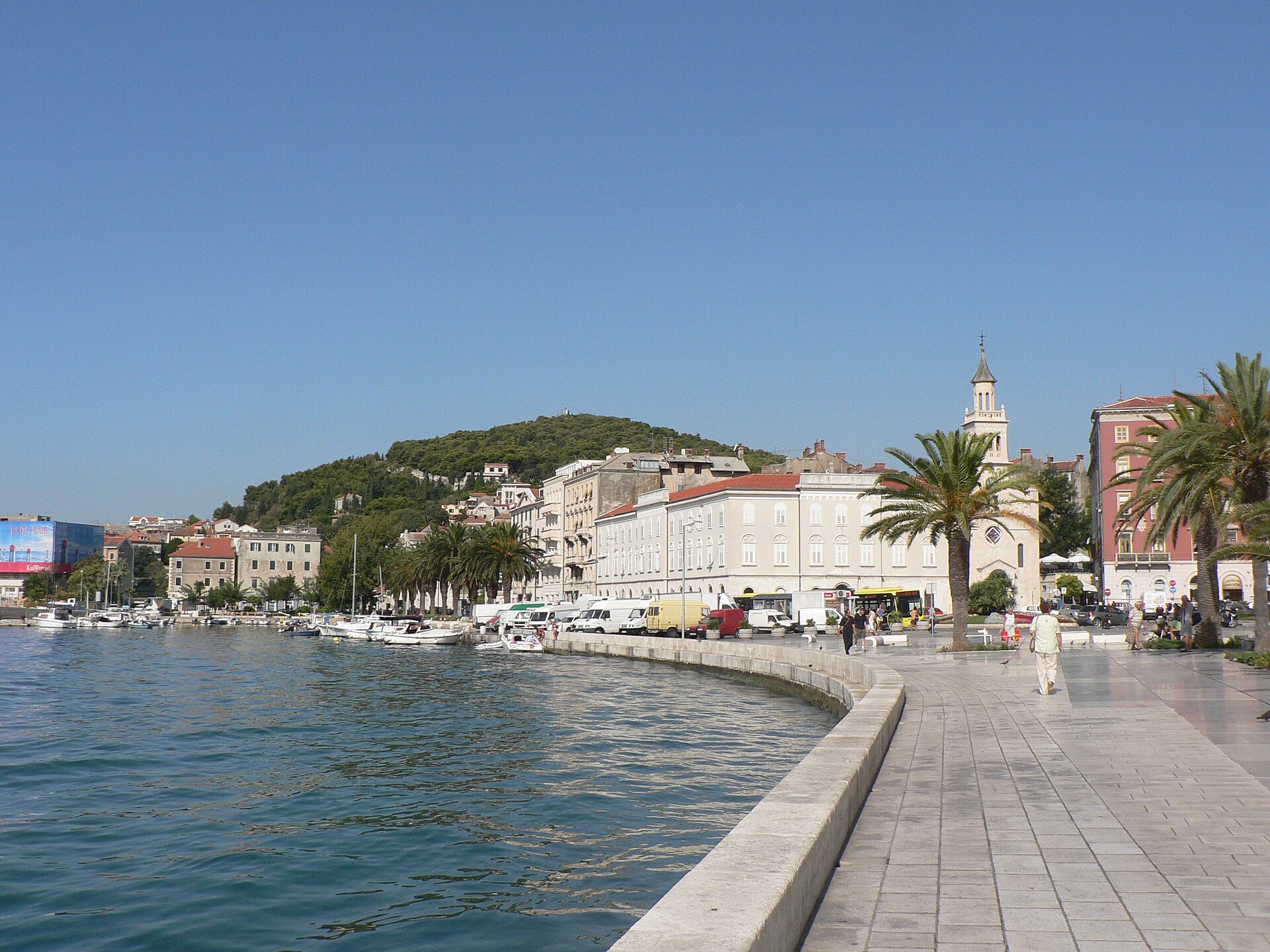
Split lies on Croatia’s Adriatic coast, north of Dubrovnik, and is very different from it. Here the old town is not a museum but a living quarter, because people live inside the walls of a Roman emperor’s palace. The city is also the main port for the ferries to the islands. Two days go to the city and one to an island or the waterfalls.
Diocletian’s palace and the old town
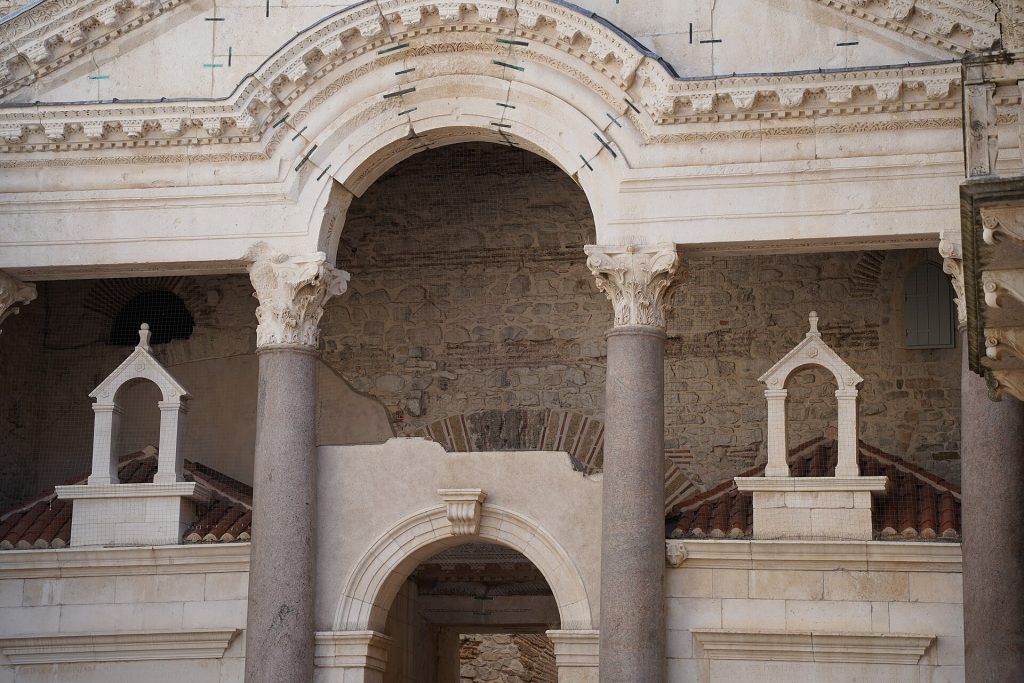
The palace was built in the fourth century for the emperor Diocletian, and the city later formed inside it. Today there are cafés, shops and flats between the walls, which means you are walking inside the monument. That is why it is on the UNESCO list.
The central courtyard called the Peristyle is the heart of the palace, and concerts are held there in the evenings. You can climb the bell tower of the cathedral beside it; the stairs are narrow, but from the top the whole coast is visible. The cellar halls, being cool, serve as a short break from the summer heat.
The waterfront, Marjan hill and the beaches in Split
The seafront boulevard called the Riva is in front of the palace and is the city’s promenade. Towards evening the whole city comes out here, the cafés fill and the air cools. The ferry port is within walking distance from here too.
Marjan hill is the pine forest to the west of the city, climbed by steps. From the top the palace, the harbour and the islands appear in one frame, and in the morning hours it is cool. Bacvice beach is a rarity, because most of the Croatian coast is stony while this one is sandy and the water stays shallow a long way out.
The islands and day routes
Split is the gateway to the islands, and ferries leave the port many times a day. The Zlatni Rat beach on the island of Brac changes shape with the wind and is the country’s best-known shore. Hvar is livelier and Vis the quieter option.
On the mainland the Krka waterfalls are an hour and a half away and are less crowded than Plitvice. Trogir is only half an hour off, a small island town, and it is on the UNESCO list too. Taking the day island and waterfall tours in advance matters in the summer months for finding a place.
Read more: A Croatia travel guide: Dubrovnik, Split, the islands, the Plitvice lakes and the Adriatic season
Transport, food and budget in Split
The airport is about twenty-five kilometres from the city and the bus gets you to the centre in half an hour. In the city itself you barely need transport — everything is within walking distance. Buy ferry tickets in advance in summer, because the car places run out quickly. On the hotel question, the options inside the palace and around the Riva need comparing, as the difference is large.
| Hotel | Around 80–150 euros a night in the centre, higher in summer |
| Peka | Meat cooked the local way, ordered in advance |
| Fish restaurant | 25–45 euros a head |
| Ferry ticket | Cheap to the near islands, the fast boat is expensive |
Croatia is in the euro zone and part of the Schengen system, which means the separate currency and border questions no longer apply. The mobile network can be weak on the islands, and an eSIM covering the region settles that. There is no direct flight from Baku; you travel via Vienna or Istanbul, and looking at flight options towards the Adriatic in advance pays off. Official information about the city is on the visitsplit.com site.
The season in Split
May–June and September are the best time, with 23–28 degrees, a sea that stays warm and thinner crowds than midsummer. In July and August the city fills, prices rise and the midday heat passes thirty-five. In October the water is still swimmable, but the ferry timetables thin out. Winter is quiet and cheap, while many island restaurants are closed.
In short
Split is a city living inside a palace and at the same time the door to the islands. Climb the tower in the morning, walk up Marjan, buy the ferry ticket in advance, and avoid August if you can. If you want to combine the islands in one route, you can look at tour offers along the Adriatic coast. For a visa and a route, fill in the application form.
Note: prices and ferry timetables change with the season, so check an official source before you travel.
