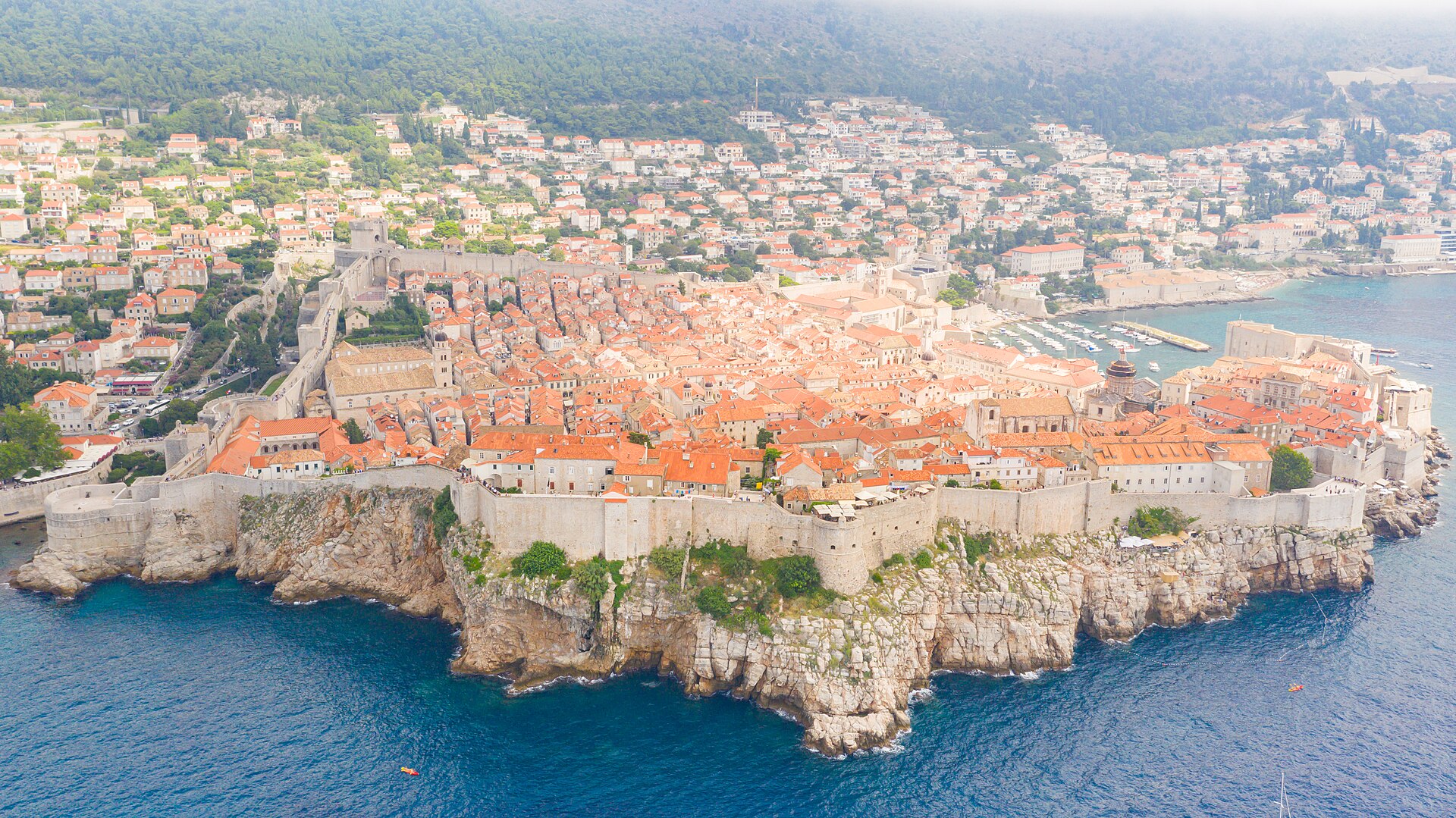
Croatia has the most beautiful shore on the Adriatic. It has more than a thousand islands. Dubrovnik’s walls, Split’s Roman palace and the Plitvice waterfalls are the country’s calling card. Since it joined the Schengen area and the eurozone you can build a route on one visa that links Italy, Slovenia and Montenegro. But there is a summer trap: in July and August Dubrovnik fills with cruise passengers, you cannot take a step in the streets, and prices double. In this article I have gathered the coast, the islands and the lakes. Transport, food, the season and the budget are here too.
Croatia in brief
| Capital | Zagreb |
| Language | Croatian; excellent English in tourism, Italian along the coast |
| Currency | Euro; cards everywhere |
| Visa | Schengen «C» visa; a member of the Schengen area |
| Best time | May–June and September; July–August hottest and busiest |
| Flights | 6–8 hours via Istanbul or Vienna |
| Daily budget | 100–150 euros at a mid-range level, more in Dubrovnik |
Dubrovnik, Split and the Dalmatian coast
Dubrovnik is the «pearl of the Adriatic», and walking the city wall is the main event of the trip: two kilometres, 35 euros. Go at eight in the morning, before the cruise ships arrive and while the wall is empty; by noon there is a queue up there. Then walk the Stradun. Tickets for the wall walk sell out early on summer mornings, and buying a timed ticket also saves you from the midday heat. Ride the cable car up Srđ hill and cross by boat to Lokrum island. The «Game of Thrones» filming locations are here too. Two days are enough, and the third is a day trip to Kotor in Montenegro or Mostar in Bosnia.
Split is a city living inside the seventeen-hundred-year-old palace of the Roman emperor Diocletian — people live in flats between the palace walls and hang out their washing there. With the Riva promenade and Marjan hill it takes two days and is the main base for the islands. Hvar is known for lavender, nightlife and the Pakleni islands. Brač has the famous Zlatni Rat beach. Korčula is called «little Dubrovnik». Vis is the most distant and quietest island. The UNESCO town of Trogir is next to Split airport and can be seen in a few hours before a flight. Zadar, with its sea organ and sunsets, is northern Dalmatia.
Plitvice, Krka, Istria and Zagreb
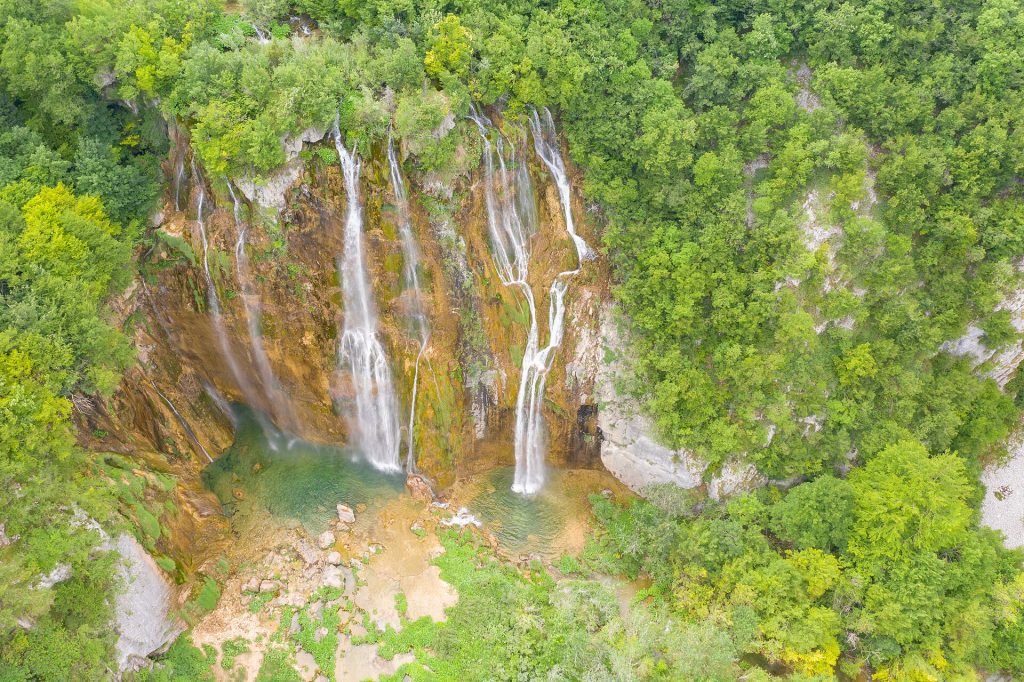
Plitvice Lakes national park is sixteen turquoise lakes with wooden walkways running between them, two hours from Zagreb and Zadar. In summer the ticket is 40 euros and is bought online with an hourly entry limit. Go early in the morning, because after midday you shuffle along the paths in single file. Krka national park, near Šibenik, is a smaller Plitvice.
The Istrian peninsula is in the north-west and stands out for its Italian spirit. Rovinj and Pula, the Roman amphitheatre, truffles and olive oil are there. Opatija, with its Austro-Hungarian villas, is the Adriatic’s first resort, and the Istarske Toplice spa offers sulphur water for skin and joints.
Zagreb is a Central European city. With the Upper Town, the Dolac market and the Museum of Broken Relationships it takes a day, and in December its Christmas market has been picked among Europe’s best.
Getting around Croatia: ferries, buses, cars
There is almost no railway along the coast. The train from Zagreb to Split takes six hours and runs rarely, so the main means is the bus.
FlixBus and Arriva run Zagreb to Split in five hours for 20–30 euros, and Split to Dubrovnik in four. That road used to pass through Bosnia’s Neum corridor; now the Pelješac bridge takes you through without a border.
Jadrolinija ferries and Krilo catamarans serve the islands. Split to Hvar takes an hour and to Brač fifty minutes; in summer buy tickets at least a day ahead.
A car is the best option for Istria, Plitvice and the coastal route, at 40–70 euros a day. The motorways are tolled — Zagreb to Split is 25 euros — and in Dubrovnik parking is both expensive and impossible to find. Uber and Bolt work in Zagreb, Split and Dubrovnik, and the airport bus into town is 8–10 euros.
The Adriatic kitchen
Dalmatian food is built on the sea and olive oil. Grilled fish is sold by the kilo at 50–70 euros, and a kilo is enough for two. Black risotto is cooked with cuttlefish, and peka is meat or octopus cooked over coals under a lid — you have to order it in advance, and it is worth the wait.
To start there is pršut cured ham and cheese from the island of Pag. In Istria truffle pasta and fuži await you, and in Zagreb Central European strudel and ćevapi.
Lunch in the family restaurants called «konoba» is 15–25 euros. Dinner in Dubrovnik’s old town is 40–60 euros, while two streets away the same meal costs half. Halal food is found in the Bosnian ćevapi and kebab restaurants of Zagreb and Split, and seafood is everywhere. The tap water is clean, and the ice cream is on an Italian level.
Read next: Croatia visa: the Schengen rules, the summer trap and two countries on one visa
When is it good to go to Croatia?
May–June and September are the ideal months. The sea is 22–25 degrees, the beaches stay empty and prices fall to sixty or seventy per cent of the summer level — honestly, I would not go at any other time.
In July and August it is 32–35 degrees and the sea twenty-seven. Dubrovnik’s streets become impassable by day, hotels and ferries sell out months ahead, and Hvar and Brač can only be reached with a booking.
In October the coast is still warm and Plitvice is at its finest in autumn colour. From November to March the coast is quiet and wet, most restaurants close, and Zagreb comes alive with its Christmas market.
One more thing: the beaches are mostly pebble, so buy water shoes or going into the sea becomes a torment. Ferry timetables and park tickets are on the Croatia.hr portal.
Budget and tickets
In Dubrovnik in summer a three-star hotel is 150–250 euros and an apartment 100–150. In Split the price is 90–150 euros and in Zagreb 70–110. In May and September prices are 30–40 per cent lower, so compare the dates — the difference is more than a hotel night.
As for entry tickets, the city wall is 35 euros, Plitvice 40 in summer and just 10 in winter, and the cellars of Diocletian’s palace eight. Excluding the flight, a ten-day trip fits into 1300–1800 euros per person, or 900–1200 out of season.
Turkish Airlines flies from Istanbul to Zagreb, Split and, in summer, Dubrovnik. Compare the price of a ticket to Dubrovnik with flying to Split and coming on by bus. For anyone touring Dubrovnik, Split, Hvar and Plitvice on one route, Croatia tour packages settle the ferry and park tickets in advance, and in summer that is the biggest advantage of all.
Frequently asked questions about Croatia
How many days does Croatia need?
Dubrovnik two, Split two, one island two, Plitvice one — eight to ten days in all. Fourteen days with Istria and Zagreb.
Base yourself in Dubrovnik or Split?
Split is central for the islands, Trogir and Krka, and it is cheaper. Dubrovnik is the most beautiful but the most expensive and out on a limb. Two or three days in each is the best plan.
Can you cross to Montenegro?
Montenegro is not in Schengen, but holders of a multiple-entry Schengen visa enter without a visa for up to 30 days. Dubrovnik to Kotor is two hours by bus, and on the way back your Schengen days start counting again.
In closing
On a Schengen visa Croatia gives you the Adriatic’s finest coast, its islands and its lakes. Anyone going in May, June or September gains both quiet and savings. The visa process is explained on the Croatia page, and to build the coast and island route together, fill in the application form.
Note: the prices here are as of the publication date and can change with the season.
