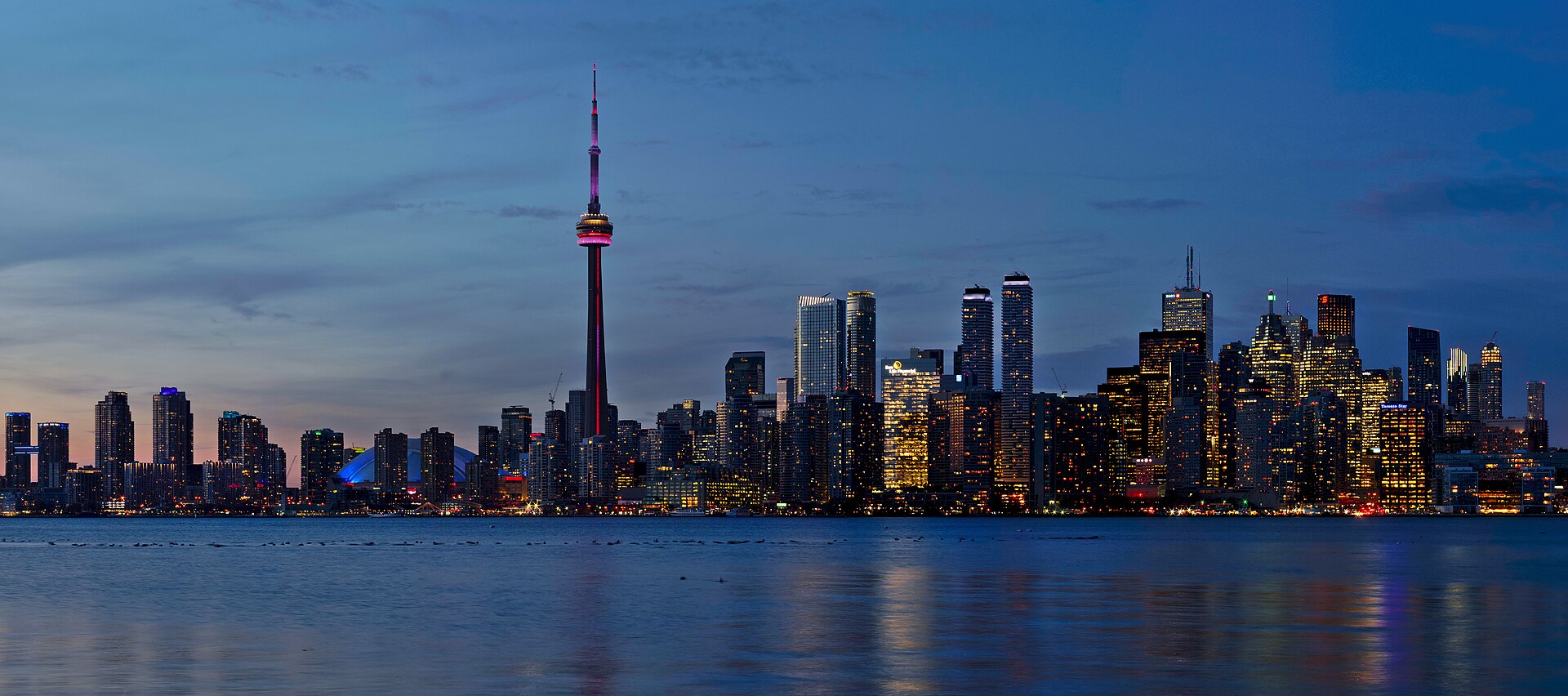
Toronto is the largest city in Canada and is counted among the most multinational cities in the world, with more than half the population born in another country. You feel that immediately in the street, at the market and in the restaurants. The city sits on a lake shore and Niagara Falls is an hour and a half away. Below I have written a three-day route.
The CN Tower and the lakefront
The CN Tower is 553 metres tall and was the tallest free-standing structure in the world for thirty years. The observation deck has a glass floor, and a harnessed walk around the edge is offered. On clear days you can see as far as Niagara.
Harbourfront is the lakeshore, and the ferry to the Toronto Islands leaves from there. Looking at the city skyline from the islands gives you the best shot, and the ferry takes only fifteen minutes. The islands have bicycle hire and a beach.
Markets, museums and neighbourhoods
St Lawrence Market has been working for two hundred years and is the best place to eat. Kensington Market, on the other hand, is a whole neighbourhood, with small shops and the world’s cuisines in old houses. The Distillery District is a former whisky works, and its cobbled streets and galleries have survived.
The Royal Ontario Museum combines nature and culture and is known for the crystal-shaped extension to its building. Chinatown, Little Italy and Greektown sit next to one another. The city’s street food covers the cuisines of every continent, and halal choice is widespread.
From Toronto to Niagara Falls
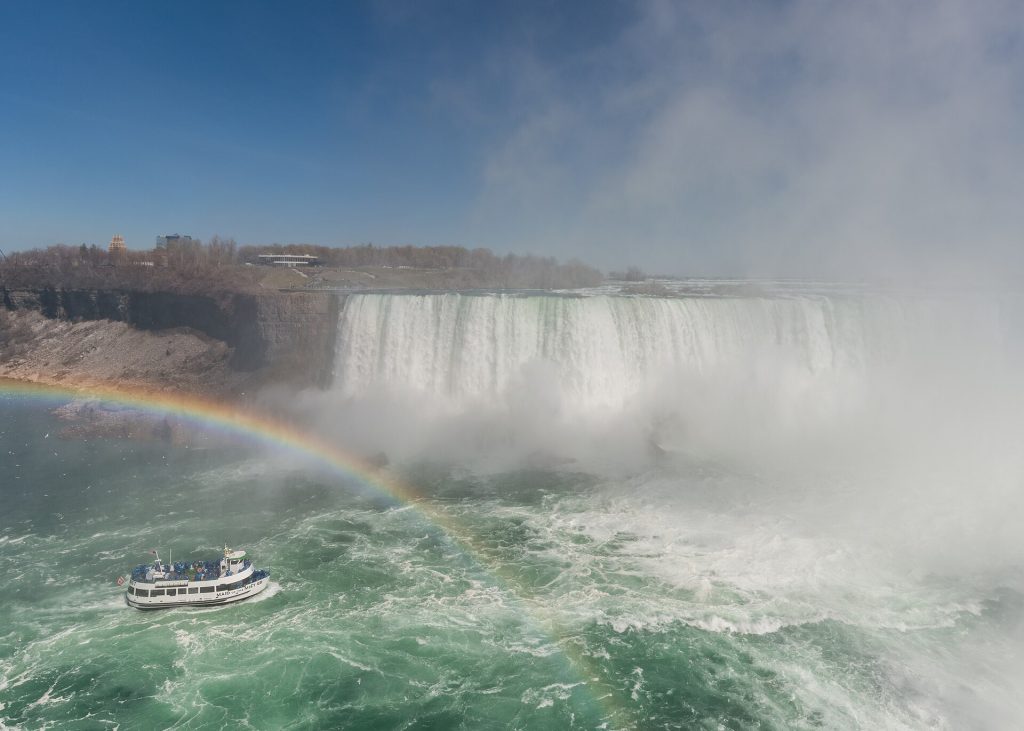
Niagara Falls is an hour and a half by bus or train. The Canadian side is better than the American one for the view, because you face the main horseshoe-shaped fall head on. The boat tour takes you to the foot of the falls and you will certainly get wet; a raincoat is included in the price.
The nearby town of Niagara-on-the-Lake is known for its vineyards and makes a quiet stop after the falls. Taking the day tours in advance settles the transport and the ticket together.
Read more: A Canada travel guide: Toronto and Niagara, Montreal, Vancouver, Banff and the Rocky Mountains
Transport and prices in Toronto
The metro has two main lines, with trams and buses completing the network. A Presto card and a contactless bank card both work. The UP Express train from Pearson airport to the centre takes twenty-five minutes.
A three-star hotel is 130–220 Canadian dollars and a hostel bed 40–70. Lunch in a restaurant is 18–30 dollars, with tax and a tip starting at fifteen per cent added on top. Official information is on the Destination Toronto site.
The season in Toronto
May to September is the best period, with 20–28 degrees and a lively lakefront. September and October are lovely for the autumn colours. Winter is long and very cold, dropping to minus fifteen, but in return there is a thirty-kilometre underground pedestrian network called PATH beneath the city.
A last word
Toronto is a three-day city, and half its value is hidden in its neighbourhoods and half at Niagara. Cross to the islands by ferry, walk around Kensington, and see the falls from the Canadian side. For a visa and a route, fill in the application form.
Note: the prices in this article are those at the time of publication and may change with the season.
