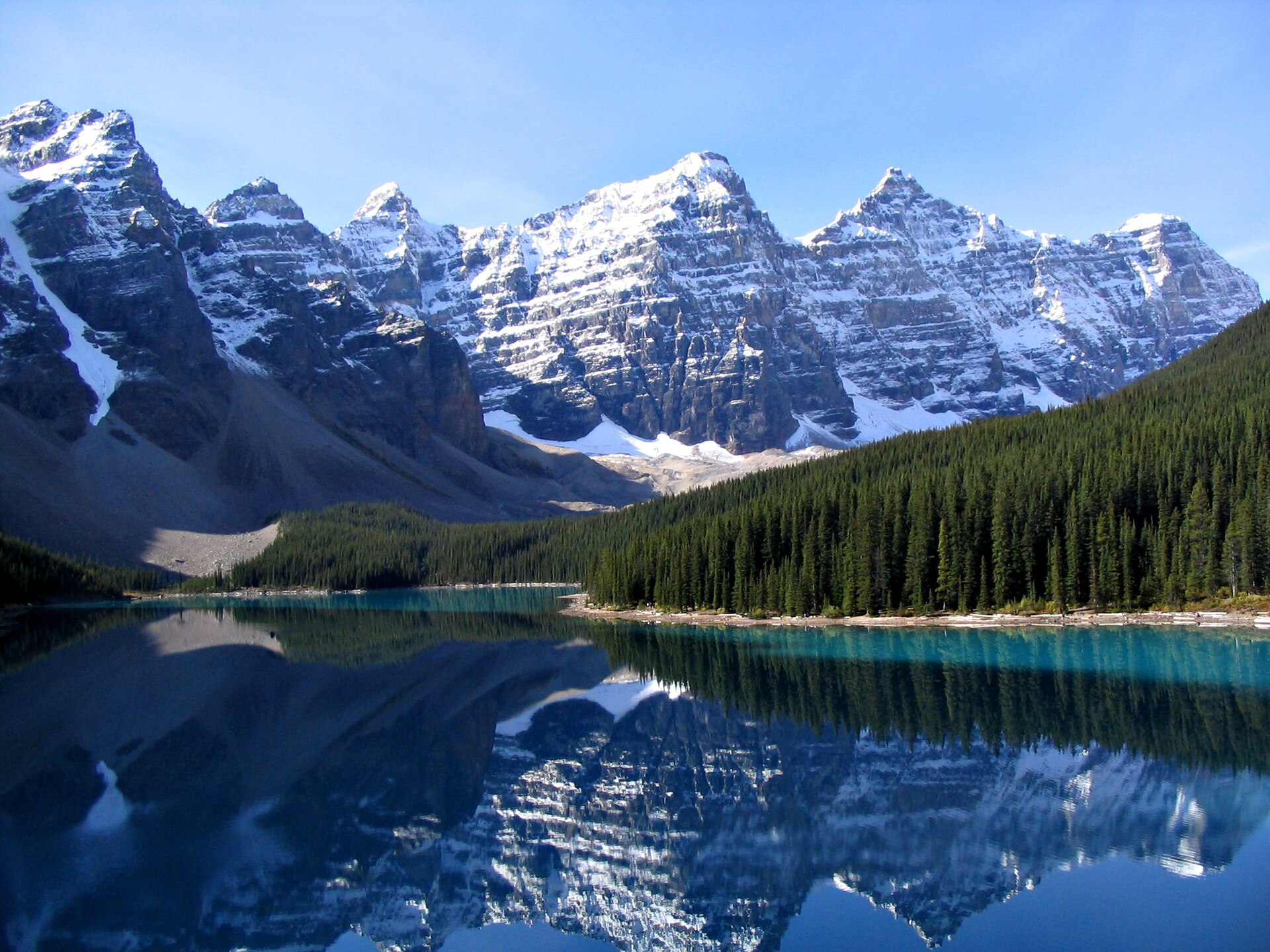
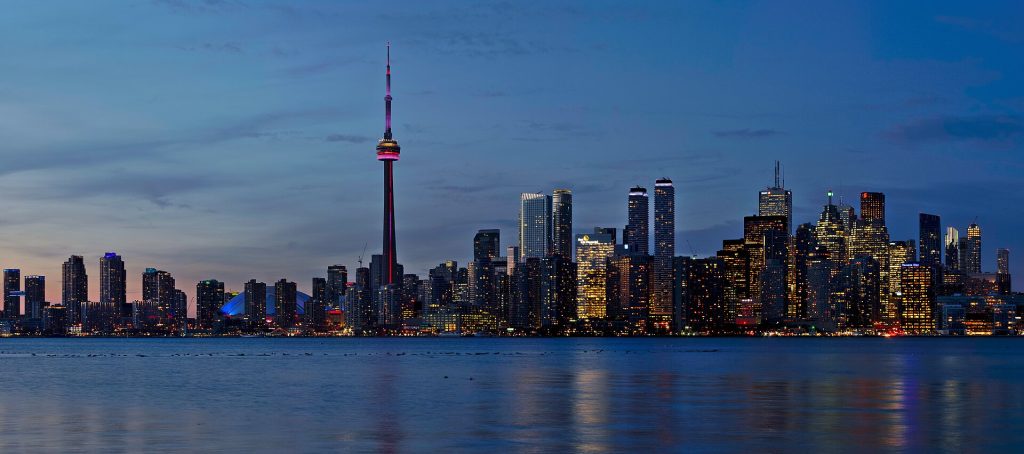
Canada is the second largest country in the world and does not fit into one trip. In the east stand Toronto, Niagara Falls and French-speaking Quebec, and in the west there are Vancouver and the turquoise lakes of the Rockies. The distance between them is four and a half thousand kilometres, roughly Baku to London. So the first question is not “what shall I see” but “which side shall I choose”.
For us the visa is a long and expensive process, but once you have it, it is usually issued multiple-entry for up to ten years. Which means the first trip is worth building properly. Below I have gathered the eastern and western routes, the mountain road, the transport, the food, the season, the tax and tipping rule and the budget in one place.
Canada in brief
| Capital | Ottawa; the largest cities are Toronto, Montreal and Vancouver |
| Language | English and French; in Quebec French dominates |
| Currency | Canadian dollar (CAD), 1 US dollar ≈ 1.37 CAD; cards everywhere |
| Visa | Tourist visa, online application and biometrics at VFS, usually multiple entry |
| Best time | June–September; autumn colours late September–October |
| Flight | 14–17 hours via Istanbul, Doha or Frankfurt |
| Daily budget | 200–280 CAD at a mid-range level |
The east: Toronto, Niagara, Montreal, Quebec
Toronto is the country’s largest and most multinational city. Going up the CN Tower, looking at the skyline from the Toronto Islands and walking the Distillery District and Kensington Market fit comfortably into two days. Queen Street, meanwhile, is the liveliest place for an evening.
Niagara Falls is an hour and a half from Toronto, and the Canadian side gives the better view — which is exactly why the Americans cross the bridge to look from here. The Hornblower boat takes you to the foot of the falls; they give you a poncho and you still get soaked. Add the evening illumination and the Niagara-on-the-Lake wine village and this becomes a full day.
Montreal is the most European city in North America. Old Montreal and the Notre-Dame basilica are in the centre, and from Mount Royal you look out over the whole city. The Plateau district is known for its street art, while the bagel and “smoked meat” shops are a reason to come in themselves. Set aside two days.
Quebec City is the only walled city in North America. The Château Frontenac hotel, the streets of Petit-Champlain and the winter Carnival turn it into a two-day stop rather than a one-day one. Ottawa is looked at on the way for its parliament and the Rideau Canal. So the eastern route comes to seven days, and all the stops are linked by train.
The west: Vancouver, Banff, Jasper and the Rockies
Vancouver is squeezed between the ocean and the mountains and is, to my mind, the most beautiful city in Canada. Cycling round Stanley Park, looking at the Granville Island market, the Capilano suspension bridge and Gastown fill two days. The Whistler ski resort is two hours away, and you can make a day trip to Victoria by ferry.
The Rockies are really the main reason to come to Canada. Banff national park is an hour and a half from Calgary. The turquoise water of Lake Louise and Moraine Lake looks photoshopped in pictures, and it looks exactly the same in person. In summer Moraine Lake can only be reached by park shuttle, while in the town of Banff there are the Upper Hot Springs and a cable car up Sulphur Mountain.
The Icefields Parkway runs 230 kilometres from Banff to Jasper and counts as one of the most scenic roads in the world. Along the way Peyto Lake, the Columbia Icefield and Athabasca Falls follow one another, and at every bend you want to stop the car. Jasper is quieter than Banff, and seeing elk and bears on the road is an ordinary thing.
The western route also comes to seven days. Two days for Vancouver, three for Banff and two for the Icefields Parkway to Jasper is enough. The starting point is Calgary or Vancouver. In autumn the forests of Quebec and Ontario turn red, while in the west the larches turn yellow.
Transport in Canada: VIA Rail, flights, cars
In the east VIA Rail trains operate and that is the most comfortable option. Toronto to Montreal takes five hours and Montreal to Quebec three, with an early-booked ticket at 40–70 CAD. The GO train from Toronto to Niagara takes two hours.
Domestic flights are expensive because of the distances. Toronto to Vancouver takes five hours and costs 250–500 CAD, and alongside Air Canada and WestJet, Porter and Flair give a cheaper alternative.
For the Rockies a car is all but compulsory, daily rental is 60–100 CAD, and the summer dates are booked out months ahead. National park entry is 11 CAD a day. For those wanting to get around without a car, there are the Roam buses in Banff town and the Lake Louise park shuttle.
In all three big cities transport runs on a card. In Toronto that card is called Presto, in Montreal OPUS and in Vancouver Compass, and one ride is 3–4 CAD. Uber works in Toronto, Montreal and Vancouver, while in Quebec it is taxis. From the airport to the centre, Toronto has the UP Express train in twenty-five minutes, Montreal the 747 bus and Vancouver the Canada Line metro. If you land at night after a long flight, a transfer booked in advance is more comfortable.
Food, tax and the tipping rule
Poutine — chips with cheese curds and gravy — is Quebec’s national dish and tastes better at two in the morning. Montreal bagels and smoked meat are sold at places like Schwartz’s. Maple syrup is on top of practically every dish. In the east there is Atlantic lobster, and in Vancouver salmon and Asian cooking. For dessert come butter tarts and Nanaimo bars. Toronto and Montreal are among the most multinational cities in the world, so halal food is on every corner. Pakistani, Arab, Turkish and Somali restaurants operate, and there is fast food with a halal sign too. Even in Banff you can find a few halal restaurants.
Know one rule in advance. A tax of 5–15 per cent is added to the price written on the menu, and on top of that a tip of 15–20 per cent is expected at a restaurant. The payment terminal shows the options itself, and picking less than eighteen per cent counts as a little shameful.
So lunch with tax and tip comes to 20–30 CAD and dinner to 40–70. The tap water is clean and drunk without a thought. The Tim Hortons coffee and doughnut chain is a symbol of the country, with one on practically every street.
Read next: A Canada visa: 185 dollars, biometrics at VFS and how many months you have to wait
Season and weather in Canada
The months from June to August are the main season for every region. In Toronto the weather is 25–30 degrees and in Banff 20, with cool nights in the mountains. In that period the Rockies are both crowded and expensive.
September is my favourite month. The weather stays settled, prices come down, and the autumn colours peak at the end of September in Quebec and Ontario and at the start of October.
Winter is harsh and long, and in Montreal the temperature drops to minus 15–25 degrees. Even so, the Quebec winter carnival is held in February, the ski season at Whistler and Banff runs from December to April, and Niagara under ice gives a completely different picture.
April–May and November count as the “dead season”, because the mountain roads and the lakes are still icy. The Banff hot springs are open all year and are at their loveliest under snow. Regional and park information is on the Destination Canada portal.
Budget and tickets
Accommodation costs differ by city. In Toronto a three-star hotel is 180–280 CAD, in Montreal 150–220 and in Vancouver 200–300, while in Banff summer prices climb to 300–500. Airbnb is restricted in the big cities, so you have to look at the hotel options early, and a hostel bed is 50–80 CAD.
The sights are a line of their own. The CN Tower charges 45 CAD, the Niagara boat 35, the Banff cable car 70, and a national park pass 11 CAD a day. Leaving out the flight, a ten-day trip fits into 3000–4000 CAD a head.
There is no direct flight from Baku. Turkish Airlines flies from Istanbul to Toronto, Montreal and Vancouver, while Qatar Airways runs to Toronto and Montreal via Doha. An air ticket to Toronto has to be bought four or five months ahead for the summer and the Christmas holidays. Canada tour packages fitting Toronto, Niagara and Montreal into one week settle the train legs and the Niagara tour together, while the Rockies route is planned separately.
Frequently asked questions about Canada
How many days do you need for Canada?
Seven or eight days for the eastern route, and the same for the western. Both together, because of the long flight, fourteen to sixteen days.
Can you cross into the USA on a Canadian visa?
No, the USA requires a separate visa. For the American side of Niagara and for New York you need a US visa, and those who hold a US visa find it easier to get a Canadian one.
What do they ask at the border?
The purpose of the trip, where you will be staying and your return ticket. Keep the hotel booking and your funds ready on your phone; the border officer is friendly but attentive.
In closing
Canada demands a long flight and an expensive visa, but with a multiple-entry visa, the September season and a choice of one side it gives you one of the great nature trips of a lifetime. The visa process is explained on the Canada page, and to build the eastern or the Rockies route together fill in the application form.
Note: the prices here are as of the publication date and can change with the season.
