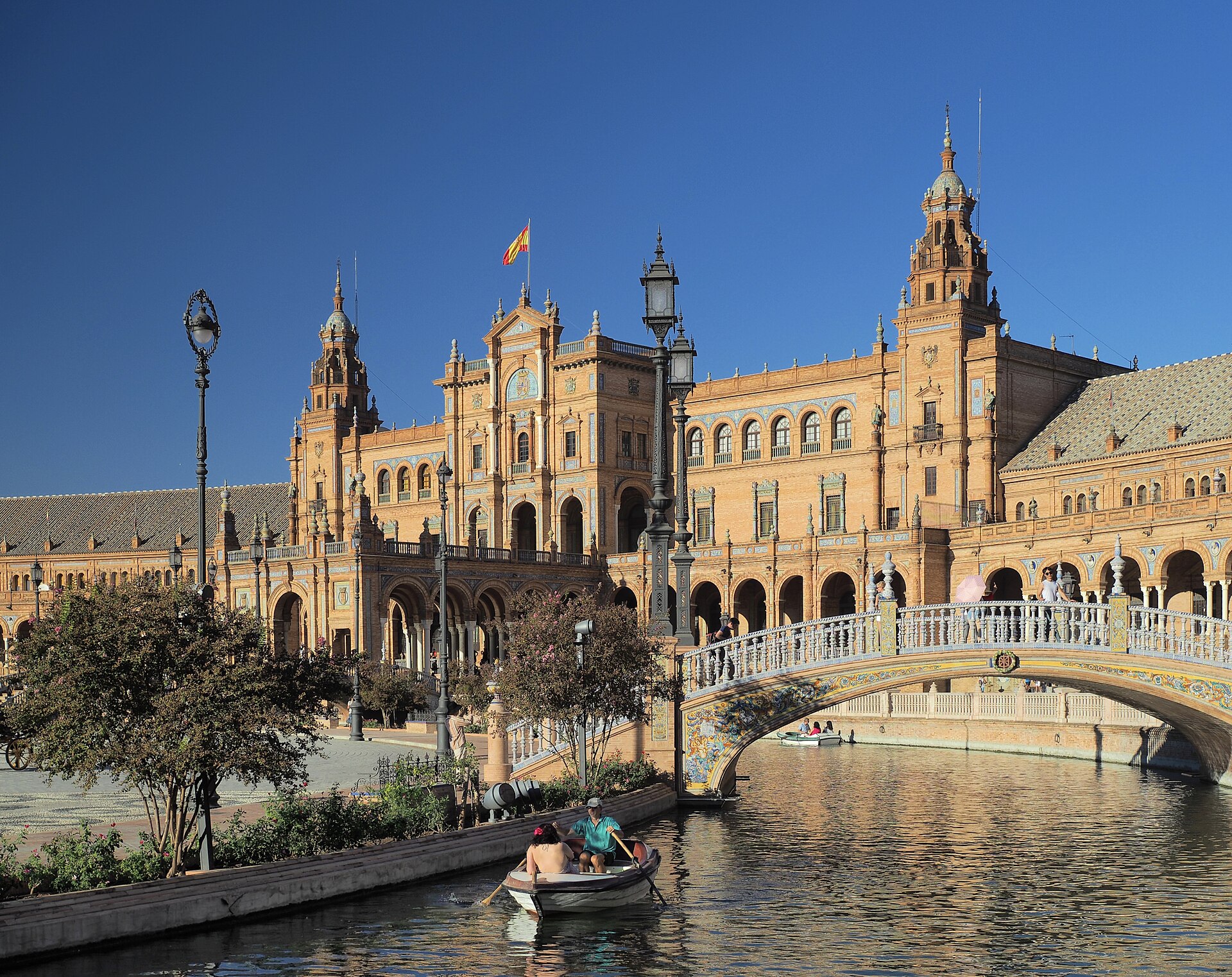
Seville is the capital of Andalusia and is counted as the most Spanish city in Spain. Flamenco was born here, the tapas tradition took shape here, and the trace of eight centuries of Muslim rule is visible in the architecture at every step. There is one condition: do not come in summer, because in July the temperature climbs to forty-five degrees. To travel it together with Cordoba and Granada it is convenient to look at Spain tours that cover Andalusia. Below I have written a three-day route.
The Alcazar palace and the cathedral
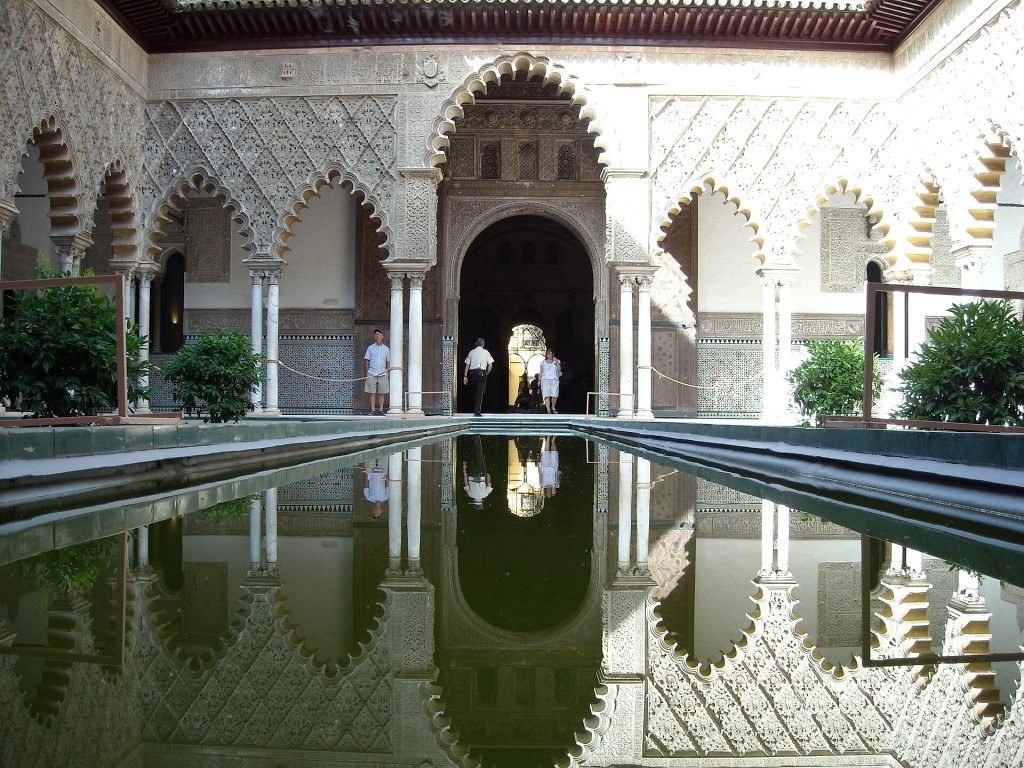
The Real Alcazar is a palace complex and it joins Muslim architecture with the later Christian additions; this style is called mudejar. Its gardens are no less striking than the palace. The ticket is timed and sells out days ahead, and it is the hardest ticket in the city.
Seville cathedral is the largest Gothic church in the world and the tomb of Columbus is kept there. The Giralda tower beside it is in fact an old minaret; you go up not by steps but by a sloping passage, because people once rode up on horseback. The ticket covers both, and taking the tours in advance settles the queue question.
Santa Cruz, the Plaza de Espana and flamenco
Santa Cruz is the old Jewish quarter and, with its narrow streets and orange trees, it is the most beautiful part of the city. Walking without a map works better there. The Plaza de Espana was built for the 1929 exhibition, is semicircular in shape and is decorated with tiled panels; entry is free.
Flamenco here is not a tourist show but a living tradition. The performances given in small halls, in the venues called tablao, turn out stronger than the big theatre productions. The Triana quarter is on the other side of the river and is considered the cradle of flamenco.
Tapas and daily life in Seville
Tapas here is not a plate but a method: you walk round several bars and eat one or two small dishes in each of them. The cold soup called salmorejo is the summer classic. Meal times are late and dinner starts after nine.
From two until five in the afternoon many small shops close, and this is the old rule of a hot climate. Spending those hours in a museum or at the hotel fits the local logic. A three-star hotel is 70–120 euros and lunch in a tapas bar 12–20.
Read more: A Spain travel guide: Barcelona, Madrid, Andalusia, the islands and the AVE trains
From Seville to Cordoba and Granada
Cordoba is forty-five minutes by high-speed train and is known for its Great Mosque-Cathedral, whose row of red and white arches inside is unique in the world. Granada is three hours and the Alhambra palace is there; its ticket sells out months ahead.
Cadiz is a coastal city and is an hour and a half away. Ronda is known for its bridge over a cleft in the rock. For these routes compare the train tickets on one screen; a ticket bought early comes down to half the price.
Season in Seville
March–May and October–November are the best months, with the weather at 20–28 degrees. July–August climbs above 42 degrees and walking in the daytime is not possible. At the beginning of April the Holy Week processions are held and after them the Feria de Abril festival; the city fills up and prices double. Winter is mild and sunny. Official information is on the Andalucia.org site.
In short
Seville fits into three days and gives you the strongest atmosphere in Spain, and the condition is choosing the right month. Buy the Alcazar ticket now, watch flamenco in a small hall, and give a day to Cordoba. For a visa and a route, fill in the application form.
Note: the prices in this article are those at the time of publication and may change with the season.
