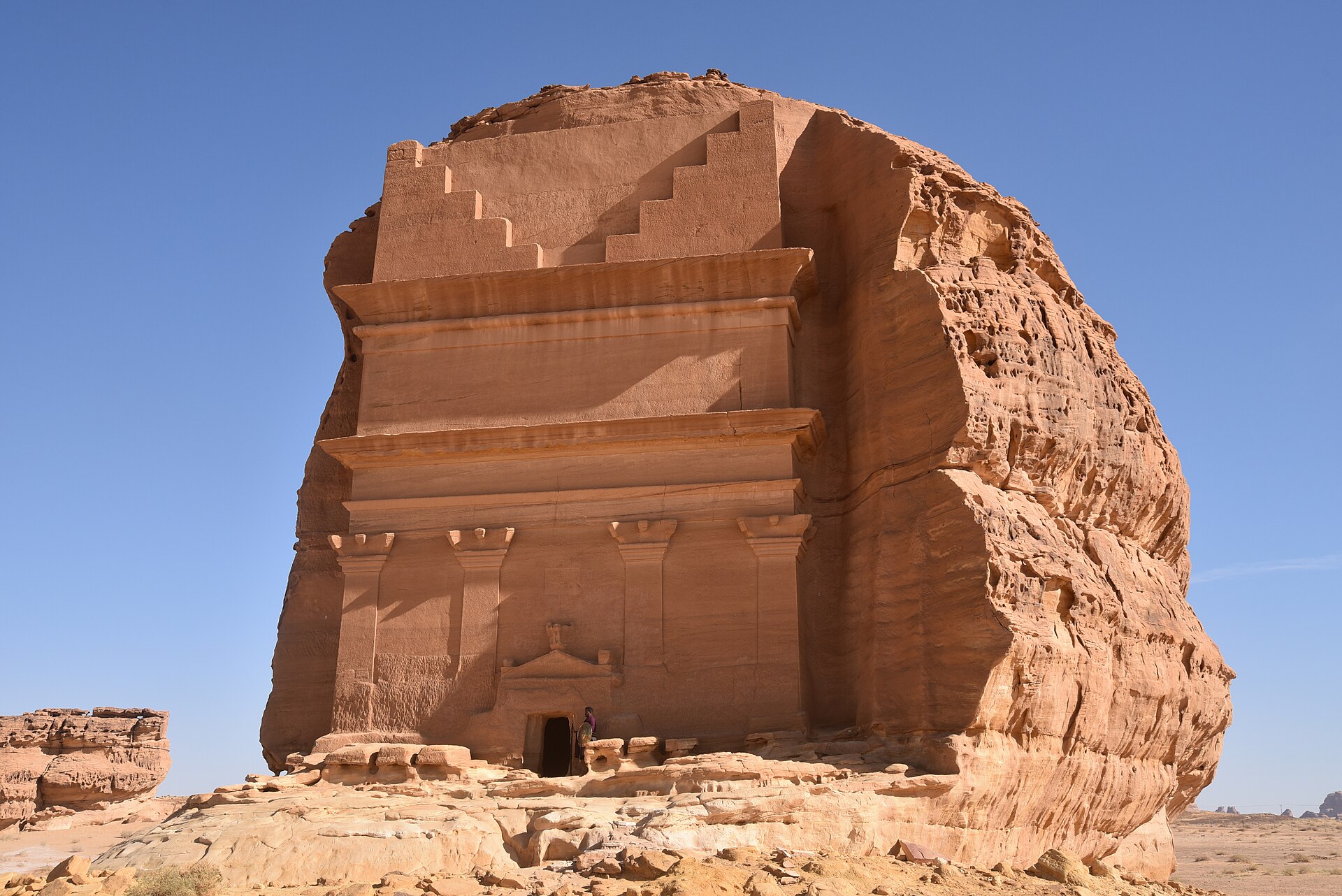
Until a few years ago Saudi Arabia was a country closed to tourists, and now it is the fastest opening travel destination in the world. In AlUla there are Nabataean tombs as magnificent as Petra. Jeddah’s old town has been restored, while in Riyadh the projects of the future are going up. The reefs of the Red Sea are still untouched. For us the most important thing is this: with a one-year multiple-entry eVisa you can also perform Umrah and there are direct flights to Jeddah, which is to say it is possible to fit the pilgrimage and the travelling into one trip. In this article I have gathered Riyadh, Jeddah, AlUla, the chance to do Umrah, the transport, the rules, the food, the season and the budget.
Saudi Arabia in brief
| Capital | Riyadh; the second city is Jeddah |
| Language | Arabic; English works in tourism and in the cities |
| Currency | Riyal (SAR), 1 dollar = 3.75 riyals; cards everywhere |
| Visa | One-year multiple-entry eVisa, 535 riyals, 90 days per visit; allows Umrah |
| Best time | November–March; Abha and Taif in summer |
| Flights | Baku–Jeddah direct, 4 hours; to Riyadh via Doha and Istanbul |
| Daily budget | 400–600 riyals at a mid-range level |
Jeddah and the chance to do Umrah
Jeddah is the gate of the Red Sea and the most open city in Saudi Arabia. The old town of Al-Balad is on the UNESCO list: houses of coral stone and «rawashin» wooden balconies, restored streets, cafés and a market in the evening; empty by day, it fills up after sunset. The Corniche is a thirty-kilometre seafront walk. The world’s tallest King Fahd fountain and the Floating Mosque are here. The Red Sea Mall and the Jeddah Yacht Club are on the shore as well. For diving and snorkelling you go out by boat from Jeddah, and the reefs have stayed untouched.
With a tourist eVisa it is possible to go to Mecca and perform Umrah. From Jeddah the Haramain high-speed train takes an hour to Mecca and two hours to Medina. You get the Umrah permit from the Nusuk app. Non-Muslims, however, cannot enter the centre of Mecca and Medina.
Taif is two hours from Jeddah, up on the mountain. It is known for its rose water and cool air, and you go up Al-Hada mountain by cable car. In summer the people of Jeddah escape the heat precisely there.
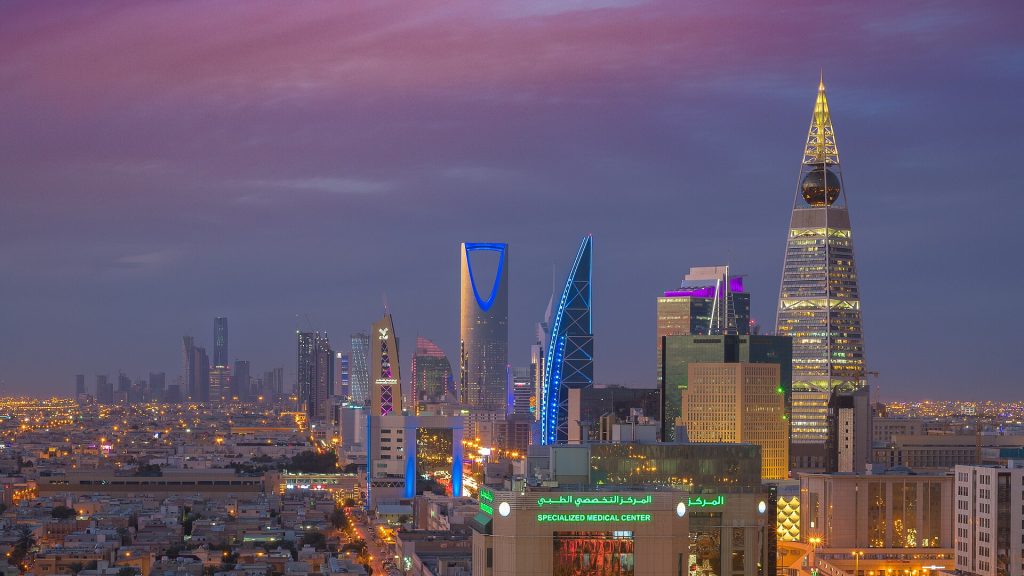
Riyadh, AlUla, Abha: Saudi Arabia through a traveller’s eyes
Riyadh is a skyscraper capital in the desert. The Sky Bridge of the Kingdom Centre looks down on the city. The Masmak fortress is where the country was founded. Diriyah is on the UNESCO list, the mud-brick city of the first Saudi state, restored and full of restaurants in the evenings. Boulevard Riyadh City is the entertainment zone. Riyadh Season runs from October to March. The Edge of the World is ninety kilometres from the city, a three-hundred-metre drop of the Tuwaiq cliffs. A 4×4 tour is 200–300 riyals, and you sit on the edge of the cliff and watch the sunset. Getting to the Edge of the World on your own is difficult, so a group tour is both cheaper and safer. Set aside two or three days for the city.
AlUla is the crown of the country. Hegra, that is Mada’in Salih, is Petra’s Nabataean brother; there are a hundred and eleven tombs carved into the rock there and it is the first monument in Saudi Arabia to make the UNESCO list. Unlike at Petra, there are few people here.
Elephant Rock, the old town of AlUla and the mirrored Maraya concert hall are places to see too, and in winter festivals are held here. The flight from Riyadh and Jeddah takes an hour and a half, the tickets are on the Experience AlUla site, and set aside two or three days for the place itself.
Abha is a green and cool city in the Asir mountains at two thousand two hundred metres; in summer the weather stays at twenty-five degrees, and nearby are the village of Rijal Almaa and the terraced mountains. The Al-Ahsa oasis in the Eastern Province is on the UNESCO list as well.
Transport in Saudi Arabia: the Haramain train, the Riyadh metro, Uber
The Haramain high-speed train runs between Medina and Mecca via Jeddah and King Abdullah Economic City at three hundred kilometres an hour. From Jeddah to Mecca it takes an hour and costs 50–100 riyals, and you buy the tickets in the app.
The Riyadh metro has been running since 2024 and has six lines, with a ride costing four riyals. The King Abdullah Financial District station is an architectural monument in itself.
Uber and Careem work in every city; a ride across town in Jeddah is 20–40 riyals and from the airport to the centre 60–80. The domestic flights are run by Saudia and flynas; Jeddah to Riyadh takes an hour and a half and costs 200–400 riyals, and there are flights to AlUla from both cities.
Car hire is 100–150 riyals a day. The roads are wide and excellent, fuel is cheap, and women have been getting behind the wheel since 2018. Take an international licence along with your Azerbaijani one, and for the Edge of the World you need a 4×4. SAPTCO buses are the cheap intercity alternative.
Kabsa, mandi, dates: Saudi food and the rules
Kabsa is chicken or lamb served over spiced rice, and it is the national dish. Mandi is cooked Yemeni-style in an earth oven, jareesh is a wheat porridge, and mutabbaq is a flatbread filled with meat and egg. Saleeg is rice in milk and is served in Taif.
Dates with cardamom Arabic coffee are the start of every meeting, and Al-Ahsa dates are considered the best in the world. Hijazi cooking is in Jeddah. The Al Baik fried chicken chain is the country’s favourite, costs fifteen riyals and every Saudi talks about it.
Everything is halal and alcohol is banned. Lunch in a restaurant is 30–50 riyals, dinner in Al-Balad 60–100, and in the Boulevard restaurants of Riyadh 150.
The rules have softened considerably since 2019. The abaya is not compulsory for women tourists, only the shoulders and knees have to be covered, while men do not wear shorts. In mosques a headscarf is required.
Know a few finer points too. Couples touching in public is considered disrespectful, shops close briefly at prayer time, during Ramadan you must not eat in the open during the day, and do not photograph government buildings.
Season and weather
November to March are the ideal months. In Riyadh the weather is 15–25 degrees and in Jeddah 25–30, while in AlUla it stays at twenty-two by day and eight at night. Riyadh Season and the AlUla winter festival fall in those same months, and hotels get dearer in December-January and around Ramadan.
From April to October the temperature in Riyadh climbs to 40–45 degrees, and in Jeddah it is thirty-eight and humid. AlUla does not close in summer, but you only walk around in the morning. Abha and Taif, at twenty-five degrees, turn into the country’s own summer resorts.
During the Hajj season, that is the month of Dhu al-Hijjah, Jeddah and Mecca get very crowded. For Umrah, Ramadan is the most blessed and at the same time the most crowded time. Information on the eVisa, the season and events is on the Visit Saudi portal.
Budget and tickets
In Jeddah a three-star hotel is 250–400 riyals and a four-star 400–700, while prices in Riyadh are a little higher. In AlUla boutique and tented resorts climb to 800–2,000 riyals. In Mecca a hotel near the Haram is 500–1,500 riyals in the Umrah season, so booking the dates early is essential. Hostels are only just appearing and come to 80–120 riyals.
The programmes are priced like this. A Hegra tour is 95 riyals, Diriyah 100, the Kingdom Sky Bridge 60 and an Edge of the World tour 250. Excluding the flight, a week-long trip taking in Jeddah, Riyadh and AlUla fits into 3,500–5,000 riyals per person, and a Jeddah trip with Umrah into 2,000–3,000.
AZAL and flynas fly direct from Baku to Jeddah, while Qatar Airways and Turkish Airlines go to Riyadh with a connection. An air ticket to Jeddah has to be bought early during Ramadan and the school holidays. Saudi Umrah and AlUla tour packages combining Umrah with AlUla and Jeddah settle the eVisa, the Nusuk permit, the Haramain train and the hotels together.
Frequently asked questions about Saudi Arabia
How many days does a Saudi trip need?
Jeddah two days, AlUla two or three, Riyadh two — a week in all. With Umrah ten days, and for Umrah alone four or five.
Can I perform Umrah on a tourist visa?
Yes, the eVisa allows Umrah, with the Hajj season as the exception. The permit is obtained in the Nusuk app, and the details are in our visa article. The app does not work without internet and you have to show the permit along the way, so coming with an eSIM is the simplest way.
Can a woman travel alone?
Yes, since 2019 women travel without a guardian, book hotels and drive. Covered clothing is enough, the abaya is not compulsory, and the country is among the safest in the world.
In closing
With a one-year eVisa, a direct flight and the chance to do Umrah, Saudi Arabia gives you both a pilgrimage and a journey of discovery. AlUla and the old town of Jeddah are the region’s new stars. The eVisa rules are explained on the Saudi Arabia page, and to build the Umrah or AlUla route together, fill in the application form.
Note: the prices here are as of the publication date and can change with the season.
