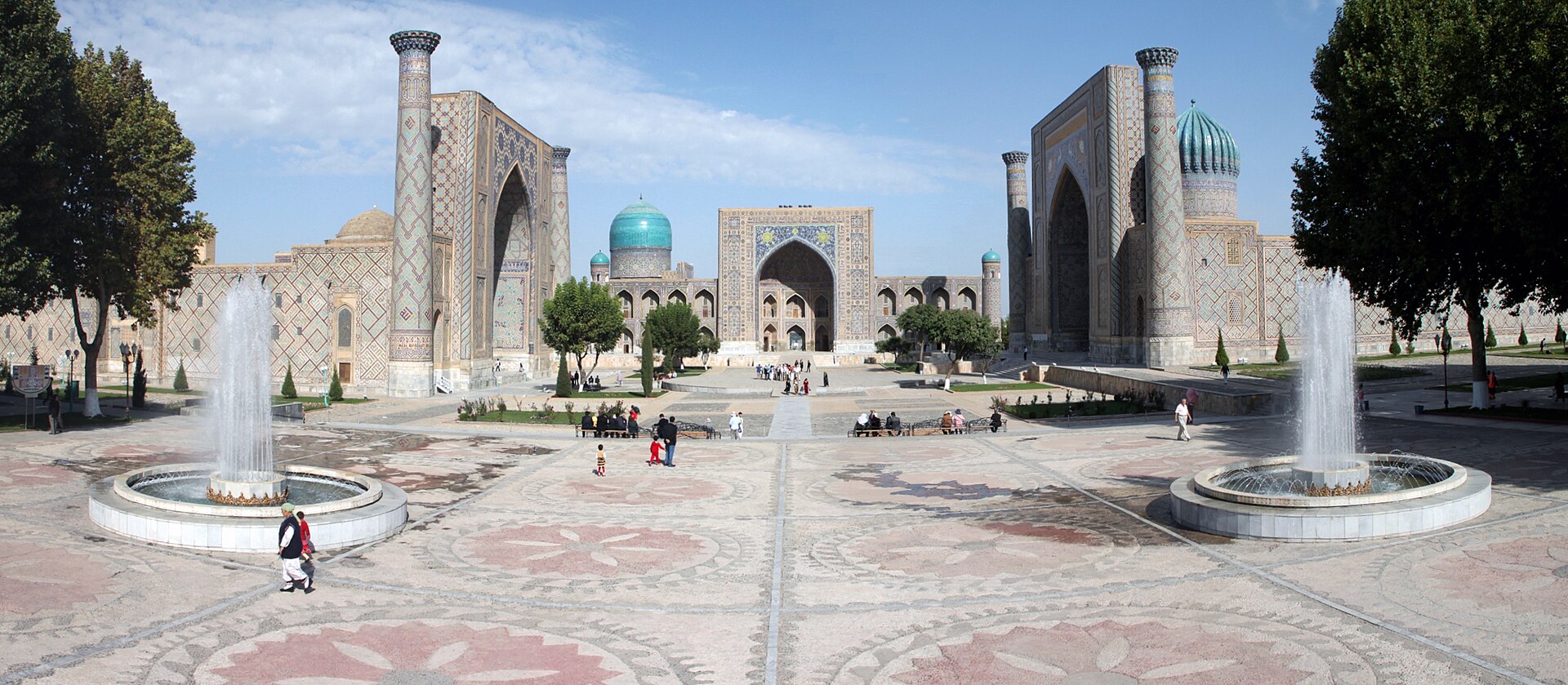
Samarkand is the best-known stop on the Silk Road, and the look of the city justifies that name. The buildings here are large and the tile patterns are a blue that barely comes out in a photograph. The city was Timur’s capital and most of the main monuments remain from precisely that period. Two full days are enough for the main places, while a third gives you the chance to walk without hurrying.
Registan square and Timur’s mausoleum
The Registan is where three madrasas stand facing one another on a single square, and it is the key to the city. The oldest carries the name of the astronomer ruler Ulugbek, while on the arch of the building opposite there is a depiction of a lion, which is a rare thing in Islamic architecture. Go to the square early in the morning; at midday the light is harsh and the tourist flow increases.
Gur-e-Amir is the mausoleum where Timur and his family are buried and its interior is covered in gilded patterns. The building is small, but its effect is strong, especially under the evening lighting. In the evenings there is a light and sound programme at the Registan; confirm the schedule on the spot.
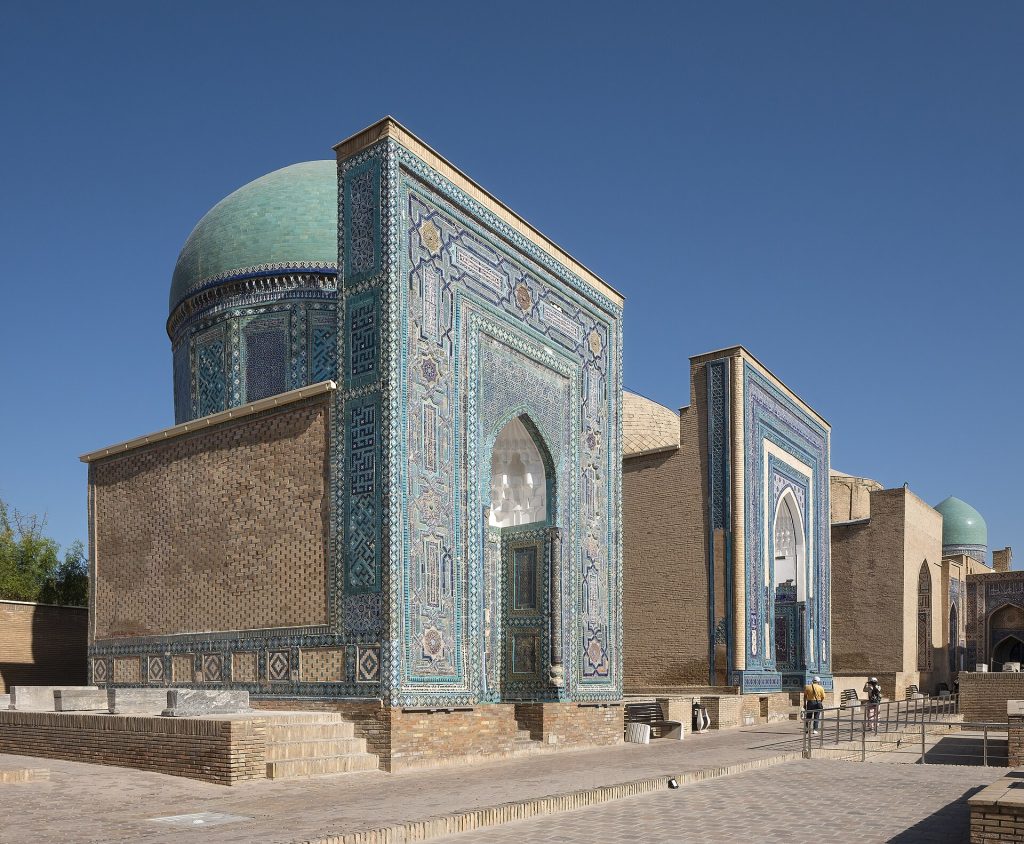
Shah-i-Zinda and the Ulugbek observatory
Shah-i-Zinda is a chain of tombs lined up along a narrow street and, for many people, this is the most beautiful place in the city. The tilework of each tomb is the work of a different master, so the patterns do not repeat one another. In the morning hours there is almost nobody here.
Of the Ulugbek observatory, part of the enormous quadrant that remains underground has been preserved. Ulugbek compiled a catalogue of the stars in the fifteenth century and the precision of his calculations still causes surprise today. The museum beside it is small, but the explanations are clear. Taking a guided city walk is useful here, because the histories of the monuments are tied to one another.
The bazaar, the food and daily life
Siyob bazaar is next to the Bibi-Khanym mosque and is the living part of the city. Dried fruit, nuts, spices and the famous Samarkand bread are sold here. The bread is traditionally pressed with a patterned stamp and keeps for a long time, so you can take it as a gift.
In the food, pilaf comes first, but every city has its own method and the local version differs from the Tashkent one. Samsa is baked in a tandoor and is eaten as breakfast. Sitting in a teahouse at lunchtime is normal here and hurrying is not accepted.
Read more: An Uzbekistan travel guide: Samarkand, Bukhara, Khiva, the Afrosiyob train and the home of pilaf
How to reach Samarkand and the budget
Direct flights from Baku change with the season, and the most reliable option is to go via Tashkent. From Tashkent to Samarkand the fast train called the Afrosiyob takes two hours and is the country’s most comfortable transport. Tickets run out several weeks ahead, so buy them as soon as you settle the date; taking Afrosiyob tickets online saves you the station queue.
| Hotel | A three-star night in the centre, roughly 30–60 euros |
| Afrosiyob train | Two hours from Tashkent, two classes |
| Lunch | 5–12 euros a head in a local place |
| Museum tickets | Cheap, paying in cash is easier |
Payment by card works in the large hotels and restaurants, while at the bazaar and in a taxi cash is needed. To choose a hotel within walking distance of the Registan it is convenient to look at Samarkand hotels on the map. Following flight prices in the Tashkent direction in advance changes the budget considerably. Official tourism information about the country is on Uzbekistan’s tourism portal.
Season in Samarkand
April–May and September–October are the best time, the weather is 20–28 degrees and walking is comfortable. In summer the temperature approaches forty and there is little shade at the monuments, so you have to move to the morning and evening hours. Winter is cold, but there are few tourists and prices come down. In the spring months the abundance of fruit is a reason of its own.
In short
Samarkand is a two- or three-day destination, near at hand and unexpectedly cheap. Go to the Registan in the morning, walk Shah-i-Zinda without hurrying, buy the Afrosiyob ticket in advance, and keep cash with you. If you want to combine Samarkand with Bukhara and Khiva, you can look at the tour options on the Silk Road route. For a route, fill in the application form.
Note: prices and the train timetable change with the season, so check from an official source before travelling.
