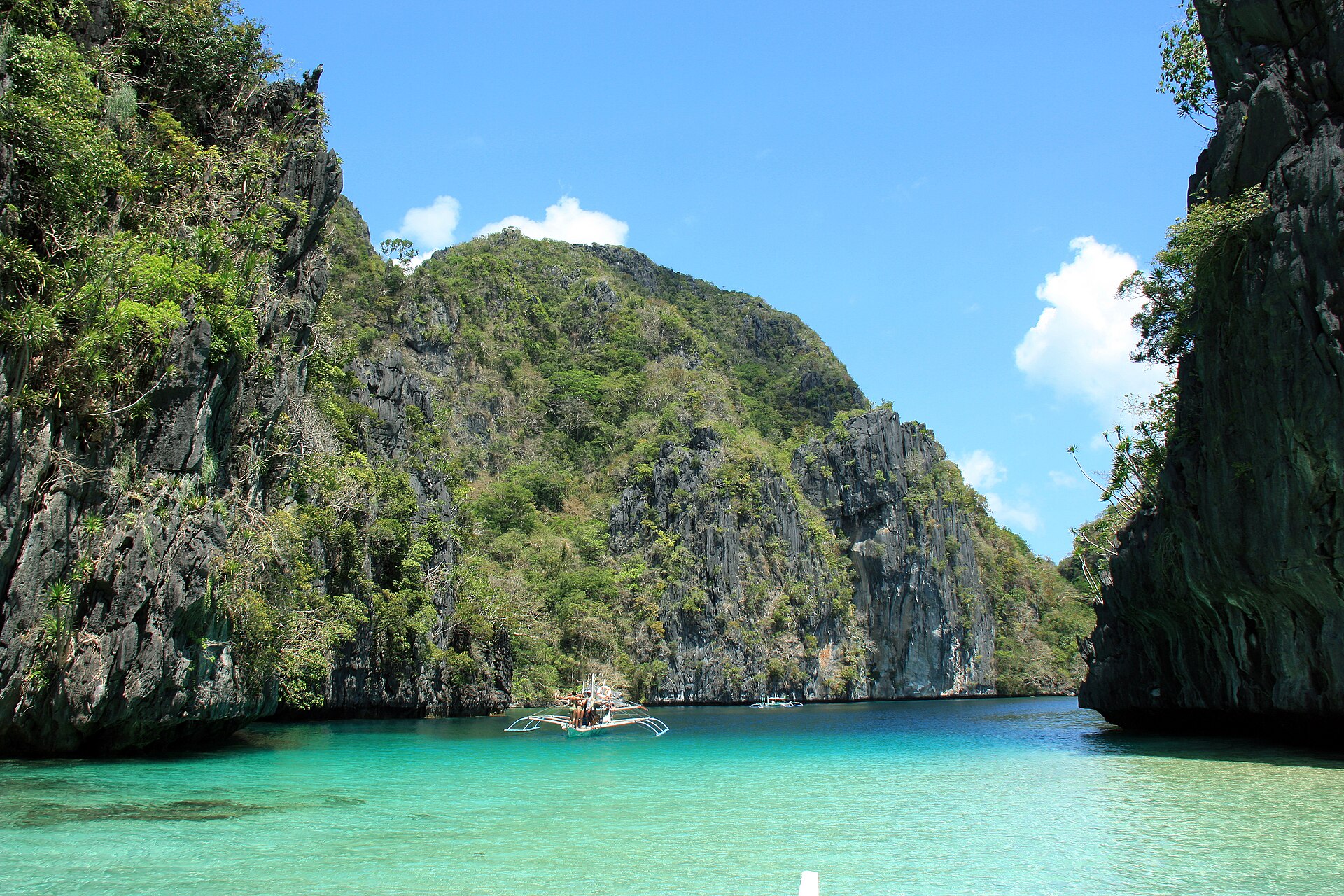
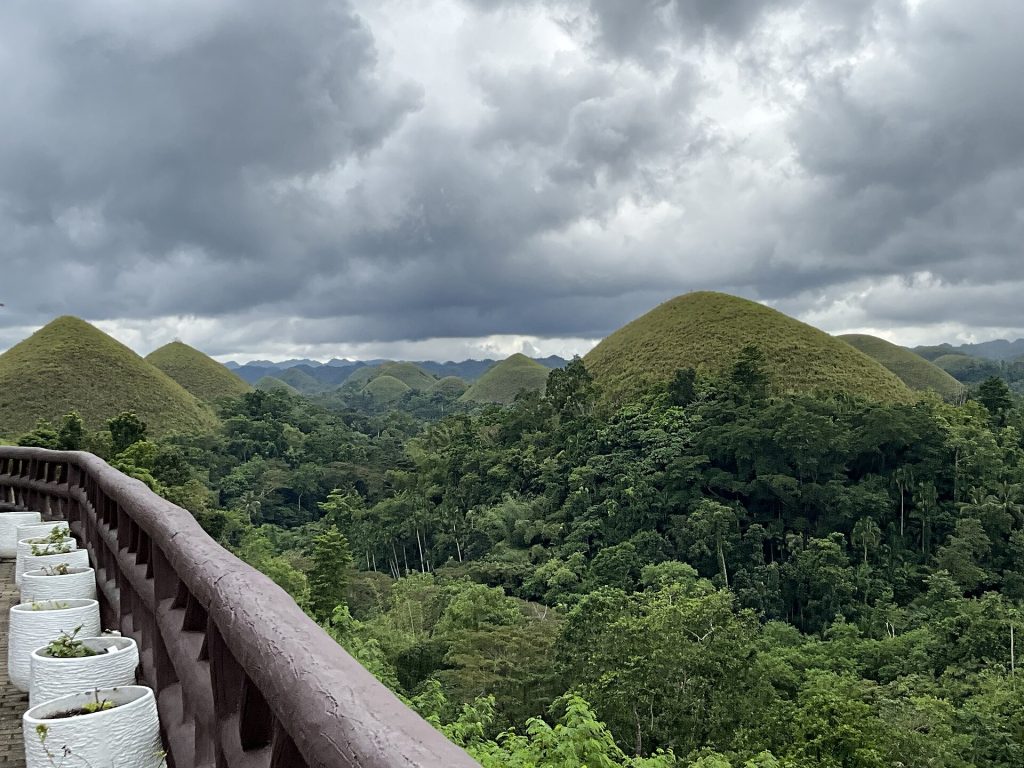
The Philippines consists of more than seven thousand islands and is one of the least known but most beautiful sea countries in South-East Asia. The limestone lagoons of Palawan, the white sand of Boracay and the hills of Bohol are gathered in one country. On top of that, the friendliest people in the world are here, and everyone who goes confirms it.
For us the main obstacle is the visa, and that is obtained from the embassy in Ankara. After that the country turns out cheap, English-speaking and comfortable. Below I have gathered the route between the islands, the domestic flights, the food, the season, safety and the budget in one place.
The Philippines in brief
| Capital | Manila |
| Language | Filipino (Tagalog) and English; English works everywhere |
| Currency | Peso (PHP), 1 dollar ≈ 57 pesos; cash matters on the islands |
| Visa | 9(a) tourist visa, the embassy in Ankara; eTravel registration before entry |
| Best time | December–May dry season; June–November typhoon season |
| Flight | 13–15 hours via Doha, Dubai or Istanbul |
| Daily budget | 60–90 dollars at a mid-range level |
The islands of the Philippines: Palawan, Boracay, Cebu, Bohol
Manila is the gateway. One day is enough, with the Spanish-era Intramuros fortress and the shopping centres of the Makati district. The city’s traffic is among the heaviest in the world, so set out for the airport three hours ahead.
Palawan is the country’s crown. In El Nido there are lagoons among limestone cliffs and island-hopping tours, in Coron sunken Japanese ships and Kayangan Lake, and in Puerto Princesa the underground river on the UNESCO list.
Boracay is the most famous resort island with its four kilometres of White Beach. Every evening people watch the sunset from a sailing boat, and that is the island’s own ritual.
Cebu is the second city of the Philippines and the centre of the Visayas. In the south there are the Kawasan falls, and people swim with whale sharks there too.
Nearby Bohol takes two days with the Chocolate Hills, the tarsier — counted as the world’s smallest primate — and the beaches of Panglao. Siargao, meanwhile, is the surf island.
For a first trip the formula goes like this. One day for Manila, four or five for Palawan, four for Cebu and Bohol. If you drop Palawan, put three days in Boracay instead.
Transport within the Philippines: flights, ferries, jeepneys
The main way between the islands is the domestic flight. Cebu Pacific, Philippine Airlines and AirAsia run dozens of flights a day from Manila to Cebu, Puerto Princesa and Kalibo, the gateway to Boracay, and booked early a ticket costs 30–60 dollars. Baggage is paid for separately, and delays are normal here, so leave plenty of connection time.
Ferries run between neighbouring islands. Cebu to Bohol takes two hours and costs 15–25 dollars, and El Nido to Coron is four hours.
Inside the cities the Grab app replaces the taxi. The colourful shared minibuses called jeepneys go for 15–20 cents and are the real local experience, while the tricycle, a motorised three-wheeled taxi, is everywhere on the islands. Both Grab and the ferry apps need the internet, and an eSIM settles that question once and for all.
In El Nido and Boracay the island tours are named with the letters A, B, C and D and cost 20–30 dollars, with A and C the best. A car only makes sense in Cebu and Bohol; in Palawan a motorbike rental is 8–10 dollars a day.
The food: adobo, sinigang and halal in the Philippines
Adobo is chicken or pork cooked in vinegar and soy sauce, and that is the national dish. Sinigang is a sour tamarind soup, lechon is a whole roast pig and a holiday dish, and kinilaw is the local ceviche. Halo-halo is a sweet iced dessert and saves you in the heat.
On the coast seafood is very cheap. Grilled fish, prawns and squid come to 5–8 dollars, and you can also buy them yourself at the market and have them cooked at the eatery next door.
As there is a lot of pork in Filipino cooking, the halal question has to be asked. There are Muslim community restaurants in Manila’s Makati and Quiapo districts and in Cebu and Palawan, and the island of Mindanao is a Muslim region as a whole. Chicken, fish and rice-based dishes are everywhere in any case.
The mangoes here count as the sweetest in the world, and that is no exaggeration. Lunch at a restaurant is 4–8 dollars and at a resort restaurant 15–25. Do not drink the tap water.
Read next: A Philippines visa: the Ankara embassy, the 9(a) visa and eTravel registration
Season, typhoons and safety
December to May is the dry season. The weather is 28–33 degrees, the sea stays calm and it is the ideal time for island tours, while March to May are the hottest months.
From June to November the rain and typhoon season begins. Close to twenty typhoons pass in a year, flights and ferries are cancelled, so do not go without insurance. Palawan lies relatively off the typhoon path.
As for safety, the tourist islands are quiet, while in Manila be careful at night and do not show your phone in the street. Western Mindanao and the Sulu islands are a warning zone for foreign ministries, so do not go there. Dengue fever is present, so keep mosquito spray in your case. Island and seasonal information is on the Philippines Travel portal.
Budget and tickets
The Philippines is cheap at Thailand’s level. In El Nido a guesthouse is 30–50 dollars and a mid-range resort 80–150. In Boracay a four-star hotel is 100–180 dollars, and in Manila a three-star 40–60.
The activities are cheap too. An island tour is 25 dollars, a dive 40–60, and swimming with whale sharks 20. Leaving out the flight, a ten-day trip fits into 900–1400 dollars a head.
From Baku, Qatar Airways and Emirates fly to Manila and Cebu; an air ticket to Manila is dearest in the Christmas and Novruz weeks and cheapest in May and June. Philippine islands tour packages linking Palawan, Cebu and Bohol settle the domestic flights and the ferries together and are planned along with visa support.
Frequently asked questions about the Philippines
How many days do you need for a Philippines trip?
Because of the long flight, at least ten days. For two island regions, twelve to fourteen days is the ideal plan.
Boracay or Palawan?
Boracay is comfortable resort life and nightlife, Palawan is nature and adventure. Families with children choose Boracay, couples and diving enthusiasts Palawan.
Can you get by in English?
Yes, English is an official language and this is the best English-speaking country in Asia. The signs, the menus and the airport are in English.
In closing
Once the visa hurdle is past, the Philippines is a cheap, English-speaking country that gives you the world’s most beautiful islands, and in the dry season with the right choice of island the trip makes itself. The visa process is explained on the Philippines page, and to build the island route together fill in the application form.
Note: the prices here are as of the publication date and can change with the season.
