For most of us, flying from Baku to Moscow does not feel like going abroad. The flight is three hours, there is no visa, we know the language, and every second person has either a relative or an old workmate there. But over the last few years Russia has changed a good deal for the tourist, and most of these changes are things you learn only after you reach the airport. Your Azerbaijani bank’s card does not work in the cash machine, you have to install an app called RuID on your phone, the hotel hands you a registration slip. I am writing this guide for exactly that person: the reader going as a tourist for the first time, wanting to see Moscow and Petersburg, and perhaps drop in on Kazan. And for the person who does not want to get stuck over the money question.
Russia in brief
| Capital | Moscow; the second city is Saint Petersburg |
| Language | Russian; for those going from Azerbaijan there is no language barrier |
| Currency | The rouble (RUB); foreign Visa and Mastercard do not work, cash dollars and euros are exchanged at the banks |
| Visa | 90 days visa-free per calendar year; the RuID notification and the registration rules are in our visa article |
| Best time | May–September; the white nights in Petersburg in June |
| Flights | Baku–Moscow and Baku–Saint Petersburg direct, 3–3.5 hours |
| Daily budget | 60–100 dollars at a mid-range level, all of it in cash |
The money question in Russia: why the card does not work and what to do
Let us settle this one first, because everything else depends on it. Since 2022 Visa and Mastercard have not served foreign banks’ cards in Russia. That is, the card issued to you in Baku will not go through in a shop, in a cash machine or in the Yandex app. Someone who does not know this gets into a taxi at Sheremetyevo and sits there wondering how to pay; I have witnessed that scene myself.
The solution is simple, it just has to be thought through in advance. You take cash dollars or euros and change them into roubles at any bank branch in the city. The rate differs little from bank to bank, while the kiosks at the airport are always expensive, so change only as much as the taxi costs there and the rest in town. Some Azerbaijani banks put out news from time to time about joining the Mir system, but this situation changes quickly, and the wiser course is to ring your own bank a week before you fly and ask. If you are staying a long time, it is also possible to open a card at a local bank with your passport; it takes an hour, and after that the metro, taxi and shop problem is gone.
As for the rules, you can stay in Russia a total of 90 days within a calendar year, and those days are counted from the first of January. Within 7 working days of arrival you have to register. If you are staying in a hotel, reception does it for you and gives you a slip; if you are staying with relatives, you will have to go to the migration service or the post office together with the householder. The RuID app is voluntary for now, and will stay that way until the end of 2027. Still, installing it and sending the notification does no harm, if only to save time at the border. Do not forget one more thing: the south-western provinces and the border regions are not for tourist travel, and Moscow’s airports are also occasionally closed for a few hours, so on the morning of your flight check its status in the airline’s app.
What do three days in Moscow cover, and how many days should Petersburg get?
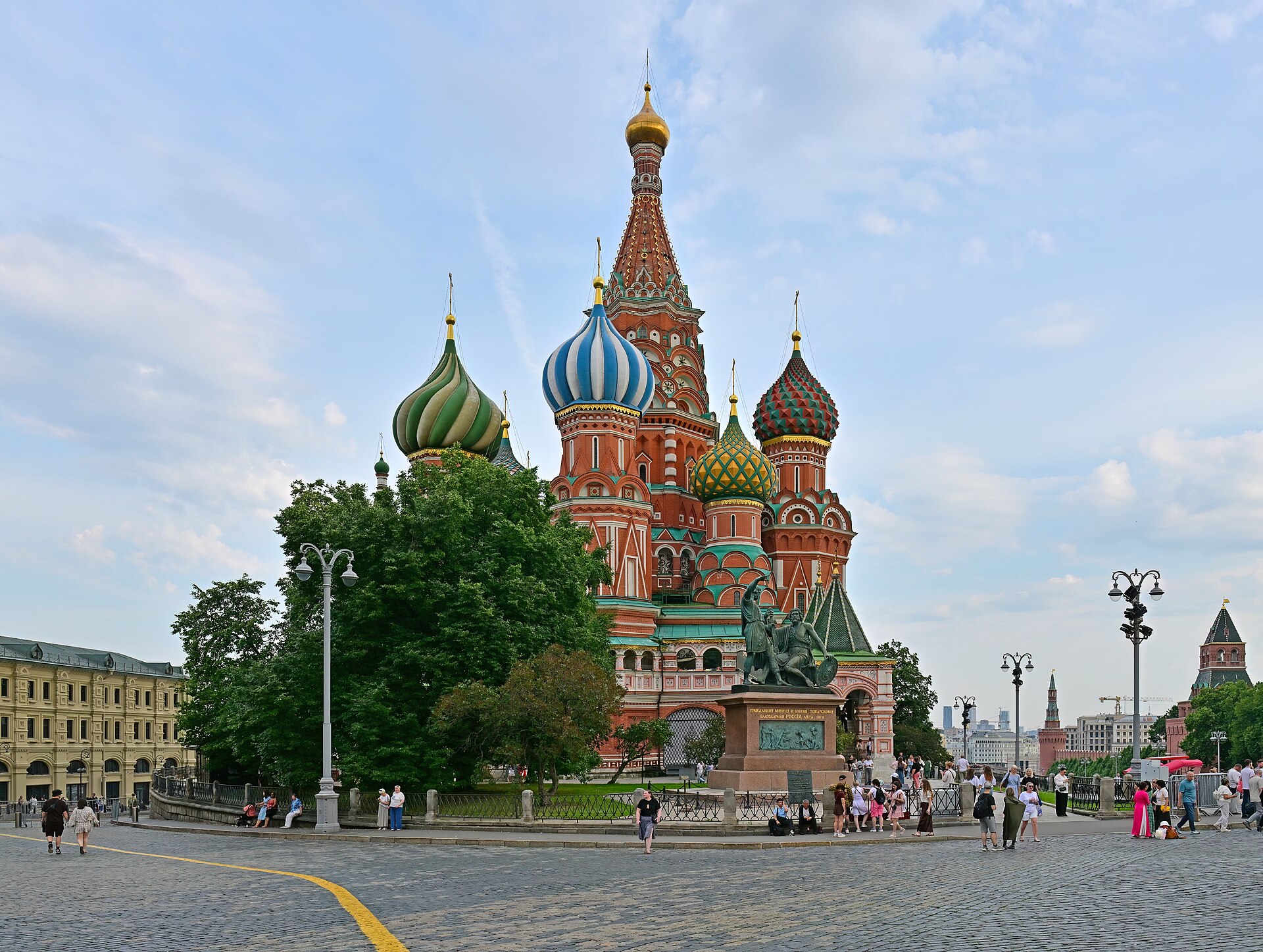
The route for a first-timer in Moscow, to be honest, builds itself. You come out onto Red Square. The coloured domes of Saint Basil’s Cathedral look smaller than in the photographs. On the left stands GUM, on the right the Kremlin wall. It is worth buying a ticket to go inside the Kremlin, especially to the Armoury, where the tsars’ crowns and carriages are kept; a limited number of tickets is sold each day, so go early in the morning. Behind the square is Zaryadye Park, where the “floating bridge” opens up a view of the Moscow River, more beautiful still in the evening lights.
Give the second day to the museums. The Tretyakov Gallery is the whole of Russian painting; it takes two or three hours, and afterwards you can look out over the city from the observation platform of the nearby Cathedral of Christ the Saviour. In the evening a ticket to the Bolshoi is hard to come by, but if you find one, go — the historic stage is worth the money. Start the third day at the Sparrow Hills, from where the Moscow City towers and Luzhniki appear in one view, then move on to VDNKh, where the Soviet-era pavilions and fountains have now been restored. As for the metro, think of it as a separate outing. The Komsomolskaya, Mayakovskaya and Novoslobodskaya stations are like palaces with their mosaics and chandeliers; people buy a single ticket and spend an hour simply riding from station to station.
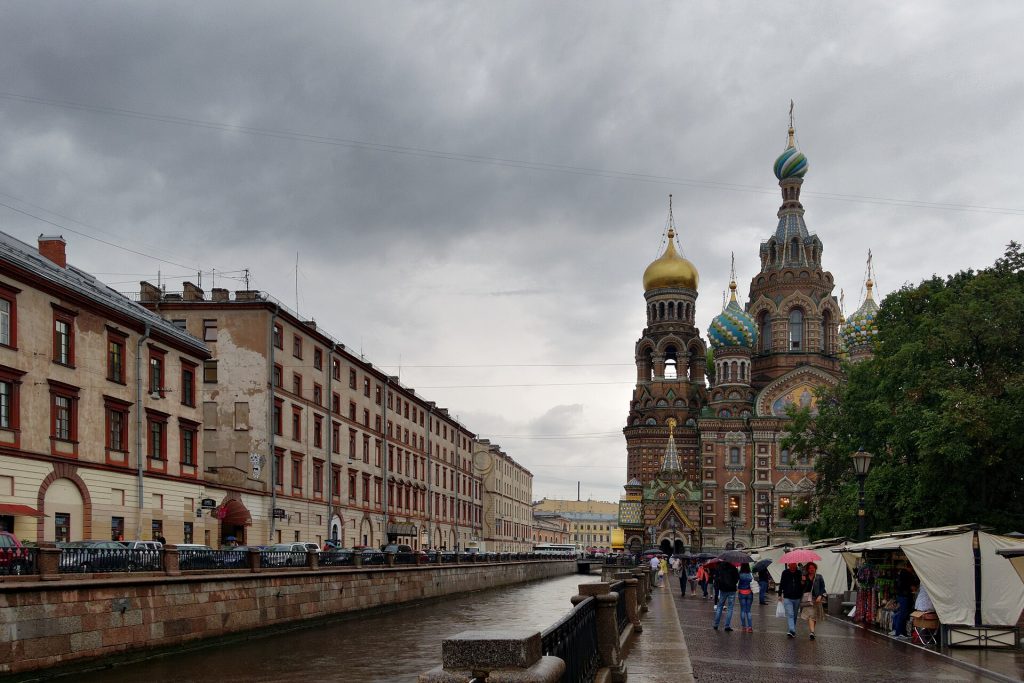
Then Saint Petersburg. It is four hours from Moscow on the Sapsan train, and give it three or four days — more would not hurt. The Hermitage swallows a day; buy the tickets online, as in summer the queue runs over an hour. Walk down Nevsky Prospekt; the mosaic of the Church of the Savior on Spilled Blood is more striking from inside. At one in the morning join the people gathering on the embankment to watch the bridges over the Neva open — in June the sky is still light at that hour, and that is exactly what the white nights are. Outside the city the fountains of Peterhof run from May to October, while in the Amber Room of the Catherine Palace in the town of Pushkin they do not allow photographs, which is precisely why it stays in the memory.
If there is time left, there are two directions. Kazan is the capital of Tatarstan, and there inside the Kremlin the Qol Sharif Mosque and an Orthodox church stand side by side, which is why the city is considered the most comfortable place in Russia for a Muslim traveller. The flight from Moscow takes an hour and a half, and the night train gets you there by morning.
Sochi is another Russia altogether. Palm trees grow on the Black Sea shore, the Krasnaya Polyana ski resort works in the mountains above, and there is a direct flight from Baku as well.
Transport in Russia: the Sapsan, the metro and Yandex Go
A Sapsan ticket can be bought on the RZD site ninety days ahead. The cheap class starts at three thousand roubles, and as the date approaches it passes six thousand. For those after some romance there is the “Red Arrow” night train: you leave Moscow in the evening and wake up in Petersburg. A compartment ticket often comes out cheaper than the Sapsan, and a night’s hotel money stays in your pocket into the bargain.
Within the city the main transport is the metro. In Moscow you buy a Troika card at the ticket office and top it up with cash; one ride is around sixty roubles, and in Petersburg the Podorozhnik card does the same job. A local bank card also works at the barriers, but yours will not, so top up the Troika in advance.
For taxis, install the Yandex Go app and choose cash as the payment type when ordering. A ride within the city comes to between three hundred and six hundred roubles. The most comfortable way from the airport to the centre is the Aeroexpress train, which gets you in from Sheremetyevo, Domodedovo and Vnukovo in 35–45 minutes for around five hundred roubles.
Domestic flights are operated by Aeroflot, S7 and Pobeda. From Moscow it is two and a half hours to Sochi and an hour and a half to Kazan. True, these tickets can only be bought on Russian sites with a local payment method, so settle the matter either through an acquaintance or through an agency. In Moscow and Petersburg, taking the excursions in advance is the most comfortable way for those without the language, and there are Russian-speaking groups too.
Car rental is needed only to tour the Golden Ring towns, Suzdal and Vladimir. Driving around Moscow itself, meanwhile, turns into torment with the traffic and the parking.
Borscht, pelmeni and the halal food question
Russian cooking is a cuisine of heavy, hot dishes, and in winter you appreciate it. Borscht is served with sour cream, pelmeni are a large version of our düşbərə, blini are thin pancakes topped with either sour cream or caviar. Olivier salad and beef stroganoff are in every restaurant. In Petersburg try the sugar-dusted doughnuts called “pyshki”, and in Kazan the local pride is echpochmak and chak-chak. Incidentally, in Moscow Georgian restaurants are on every corner and are often tastier than the Russian ones, and there is no shortage of Azerbaijani restaurants either.
As for prices, on a weekday look for the lunchtime “business lunch”: for 400–700 roubles they give you soup, a main course and a drink. The Teremok chain is the most convenient option for cheap Russian food, and for the evening in a normal restaurant count on 1,500–3,000 roubles a head. Halal food is not a problem in Kazan, as the whole city is geared to it. In Moscow and Petersburg most Uzbek, Tatar and Azerbaijani restaurants have a halal menu, and the large supermarkets have a halal meat section. You can drink the tap water in Moscow, but in Petersburg buy bottled water — the locals do the same.
When is it good to go to Russia?
May to September is the most comfortable time. In Moscow the weather is 20–27 degrees, the parks are full and the cafés put their tables outside. In the middle of June the white nights begin in Petersburg and the “Scarlet Sails” festival is held; that week the city is at its most expensive, so book the hotel two or three months ahead. July and August are hot and occasionally rainy, while September is the golden autumn, and the Peterhof fountains run until the middle of October.
Winter is an entirely different trip. From November to March the temperature swings between minus 5 and minus 20, but Red Square under snow, the New Year fairs and the empty museums are worth it. Only take the clothing seriously: without thick boots and a hat the Moscow wind sends you back to the hotel within half an hour. The ski season in Krasnaya Polyana runs from December to April. April and November, on the other hand, are grey, wet and muddy months — skip them if you can. Sochi is separate: the beach is open from the end of May to October. The calendar of events and festivals by region can be seen on the official Russia Travel portal.
How much does a trip to Russia cost?
In Moscow a night in a three-star hotel near the centre asks 5,000–8,000 roubles, and a four-star 9,000–15,000. Petersburg is a little cheaper, in Kazan a good hotel can be found for 4,000–6,000 roubles, and in Sochi the summer price is 6,000–10,000. A rented flat comes to 3,500–6,000 roubles, but agree the registration question with the owner in advance.
The museums are not expensive. The Kremlin charges seven hundred roubles, the Hermitage five hundred, the Tretyakov seven hundred, the lower park of Peterhof is six hundred, and a canal tour comes to about one thousand two hundred. Not counting the flight, a week in Moscow and Petersburg fits into 700–1,100 dollars a head — and keep in mind that you will have to carry the whole of that sum in cash.
From Baku, AZAL and the Russian airlines fly to Russia, with several flights a day to Moscow and Petersburg. Air tickets to Moscow go up in summer and over the New Year holidays, but as there are many flights, shifting the date by a day or two finds a different price. For those who do not want to rack their brains over cash, train tickets and museum queues, there is the Russia two-capitals tour package, where the Sapsan, the hotel and the excursions are all settled together.
Frequently asked questions about Russia
How many days do you need to see Russia?
Give Moscow three days and Petersburg three or four, and it comes to a week. For a first trip that is entirely enough. If you want to add Kazan or the Golden Ring, count on ten days. Sochi, though, is better planned separately as a seaside holiday.
How much cash should I take?
Take the whole budget in dollars or euros; 700–1,100 dollars is enough for a week, and less if the hotel is paid for in advance. Keep the money in several places rather than in one. At customs anything above 10,000 dollars must be declared; below that raises no questions.
Can you travel to Russia with an ID card?
No, you cannot; a foreign passport is required. The RuID notification, the 90-day calendar-year limit and the fine points of registration are explained in detail in our visa article.
In closing
Russia means two great capitals reached without a visa, on a direct flight and with no language barrier. If you settle the cash question, RuID and the flight situation beforehand, the rest is an ordinary journey. All the entry and registration rules are gathered on the Russia page, and if you would like to build the Moscow and Petersburg route together, fill in the application form and we will call and talk it through.
Note: the prices in this article are as of the publication date; payment and entry rules change quickly in Russia, so check once more before your trip.
