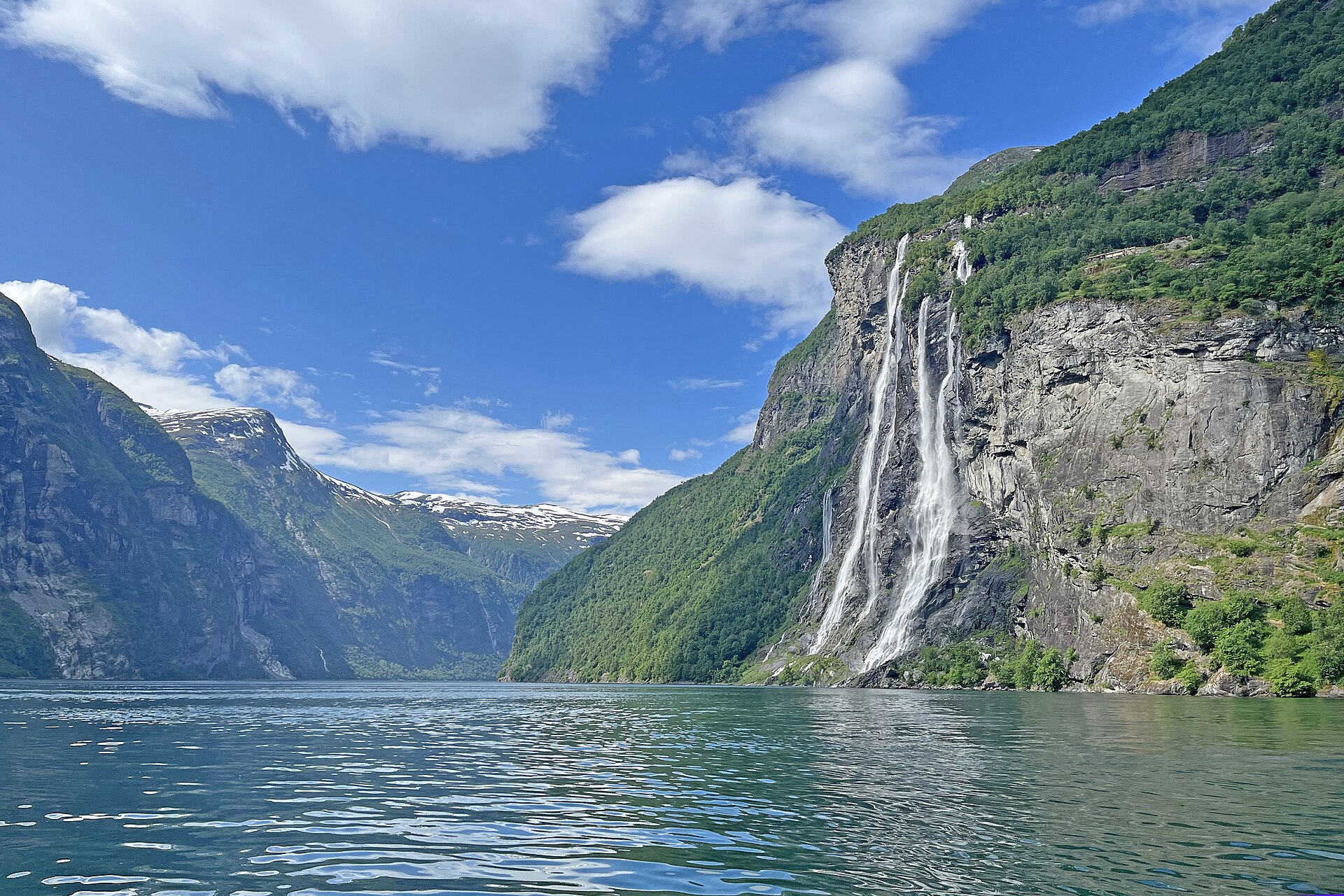
Norway is always in the top five on any list of countries with the most beautiful nature in the world. Fjords that cut in between thousand-metre cliffs, the red fishermen’s houses of Lofoten, a sun that does not set in summer and lights that burn in the sky in winter all fit into one country. For us there are two obstacles: the visa takes up to twenty-five days, and the prices are among the highest in the world, with a beer coming to twelve euros.
But the best part of this country, that is the nature itself, is free, and with the right plan the budget can be managed. Below I have gathered Oslo, Bergen and the fjord route. Lofoten, the transport, the food and the question of the season are here too.
Norway in brief
| Capital | Oslo |
| Language | Norwegian; everybody’s English is excellent |
| Currency | Norwegian krone (NOK), 1 euro ≈ 11.5 kroner; cash is all but unnecessary |
| Visa | Schengen «C» visa, VFS Baku, the decision in Ankara, 25 days |
| Best time | June–August for the fjords; September–March for the northern lights |
| Flights | 7–8 hours to Oslo via Istanbul |
| Daily budget | 200–300 euros at a mid-range level |
Oslo and Bergen
Oslo is the gateway and two days are quite enough for it. The roof of the opera house starts at street level, so the locals climb up and picnic on it. The Munch museum holds «The Scream», while in Vigeland park some two hundred sculptures are gathered in one garden.
On the Bygdøy peninsula stand the Fram and Kon-Tiki museums, both of them about sea voyages. To Bergen you go by a seven-hour railway, and that line counts among the most scenic in Europe. Which is to say part of the trip passes at the train window.
In Bergen the wooden houses of the Bryggen wharf are on the UNESCO list and are the most photographed spot in the city. The Fløibanen funicular lifts you above the city, and below stay the fish market and Grieg’s house. It rains two hundred and forty days a year, the people of Bergen are almost proud of it, so a waterproof jacket is a compulsory item here.
Bergen is also the base for the fjord tours. In the direction of Mostraumen the boat takes three hours, while the Hardanger fjord with its fruit orchards takes a full day. In the south the town of Stavanger is the starting point for the Preikestolen cliff, which stands six hundred metres above the Lysefjord, and the hike there takes four hours.
The fjords, Lofoten, Tromsø: Norway outside the cities
The Geiranger fjord, with the Seven Sisters waterfall and the Dalsnibba viewpoint, has become the symbol of the country. It is an hour and a half by boat from the town of Ålesund. The Nærøy fjord, meanwhile, is the narrowest and most dramatic of them, and people set out for it from the village of Flåm.
The Flåm railway drops eight hundred and sixty metres over twenty kilometres and counts among the steepest train lines in the world. The route called «Norway in a Nutshell» combines train, boat and bus to give the full fjord experience in one day, and it costs between 150 and 200 euros. For someone short of time this is the right choice.
Those after a more serious hike climb from Odda to the Trolltunga rock. That is ten hours there and back and is only possible from June to September. Setting out unprepared here means a real risk.
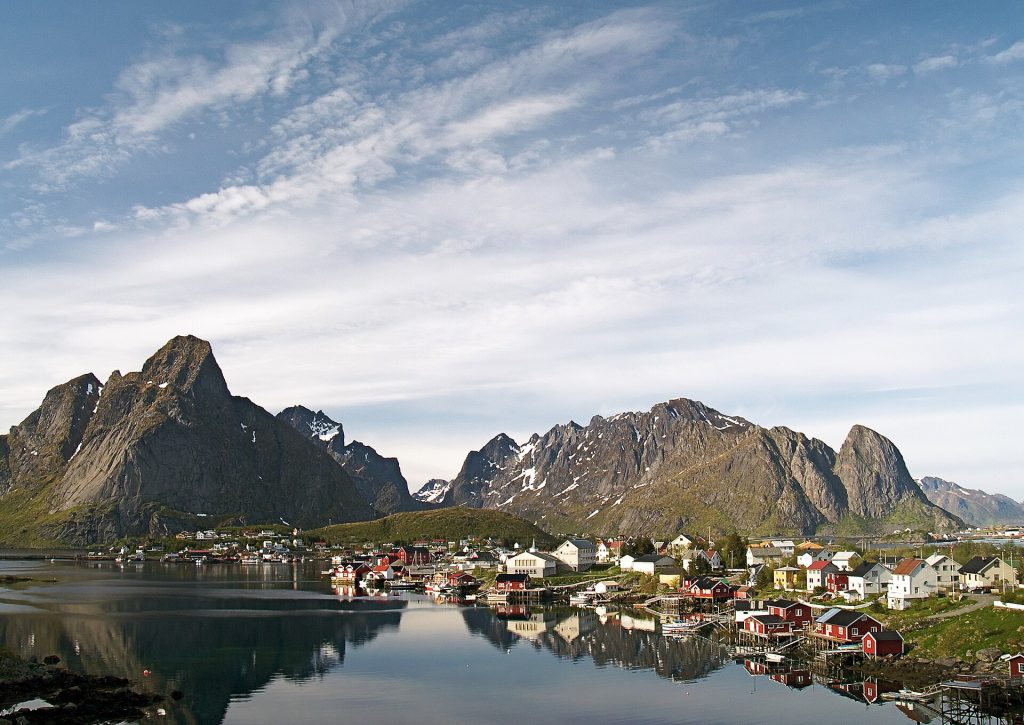
Lofoten is above the Arctic Circle, with mountains and white beaches. In villages such as Reine and Hamnøy the red «rorbu» fishermen’s cabins stand in a row. In summer there is the midnight sun, in winter the northern lights and surfing. You get there by ferry from Bodø or through Leknes airport; set aside three or four days. Tromsø is called «the Paris of the Arctic» and is the capital of the northern lights from September to March. Whale tours are organised from November to January. The Sami reindeer camps and the Fjellheisen cable car are here as well. The Hurtigruten coastal ship travels the whole coast from Bergen to Kirkenes in seven days.
Transport in Norway: Vy trains, Widerøe, the car and the ferries
Vy trains go from Oslo to Bergen in seven hours and to Stavanger in eight. A «minipris» ticket bought early comes to 30–50 euros, while at the last minute you pay over a hundred. Seeing the difference between train and bus in one search turns directly into money in this country, and the Entur app gathers all the transport onto one screen.
Because the distances are long, domestic flights are a serious option too: from Oslo to Tromsø the journey takes two hours and the ticket is between 60 and 150 euros. In the fjord region a car solves everything, and the daily hire is 70–110 euros. The roads are narrow, the tunnels long, and the ferries are an inseparable part of the route, with each crossing costing 10–30 euros.
The Trollstigen hairpin road is only open in summer, and the tolls are read automatically with the bill coming later from the hire company. In Oslo the Ruter app covers the trams, the metro and the ferry for city transport, and a day ticket is 12 euros. From the airport the Flytoget express brings you in in twenty minutes and takes 20 euros, while the ordinary Vy train does the same journey for roughly half. On Lofoten the buses are infrequent, so a car there is all but compulsory.
Salmon, brunost, kanelboller: Norwegian food and the budget trick
Norwegian cooking is really the sea. Salmon is served here in every form, while on Lofoten cod is dried in the open air and called tørrfisk. In Bergen it is the custom to have fish soup, at the harbour prawns are sold in a paper cone, and in the Arctic king crab comes to the table.
On land the best-known dish is fårikål, that is cabbage cooked with mutton. The sweet brown cheese called brunost is put on a waffle and baffles anyone tasting it for the first time. A main course in a restaurant is 30–45 euros, a lunch soup 18–25 and a coffee in a café 5.
The budget trick is simple, and the Norwegians live this way themselves. If you shop at the Rema 1000 and Kiwi supermarkets and cook in a flat, the daily spend halves. On the road the hot sausage sold at the petrol stations gives you the cheapest lunch, and the tap water is among the cleanest in the world.
The sandwich picnic that the locals call matpakke is exactly that logic. The halal food question is easily solved in Oslo, where Pakistani, Turkish and Somali restaurants stand side by side in the Grønland quarter. In the other cities there remain the kebab shops and the fish you find everywhere.
Read next: Why does a Norwegian visa take 25 days? VFS Baku, the decision in Ankara and the fjord plan
The season: the midnight sun and the northern lights
June to August is the fjord and hiking season: the weather is 15–22 degrees and all the mountain roads stay open. On Lofoten the midnight sun lasts from the end of May to mid-July. This period is at the same time both the busiest and the most expensive. May and September, meanwhile, pass quietly and cheaply, and in September the first northern lights start to appear on top of that.
October to March is the northern lights season, and the highest chance is in Tromsø and Lofoten. The temperature drops to minus five on the coast and minus twenty inland. In December the sun does not rise above the horizon at all in Tromsø, while in February and March the balance of light and snow on Lofoten pulls the photographers in.
The weather in the fjords changes by the hour, so layered clothing and a waterproof jacket are needed. The northern lights forecast can be followed on the Visit Norway portal.
Budget and tickets
Accommodation is this country’s heaviest cost. A night in a three-star hotel in Oslo is 150–220 euros and in Bergen 140–200. In Flåm and Geiranger the summer prices climb to 180–280 euros, while on Lofoten a fisherman’s cabin called a rorbu costs 150–250. Campsites and mountain huts come to 40–80 euros, and a hostel bed is 50–70, which is the main option keeping the budget together in Norway.
The excursions are a separate line. The Flåm railway is 60 euros, a fjord boat 50–80 and the Fløibanen funicular 15. The Preikestolen hike itself is free, only the parking costs 25 euros, while a northern lights tour in Tromsø comes to 120–180. Excluding the flight, a ten-day trip fits into 2,500–3,500 euros per person.
There is no direct flight from Baku, so flying to Oslo via Istanbul is the usual way. An air ticket to Oslo has to be bought early in summer, while crossing to Bergen via Copenhagen saves a few hours. Tour packages that fit Oslo, Flåm, Bergen and the fjords into one week settle the train, boat and hotel bookings together, and in the summer months the value of that is especially felt.
Frequently asked questions about Norway
How many days does Norway need?
Oslo two, the fjords and Bergen four or five — a week in all. With Lofoten or Tromsø, ten to twelve days.
For the northern lights, Tromsø or Lofoten?
Tromsø, with its tours, flights and city comforts, is easy for a first time. Lofoten gives a more beautiful shot against the mountains and the sea, but demands a car and more nights.
What is the cheapest way to travel?
Go in September and buy the «minipris» train tickets early. Use the supermarket and rent a flat. The hikes are free anyway. In Norway everyone has the right of access to nature, and pitching a tent is free.
In closing
Norway is an expensive country, but its best part is free. The fjords are for summer and the northern lights for winter, and both want planning early. The visa timing and process are explained on the Norway page, and to build the fjord or the Arctic route together, fill in the application form.
Note: the prices here are as of the publication date and can change with the season.
