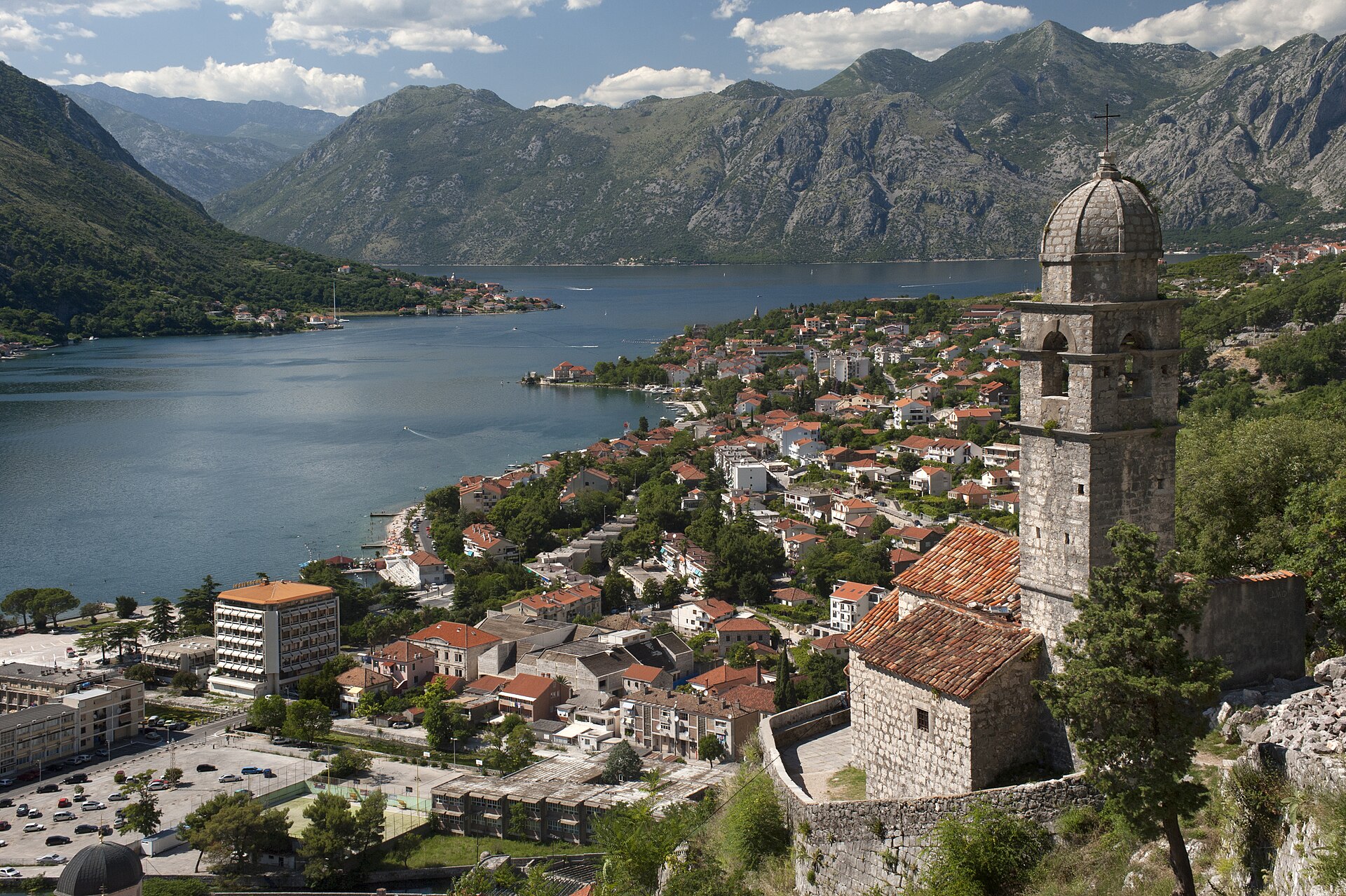
Montenegro has gathered into one small country the deepest bay of the Adriatic, medieval walled towns, the deepest canyon in Europe and mountains of two and a half thousand metres. Being on the walls of Kotor in the morning, on a Budva beach at midday and by the lakes of Durmitor in the evening really is possible.
For us there is one important change. The visa-free regime has been abolished and the visa is obtained through VFS Baku. Holders of a multiple-entry Schengen, US or British visa, though, enter visa-free for up to thirty days. Below I have gathered the Bay of Kotor, Budva and Durmitor, along with the internal route, the transport, the food, the season, the visa rule and the budget, in one place.
Montenegro in brief
| Capital | Podgorica; the tourist centres are Kotor and Budva |
| Language | Montenegrin; English in tourism, Russian widely on the coast |
| Currency | The euro; cards in the cities, cash in the villages |
| Visa | Visa through VFS Baku; 30 days visa-free with a multiple-entry Schengen, US or British visa |
| Best time | May–June and September; Durmitor June–September |
| Flight | 6–7 hours to Podgorica or Tivat via Istanbul |
| Daily budget | 80–120 euros at a mid-range level |
The Bay of Kotor: Kotor, Perast, Tivat
The Bay of Kotor is the place on the Adriatic that most resembles a fjord, and the town of Kotor is a walled Venetian-era town on the UNESCO list. Narrow streets and a cat on every corner greet you. St Tryphon’s cathedral is in the centre. You climb 1350 steps to the fortress of San Giovanni and see the panorama of the bay, with a ticket at 15 euros. Go early in the morning or at sunset, because at midday the steps get very hot. In summer the cruise ships fill the town during the day and it empties in the evening.
Perast is a fishing village with baroque palaces on the shore of the bay. In front of it stands the artificial island of Our Lady of the Rocks with its church, and you cross to it by boat for 5 euros. This is Montenegro’s most famous view. Tivat is the luxury side with the Porto Montenegro yacht marina, and the airport is there. Herceg Novi at the mouth of the bay is a town of staircases. The Igalo institute is here, the best-known mud and seawater treatment centre on the Adriatic. Two-to-three-week courses are arranged for rheumatism and the spine. Those going from Baku for treatment go precisely there. The bay is driven round in two hours, and the Kamenari–Lepetane ferry shortens the road.
Budva, Sveti Stefan, Durmitor, Tara: Montenegro beyond the bay
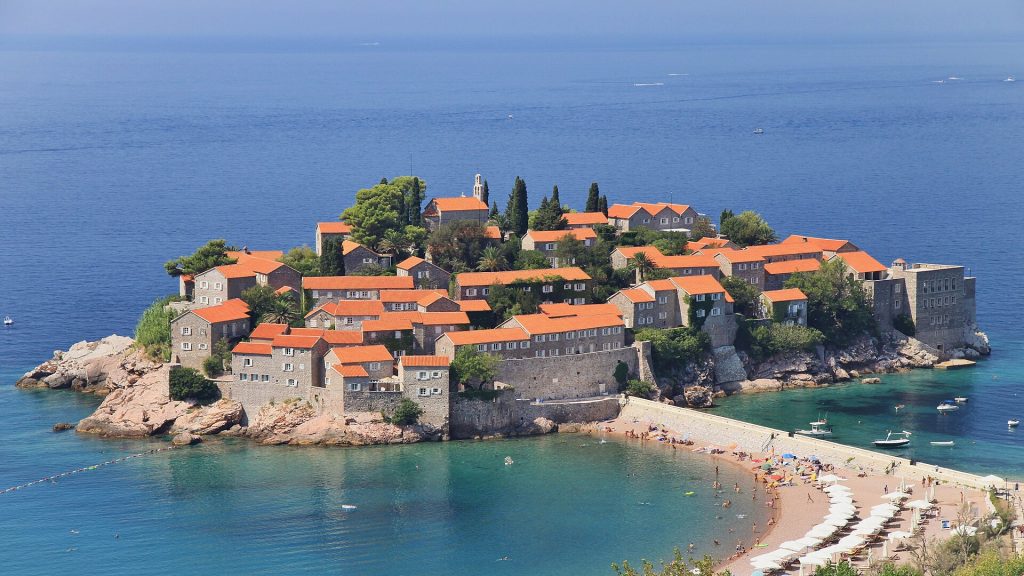
Budva is the tourist capital of the coast. The small walled old town, the Mogren and Jaz beaches and the nightlife are there, and in July and August you cannot see one person for another. The island of Sveti Stefan is a resort hotel and is only looked at from outside, with Miločer beach beside it, while Petrovac is a quiet family village. In the south, Ulcinj is a Muslim town, home to the twelve-kilometre Long Beach and Ada Bojana.
On Mount Lovćen the mausoleum of Njegoš stands at one thousand six hundred and fifty-seven metres; you climb four hundred and sixty-one steps and see half the country from the top. On the way, the Kotor serpentine runs through twenty-five bends — entertainment for anyone not at the wheel and an ordeal for the driver. Cetinje is the old capital, known for its monastery and museums.
Ostrog monastery, with its white walls built into the rock, is the most visited Orthodox site in all the Balkans. Lake Skadar is the largest in the Balkans, pelicans live there, and the boat tour sets out from Virpazar.
Durmitor national park begins in the north at the village of Žabljak. You walk around the Black Lake. The canyon of the river Tara, at 1300 metres deep, is the deepest in Europe. Zip-lining from the Đurđevića bridge and rafting are 40–60 euros. There is a hike to the Bobotov Kuk peak, and in winter the ski season opens. Kolašin is the Biogradska forest and a winter resort.
Transport in Montenegro: cars, buses, the Bar–Belgrade train
The country is toured by car, with rental at 30–50 euros a day. The roads are narrow, winding and scenic, and the coastal road jams in summer. To Durmitor you go from Podgorica through the Morača canyon in two and a half hours. An Azerbaijani driving licence is accepted here.
Getting around without a car is possible too. Buses link all the towns: Kotor to Budva takes thirty minutes and costs three euros, Budva to Podgorica an hour and a half and seven euros, and Podgorica to Žabljak three hours and ten euros, with tickets on the busticket4.me site.
The Bar–Belgrade railway, with four hundred and thirty-five tunnels and bridges, is one of the most scenic train lines in Europe, and the Montenegrin section from Bar to Bijelo Polje takes four hours.
As for the airports, Tivat is ten minutes from Kotor and Podgorica an hour and a half. Dubrovnik airport is only twenty minutes from the border, but to cross there you need a Croatian visa. There is no taxi app; in Kotor metered taxis work, and in Budva you agree the price in advance. A boat tour from Kotor to Perast and the Blue Cave is 25–40 euros.
Njeguši cheese, ćevapi, black risotto: Montenegrin food
The coastal cooking is pure Adriatic. Black risotto is made with squid ink, grilled fish and calamari come with buzara sauce, and you must try the mussels of the Bay of Kotor.
The mountain cooking, meanwhile, is Balkan. The smoked pršut ham and the cheese of the village of Njeguši are famous, and ćevapi with kačamak, the maize and potato mash, are everywhere. In Durmitor lamb is cooked “ispod sača”, that is under the embers. Priganice are fried dough served with honey, and Vranac red wine comes to the table.
At a family restaurant called a konoba lunch is 10–15 euros, dinner in Kotor’s old town 25–40 and in Žabljak 12–20 — cheaper than Croatia, in other words. Halal food is easy to find in Muslim towns such as Ulcinj, Podgorica and Rožaje, while on the coast there is always fish; ćevapi are made of beef, but it is worth asking. The tap water is clean, and in the mountains you drink spring water.
Read next: A Montenegro visa is now required: why the visa-free regime was abolished and what to do
Season and weather
May–June and September are ideal for the coast. The weather is 24–28 degrees and the sea 22–24, Kotor stays calm, and prices fall to sixty per cent of the summer level. I always choose this time. In July and August the temperature climbs to 32–35 degrees. Budva and Kotor get crowded, the coastal road jams and the hotels have their most expensive season. October is still warm on the coast, with autumn colours in Durmitor. In winter the coast is 10–12 degrees and it rains. In Kolašin and Žabljak the ski season opens from December to March. A day pass is 25–30 euros, three times cheaper than the Alps. The Durmitor roads can be snowy from November to May. Information on the regions, park tickets and events is on the Montenegro Travel portal.
Budget and tickets
In Kotor’s old town a boutique hotel is 100–160 euros and an apartment in the bay villages 50–90. In Budva in summer a three-star hotel is 80–130 euros, and in Žabljak a mountain house comes down to 40–70. A hostel bed is 20–30 euros, with a wide choice in Kotor and Budva.
Entry tickets are cheap. Kotor fortress charges 15 euros, entry to Durmitor 5, the Lovćen mausoleum 8, and the Perast boat 5. Tara rafting starts at 50 euros, and you have to pick a group in advance, because in summer the morning departures fill up fast.
Leaving out the flight, a week’s trip fits into 700–1000 euros a head, thirty per cent cheaper than Croatia. Turkish Airlines flies from Istanbul to Podgorica and Air Serbia to Tivat via Belgrade. People compare the price of an air ticket to Tivat in summer with the option of flying to Dubrovnik and crossing the border, but that route needs a Croatian visa. Montenegro tour packages fitting Kotor, Budva, Durmitor and Ostrog into one week settle the visa support, the car and the canyon tours together.
Frequently asked questions about Montenegro
How many days do you need for Montenegro?
Two or three days for the Bay of Kotor, two for Budva and the coast, two for Durmitor: one week in all. Lovćen, Ostrog and Lake Skadar fit in along the way.
Can I enter visa-free with a Schengen visa?
Yes, holders of a valid multiple-entry Schengen, US, British, Canadian or Irish visa enter visa-free for up to thirty days. Those without a visa apply through VFS Baku, and the details are in our visa article.
Can it be combined with Croatia?
Yes, Kotor to Dubrovnik is two hours. But Croatia requires a Schengen visa, and when you come back to Montenegro your Schengen days are counted afresh.
In closing
Montenegro is a country that gives you a bay, beaches, a canyon and mountains in a small space and more cheaply than Croatia. The visa rule may have changed, but for holders of a Schengen visa the door is still open. The visa options are explained on the Montenegro page, and to build the Kotor and Durmitor route together fill in the application form.
Note: the prices here are as of the publication date and can change with the season.
