Malaysia is the most comfortable country in South-East Asia. For us it is visa-free for thirty days, English works everywhere, almost all the food is halal, and prices run at up to half of Europe’s. From the skyscrapers of Kuala Lumpur you reach the beaches of Langkawi or the tea plantations of the Cameron Highlands in two hours.
The country’s most interesting side is its food. Malay, Chinese and Indian culture come together at one table here, and Penang counts as the street-food capital of the world; people come back from there a few kilos heavier. Below I have gathered Kuala Lumpur, Penang and Langkawi, Malacca and the Cameron Highlands in one place. Borneo, transport, food, the season and the budget are in there too.
Malaysia in brief
| Capital | Kuala Lumpur; the administrative centre is Putrajaya |
| Language | Malay; English everywhere, signs bilingual |
| Currency | Ringgit (MYR), 1 dollar ≈ 4.5 ringgit; cards and Touch ‘n Go everywhere |
| Visa | 30 days visa-free for citizens of Azerbaijan, the MDAC form before entry |
| Best time | West coast November–March, east coast March–October; Kuala Lumpur all year |
| Flight | 11–13 hours via Doha, Dubai or Istanbul |
| Daily budget | 50–80 dollars at a mid-range level |
Kuala Lumpur: Petronas, the Batu caves, Bukit Bintang
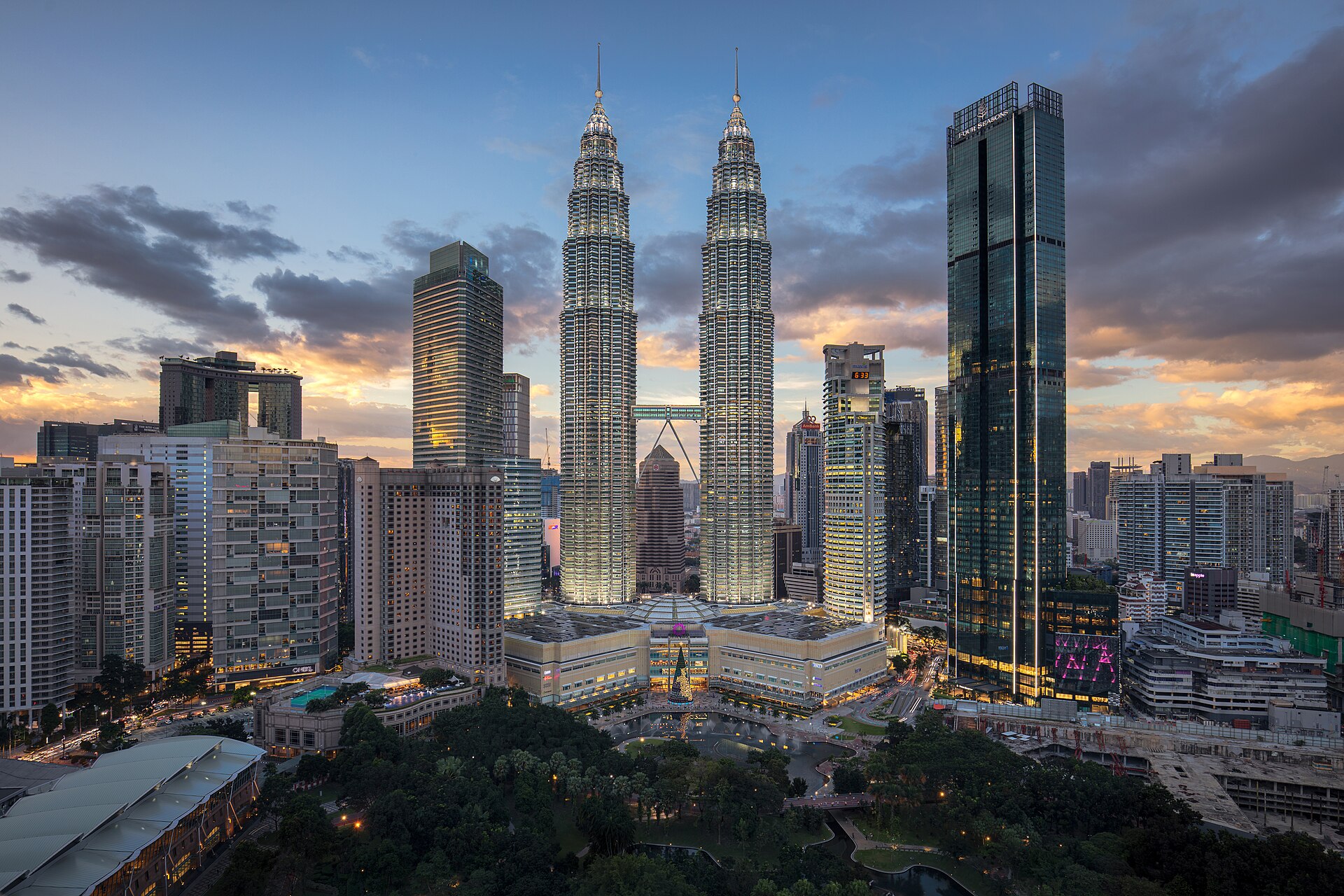
Set aside two or three days for Kuala Lumpur. The Petronas twin towers are the tallest twin building in the world; buy the ticket for the eighty-sixth floor and the bridge between them online, because on the spot it sells out fast. In the evening watch the fountain show in KLCC park. The city’s tallest building, though, is now the Merdeka 118 tower.
The Batu caves are thirty minutes by train from the centre. At the entrance stands a forty-three-metre golden statue of Murugan, and two hundred and seventy-two coloured steps climb to the Hindu temple above. Go early in the morning, because the air warms up through the day and the monkeys on the steps start checking your bag.
Bukit Bintang is the shopping district, and Jalan Alor, a few steps away from it, fills with street food in the evening. Chinatown and Petaling Street are nearby, while Little India is in the Brickfields neighbourhood. In the historic centre Merdeka Square, the Sultan Abdul Samad building and the National Mosque stand side by side.
There is real jungle inside the city too: KL Forest Eco Park gives you a canopy-level walk among the skyscrapers. Putrajaya takes half a day with its pink mosque and its bridges over the lake. Genting Highlands, meanwhile, is a casino and amusement park built up in the mountains, an hour away, and you go up there by cable car.
Penang, Langkawi, Malacca, Cameron, Borneo: Malaysia beyond the capital
George Town, the centre of Penang island, is on the UNESCO list. The street art, the Chinese clan houses, the Kapitan Keling mosque and the Kek Lok Si temple are the main stops, and you go up Penang Hill by funicular. The best street food in Asia is right here as well. From Kuala Lumpur the ETS train takes four hours and the flight one; give the city two or three days.
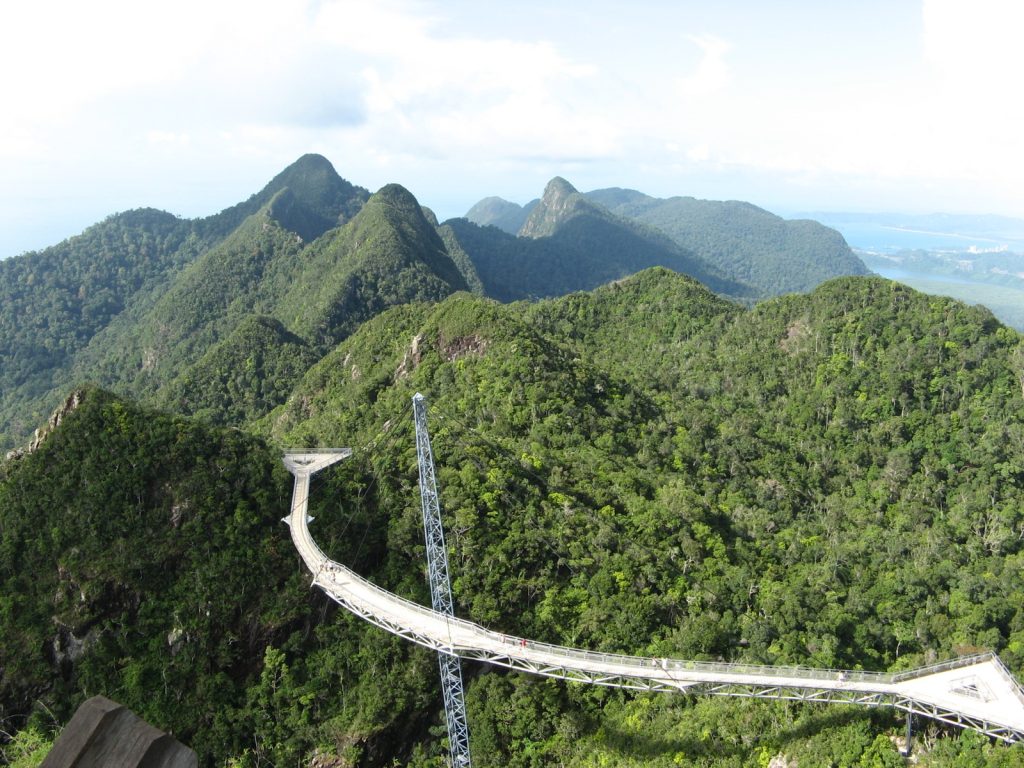
Langkawi is a duty-free archipelago of ninety-nine islands. The Sky Bridge suspension bridge and the cable car climbing to it are its main attraction, and beyond that there are Cenang beach, the mangrove boat tour and the Kilim geopark. Hotels and chocolate are cheap here. Set aside three days and come from Penang by ferry or by air.
Malacca keeps its Portuguese, Dutch and British heritage on one street, and a night market is set up on Jonker Street. It is two hours from Kuala Lumpur and one day is enough. The Cameron Highlands, at fifteen hundred metres, give you tea plantations, strawberry farms and twenty degrees of cool — the nearest address for escaping the heat, with the road taking four hours.
Borneo is a separate trip altogether. The centre of Sabah state is Kota Kinabalu, and beside it stands Mount Kinabalu at four thousand and ninety-five metres. The Sepilok orangutan centre is a must-see, while Sipadan counts as one of the best diving spots in the world. The flight from Kuala Lumpur takes two and a half hours and the region needs at least a week. The Perhentian and Redang islands on the east coast, meanwhile, are a snorkelling paradise from March to October.
Transport in Malaysia: the KLIA Ekspres, Grab, ETS, AirAsia
The KLIA Ekspres runs from the airport to the centre in twenty-eight minutes and costs twelve dollars. A Grab car costs 15–20 dollars but takes an hour, and two if you hit the traffic. If you are arriving with family and luggage, booking a transfer in advance works out both cheap and comfortable.
In Kuala Lumpur the MRT, LRT and monorail network runs on the Touch ‘n Go card, and one journey costs 0.5–1 dollar. The card is sold in the shops and works afterwards for tolls, for parking and even in shops. Grab, meanwhile, is the main app both for taxis and for food delivery, and a ride across the city comes to 2–5 dollars. In a taxi you flag down on the street, always insist on the meter.
The ETS fast train gets you from Kuala Lumpur to Ipoh in two and a half hours and to Penang via Butterworth in four. A ticket is between 15 and 20 dollars and you can choose your seat online, while you buy the tickets from the KTM app.
AirAsia and Batik Air’s domestic flights are very cheap: booked early, the Langkawi and Kota Kinabalu routes come down to 20–50 dollars. A car is only worth it for Langkawi and Cameron, with daily rental at 20–35 dollars. Traffic drives on the left, the roads are good, and along with your Azerbaijani licence take an international one as well.
Nasi lemak, laksa, roti canai: halal Malaysian food
Malaysia is a Muslim country, so the halal question practically does not arise. Only Chinese restaurants without a “halal” sign may have pork, and there it is enough to ask.
Nasi lemak is rice cooked in coconut milk, served with sambal, anchovies and egg; it is the national breakfast and sells for 1–2 dollars. Laksa is Penang’s sour fish soup, char kway teow is fried noodles, and roti canai is an Indian flatbread served with curry and found day and night. Satay comes with peanut sauce, rendang is a spiced meat dish, and nasi kandar is Penang’s Indian-Muslim plate of rice.
Among drinks, teh tarik, the “pulled” milk tea, comes first. Durian counts as “the king of fruits”, but for its smell they will not let it into the hotels. The twenty-four-hour Indian-Muslim eateries called “mamak” are the country’s social centre and are full at three in the morning too.
Prices are low. Street food costs 1–3 dollars, lunch at a hawker centre 3–5, an ordinary restaurant 8–15, while skyscraper restaurants climb to thirty dollars. Tap water has to be boiled, and bottled water is cheap.
Read next: Do you need a visa for Malaysia? 30 days visa-free and the compulsory MDAC form
When to go to Malaysia and what it costs
The equatorial climate means 28–33 degrees and high humidity all year round. An hour of tropical downpour a day is normal here, and the sun comes back out as soon as the rain stops.
The season differs by coast. On the west coast, that is in Langkawi and Penang, the dry season runs from November to March. The season of the east coast, that is the Perhentians, Redang and Tioman, lasts from March to October; from November to February the monsoon starts there and the islands close. Kuala Lumpur and the Cameron Highlands can be visited all year.
During Ramadan the restaurants work in the daytime, and the iftar markets set up in the evening are a sight in their own right. During the Hari Raya holiday everything closes, so check those days in advance.
Accommodation is cheap. In Kuala Lumpur a four-star hotel costs 40–70 dollars and a five-star 80–150; in Penang a boutique hotel is 40–80 dollars, in Langkawi a beach hotel 50–120, and a hostel bed 8–15.
The sights do not strain the budget either. Petronas charges 20 dollars, the Sky Bridge 15 and Sepilok 8, while entry to the Batu caves is free. Leaving out the flight, a ten-day trip fits into 700–1100 dollars a head.
Qatar Airways, Emirates and Turkish Airlines fly to Kuala Lumpur, and air tickets to Kuala Lumpur go up in the New Year and Chinese New Year weeks. For those who want to see Kuala Lumpur, Penang and Langkawi on one itinerary, Malaysia tour packages settle the domestic flights and the island crossings together. Regional and seasonal information is on the Malaysia Travel portal.
Frequently asked questions about Malaysia
How many days do you need for a Malaysia trip?
Three days for Kuala Lumpur, three for Penang, three for Langkawi: ten in all. With Borneo, two weeks; Singapore adds another two or three days.
Which route with a child?
In Kuala Lumpur the Aquarium, the Bird Park and the Sunway Lagoon water park hold children’s attention. Langkawi’s shallow beaches and the cable car are a good choice too. The strawberry farms in Cameron round the trip off. The country is clean, safe and cheap for a child.
Can it be combined with Singapore and Thailand?
Yes, the bus to Singapore takes five hours and the flight one. But Singapore requires a visa from citizens of Azerbaijan. To Thailand you go from Penang overland or by air, and Thailand gives a visa on arrival.
In closing
Malaysia is visa-free, halal, English-speaking, inexpensive Asia, and because city, island and mountain lie three hours apart it is the ideal start for a first South-East Asia trip. The entry rules and the MDAC form are explained on the Malaysia page, and to build the itinerary and the island plan together fill in the application form.
Note: the prices here are as of the publication date and can change with the season.
