Lithuania is the southernmost and largest of the Baltic states, and Vilnius is the biggest baroque old town in Eastern Europe.
For us Lithuania is one of the comfortable addresses for a Schengen visa, and it is either the start or the end of the Vilnius–Riga–Tallinn route. Outside the city, Trakai castle stands in the middle of a lake, huge sand dunes stretch along the Curonian Spit on the Baltic shore, and Druskininkai is a mineral water spa. Below I have gathered Vilnius, Trakai, Kaunas and the Curonian Spit, along with the spas, transport, food, the season and the budget.
Lithuania in brief
| Capital | Vilnius |
| Language | Lithuanian; English among the young, Russian among the older generation |
| Currency | Euro; cards everywhere |
| Visa | Schengen «C» visa, embassy or visa centre in Baku |
| Best time | May–September; the Curonian Spit June–August |
| Flights | 6–8 hours via Istanbul, Warsaw or Riga |
| Daily budget | 80–120 euros at a mid-range level |
Vilnius and Trakai
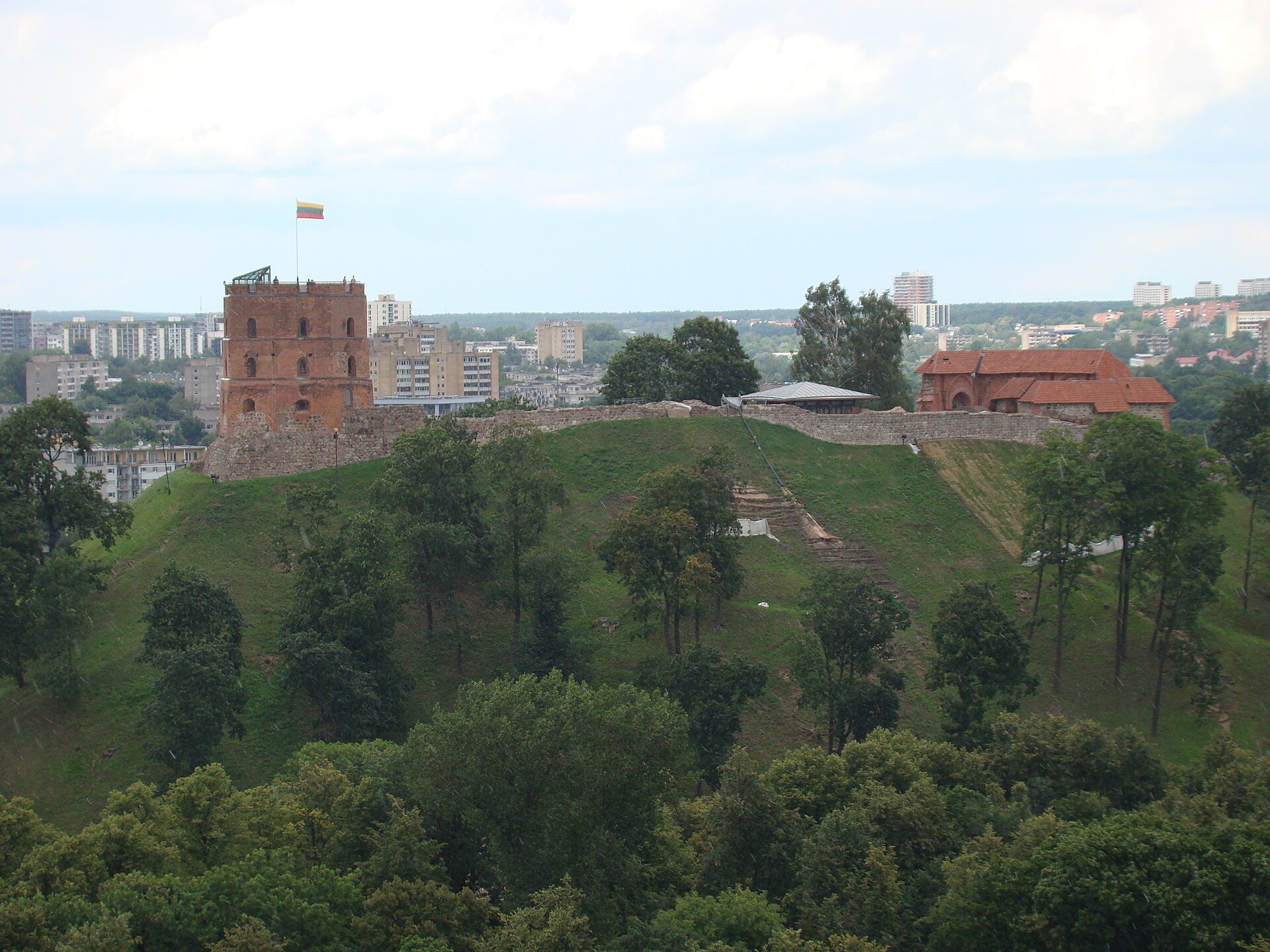
Vilnius’s old town is on the UNESCO list and is walked in two days. Cathedral square and the bell tower are the centre. From the Gediminas tower a panorama of red roofs opens up. Pilies street, the Gates of Dawn and the miraculous icon there should not be missed. The gothic facade of St Anne’s church is so fine that Napoleon wanted to carry it to Paris in the palm of his hand. Walk the courtyards of Vilnius University too. Užupis, across the river, is the artists’ «independent republic», its constitution written on a street wall in thirty languages, with cafés and workshops; on the first of April they stamp your passport there.
The Three Crosses hill and the Bernardine garden are for walking. The Halės market, the KGB museum and the Palace of the Grand Dukes of Lithuania are on the list too. The city is one of Europe’s greenest capitals and one of the few where a hot-air balloon may fly over the old town — 150 euros, early in the morning. Trakai is thirty minutes from Vilnius. On an island in Lake Galvė stands a fourteenth-century red brick castle, and you go out on the lake by boat and kayak. The wooden houses of the Karaim community and their kibinai pies are here. Half a day is enough, and in summer stay the full day.
Kaunas, the Curonian Spit, the Hill of Crosses: Lithuania beyond the capital
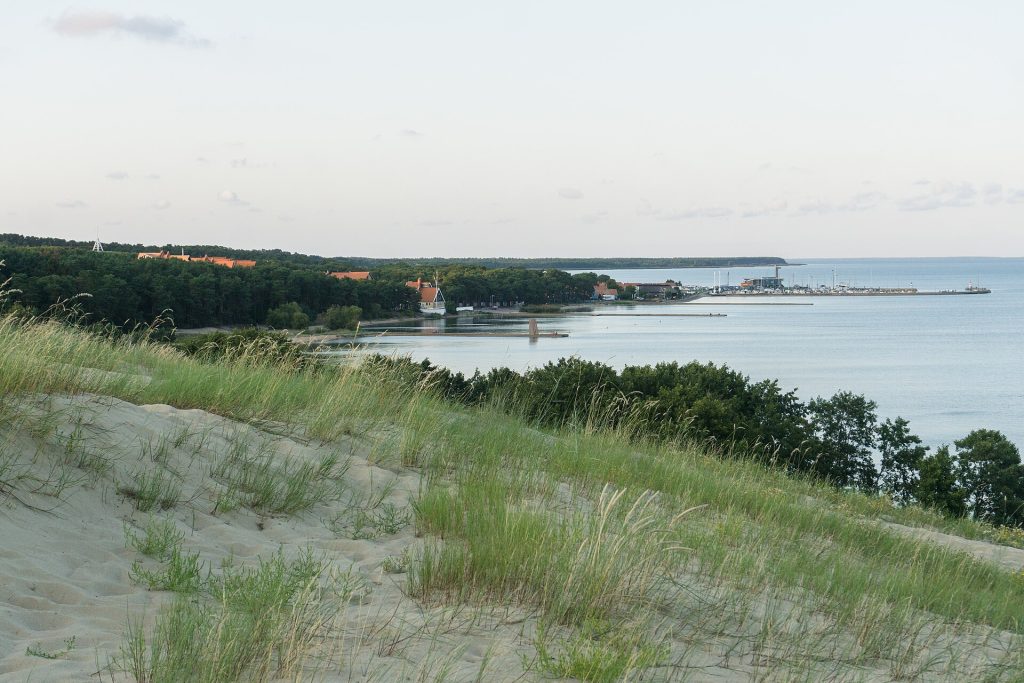
Kaunas is the second city and the interwar capital. The Laisvės pedestrian avenue, the old town and the castle are the centre. The Čiurlionis museum and the modernist architecture set the city apart. It is an hour and fifteen minutes from Vilnius by train; give it a day. Klaipėda is a port city on the Baltic shore and the gateway to the Curonian Spit. The ninety-eight-kilometre sand spit is on the UNESCO list and is ten minutes away by ferry. The village of Nida has fishermen’s houses. The Parnidis dune is fifty-two metres high. Pine forest runs between the Baltic and the lagoon, and amber is found on the shore. Thomas Mann’s summer house is here too. Set aside two days; the season is June to August.
The Hill of Crosses at Šiauliai is a place of pilgrimage where hundreds of thousands of crosses have gathered — a stop on the road to Riga, and a moving one. Druskininkai in the south is a two-hundred-year-old spa with mineral water and mud. Sanatoriums and an aqua park operate. The Snow Arena is an indoor ski hall open all year. Nearby is the Grūtas park of Soviet statues; it is two hours from Vilnius. Birštonas is a small spa town on the Neman river. Aukštaitija national park is for lakes and canoeing.
Getting around Lithuania: LTG trains, Bolt, buses
LTG Link trains are modern and cheap. Vilnius to Kaunas takes an hour and fifteen minutes for 7 euros, Klaipėda four hours for 20–25, and Trakai thirty-five minutes for 2. The train from the airport to the centre takes eight minutes and costs one euro.
City transport in Vilnius is buses and trolleybuses; with the «Trafi» app a ticket comes to one euro, and the old town is walked. A Bolt taxi across the city is 4–7 euros.
Intercity there are Lux Express, Ecolines and Flixbus; Vilnius to Riga is four hours and to Warsaw eight, with tickets at 15–30 euros.
A car pays off for the Druskininkai, Curonian Spit and Hill of Crosses route, at 30–45 euros a day. Driving onto the Curonian Spit carries an ecological charge of 30 euros in summer. There are no flights to Klaipėda, while Palanga airport takes seasonal flights in summer.
The Lithuanian kitchen: cepelinai, pink soup, šakotis
Cepelinai are large dumplings of grated potato filled with meat, served with sour cream and fried bacon; that is the national dish. The name comes from the zeppelin airship, and one look at the shape explains why.
Šaltibarščiai is a cold beetroot soup made with kefir and the pink symbol of summer — the colour looks made for Instagram. Kibinai are the Karaim pies of Trakai, and kepta duona is fried black bread with garlic.
Šakotis is a «tree cake» baked over an open fire and counted as a wedding and gift sweet. Black rye bread with honey is a permanent member of the table too.
Lunch in Vilnius is 8–12 euros and dinner in a restaurant 20–35, while eating at the Halės market is both cheap and local. Halal food in Vilnius is limited to a few Turkish and Middle Eastern restaurants; kibinai also come with chicken, and meat-free versions of the beetroot soup and the potato dishes are made. The tap water is clean.
Read next: Lithuania visa: the embassy or the visa centre? Fees, documents and the Baltic route
Season and weather
May–September are the ideal months at 18–25 degrees, and in June the day lasts seventeen hours. The twenty-fourth of June is Joninės, when bonfires are lit and wreaths are woven.
On the Curonian Spit and at Palanga the beach season runs only from June to August, and the Baltic does not get warmer than 18–20 degrees. September is quiet, cheap and still green, while October and November are wet and grey.
In winter the temperature drops to minus 5–10. Vilnius’s Christmas market and its lit old town are especially lovely in December. Druskininkai works all year, with its sanatoriums and the Snow Arena in winter, and at the start of March the Kaziuko fair turns Vilnius into the biggest craft market of the year. Regional and event information is on the Lithuania Travel portal.
Budget and tickets
In Vilnius old town a three-star hotel is 60–100 euros, and outside the centre 45–70. A guesthouse in Nida is 80–130 euros in summer, and a Druskininkai sanatorium with treatment 60–110. A hostel is 20–30 euros, with options inside the old town in Vilnius too.
Entry tickets are cheap. The Gediminas tower is 6 euros, Trakai castle 12 and the Snow Arena 25, while driving onto the Curonian Spit is 30. Excluding the flight, a week-long trip fits into 650–950 euros per person.
Turkish Airlines flies to Vilnius via Istanbul, LOT via Warsaw and airBaltic via Riga. When looking for a ticket to Vilnius, also work out the option of flying to Riga and coming on by a four-hour bus. For anyone touring Vilnius, Trakai, Riga and Tallinn on one route, three-Baltic-country tour packages settle the bus crossings and the hotels together.
Frequently asked questions about Lithuania
How many days does Lithuania need?
Vilnius two days, Trakai half a day, Kaunas one — four days in all. Six or seven with the Curonian Spit, and ten with all three Baltic countries.
Can you cross to Poland on a Lithuanian visa?
Yes, it is a Schengen visa. The bus to Warsaw takes eight hours and the flight one. The visa should be taken from the main country of the trip.
Which route with children?
Trakai castle and a boat, the dunes of the Curonian Spit and Nida’s shallow beach, the Druskininkai aqua park and the Snow Arena. Vilnius old town is comfortable with a pushchair.
In closing
With a baroque capital, a castle in the middle of a lake, sand dunes and a year-round spa, Lithuania is the most varied of the Baltic countries, and its prices are still on Europe’s cheap side. The visa process is explained on the Lithuania page, and to build the Vilnius and Baltic route together, fill in the application form.
Note: the prices here are as of the publication date and can change with the season.
