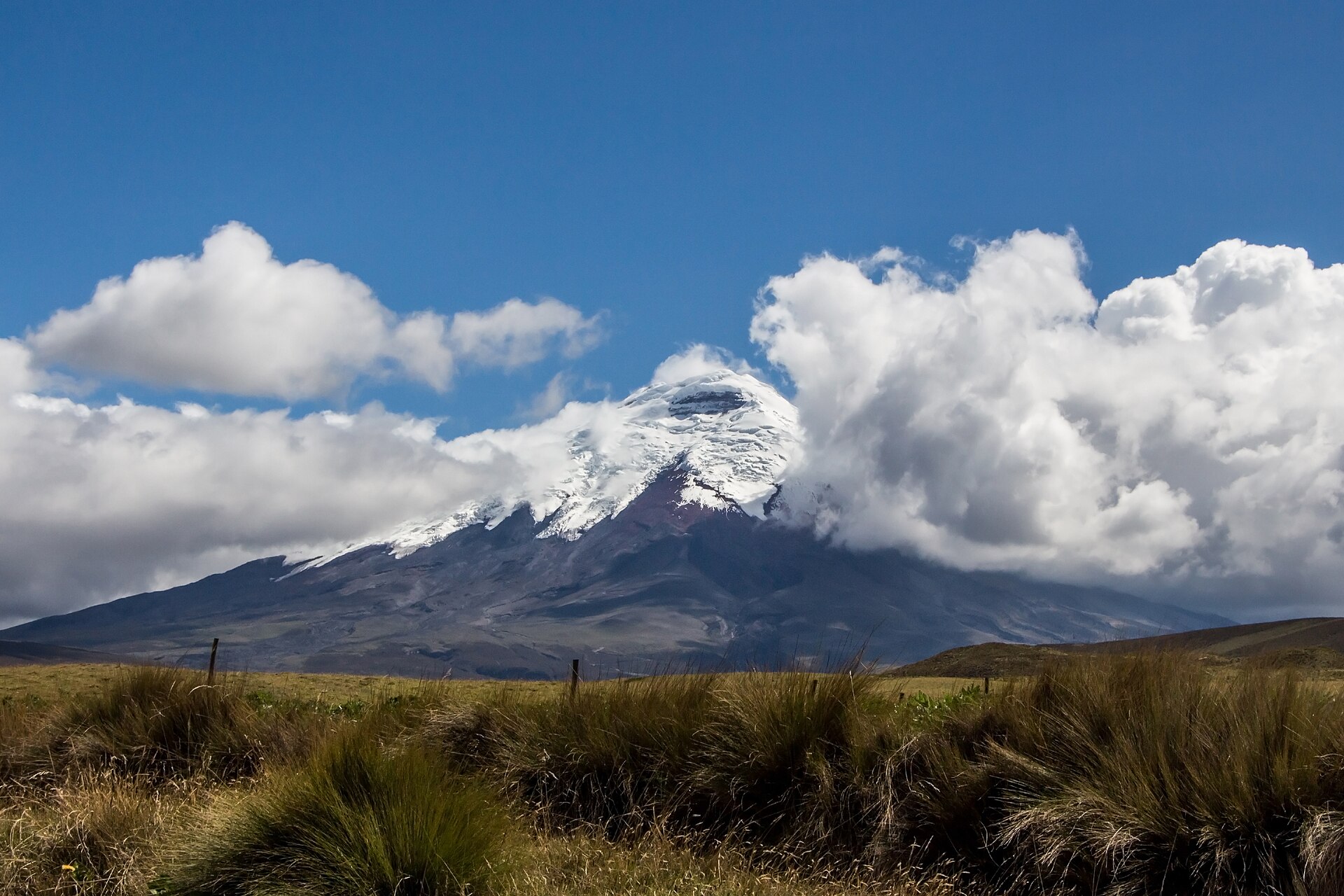
Ecuador is one of the smallest countries in South America, yet it gives you four worlds in one trip. Quito in the Andes at 2850 metres, the Amazon forest, the Pacific coast and the Galápagos islands. For a citizen of Azerbaijan it is 90 days visa-free, its currency is the US dollar, so you do not have to think about exchange rates, and prices are lower than in Peru and Bolivia. But there are the altitude, the long roads and the safety question, and those have to be known in advance. In this article I have gathered the cities and the Galápagos in one place. Transport, food, the season, safety and the budget are here too.
Ecuador in brief
| Capital | Quito, at 2850 metres; the largest city is Guayaquil |
| Language | Spanish; English only in tourism |
| Currency | The US dollar; small notes and cash matter |
| Visa | 90 days visa-free for citizens of Azerbaijan |
| Best time | June–September for the mountains; the Galápagos all year |
| Flight | 18–20 hours via Madrid or Amsterdam |
| Daily budget | 60–90 dollars at a mid-range level; the Galápagos separately |
Quito, Cuenca and the Andean route
Quito was on UNESCO’s very first cultural heritage list. Its colonial old town has survived whole. The inside of La Compañía church is wrapped in gold. From the Panecillo hill you look out over the city. And the TelefériQo cable car lifts you to four thousand metres. Take the first two days slowly, because the altitude catches you unawares and you lose your breath on the stairs. An hour from the city, the “Middle of the World” monument stands right on the equator line, where people pose with one foot in the northern hemisphere and one in the southern.
To the north, Otavalo is the largest indigenous craft market in South America; go on a Saturday. The Cotopaxi volcano is a perfect cone at 5897 metres, and in the national park you can drive up to 4500 metres. Baños is the adventure capital with hot springs, waterfalls and the “swing at the end of the world”, and the young gather there. Cuenca in the south, with its colonial architecture, is the country’s loveliest city and quieter than Quito. Guayaquil on the Pacific coast is a business and Galápagos transit city, and there is no need to stay long.
The Galápagos: the crown of an Ecuador trip
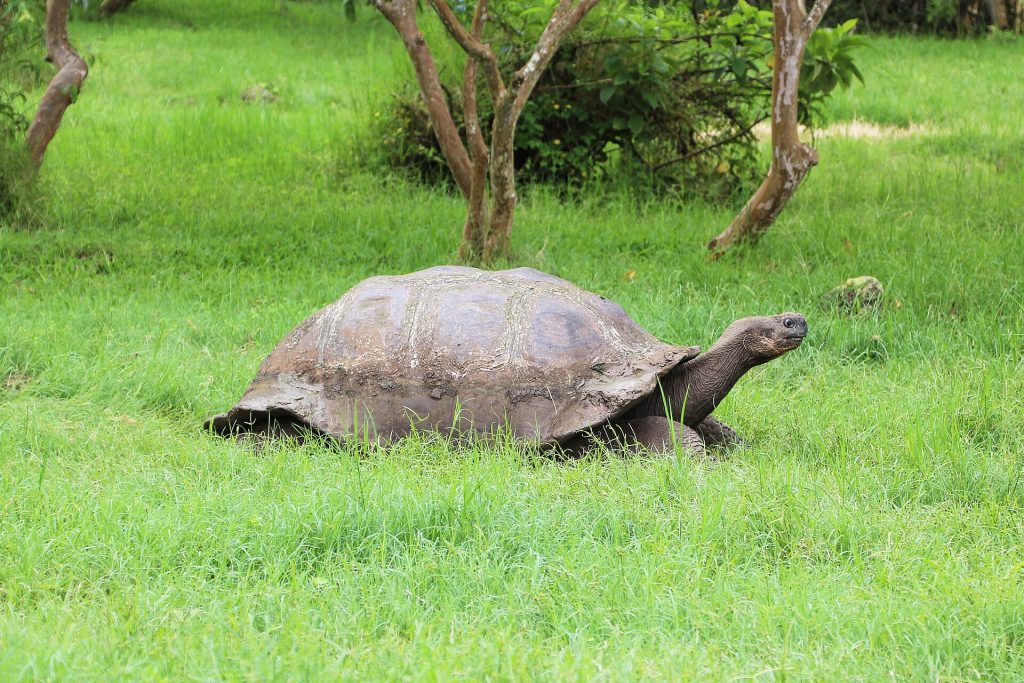
The Galápagos islands are where Darwin’s theory of evolution was born, and nowhere else in the world do the animals let people this close. Marine iguanas are under your feet, giant tortoises on the road, and sea lions sleep beside you on the beach and pay you no attention. The flight from Quito or Guayaquil to Baltra or San Cristóbal is two hours and costs 400–550 dollars return. On arrival the national park fee of 200 dollars and the transit card of 20 dollars are paid in cash; cards are not accepted.
Then there are two routes. The cheap one is to move between the islands by ferry and stay on Santa Cruz and Isabela, at 100–150 dollars a day, with day snorkelling tours at 80–150. The expensive one is a four-to-eight-day cruise, starting at 2000 dollars a head, but that is the only way to see the far islands. The fees and the rules are updated on the Ecuador Travel portal.
Transport in Ecuador and the altitude question
Intercity buses are cheap and crowded. Quito to Baños takes three and a half hours and costs five dollars, while Cuenca takes nine hours and costs fifteen. There are night buses too, but keep your bag in your arms, because bags disappear while you sleep.
The flight from Quito to Guayaquil and Cuenca is forty-five minutes and comes to 50–90 dollars.
In Quito the metro has been running since 2023 and a ride is forty-five cents. There are Uber and the local Cabify as well, and in an ordinary taxi insist on the meter. Car rental on the mountain roads is only for experienced drivers.
As for altitude, move slowly on your first day as soon as you land in Quito, drink plenty of water and eat little. Coca tea is sold everywhere and helps. If a bad headache and nausea do not pass, the best medicine is to go down, to Baños.
Ecuadorian food: ceviche, locro and cacao
On the coast ceviche is served with prawns and fish. In the mountains locro is a potato and cheese soup, encebollado a tuna soup, and hornado a whole roast pig.
And then there is cuy, roast guinea pig. It is a traditional dish of the indigenous peoples and the thing tourists ask about most, and whether or not you eat it is your business.
The midday menu called “almuerzo” gives you soup, a main course and a juice for 3–4 dollars, and that is the cheapest and most local way to have lunch. Ecuadorian cacao is among the best in the world, and chocolate tours are run in the Mindo region. Tropical fruit juices are everywhere, and banana and passion fruit juice is cheaper than water. There is practically no halal restaurant; in exchange there is plenty of seafood and vegetarian choice. Do not drink the tap water.
Read next: Do you need a visa for Ecuador? 90 days visa-free, the Galápagos fee and a fully visa-free route
Safety and season
In recent years the crime rate in Ecuador has risen, and there is no point hiding that. The problem is mainly in Guayaquil and the coastal cities, especially the Esmeraldas region, and the government periodically declares a state of emergency. Quito, Cuenca, Baños and the Galápagos are relatively calm for tourists. The rules are the usual ones: do not walk at night, call an Uber, do not show your phone in the street, and in Guayaquil stay only for the airport and the Galápagos transit.
The season varies by region. In the mountains June to September is dry and sunny, and from October to May it rains, though the mornings are clear. On the coast December to April is the hot, rainy beach season. In the Galápagos, from December to May the water is warm and the sea calm, while from June to November the water is cooler but there is more wildlife.
Budget and tickets
In Quito a three-star hotel is 40–70 dollars and a guesthouse 25–40, while in Cuenca and Baños the prices are lower. In the Galápagos a hotel is 80–150 dollars, so check the options on the islands early, because places are limited.
Entry tickets are cheap. A museum is 2–5 dollars and the TelefériQo nine. A day tour to the Cotopaxi volcano costs 60–80 dollars, and choosing a guided group is also safer given the altitude.
Leaving out the flight, a two-week trip fits into 1200–1600 dollars without the Galápagos and 2500–3500 with them. From Baku, Iberia and Air Europa fly via Madrid and KLM via Amsterdam. A return air ticket to Quito runs between 1200 and 1600 dollars. On a Madrid connection no Schengen transit visa is required, but if you want to go out and see the city you do need one. Ecuador and Galápagos tour packages linking Quito, the Amazon and the Galápagos settle the cruise and the domestic flights together.
Frequently asked questions about Ecuador
How many days do you need for Ecuador?
Seven days for Quito, Otavalo, Cotopaxi and Baños. With the Galápagos, twelve to fourteen days.
Is a yellow fever vaccination needed?
It is not required on entry, but it is recommended for those going to the Amazon region. Malaria prophylaxis is also considered for the Amazon.
How is an Amazon tour done?
From Quito to the town of Tena or Coca, and from there by boat to lodges inside the forest. A three-to-four-day tour is 300–800 dollars, and the Cuyabeno reserve is the most popular option.
In closing
Ecuador is visa-free, works in dollars and gives you mountains, forest, ocean and the Galápagos on one itinerary; for someone who respects the altitude and knows the safety rules it is an ideal trip. The entry rules are explained on the Ecuador page, and to build the Galápagos and Andes route together fill in the application form.
Note: the prices here are as of the publication date and can change with the season.
