Busan is South Korea’s second city and its largest port. The difference from Seoul is felt immediately: here there is the sea, the tempo is slower and people speak more easily. It is two and a half hours from Seoul on the high-speed train, which means it is easily added to a Korean route. Below I have written the two or three days.
The beaches and Gamcheon village in Busan
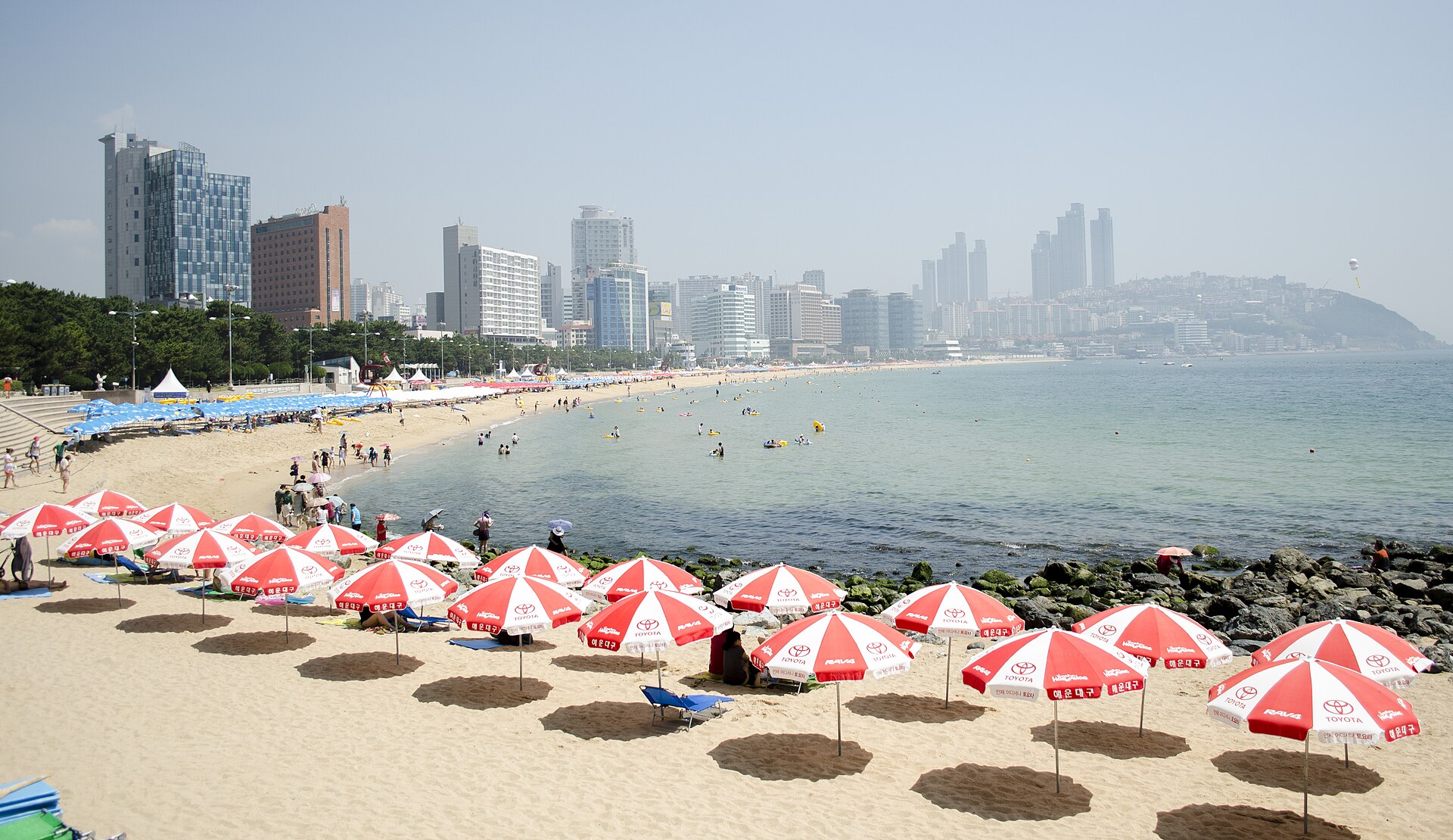
Haeundae is the city’s main beach, with skyscrapers behind it, and in summer the sand is not visible. Gwangalli is younger, in the evening the lights of the bridge fall on the water and the shore cafés work until late. Between the two it is twenty minutes by metro.
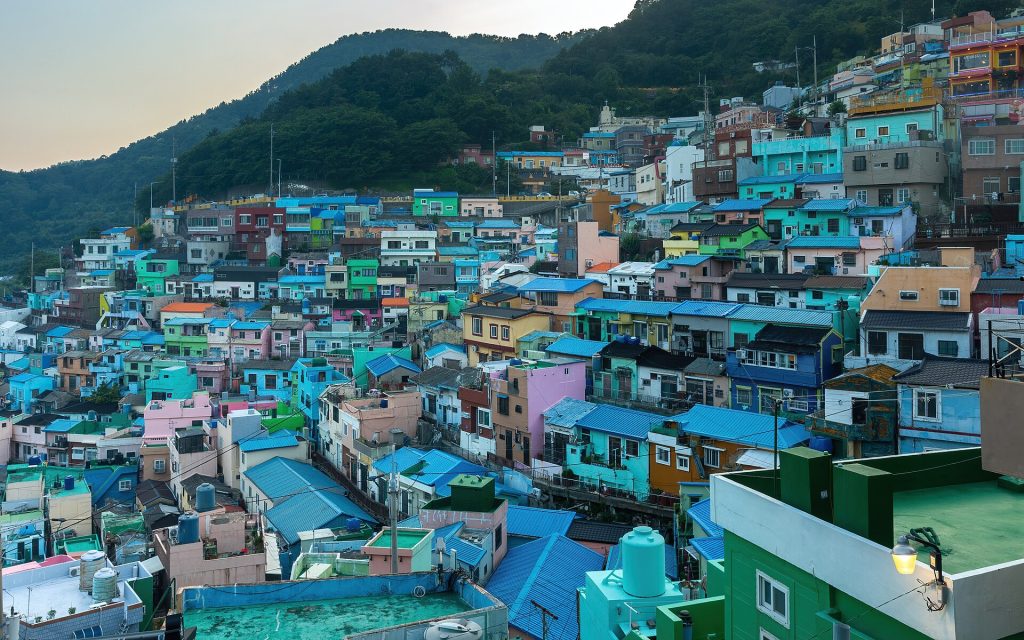
Gamcheon culture village consists of coloured houses stacked up a hill and is the city’s best-known view. It was once a refugee quarter and artists later rebuilt it. Walking the narrow stairways takes two hours and comfortable shoes are needed.
The fish market and the sea temple
Jagalchi is Korea’s largest fish market and the place that shows the city’s character best. Downstairs you choose the fish and upstairs they cook it for you. The morning hours are the liveliest time.
Haedong Yonggungsa is a Buddhist temple built directly on the rocks at the edge of the sea and is one of the rare temples in Korea in such a position. It takes an hour from the city. When the sound of the waves joins the temple, this becomes one of the country’s most memorable spots.
Food and the night markets
Busan cooking differs from Seoul’s and seafood predominates. The long-cooked pork soup called gukbap is the city’s own dish. Mil-myeon is a cold noodle dish and is meant for summer.
BIFF square is the best place for street food, especially the hotteok filled with seeds. In October the international film festival is held here and the city fills up completely. If you fall on that week, book your hotel months ahead.
Read more: A South Korea travel guide: Seoul, Busan, Jeju, the T-money card and the K-culture route
Transport and budget in Busan
The metro has four lines and links all the tourist points. If the T-money card is bought in Seoul it works here too, and you pay with the same card on the bus and the metro. From Seoul the KTX high-speed train is the most comfortable option, while a domestic flight does not save time.
| Three-star hotel | 50–90 dollars a night |
| Near the beach | Considerably more expensive in summer |
| KTX from Seoul | About two and a half hours |
| Metro ticket | With the T-money card |
Staying near the beach is expensive in summer, while staying on a metro line gives the same convenience cheaply, so compare hotels by the metro line. Free wireless internet is widespread in Korea, but for a connection on the train and the metro buying an eSIM before the trip is convenient. There is no direct flight; you go via Seoul or Doha, so check ticket prices in the Seoul direction in advance. Official tourism information is on Korea’s official tourism portal.
Season in Busan
April–June and September–November are the best months, with the weather at 18–25 degrees. In April the cherry blossom opens, and in October the autumn colours coincide with the film festival. July–August is hot and humid, and on top of that August–September is typhoon season and flights can be cancelled. Winter is dry and cool, the beach is empty, but walking the city is comfortable.
In short
Busan is the city that completes a Korean route and balances it with the sea. Stay on a metro line, go to Gamcheon in the morning, choose your own fish at Jagalchi, and check the October festival week in advance. If you want to plan Korea together with Seoul, you can look at the ready-made tour options. For a route and a visa, fill in the application form.
Note: festival dates and the typhoon season change from year to year, so check again before travelling.
