South Korea is the Asian country that has grown most quickly popular among travellers from Baku in recent years, and the reason is not only K-pop. The world’s most comfortable metro and safest streets are here. In April the cherry blossom opens and in October the golden leaves. On one street a five-hundred-year-old palace and a glass skyscraper stand side by side. The visa is obtained at the embassy, the flight is long, but inside the country everything works like a clock — coming back to Baku after a week, a person is thrown for the first few days. In this article I have gathered the neighbourhoods of Seoul, Busan and Jeju. The transport, the food, the season and the budget are here too.
South Korea in brief
| Capital | Seoul |
| Language | Korean; young people know English and the signs are bilingual |
| Currency | Won (KRW), 1 dollar ≈ 1350 won; cards everywhere |
| Visa | C-3 visa, by appointment at the embassy in Baku |
| Best time | April for cherry blossom, October–November for autumn leaves |
| Flights | 13–16 hours via Doha, Istanbul or Tashkent |
| Daily budget | 100–130 dollars at a mid-range level |
Seoul: the neighbourhoods and the route
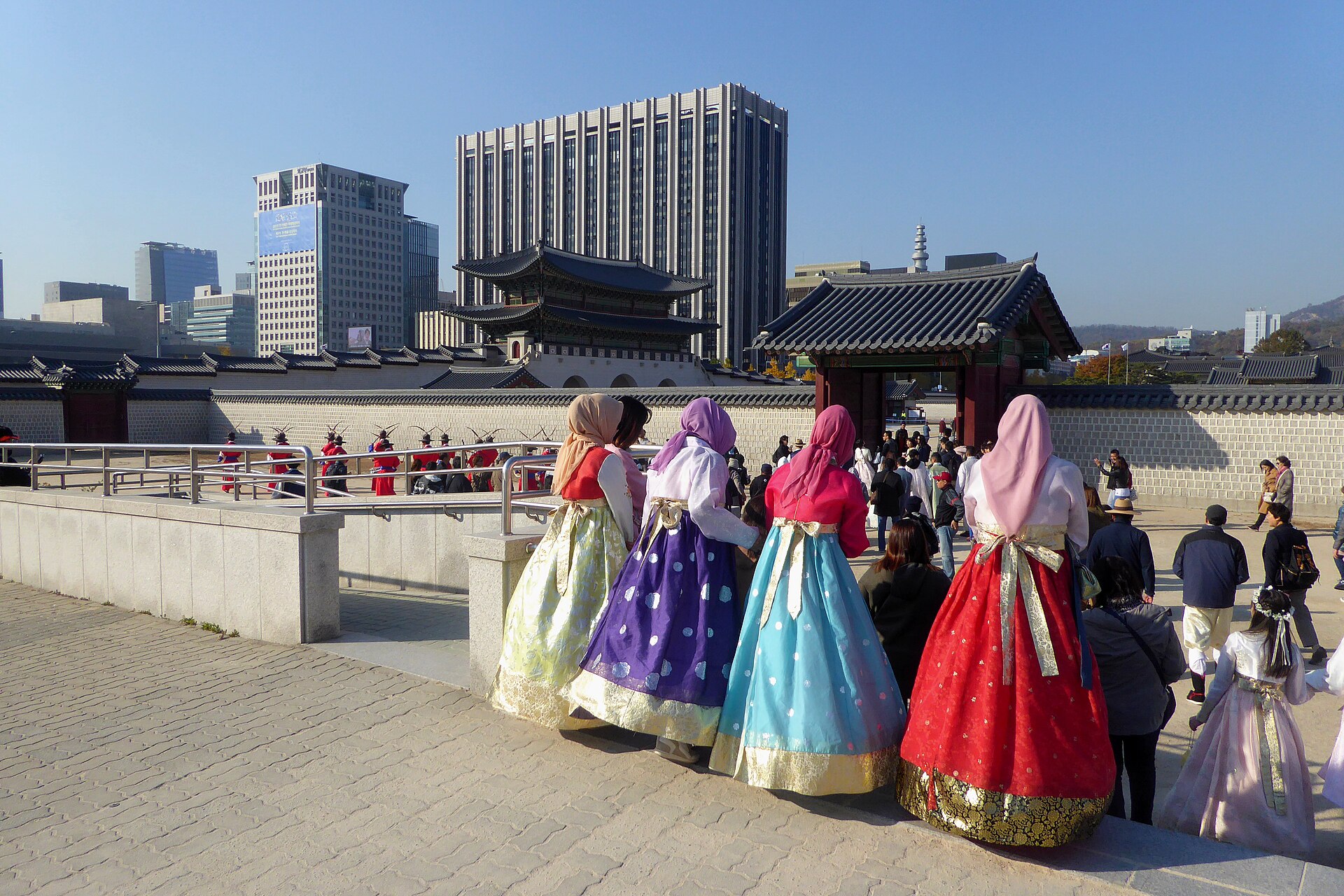
Seoul wants four days and is walked neighbourhood by neighbourhood. Gyeongbokgung palace and the Bukchon hanok village are the historic centre, and entry to the palace is free for those wearing a hanbok, which is why the palace courtyard is full of people in colourful clothes. Insadong is the district of souvenirs and tea houses. Myeongdong is known for cosmetics and street food. Hongdae means youth and night life. Gangnam has skyscrapers and the buildings of the K-pop agencies. Itaewon is the foreigners’ quarter and the halal restaurants are there. From Namsan tower you look out over the city, and on the bank of the Han river you picnic like the locals.
The DMZ tour, that is the North Korean border, is the most extraordinary half-day excursion; it is booked in advance and requires a passport. The DDP design museum and the Lotte World tower are the modern Seoul; go there after seeing the palaces, as the contrast is strong.
Busan and Jeju: South Korea outside Seoul
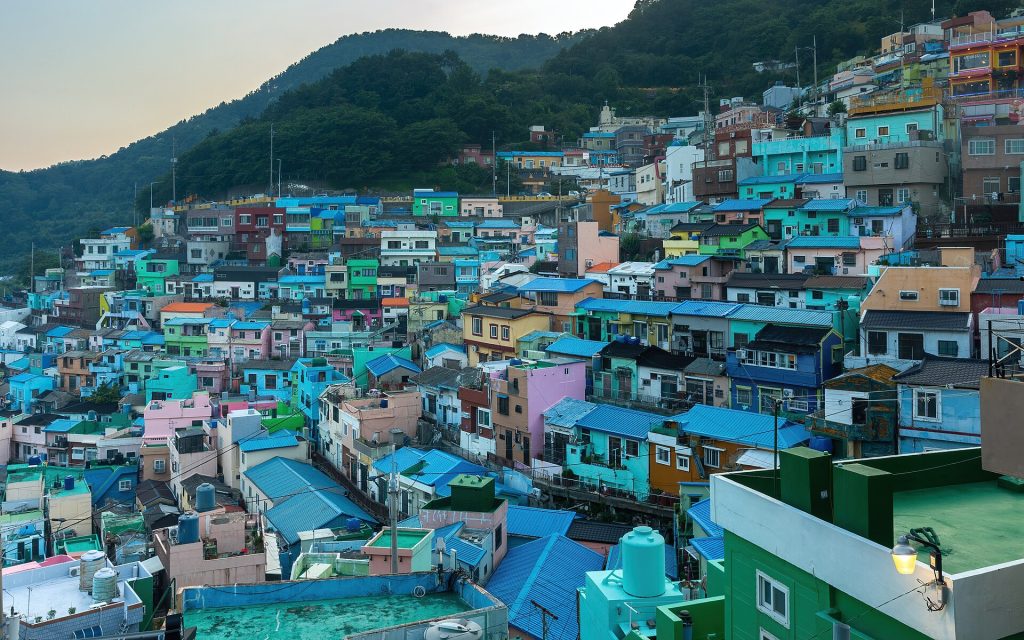
Busan is two and a half hours from Seoul on the KTX fast train. Haeundae beach, the colourful village of Gamcheon, the Jagalchi fish market and the Haedong Yonggungsa temple built right above the sea join up on one route, and two days is enough.
Jeju island is the Koreans’ Hawaii and is an hour’s flight from Seoul. The volcanic peak of Hallasan is at the centre of the island, Seongsan is known for its sunrise peak, and there are waterfalls and mandarin orchards too. Set aside three days with a car.
If there is time left, Gyeongju is the ancient capital, Andong a traditional village, and Sokcho the gateway to the Seoraksan mountain national park. The formula that works for a first trip goes like this: four days for Seoul, two for Busan and three for Jeju.
Transport: the T-money card and the KTX
As soon as you land at the airport, buy a T-money card at a convenience store. The metro, buses, taxis and even the shops are paid with it. Naver Map and Kakao Map do not work without the internet, so an eSIM is needed in the very first hour.
The Seoul metro, with twenty-three lines, is one of the largest in the world, a ride is less than a dollar, everything is written in English, and getting lost is practically impossible.
KTX fast trains go from Seoul to Busan in two and a half hours, the ticket is 40–45 dollars, and buying early brings a discount. Choosing your seat online saves you the station queue. Taxis are cheap and are called with the Kakao T app.
There is one important matter too. Google Maps does not fully work in Korea, so download Naver Map or Kakao Map, otherwise you will not be able to find a walking route. From the airport to Seoul the AREX train takes forty-five minutes. A car is needed only for Jeju, costs 40–60 dollars a day and requires an international driving licence.
Korean food and halal
Korean cooking is known for bibimbap, bulgogi, kimchi and samgyeopsal cooked on the grill in the middle of the table. Around it come dozens of little dishes, that is «banchan»; they are free, and when they run out they bring more.
In street food, tteokbokki spicy rice cakes, hotteok sweet pancakes and Korean fried chicken come first. The café culture is among the strongest in the world, and there is a design café on every street.
Halal food is concentrated in Itaewon, where dozens of halal restaurants operate around the Seoul central mosque. In Busan and Jeju the choice is small, and there seafood and the vegetarian version of bibimbap save the day.
Lunch in a restaurant is 8–12 dollars and a grill evening 20–25. Tipping is not accepted, and if you try to give one they hand it back.
Read next: A South Korea visa: there is no K-ETA, there is an embassy. The C-3 visa step by step
Season: cherry blossom, monsoon and autumn
The first half of April is the cherry blossom season. Yeouido park in Seoul and the Jinhae festival fall in that time, and the hotels get dearer. May passes green and comfortable, and in July-August the monsoon starts, the weather turns hot and humid, and after midday a person does not want to leave the café.
October-November, with the autumn leaves, is the loveliest period of the year; Seoraksan and the palace gardens turn red, and that is the time I would choose.
Winter is dry and cold, the temperature drops to minus ten, but the palaces under snow and the ski resorts give a beauty of their own. The festival calendar and the halal restaurant map are on the Visit Korea portal.
Budget and tickets
In Seoul a three-star hotel is 70–110 dollars and a four-star in Myeongdong 120–180, while in Busan the prices are a little lower. Staying near a metro station halves the size of the city, so choose the hotel on the map.
Entry tickets are cheap. The palaces are 2–3 dollars, Namsan tower 15 and the DMZ tour 50–70. Excluding the flight, a ten-day trip fits into 1300–1800 dollars per person, which is considerably cheaper than Japan.
Qatar Airways and Turkish Airlines fly to Seoul, and Uzbekistan Airways via Tashkent sometimes gives the cheapest option. A ticket to Seoul must be bought early in the cherry blossom and autumn seasons. South Korea tour packages linking Seoul, Busan and Jeju settle the KTX and the domestic flight together.
Frequently asked questions about South Korea
Is South Korea safe?
It is one of the safest countries in the world. Walking alone at night, or leaving your phone on the table in a café and going to the toilet, is normal — nobody touches it.
Can you manage with English?
In Seoul yes, in the smaller cities it gets difficult. The Papago translation app works better than Google for Korean.
Can it be combined with Japan?
Yes, there is a two-hour flight from Seoul to Tokyo and a ferry from Busan to Fukuoka. Japan requires a separate visa.
In closing
South Korea is a safe, comfortable country that is different in every season, and with a T-money card and the right season the trip arranges itself. The visa process is explained on the South Korea page, and to build the Seoul, Busan and Jeju plan together, fill in the application form.
Note: the prices here are as of the publication date and can change with the season.
