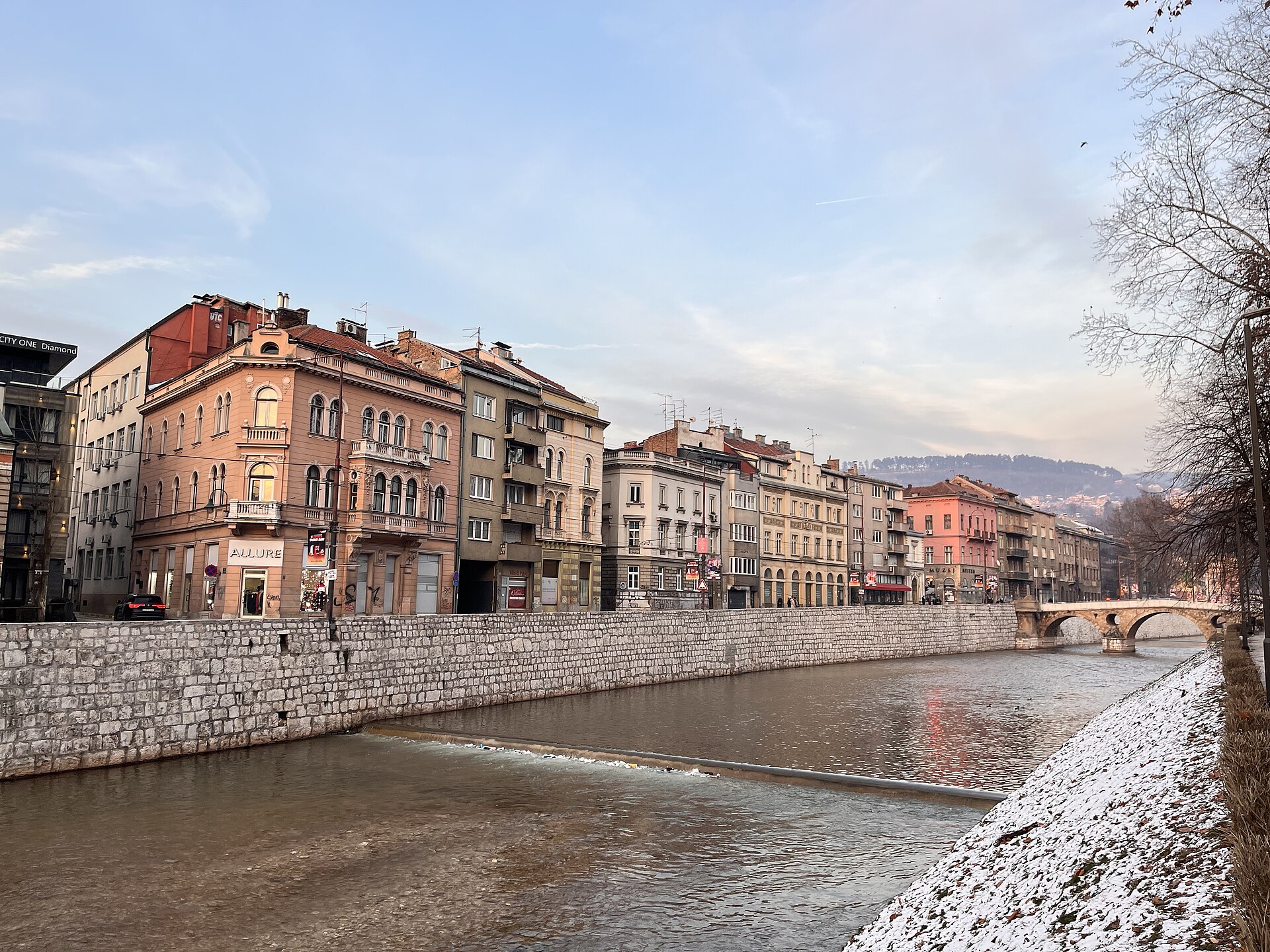
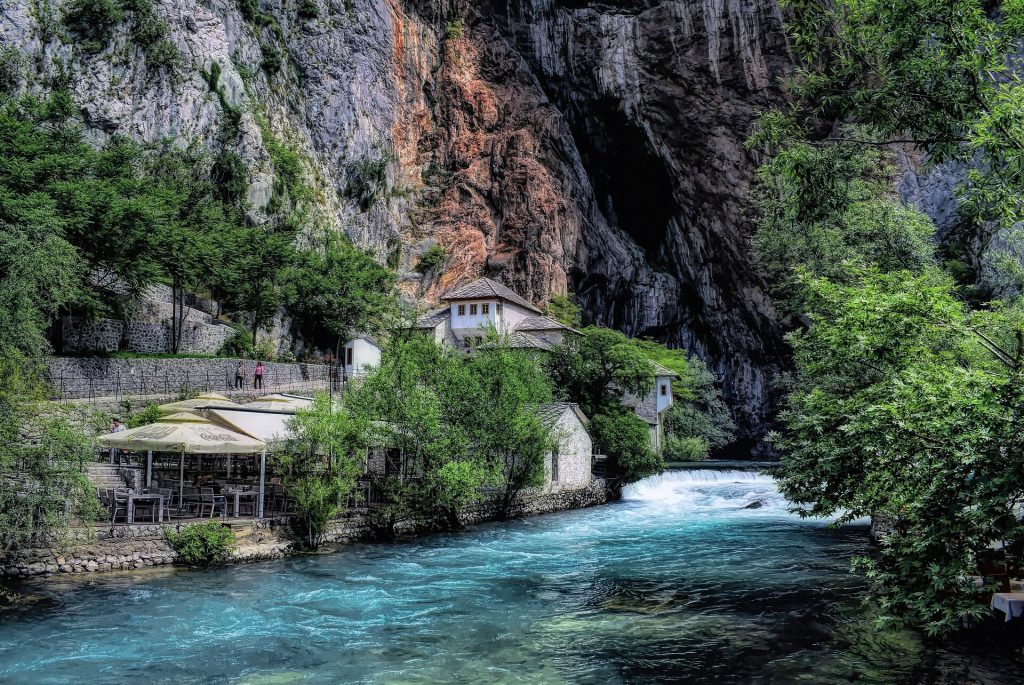
Over the last few years Bosnia and Herzegovina has become the first choice for people going to the Balkans from Baku, and the reason is plain to everyone. There is no visa, the culture is familiar, the food is halal, the surroundings are mountains and rivers, and prices are the cheapest in Europe. Walking into Sarajevo’s Baščaršija, you feel they have brought a small piece of Istanbul and set it down among the mountains. Everyone knows the Mostar bridge from photographs, and at Blagaj a river comes out from under a sheer cliff. In this article I have gathered the cities, transport and the winter resorts. The food, the season and the budget are here too.
Bosnia in brief
| Capital | Sarajevo |
| Language | Bosnian; many Turkish words, and the young speak English |
| Currency | Convertible mark (KM), 1 euro ≈ 1.96 KM |
| Visa | 90 days visa-free for citizens of Azerbaijan, registration within 48 hours |
| Best time | May–June and September; skiing at Jahorina in winter |
| Flights | 3+2 hours via Istanbul |
| Daily budget | 40–60 euros at a mid-range level |
Bosnian cities: Sarajevo, Mostar and around
Sarajevo stretches out between the mountains and its centre is walked on foot. The Baščaršija bazaar, the Sebilj fountain and the Gazi Husrev-beg mosque are the heart of the city. The Latin Bridge is where the First World War began. The Tunnel museum remains from the siege years. Then you ride the cable car up Mount Trebević. Two days are enough, and on the third go to Vrelo Bosne park at the source of the river Bosna, where the locals go walking at the weekend.
Mostar is 130 kilometres south, and the Old Bridge over the Neretva is the country’s symbol. By day the bridge fills with tourists; in the evening, once the day visitors have gone, it becomes an entirely different place, so stay a night there. Fifteen minutes from Mostar, at Blagaj, the river Buna emerges from under a cliff with a dervish tekke beside it, and thirty minutes away Počitelj is a stone village. People go to the Kravice waterfalls to swim in summer. In the north, Jajce has a waterfall in the middle of the town, Travnik is a day’s stop as a former capital, and Trebinje and Višegrad with its Drina bridge are little visited but lovely.
Getting around Bosnia: train, bus and car
The train between Sarajevo and Mostar is one of the most scenic routes in Europe. It runs two hours along the Neretva canyon, the ticket is six euros and there are two services a day. Be sure to sit by the window.
Buses link all the towns. Sarajevo to Mostar is two and a half hours and Mostar to Dubrovnik three, though Dubrovnik requires a Croatian Schengen visa.
In Sarajevo the tram is the city’s main line, a ride is under a euro, and taxis are cheap too. Car hire is 25–40 euros a day; the roads are narrow and mountainous, and a car is ideal for the Mostar, Blagaj and Kravice route. An Azerbaijani licence is accepted. The airport is only twelve kilometres from Sarajevo, and a taxi is 10–15 euros.
The Bosnian kitchen: ćevapi, burek and Bosnian coffee
Bosnian cooking is a mixture of the Ottoman heritage and the Balkan grill, and everything is halal — there is no need to check the menu. Ćevapi are small kebabs served with somun bread, onion and kaymak, and a portion in the Baščaršija is 3–4 euros. By burek they mean only the meat-filled layered pastry; the cheese one is sirnica and the potato one krompiruša, and if you say it wrong they will correct you. Bey’s soup, stuffed onions and baklava make up the rest of the table. Bosnian coffee comes in a copper pot with Turkish delight and sugar and is drunk slowly — they give an odd look to anyone in a hurry. Lunch in a restaurant is 6–10 euros, and the best food is in the small canteens of the Baščaršija called «aščinica». In Mostar the riverside restaurants charge a little more for the view.
Mountains and winter in Bosnia: Jahorina, Bjelašnica, Sutjeska
The Jahorina and Bjelašnica resorts of the 1984 Olympics are thirty kilometres from Sarajevo and are among the cheapest ski areas in Europe. A day pass is 25–35 euros and equipment 15, and the season runs from December to March.
In summer other routes open up. Sutjeska national park, the Perućica forest and the Maglić peak are for trekking, and people go rafting on the Neretva. In the north-west, Una national park is known for its waterfalls.
For thermal treatment there are Ilidža and Fojnica. These are not Soviet-style sanatoriums but modern spa hotels.
Season and weather
Sarajevo has a mountain climate: summer is 25–30 degrees with cool nights, and winter is snowy down to minus five. Mostar and Herzegovina are close to a Mediterranean climate, reaching 35–38 degrees in July and August, and you find yourself looking for shade while watching the divers off the bridge. May–June and September are ideal for both the cities and the countryside. The Novruz holiday is the busiest time for trips from Baku and Sarajevo’s hotels fill up, so book in February. The Sarajevo Film Festival is held in August. Regional and event information is on the Sarajevo Tourism Board portal.
Budget and tickets
Bosnia is one of Europe’s cheapest countries. A hotel in central Sarajevo is 40–70 euros and in Mostar 35–60, while an apartment comes to 25–40. To stay within walking distance of the Baščaršija, choose the place on the map.
Entry tickets are all but symbolic. A museum is 2–5 euros and the cable car ten, while watching the diving show off the Mostar bridge is free — the divers simply pass a hat round. Excluding the flight, a week-long trip fits into 350–550 euros per person.
Money is simple too: euros are changed everywhere, cards work in the centre, and in the villages you need cash marks. Turkish Airlines and Pegasus fly to Sarajevo via Istanbul, and tickets to Sarajevo should be bought early for Novruz and the summer dates. Bosnia tour packages covering Sarajevo, Mostar and Blagaj are the best-selling Balkan programme over the holidays.
Frequently asked questions about Bosnia
Is Bosnia safe?
Yes, it is a calm country for tourists. The only warning is not to enter areas marked «mine» in the countryside — do not leave the marked routes.
How many days does it need?
Sarajevo two or three days, Mostar and around two. A week is enough for the main part of the country.
Can you get by in Turkish?
Bosnian has hundreds of Turkish-Ottoman words and plenty of people in the Baščaršija speak Turkish. For a full conversation, though, you will need English.
In closing
Bosnia is the visa-free, cheap, safe European country culturally closest to us: one week, two cities, one train journey. The entry and registration rules are gathered on the Bosnia and Herzegovina page, and to plan the ticket and the route together, fill in the application form.
Note: the prices here are as of the publication date and can change with the season.
