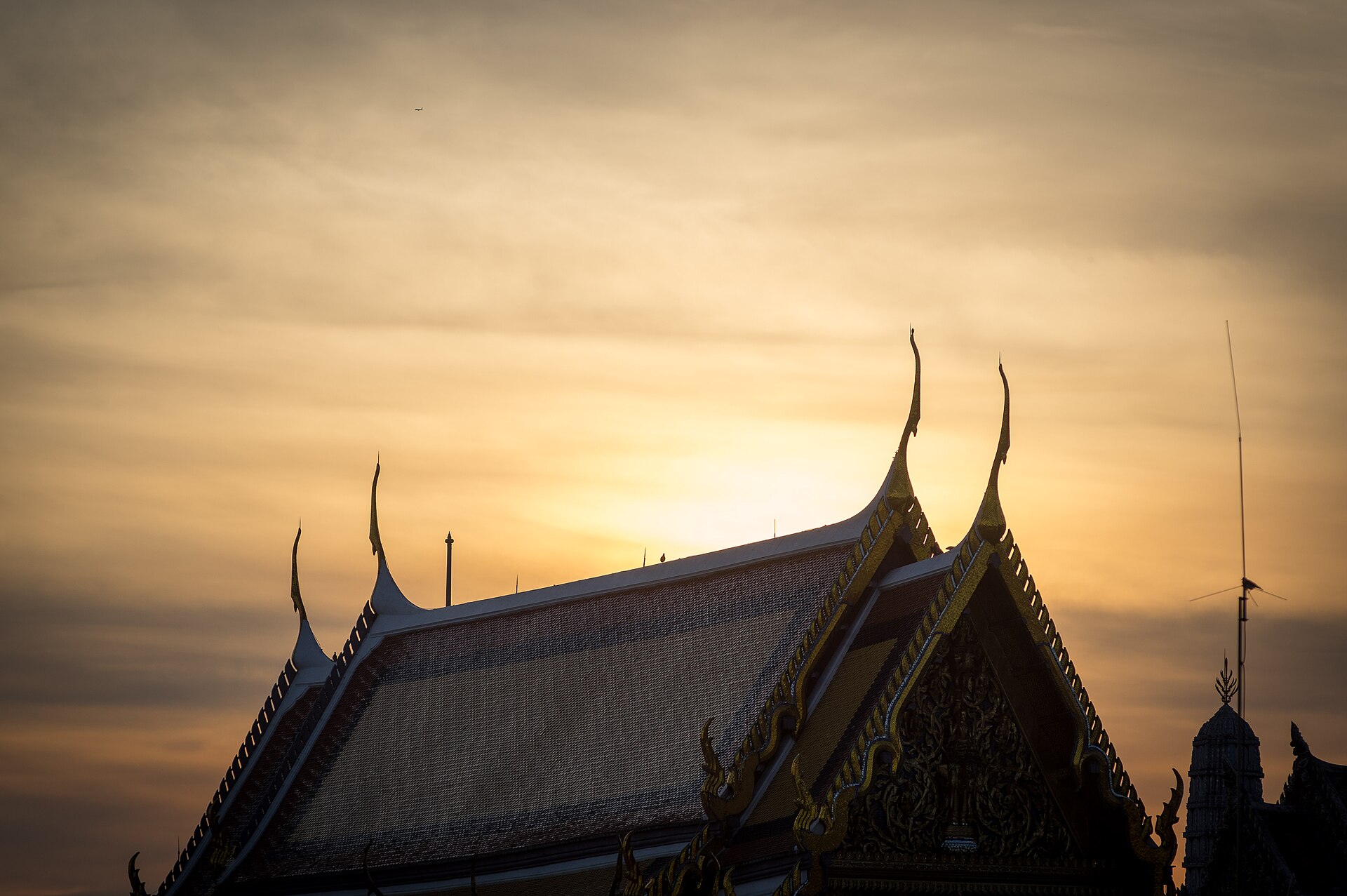
Bangkok wears you out within a few hours and then suddenly wins you over. In the morning you are among golden temples, at midday you are stuck in traffic, and in the evening you eat the best dinner of your life on the street for five dollars. The city is the main gateway to South-East Asia and every route starts here. Below I have written a three-day plan and the rules for getting around.
The Grand Palace and the temples
The Grand Palace and the Temple of the Emerald Buddha are the city’s main site. The dress rule is strict — shoulders and knees must be covered, or you are not let through the gate. Go at half past eight in the morning, at opening time; by midday the heat there is unbearable.
Wat Pho holds a forty-six-metre reclining Buddha, and the traditional massage school beside it is the oldest in Thailand. Wat Arun is on the opposite bank of the river, a few baht away by boat, and looks its best at sunset. Do not believe anyone at the gate who tells you the temple is closed — that is an old scheme.
The markets and street food
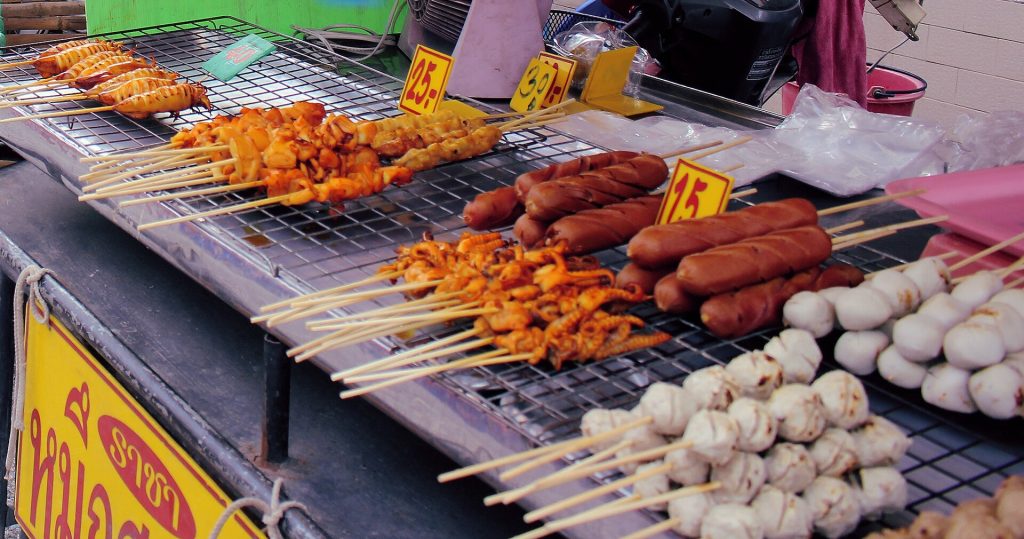
The Chatuchak weekend market consists of more than fifteen thousand stalls and is one of the largest in the world. The floating markets are outside the city, and Amphawa is the less touristy one. Yaowarat street in Chinatown is the best place in the city for an evening meal.
Do not shy away from street food; the best dishes are cooked exactly there. The rule is simple: choose the stall with a queue, because that means the produce is fresh. Pad thai, tom yum and mango sticky rice are the classic choices. Halal restaurants are found in the districts where the Muslim community lives and in the markets.
Transport and traffic in Bangkok
Traffic is a serious problem here, so wherever you can use the metro and the elevated train — both are air-conditioned and punctual. The river boat is the fastest way to reach the old city. In a taxi insist that the meter is switched on, and do not go with a driver who offers a fixed price. You reach Bangkok from Baku with a connection, and comparing the prices of long-haul flights across several dates is a serious saving.
Tuk-tuks are expensive for tourists and often take you to a shop they earn commission from. For the islands and other cities, taking the bus, train and ferry tickets from one place is the most comfortable method in Thailand, because the routes combine several kinds of transport.
Read more: A Thailand travel guide: Bangkok, Chiang Mai, Phuket, Krabi and the right route between the islands
Season and budget in Bangkok
November to February is the best period, with 26–32 degrees and relatively dry weather. March to May is the hottest time of the year and climbs to 38. June to October is the rainy season; the rain usually lasts an hour or two in the afternoon and then stops, so it does not ruin a trip.
A three-star hotel is 25–50 dollars, and a four-star with a pool 50–90. Choosing your hotel by the elevated train station all but solves the traffic problem. Lunch on the street is 2–4 dollars and in a restaurant 8–15. Official information is on the Tourism Thailand site.
In closing
Bangkok is a three-day city, and after that it makes sense to move on to the islands or the north. Go to the palace at opening time, take your hotel at a train station, and do not be afraid of street food. For a visa and a route, fill in the application form.
Note: the prices in this article are those at the time of publication and may change with the season.
