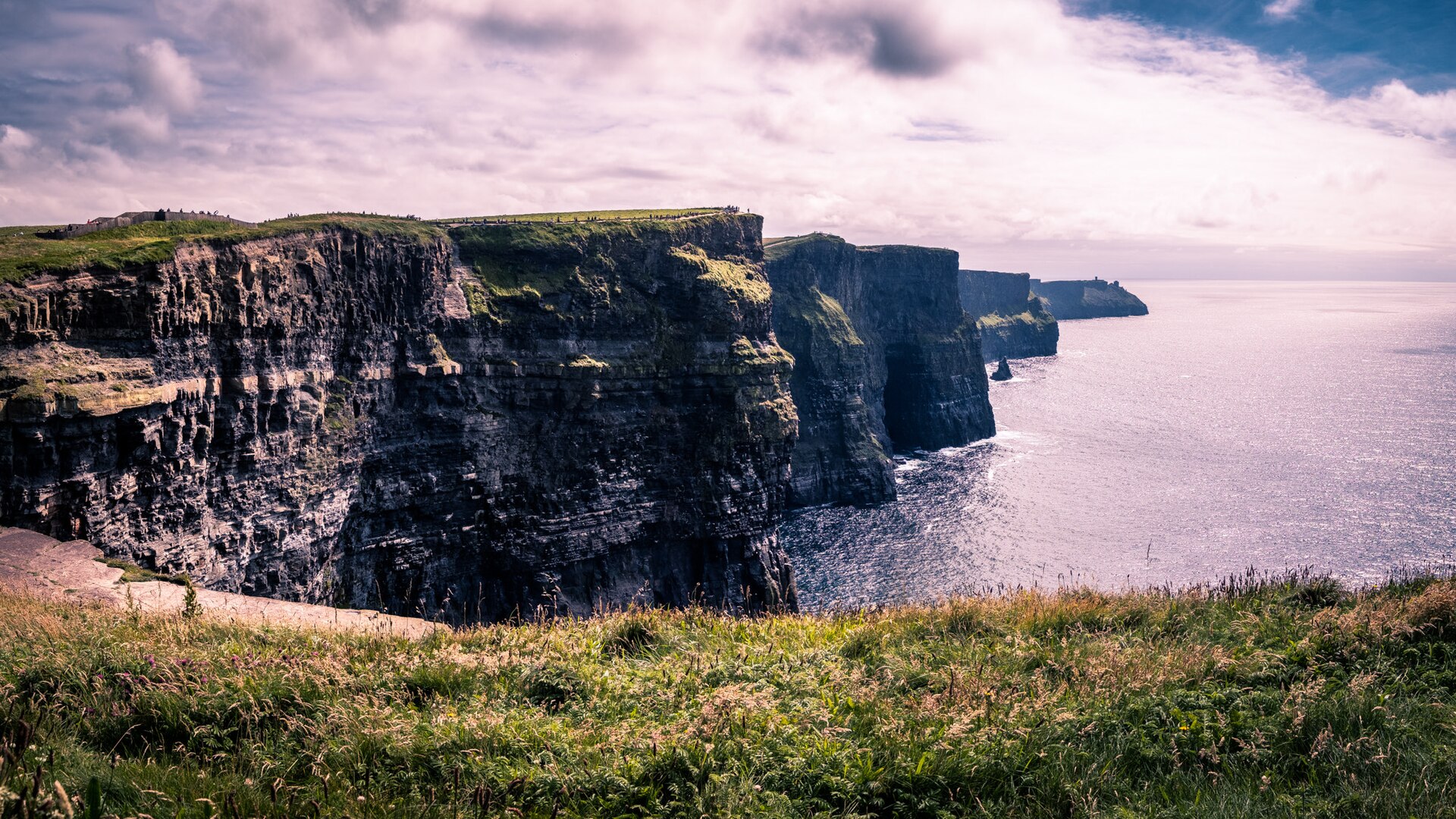
Ireland, at the western edge of Europe, means green hills, Atlantic cliffs, castles and the friendliest pub culture in the world.
For us the main obstacle is the visa. Neither a Schengen nor a UK visa works here; a separate Irish visa is needed, and someone who does not know that tries to fly to Dublin on a London visa. Once you get there everything becomes easy, because the country is English-speaking, safe and compact, and in a week you can travel from Dublin to the Atlantic coast. Below I have gathered Dublin, the west coast, the driving route, the food, the rainy weather and the budget in an expensive country.
Ireland in brief
| Capital | Dublin |
| Language | English and Irish; English everywhere |
| Currency | Euro; pounds sterling in Northern Ireland |
| Visa | A separate Irish visa, the AVATS online application and VFS |
| Best time | May–September; rain in every season |
| Flights | 8–10 hours via Istanbul, London or Frankfurt |
| Daily budget | 150–200 euros at a mid-range level |
Dublin: Trinity, Temple Bar and Guinness
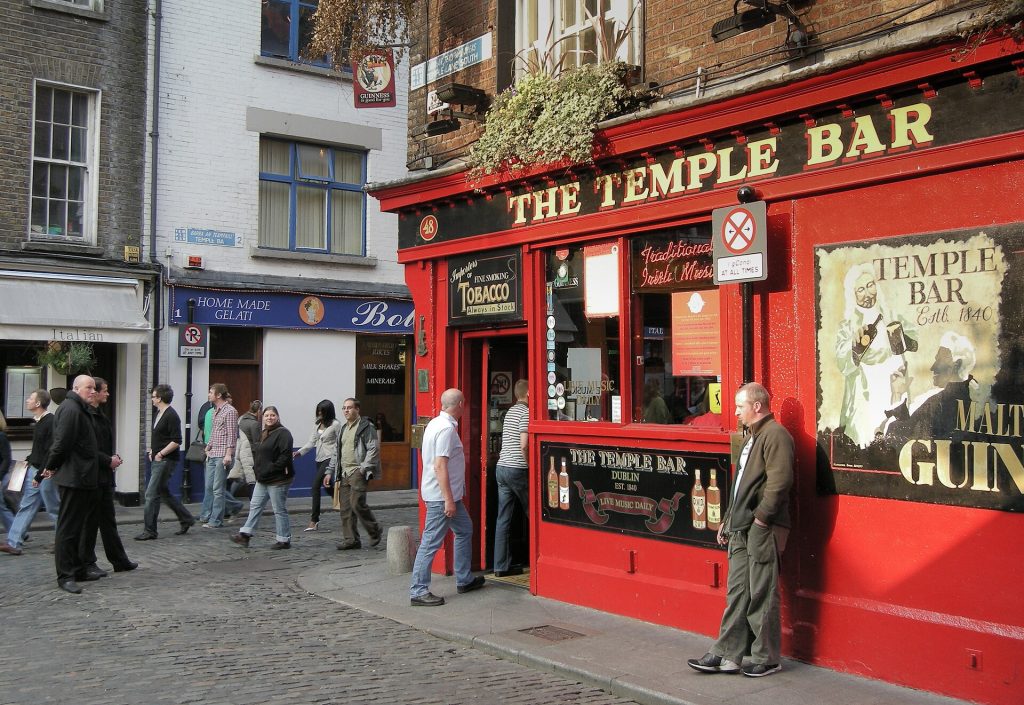
Dublin is a two- or three-day city and is walked on foot. The twelve-hundred-year-old Book of Kells is kept in the Long Room of Trinity College. Dublin Castle and St Patrick’s Cathedral are nearby. At Kilmainham Gaol you learn the country’s independence history in an hour. From the roof terrace of the Guinness Storehouse museum the whole city is visible. And over the Liffey stands the Ha’penny Bridge. Temple Bar is the quarter of colourful pubs, touristy and expensive, good for live music — but the pubs two streets away are half the price and that is where the locals sit.
Grafton Street is shopping and street musicians, and Phoenix Park is one of the largest city parks in Europe, with a herd of deer wandering inside it. There are day trips out of the city too. Howth is a fishing village where you walk along the cliffs. The Wicklow mountains and Glendalough monastery are another route. Newgrange is a five-thousand-year-old tomb, older even than the pyramids.
The west coast: Ireland outside Dublin
The Cliffs of Moher are an eight-kilometre precipice dropping two hundred metres into the Atlantic and the country’s most visited natural monument; entry is 10–15 euros. Go in the morning or the evening, because at midday the cruise coaches arrive. A day tour from Dublin comes to 55–70 euros.
Galway is the cultural capital of the west, known for its colourful streets, its pubs and its street music. From there a ferry runs to the Aran Islands, and on the island you cycle between stone walls.
The Ring of Kerry is a hundred-and-eighty-kilometre circular route. Killarney national park, the lakes, the coastal villages and the view of the Skellig islands fit into a one-day drive, while the Dingle peninsula is the quieter alternative.
The Wild Atlantic Way runs two and a half thousand kilometres along the coast from Donegal to Cork. Few do it all at once; usually people travel it in pieces. Cork and Kinsale in the south are known for their food, and Blarney Castle for its «stone of eloquence» — to kiss the stone you have to hang upside down.
Do not confuse one thing. Northern Ireland, that is Belfast and the Giant’s Causeway, is territory of the United Kingdom and requires a separate UK visa.
Transport: driving on the left, trains and the Leap card
In Dublin the Leap Visitor card covers the bus, the Luas tram and the DART coastal train. There are one-, three- and seven-day versions, the airport bus is included, and the price is between 8 and 40 euros.
Intercity Irish Rail trains operate. Dublin to Galway takes two and a half hours, Cork is the same distance, and bought early a ticket comes to 15–25 euros. Bus Éireann and Citylink coaches are cheaper, and seeing the price difference with the train on one screen makes planning the route easier.
For the west coast a car is the best option, and daily hire costs 40–70 euros. Traffic drives on the left, and the country roads are so narrow that two cars barely pass. Insurance is expensive, drivers under twenty-five are charged extra, and if you want an automatic gearbox book in advance, because such cars are few.
Inside the city Uber only calls licensed taxis, and the main app is Free Now. From the airport into the centre the Aircoach and Dublin Express buses take thirty minutes and charge 7–8 euros.
Pub culture and Irish food
A pub in Ireland is not a bar, it is a public room. Families have lunch there, in the evening live music is played, and ordering a soft drink is completely normal — nobody looks at you oddly.
The food is simple and filling. Irish stew is cooked from lamb and potatoes, and the seafood soup called «chowder» is served with soda bread. The «Full Irish» breakfast, fish and chips, and the oysters of Galway are on the list to try. Lunch in a pub is 15–20 euros, and dinner in a restaurant 30–50.
Halal food is widely available in Dublin, with Middle Eastern and Pakistani restaurants lined up on Parnell and Capel streets, while fish and a vegetarian option are in every pub. The tap water is clean, and tea is drunk here even more than by the English. The tip is ten per cent and is given only in a restaurant.
Read next: An Irish visa: Schengen does not work, Britain does not work. AVATS, VFS and 60 euros
Weather and season in Ireland
Irish weather shows four seasons in one day. In summer the temperature is 15–20 degrees and in winter 5–8, snow falls rarely, and rain falls in every month; the driest months are April to June.
May to September is the best time. In June the day stays light for seventeen hours, July and August are the busiest and dearest period, and September passes quietly while everything is still green. The seventeenth of March is Saint Patrick’s Day, Dublin holds its biggest celebration and the hotels run out.
The main part of the suitcase is a waterproof jacket and comfortable shoes. Do not take an umbrella; the Atlantic wind turns it inside out in a minute. Route and event information is on the Ireland.com portal.
Budget and tickets
Dublin is one of the most expensive capitals in Europe. A three-star hotel in the city is 150–220 euros, while in Galway and Cork it is 100–150. Country guest houses, that is «B&B», come to 90–130 euros with breakfast, and honestly, that is where the best experience is too. A hostel is 50–70 euros, and there are plenty of options in the centre of Dublin.
The museums are not expensive. The Book of Kells is 25 euros, the Guinness Storehouse 26 and Moher 12. Excluding the flight, a week-long trip fits into 1400–1900 euros per person, and to economise, do not stay more than three days in Dublin.
Turkish Airlines flies to Dublin via Istanbul. When looking for a flight to Dublin, bear in mind that a London connection may require a UK transit visa, while an Istanbul or Frankfurt connection does not create that problem. Ireland tour packages that fit Dublin, Moher and the Ring of Kerry into one week settle the car and the B&B bookings together.
Frequently asked questions about Ireland
How many days does Ireland need?
Three days for Dublin, two for Moher and Galway, two for Kerry — a week in all. Ten days with the Wild Atlantic Way.
Can you enter on a UK visa?
No, you cannot. The Britain–Ireland visa scheme does not work for citizens of Azerbaijan; the Irish visa is obtained separately, and it is not valid for Northern Ireland either.
Can you see the west coast without a car?
Yes, there are day coach tours from Dublin and Galway to Moher and the Ring of Kerry, 50–70 euros. For the small villages and Dingle, though, you need a car.
In closing
Ireland requires a separate visa and is expensive. Even so it is an English-speaking, safe country whose scenery is worth every drop of rain. The person who does not settle for Dublin and goes west sees the real Ireland. The visa process is explained on the Ireland page, and to build the route and the driving plan together, fill in the application form.
Note: the prices here are as of the publication date and can change with the season.
