Australia is the most distant, most expensive and most often badly planned trip you can take from Baku. People want to fit Sydney and the Great Barrier Reef into the same weekend, then look at the map and see there are two thousand kilometres between them. The country is the size of a continent, the seasons are the reverse of ours, and at the border you have to declare every piece of sausage in your bag. In this article I have tried to turn a first trip into a logical route, a realistic budget and the right time of year, because not everyone gets to go to Australia twice.
Australia in brief
| Capital | Canberra; the largest cities are Sydney and Melbourne |
| Language | English |
| Currency | Australian dollar; cards everywhere, cash hardly needed |
| Visa | Visitor visa (subclass 600), online |
| Best time | September–November and March–May; December–February is summer and the most expensive |
| Flights | Via Doha or Dubai, 20–24 hours in all |
| Daily budget | 250–350 Australian dollars at a mid-range level |
Australian cities: where to go on a first trip
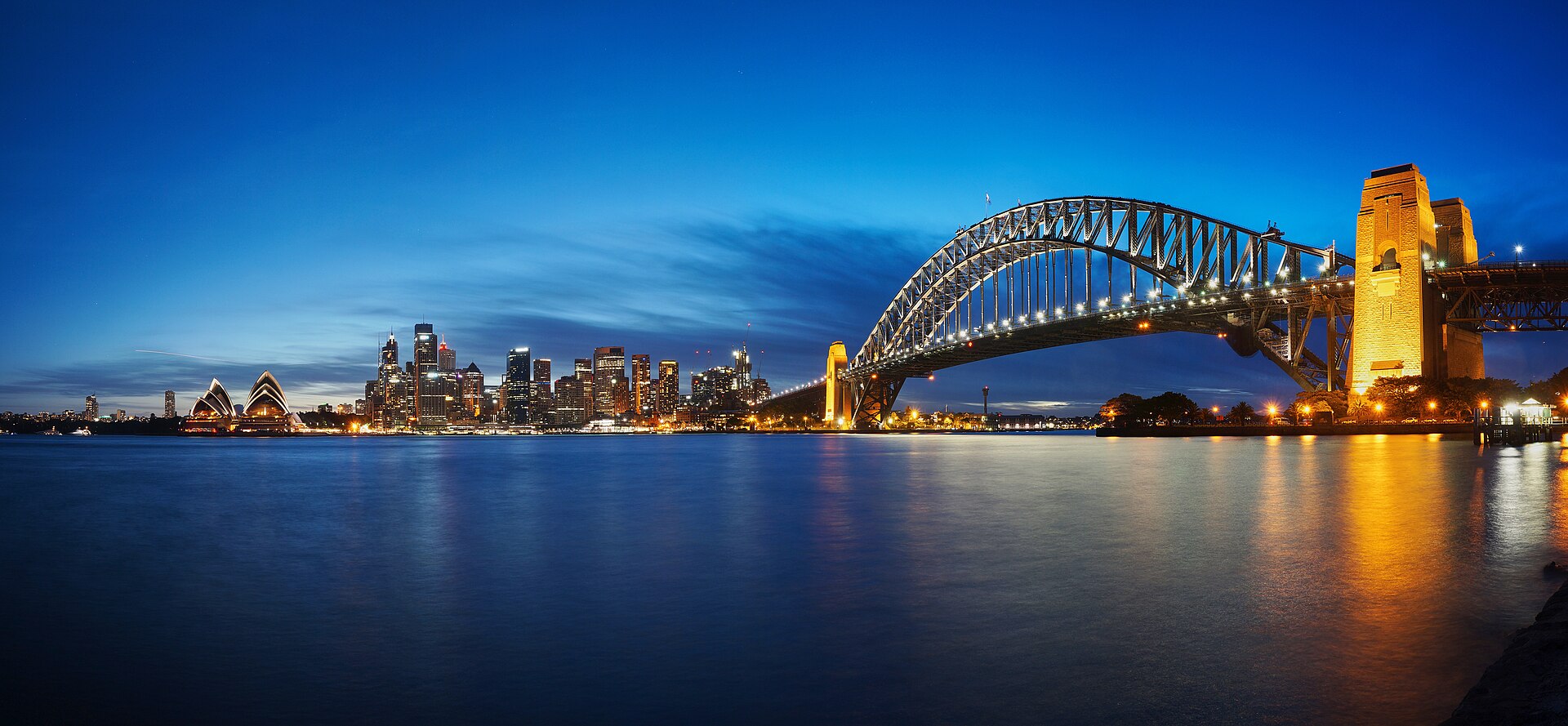
Start with Sydney; there is no other way. The Opera House, the Harbour Bridge, Bondi beach and a ferry ride around the harbour fill four days comfortably. Pay particular attention to the ferry: the ordinary city ferry to Manly gives a better view than any tourist boat and costs ten dollars. Melbourne is an hour’s flight away and an entirely different city — street art, café culture, trams. Stay three days in Melbourne, because the Great Ocean Road starts there and the Twelve Apostles are a day trip.
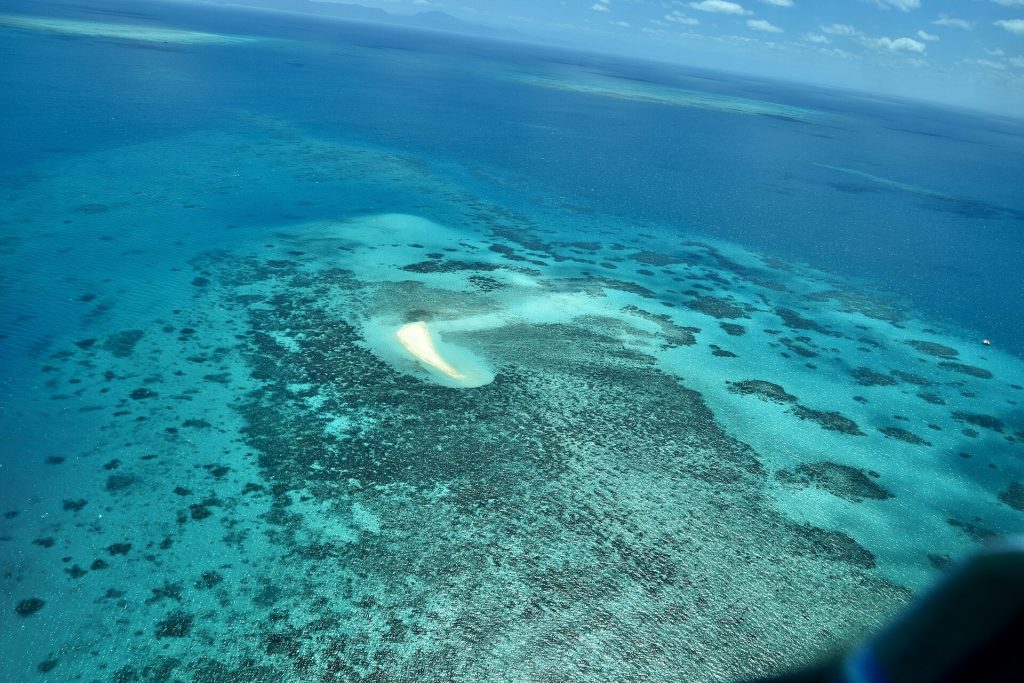
Then fly north to Queensland. Cairns is the gateway to the Great Barrier Reef and the Daintree rainforest, and the Whitsunday Islands and Whitehaven beach are the view you have seen in every advertisement for the country. Uluru, the red rock in the very middle of the country, needs a flight of its own and should be seen at sunset; at any other hour it is just a rock. Perth on the west coast is far from everything — save it for a second trip. The formula that works for a first trip is this: Sydney four days, Melbourne three, Cairns and the reef four.
Getting around Australia: distance decides everything
Between cities the only sensible transport is the plane. Qantas, Virgin Australia and Jetstar connect all the big cities; Sydney to Cairns is a three-hour flight and, booked early, the ticket comes to 100–150 dollars. The train is romantic but slow and expensive — for people with time. Within the cities you need no separate card in Sydney: you tap onto ferries, trains and buses with a bank card, and in Melbourne the city-centre tram is free.
Car hire is needed only for the Great Ocean Road and Tasmania, at 60–90 dollars a day. Traffic is on the left. And there are the kangaroos: they come onto the road at dusk and collisions are routine, so do not drive at night outside the cities. On long roads the signal thins out, and with an eSIM downloading offline maps at least covers the intercity stretches. Uber works in all the cities.
Food and coffee culture
What is called Australian cooking is really the cooking of its immigrants. Asian food is on every corner, Greek and Italian restaurants line up in Melbourne, and seafood is everywhere.
Breakfast here is a ritual of its own. Avocado toast and the flat white were invented in this country, and breakfast in a café is 20–25 dollars. Meat pies, fish and chips and a barbecue in the back garden are the locals’ everyday food.
Halal food is plentiful in Sydney and Melbourne and thins out in the small towns. Tipping is not expected and tax is included in the prices, which comes as a relief after America. A main course in a restaurant is 25–40 dollars, while buying from the supermarket costs half that.
Australian seasons: everything is reversed
December to February is summer. Sydney is thirty degrees, the school holidays fall then too, and so it is the most expensive period.
June to August is winter, holding at 10–15 degrees in the south. Even so, those are exactly the months when Queensland is ideal: dry and twenty-six degrees. In the north, November to April is the rain and jellyfish season; you can swim on the reef, but in a protective suit.
January and February are the bushfire months, so follow the news. The most balanced times are September–November and March–May. Regional weather and the events calendar can be seen on the Tourism Australia portal.
Read next: Australia visa: every detail of the online subclass 600 application
Quarantine, insurance and safety at the Australian border
The world’s strictest biosecurity control is here, and you should take it seriously. All food, plants, wooden souvenirs and medicines must be declared on the arrival card; if you declare them they simply take them away, and if you do not they write a fine of more than two thousand dollars for a single apple. Forget in advance about the nuts and jam you brought from Baku.
The sun here is stronger than in Europe: SPF 50 cream and a hat are needed every day, and the locals do not look for shade everywhere for nothing. On the beaches swim only between the yellow and red flags; the rip currents carry tourists out every year. Medical care is excellent but expensive, so do not travel without insurance. In terms of crime, the country is very easy.
Budget and tickets
A hotel is 200–300 dollars in Sydney and 150–220 in the other cities. A hostel bed is 40–60 dollars; the network is very strong in Australia and it is the best-value option for solo travellers.
The activities are expensive. A reef tour is 200–250 dollars, and a two-day Uluru programme starts at 800. The reef boats out of Cairns fill up in season, so choose the operator in advance. Excluding the flight, a two-week trip fits into 4000–5000 Australian dollars per person.
Qatar Airways flies via Doha and Emirates via Dubai, and neither raises a transit visa problem. Tickets to Australia are at their highest in the Australian summer, that is December and January, while March and October are good value. Australia tour packages giving Sydney, Melbourne and the reef in one programme settle the domestic flights and cut the time lost on a route this far away.
Frequently asked questions about Australia
How many days does a trip to Australia need?
Fourteen days at least. Two go on the journey and one on the time difference; a ten-day trip only makes sense for one region.
Can you cross to New Zealand via Sydney?
Yes, it is a three-hour flight, but New Zealand requires its own visa and your Australian visa must be multiple entry so that you can come back.
Are Australia’s dangerous animals real?
Not in the cities. In the north it is enough to follow the crocodile and jellyfish warning signs; the tourist’s real risks are the sun and the ocean currents.
In closing
For anyone who does the arithmetic on distance and season, Australia is the trip of a lifetime. Allow three regions and two weeks for one trip, and buy the ticket early. The visa application and documents are explained on the Australia page, and to build the route together, fill in the application form.
Note: the prices here are as of the publication date and can change with the season.
