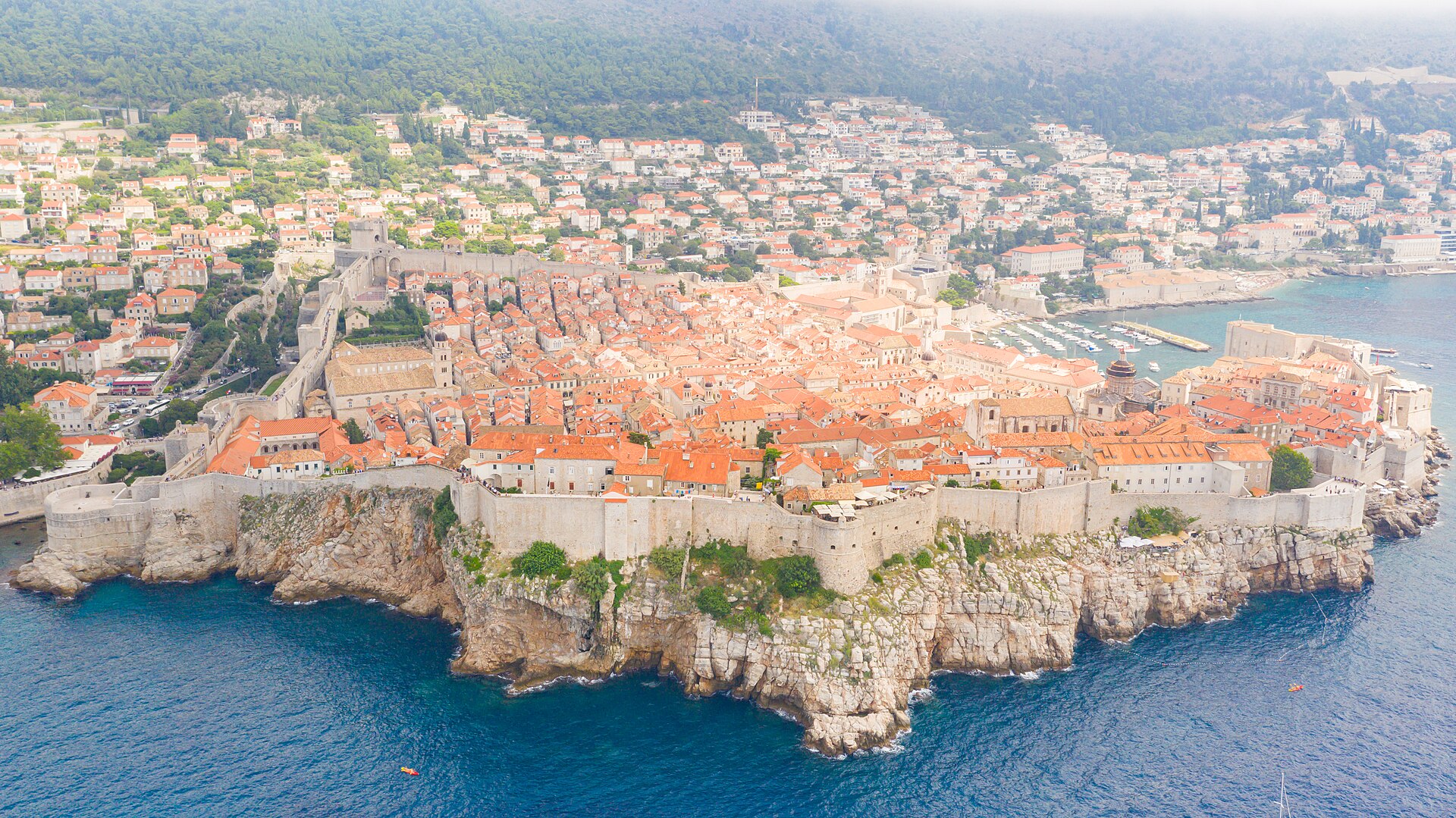
Dubrovnik is a small city enclosed by a wall, and the whole point is that wall. It is two kilometres long, runs above the sea and shows you the city from roof level. Since the series was filmed here the flow of tourists has multiplied several times over, so you need to pick your moment before you come. Below I have written when to come, where to stay and what is worth paying for.
The city walls and the old town
The walk along the wall takes an hour and a half and runs one way only — you cannot turn back halfway. There is almost no shade, so go at opening time in the morning or after five in the evening. The ticket looks expensive, but this is the one paid experience in the city that genuinely gives you your money’s worth.
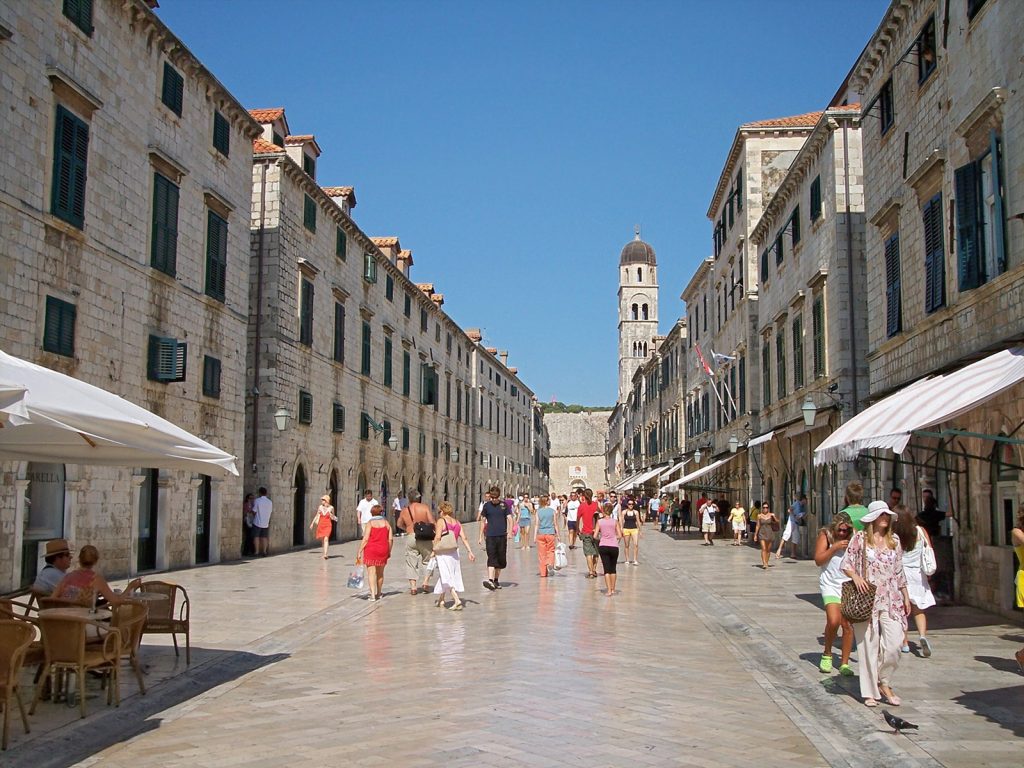
Inside the old town the main street, paved in polished stone, is called Stradun, and a fountain closes each end of it. The pharmacy in the Franciscan monastery has been working since 1317 and is one of the oldest in Europe. The little streets climb away in steps, and prices come down as they do.
Srđ hill and the islands
The cable car takes four minutes up Srđ hill, and from the top the whole city and the island of Lokrum fit into one frame. It is the best spot for sunset. There is a walking path too, but it takes two hours and is hard going in the heat.
The ferry to Lokrum is fifteen minutes from the harbour; the island is a nature reserve and peacocks wander around it. The Elaphiti group is seen on day boat trips that stop at three islands. Taking the boat trips and the wall ticket in advance settles the question of availability in summer.
Staying in Dubrovnik and getting around
Staying inside the old town sounds romantic, but cars cannot get in, you end up carrying your suitcase up steps, and you hear the street at night. The Lapad peninsula is more comfortable, has a beach and is fifteen minutes from the centre by bus. The Ploče side is scenic and close to the centre.
There is no metro in the city, but the buses run often. The shuttle bus from the airport to the centre takes half an hour. Split is four hours away by bus, and faster by ferry. The bus to Kotor in Montenegro is two hours, and the border crossing builds a queue in summer.
Read more: A Croatia travel guide: Dubrovnik, Split, the islands, the Plitvice lakes and the Adriatic season
Season and prices in Dubrovnik
May, June and September are the best months: 24–29 degrees, with a warm sea. July and August are both hot and very crowded — the cruise ships bring in several thousand people a day. October is quiet and cheap. In winter a great deal closes, but the wall stays open and the city empties out.
This is the most expensive city in Croatia. In summer a three-star hotel is 150–250 euros, and 60–110 outside the season. Hostel and apartment options bring the budget down seriously. The wall ticket is 35 euros, the cable car 27, and lunch in a restaurant 20–35. Official information is on the Visit Dubrovnik site.
In short
Dubrovnik is small and two days are enough, but anyone who comes in the middle of summer sees the crowd, not the city. Plan for May or September, go up on the wall at opening time, and take your hotel in Lapad. To see it together with Split and Plitvice, it is better value to look at group tours of the Balkans. For a visa and a route, fill in the application form.
Note: the prices in this article are those at the time of publication and may change with the season.
