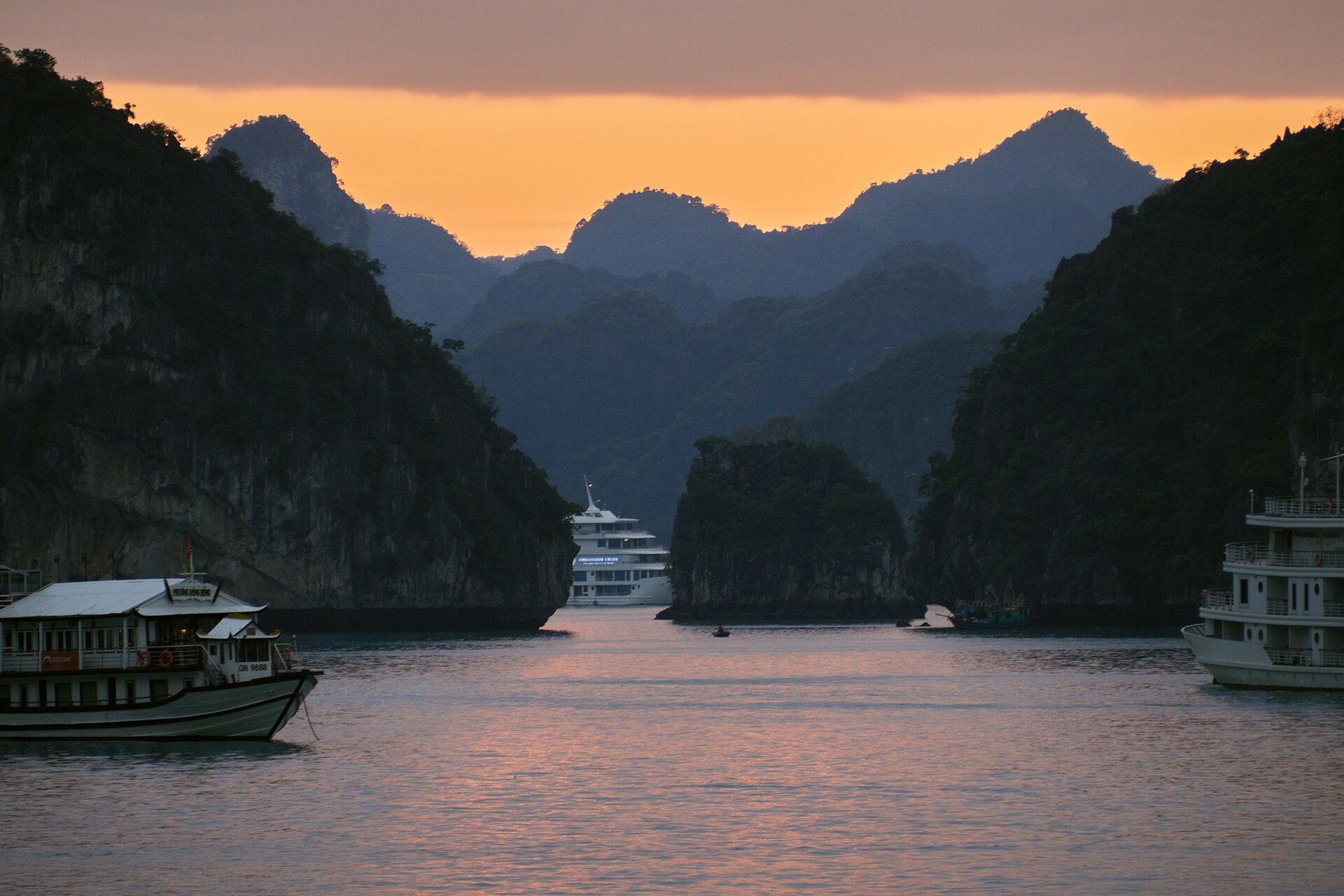
Vietnam is the most varied country in Southeast Asia. In the north there are the limestone islands of Ha Long Bay and the rice terraces of Sapa; in the middle the lantern-lit streets of Hoi An and the imperial city of Hue; in the south the motorbike flood of Ho Chi Minh City and the floating markets of the Mekong delta.
The country has seventeen hundred kilometres of coast, the world’s cheapest and tastiest street food, and smiling people. For us the eVisa costs twenty-five dollars for ninety days, which makes it one of the easiest visas in all of Asia. Below I have gathered the north-to-south route, the three climate zones, transport, the food and halal options, the season and the budget.
Vietnam in brief
| Capital | Hanoi; the largest city is Ho Chi Minh City |
| Language | Vietnamese; English in tourism, a translation app is needed |
| Currency | Dong (VND), 1 dollar ≈ 25,000 dong; cash is the rule, cards in hotels and restaurants |
| Visa | eVisa 25 dollars, 90 days, official portal; Phu Quoc island 30 days visa-free |
| Best time | North October–April, centre February–August, south December–April |
| Flights | 11–13 hours to Hanoi and Ho Chi Minh City via Doha, Dubai or Istanbul |
| Daily budget | 40–70 dollars at a mid-range level |
The north: Hanoi, Ha Long, Ninh Binh, Sapa
Hanoi is a thousand-year-old capital, two days. The Old Quarter with its thirty-six streets is the heart of the city, with Hoan Kiem lake beside it. The Temple of Literature and the Ho Chi Minh mausoleum are seen in the morning. Look at Train Street, drink an egg coffee, and spend the evening on the Bia Hoi corner. Ha Long Bay is on the UNESCO list and consists of sixteen hundred limestone islands. A one or two-night cruise with kayaking, caves and sunset is 100–250 dollars. Lan Ha Bay is the quieter alternative. It is two and a half hours from Hanoi.
Ninh Binh is called «Ha Long on land». At Trang An and Tam Coc there is a river boat trip between the rocks, and you climb Hang Mua peak on foot. It is two hours from Hanoi and a day is enough. I love it no less than Ha Long. Sapa in the north-west means rice terraces and the villages of the mountain peoples. You ride the cable car up Fansipan, Indochina’s highest peak. In September the terraces turn gold. You get there on the night train from Hanoi or a five-hour bus; set aside two days. The Ha Giang loop by motorbike is the country’s wildest mountain road, three or four days.
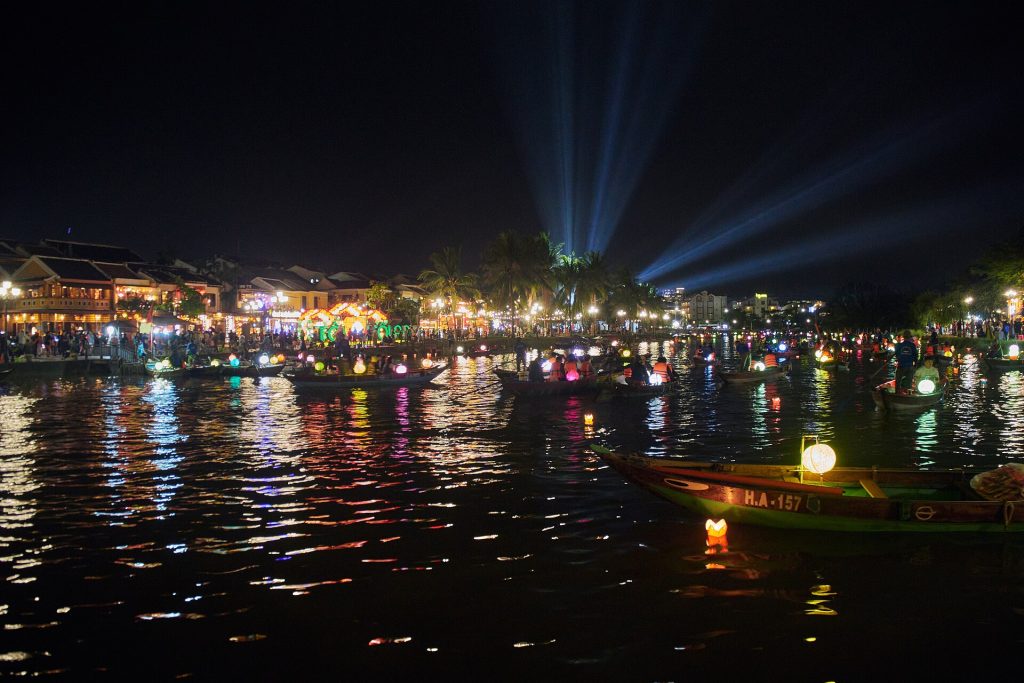
Centre and south: Hue, Hoi An, Da Nang, Ho Chi Minh City, the Mekong
Hue is the imperial city. The Citadel and the Forbidden City, the Perfume river and the imperial tombs take a day or two.
Hoi An is Vietnam’s best-loved town. The old town of yellow houses is on the UNESCO list, lanterns are lit every evening and candle boats drift on the river, and the Japanese bridge is there. Tailors make a suit in twenty-four hours. With An Bang beach and cooking classes, three days pass easily.
Da Nang is forty minutes from Hoi An. In the Ba Na hills there is the Golden Bridge on giant hands, while in the city there are the Marble Mountains and My Khe beach; the region’s airport is here too.
Further south, Nha Trang is a beach and diving centre, Da Lat is a cool mountain town of French villas, and Mui Ne is known for its sand dunes.
Ho Chi Minh City, formerly Saigon, means nine million motorbikes. The Ben Thanh market, the War Remnants museum, Notre-Dame cathedral and the Central Post Office join up on one route, and the nightlife is on Bui Vien street. The Cu Chi tunnels take half a day; give the city itself two.
In the Mekong delta you have to reach the Can Tho floating market early in the morning, and you go along the canals by boat; this takes a day or two. Phu Quoc island in the south is known for its white beaches and resorts, is entered visa-free for thirty days, and the flight takes an hour. The classic north-to-south route is fourteen days.
Getting around Vietnam: flights, trains, Grab, motorbikes
The country is long: it is seventeen hundred kilometres from Hanoi to Ho Chi Minh City. Domestic flights are run by VietJet, Bamboo and Vietnam Airlines, take one or two hours and cost 30–70 dollars, and that is the best way to save time.
The Reunification Express crosses the whole country in thirty-two hours. Its most scenic section is the Hue–Da Nang stretch over the Hai Van pass, three hours. On the Hanoi–Sapa night train a soft berth is 25–40 dollars, and taking the ticket online is far easier than queueing at the station. Sleeper buses run in every direction for 10–20 dollars, but they are cramped.
Within the cities Grab taxis and motorbikes work, and a ride in Hanoi costs 1–2 dollars. The Ho Chi Minh City metro has run on one line since 2024, and Hanoi’s metro has opened too. Motorbike hire is 5–8 dollars a day, comfortable in Hoi An and Da Lat but chaotic in the cities, and an international licence and insurance are needed.
Crossing the street is an art of its own here. Walk at a steady pace and the motorbikes will go around you; the main thing is not to stop in the middle. Ha Long and Sapa tours pick you up from the hotel. To call a Grab you need internet on your phone, and an eSIM works the moment you step off the plane.
Pho, banh mi, coffee: Vietnamese food and halal
Pho is a beef or chicken broth served with noodles, counted as breakfast and costing 1–2 dollars. Banh mi is a sandwich in a French baguette and sells for a dollar. Bun cha is Hanoi’s grilled meat and noodles, and cao lau is Hoi An’s noodle dish. Banh xeo is a crispy pancake, served with summer rolls.
The regions differ too. Hue’s cooking carries on the imperial tradition, while in the south seafood and coconut dominate.
Vietnamese coffee is served with condensed milk over ice and is called «ca phe sua da». In Hanoi they drink egg coffee and in Ho Chi Minh City coconut coffee. Street food on small stools is 1–3 dollars, a restaurant 5–10 and a tourist restaurant 15–20.
Halal food is easy to find in Ho Chi Minh City — go to the Malay-Cham quarter and Nguyen An Ninh street. Hanoi has a few halal restaurants, while in Hoi An and Da Nang the choice is limited. Seafood, tofu and vegetable options are everywhere. Ask for the pho with chicken, because there is a lot of pork in the cooking. Drink bottled water; ice is safe in the tourist places.
Read next: Vietnam visa: a 25-dollar eVisa for 90 days, the official portal and the entry point rule
Three climate zones: the Vietnamese season
Vietnam has no single season; every region has its own calendar.
In the north, that is Hanoi and Ha Long, October to April is dry and comfortable. December to February is cool and misty at 12–18 degrees, and May to September hot and wet. In Sapa the terraces are gold in September–November and green in March–May.
In the centre, that is Hue, Hoi An and Da Nang, February to August is dry and the beach season. September to December is wet, Hoi An floods, and the typhoon risk falls in October and November.
In the south, that is Ho Chi Minh City, the Mekong and Phu Quoc, December to April is dry and thirty degrees. From May to November there are afternoon downpours, but travel is still possible. Check one date separately: Tet, the Lunar New Year, falls in January or February, and on those days everything closes and transport fills up. Regional and seasonal information is on the Vietnam Tourism portal.
Budget and tickets
Vietnam is among the cheapest countries in Asia. In Hanoi and Ho Chi Minh City a three-star hotel is 25–45 dollars and a four-star 50–90. A villa hotel with a pool in Hoi An is 40–80 dollars, a hotel with mountain views in Sapa 30–60, and a resort on Phu Quoc 100–250. A hostel bed starts at 6–12 dollars.
The activities are cheap too. A Ha Long cruise is 120 dollars, the Trang An boat 10, the Cu Chi tunnels 6, the Citadel 8, the Fansipan cable car 30, and a tailored suit in Hoi An 80–150. Excluding the flight, a two-week north-to-south trip fits into 900–1400 dollars per person.
Qatar Airways, Emirates and Turkish Airlines fly to Hanoi and Ho Chi Minh City. When looking for a ticket to Hanoi, consider entering at Hanoi and leaving from Ho Chi Minh City; a return from a different city can come out cheaper. Vietnam tour packages fitting Hanoi, Ha Long, Hoi An and Ho Chi Minh City into two weeks settle the domestic flights, the cruise and the eVisa together.
Frequently asked questions about Vietnam
How many days does a trip to Vietnam need?
North five days, centre four, south four — two weeks in all. The north alone or the centre alone is seven or eight days.
Is Vietnam safe?
Yes, crime is low. The main risks are phones snatched from motorbikes, taxi meter scams and road accidents — call a Grab and do not hold your phone on the road side.
Can it be combined with Cambodia?
Yes: the Ho Chi Minh City–Phnom Penh bus takes six hours and the flight to Siem Reap one. Cambodia requires its own eVisa. If the Vietnamese eVisa is chosen as multiple entry, you can come back.
In closing
With an online eVisa, very low prices and landscapes that change from north to south, Vietnam is Asia’s fullest two-week trip, and for anyone who picks the regional season correctly it is an ideal plan. The eVisa rules are explained on the Vietnam page, and to build the north–south route together, fill in the application form.
Note: the prices here are as of the publication date and can change with the season.
