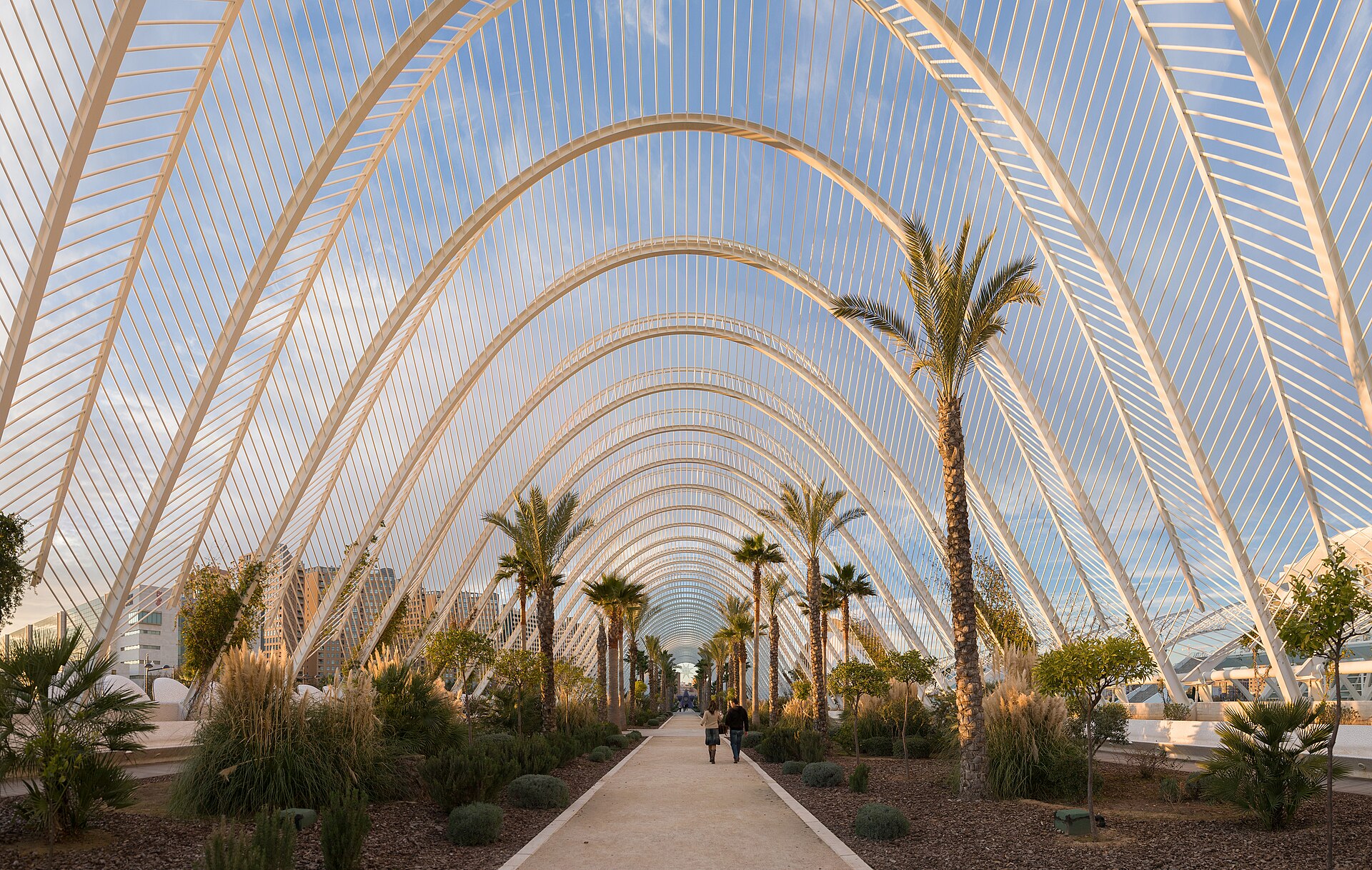
Valencia is the third largest city in Spain, but it is far quieter than Barcelona and Madrid. Here the sea, the old town and futuristic architecture are half an hour from one another. On top of that, prices are below those two cities. The high-speed train from Madrid takes under two hours, and buying the train ticket in advance works out cheaper and easier than flying. Two or three days is comfortably enough, and most of the city is seen by bicycle.
The dry river bed and the city’s park
The most interesting part of the city is actually the result of an engineering decision. Last century, after a severe flood, the river was diverted around the edge of the city, and the nine kilometres of empty bed were turned into a park. It now holds cycle paths, sports grounds and an enormous playground.
The park splits the city in two and connects virtually all the main points. Hiring a bicycle and riding from one end to the other takes twenty minutes. It is the best way to get to know the city, because you cannot hear the traffic.
The City of Arts and Sciences in Valencia
At the end of the park there is a complex of white buildings, somewhere between a ship and a skeleton in form. The design is by a local architect and it has become the city’s symbol. The buildings stand over water, so the reflection comes out striking in photographs.
The complex holds a planetarium, a science museum and the largest aquarium in Europe. For anyone going with children, the aquarium can take the whole day. If you are going into more than one building, a combined ticket comes out cheaper, and taking the tickets in advance gets you past the weekend queue.
The old town, the market and paella
The old town has the cathedral, the bell tower and the silk exchange building, the last of which is on the UNESCO list. There are more than two hundred steps up the tower, but from the top all the rooftops are visible. A small chapel in the cathedral holds the holy chalice, and that is a reason to visit in itself.
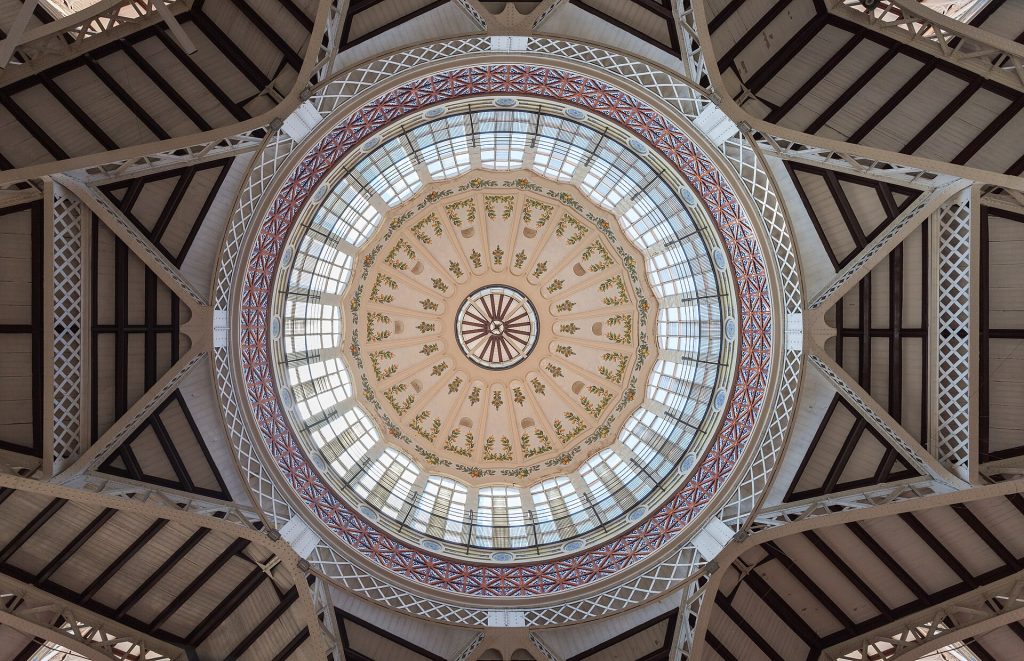
The Central Market is one of the largest in Europe, and its building is in the art nouveau style and more than a hundred years old. Paella was created in this very region, and the traditional version contains chicken and rabbit rather than seafood. The local rule is this: paella is a lunch dish, not an evening one.
Read more: A Spain travel guide: Barcelona, Madrid, Andalusia, the islands and the AVE trains
Transport and budget in Valencia
The metro from the airport to the centre takes twenty minutes. For getting around the city, hiring a bicycle is the most comfortable option, because the ground is flat and there are separate lanes. The beach is twenty minutes from the centre by tram. Choosing a hotel between the old town and the beach sets the rhythm of the trip, so decide with the map in front of you.
| Hotel | A three-star in the centre is around 70–120 euros a night |
| Paella | A portion for two 30–45 euros |
| Horchata and fartons | The local drink and pastry, 4–6 euros |
| Aquarium | Entry is expensive, the combined ticket is better value |
In the middle of March the city holds an enormous festival: large figures are set up in the streets and burned at the end. In that week hotel prices double and finding a place becomes hard, so check the dates in advance. There is no direct flight from Baku, and looking at flight prices towards Spain makes planning easier. Official information about the city is on the visitvalencia.com site.
The season in Valencia
April–June and September–October are the most comfortable period, with 22–28 degrees and a sea fit for swimming. July and August are hot and humid, but in return the beach season is fully open. Winter is mild, staying around fifteen degrees, with few tourists. The festival week in March is a calendar of its own — either choose it or deliberately go around it.
In short
Valencia is a quiet city that gives you sea, park and modern architecture in one place. Take a bicycle, ride the park end to end, order the paella at lunch, and check the March festival on the calendar. If you want to combine several Spanish cities, you can look at tour options for Spain. For a visa and a route, fill in the application form.
Note: prices change sharply on festival days, so check the dates before booking.
