Turkey is the country most travelled to from Azerbaijan, and the reason is clear. There is no visa, an identity card is enough on direct flights, the language is the same, and there are dozens of flights a day from Baku to Istanbul.
But precisely because it is familiar, most of us go to the same three places: Istanbul, Antalya and Trabzon. Yet Turkey is a country that does not fit into one lifetime. The balloons of Cappadocia, the white terraces of Pamukkale, the lagoon at Fethiye, the thermal waters of Bursa and Afyon are only a part of it, and I discover a new region myself every time. Below I have gathered Istanbul, the Mediterranean resorts and Cappadocia, along with the Black Sea, the thermal resorts, the transport, the food, the season and the budget.
Turkey in brief
| Capital | Ankara; the largest city is Istanbul |
| Language | Turkish; complete mutual understanding with Azerbaijani |
| Currency | Turkish lira (TRY), the rate is volatile; cards everywhere |
| Visa | Visa-free, 90 days in 180; an identity card on direct flights, passport valid 150 days |
| Best time | April–June and September–October; Antalya May–October; Uludağ December–March |
| Flights | Direct from Baku to Istanbul, Antalya, Izmir, Ankara and Trabzon, 2.5–3.5 hours |
| Daily budget | 60–100 dollars at a mid-range level; all-inclusive at a resort |
Istanbul: the historic peninsula, the Bosphorus, Kadıköy
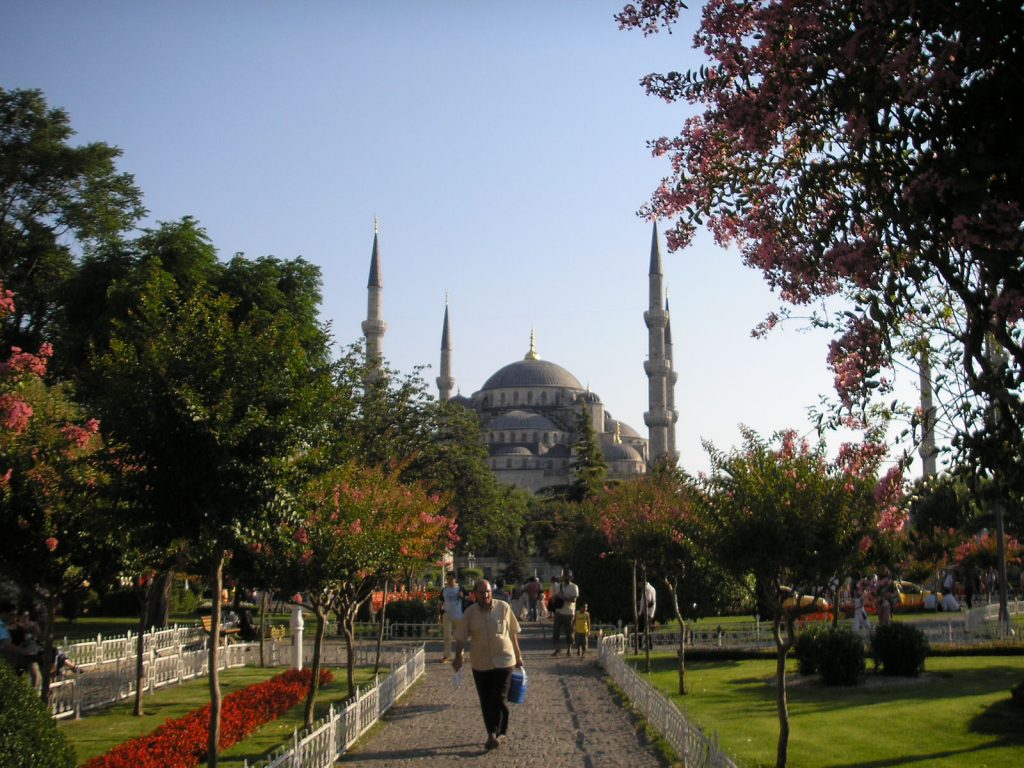
Istanbul is three or four days and is different every time. On the Sultanahmet historic peninsula stands Hagia Sophia, with paid entry for foreigners. Nearby are the Blue Mosque, Topkapı Palace and the Harem, and the Basilica Cistern. For shopping, the Grand Bazaar and the Spice Bazaar are right here. Galata Tower and the cafés of Karaköy join up with İstiklal Street and Taksim on one route. Dolmabahçe Palace is on the shore. The Bosphorus boat goes from Eminönü to Anadolu Kavağı with Şehir Hatları for 30 lira. And on the waterfront at Ortaköy and Bebek you take an evening walk.
Kadıköy on the Asian side stands out for its market, the Moda waterfront and the best eating houses in the city. Üsküdar has the Maiden’s Tower, Balat is known for its colourful houses, and to the Islands you cross by ferry.
We usually stay in Laleli, Aksaray and Fatih. But staying in Kadıköy and Beşiktaş shows a completely different face of the city — try it once. The İstanbulkart works on all transport, the Marmaray takes you from Europe to Asia in four minutes, and the metro from the new airport takes forty.
Antalya, Cappadocia, the Aegean, the Black Sea: Turkey region by region
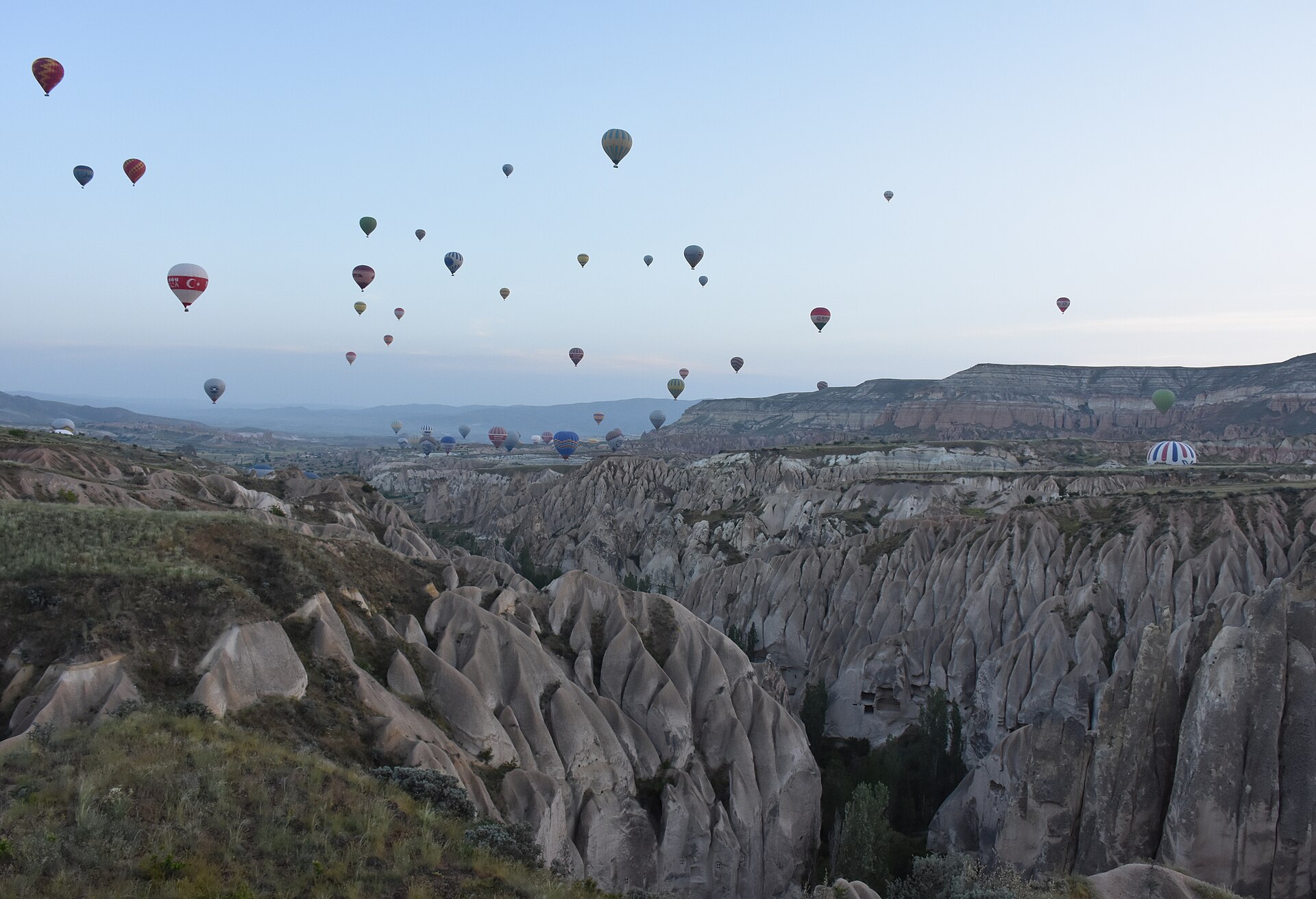
Antalya is the capital of the all-inclusive resorts. Five-star resorts are lined up in Lara and Belek, and Kemer joins the mountains to the sea. Alanya is cheap and family-friendly, and Side has an ancient theatre. Kaleiçi is the old town and the Düden waterfall is on the edge of the city. A day tour to Pamukkale is organised from Antalya. Cappadocia is Turkey’s most extraordinary landscape. Hundreds of balloons rise over the fairy chimneys of Göreme at sunrise, and one flight is 200–250 euros. Stay in the cave hotels, go down into the underground city of Derinkuyu, and walk Ürgüp and Uçhisar. A flight to Nevşehir or Kayseri takes an hour and a half; set aside two or three days for the region.
In the Aegean, Bodrum is known for yachts and night life. Fethiye has the Ölüdeniz lagoon and paragliding, Kaş is a diving centre, and in Dalyan the mud baths work. Marmaris, Izmir, the ancient city of Ephesus and the beaches of Çeşme join up on one route. Pamukkale stands out for its white travertines and Hierapolis, and Alaçatı for its stone houses.
On the Black Sea, Trabzon is known for the Sumela monastery. Uzungöl and the Ayder plateau, with their green mountains and mist, are our summer favourite, and Rize is full of tea gardens. In winter the turn comes to Kars and the Eastern Express train.
In the thermal and mountain direction Bursa comes first with skiing on Uludağ and the Çekirge baths, and nearby are Lake Sapanca and Abant.
Transport: flights, the YHT, buses, cars
From Baku, AZAL, Turkish Airlines and Pegasus fly direct to Istanbul, Antalya, Izmir, Ankara and Trabzon, and in season flights to Bodrum and Dalaman open too. On direct flights you can travel on an identity card, while for connecting flights a passport is needed.
Domestic flights with THY, Pegasus and AJet come to 20–60 dollars, and Istanbul to Antalya takes an hour and a half. The YHT fast train takes four and a half hours from Ankara to Istanbul and two to Konya. Among the intercity buses Kamil Koç, Metro and Pamukkale are comfortable and have night sleepers, and from Istanbul to Cappadocia the journey takes eleven hours.
Places are limited for the balloon flight and the Göreme tours in Cappadocia, and those who do not book in advance get up in the morning and watch the balloons from below.
Inside the cities the İstanbulkart settles everything, and in Antalya there is a tram. For taxis there are the BiTaksi and Uber apps, and metered taxis stop too. Car hire is ideal for the Aegean and the Black Sea, costs 30–50 dollars a day, the roads are excellent and the toll roads are paid with HGS. Entering with an Azerbaijani-plated car is possible too, for which the green card and the six-month rule apply.
Kebab, meze, baklava: Turkish food and the thermal resorts
Turkish cooking changes from region to region. In Istanbul people eat fish in bread, and on the Bosphorus a meze table is laid. Adana and Urfa kebab are everywhere in the country, while the İskender comes out of Bursa.
Pide and lahmacun are sold on every corner, mantı is cooked in Kayseri and künefe in Hatay. On the Black Sea they serve anchovies and mıhlama, and in the Aegean herbs in olive oil. For dessert comes Antep baklava, and to drink tea, Turkish coffee and ayran. Everything is halal.
As for prices, lunch at a lokanta is 5–10 dollars, an evening at a restaurant in Istanbul 20–40, and at the Bosphorus restaurants over 50. At the resorts food is included in the package, and a kebab shop is 3–5 dollars.
The thermal resorts are a reason of their own for going to Turkey. Pamukkale and Karahayıt are known for its red water. In the Çekirge quarter of Bursa the Ottoman baths are working. Afyon, with Europe’s largest thermal hotels, treats rheumatism and joint problems. Yalova has thermal centres, and the fish lake at Kangal is for psoriasis. A full-board night at a thermal hotel is 60–150 dollars and a bath 15–30. Tap water is drunk in the cities and bottled water is cheap.
Season and weather
April-June and September-October are ideal for Istanbul, Cappadocia and the Aegean, the weather is 20–28 degrees, and in April the tulips open in Istanbul.
From June to September it is the beach season in Antalya and the Aegean, while July-August is 35–40 degrees and the dearest period. The Black Sea plateaus stay at twenty degrees in summer, and that is exactly why the flow to Trabzon happens. In October the weather in Antalya is still twenty-eight degrees and the prices drop.
In winter the weather in Istanbul is 5–10 degrees and it rains. Cappadocia under snow is at its most photogenic, and the balloons fly in winter too. On Uludağ, Palandöken and Erciyes the ski season runs from December to March, while in Antalya it is fifteen degrees in winter. In the weeks of Ramadan and the Feast of Sacrifice domestic tourism pushes the prices up. Regional, resort and event information is on the Go Türkiye portal.
Budget and tickets
In Istanbul a three-star hotel is 50–90 dollars, a boutique hotel in Sultanahmet 80–150, and a flat in Kadıköy 40–70. In Antalya a four-star all-inclusive is 80–150 dollars a night for a couple and a five-star 200–400. In Cappadocia a cave hotel is 60–150 dollars, a bungalow in Uzungöl 50–100, and a thermal hotel comes to 60–150. The good cave hotels fill months ahead, so check the free dates now.
As for entry tickets, Hagia Sophia is 25 euros, Topkapı with the Harem 60, Pamukkale 30 and Sumela 10, while a balloon flight is 220. Excluding the flight, a week-long trip fits into 500–900 dollars per person and a resort holiday into 600–1200.
There are dozens of flights a day, and a ticket to Istanbul with Pegasus and AJet starts from a hundred dollars when bought early, while the Antalya flights close three months ahead in summer. For those travelling Cappadocia, Pamukkale and the Aegean on one route, Turkey tour packages settle the balloon, the domestic flight and the cave hotels together, and Antalya’s all-inclusive packages are the best-selling holiday from Azerbaijan.
Frequently asked questions about Turkey
Can you go to Turkey on an identity card?
Yes, on direct flights from Baku with the new-generation identity card. For connecting flights, land borders and continuing from Turkey to a third country a passport is needed; the details are in our visa article.
Where should you go in Turkey for the first time?
Three days in Istanbul and two in Cappadocia is the classic start. For the beach, Antalya; for cool air, Trabzon; for the sea and night life, Bodrum.
How does the 90-day count work?
Ninety days in total in any 180-day period, so frequent travellers have to count the days. To stay longer a residence permit is needed; the details are in our visa article.
In closing
Visa-free, on an ID card, with daily flights and in a language of our own, Turkey is one of the richest travel countries in the world, and whoever goes beyond the familiar three cities sees a new Turkey every time. The entry rules are gathered on the Turkey page, and to build the Cappadocia, resort or thermal plan together, fill in the application form.
Note: the prices here are as of the publication date and can change with the exchange rate.
